
Free Japanese Knotweed Identification
Are you concerned that you may have Japanese Knotweed? Upload a picture or video for a free, no-obligation assessment by our Japanese Knotweed specialists.
Not sure if it’s Japanese Knotweed?
Are you concerned that you may have Japanese Knotweed but are unsure? Perhaps a homebuyer’s surveyor or valuation surveyor has identified a suspected plant and recommended that you seek specialist advice. Japanese Knotweed Agency can help.
Simply submit photographs or videos of the suspected plant, and our specialists will carefully assess the information provided to determine whether it is Japanese Knotweed.
With decades of combined experience managing Japanese Knotweed across the UK and Ireland, every submission is reviewed by a qualified surveyor. We provide reliable identification, professional guidance, and advice on the most appropriate next steps based on your individual circumstances.
Japanese Knotweed, how we identify it
Every submission is manually assessed by our experienced team at Japanese Knotweed Agency. We examine key identification features including seasonal growth patterns, stem characteristics, leaf shape and arrangement, and surrounding site conditions to determine whether Japanese knotweed may be present.
Accurate identification of Japanese Knotweed is essential to prevent its spread and understand the potential risks it may pose to your property and surrounding areas. Due to its ability to remain dormant and regenerate from small fragments of underground rhizome, relying on experienced specialists is crucial for accurate assessment and effective management.
At Japanese Knotweed Agency, our specialists provide comprehensive Japanese Knotweed surveys and expert visual identification using detailed assessments of plant characteristics, seasonal growth patterns, and site conditions. Our approach ensures that potential infestations are accurately identified and that clients receive clear, professional guidance on the most appropriate next steps.
The Key identifying features of Japanese knotweed
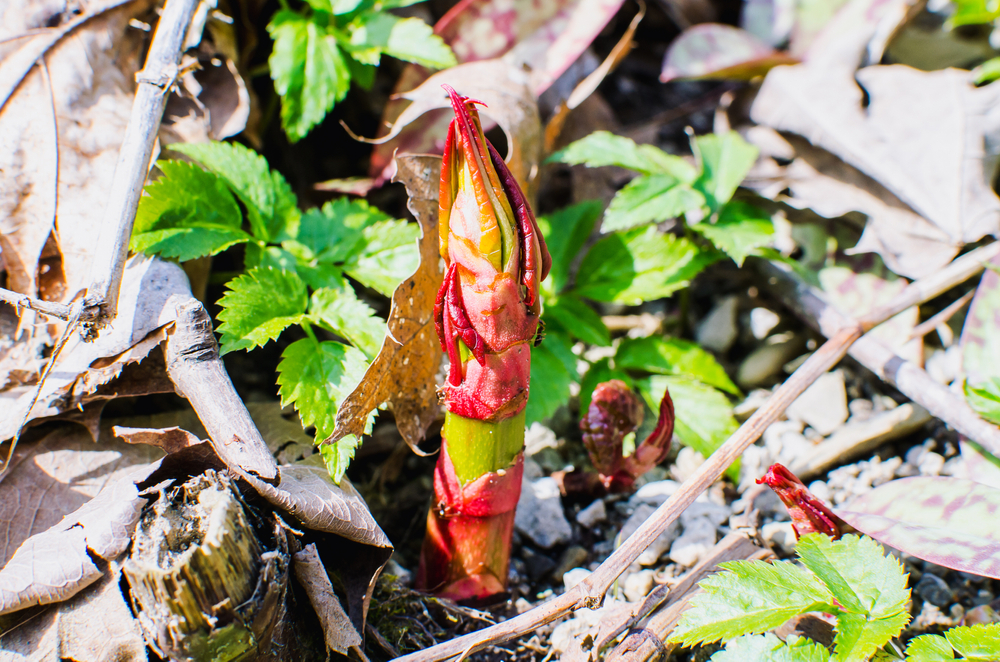
- Reddish-purple shoots emerging in spring
- Hollow, bamboo-like stems with distinctive purple speckling
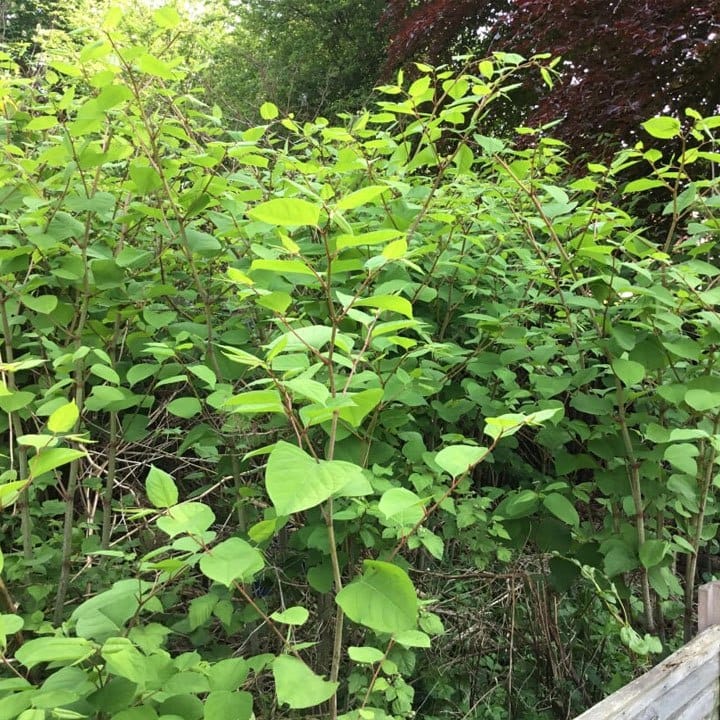
- Zig-zag stem growth with shield-shaped leaves
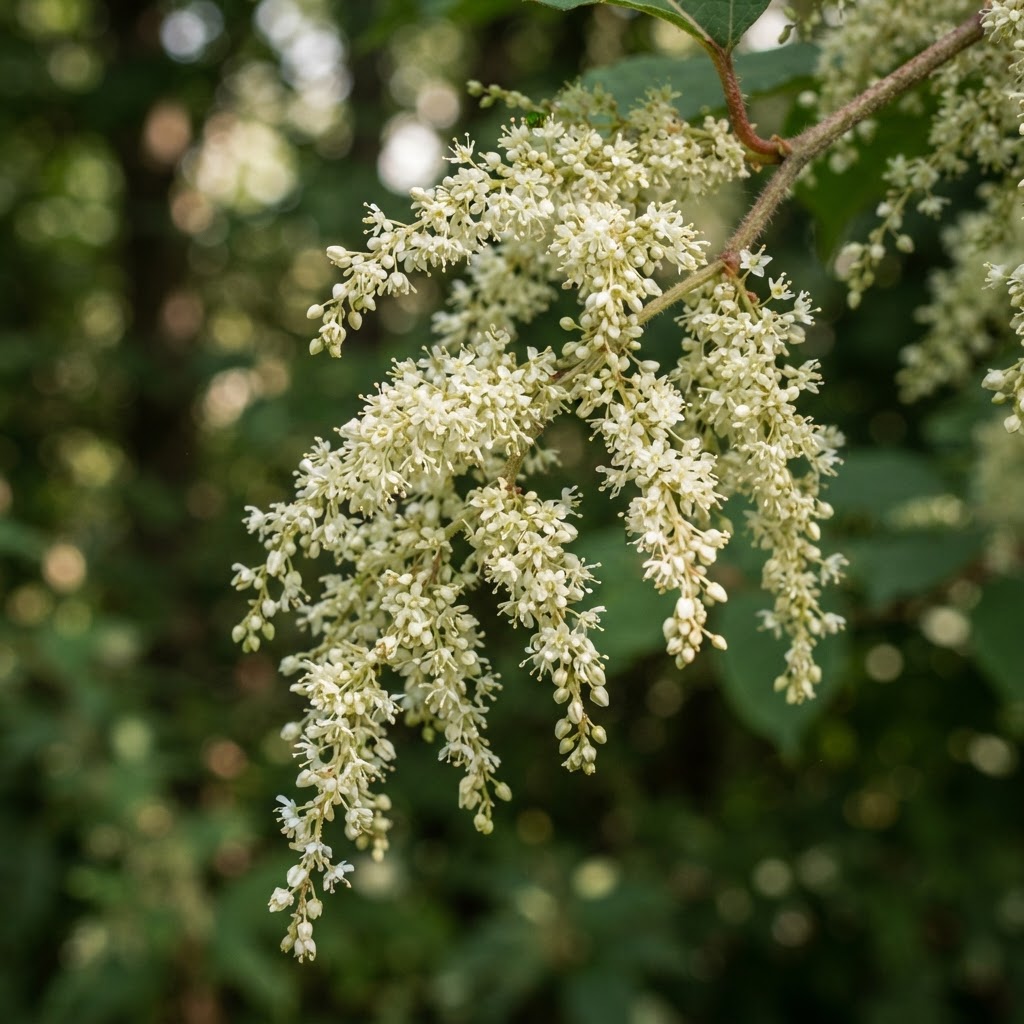
- Clusters of creamy-white flowers appearing in late summer
Get In Touch
Are your photos or videos stored on a different device, or don’t have any images available right now? No problem. Submitting photos or videos to our specialists is quick and easy, whenever it suits you. You can send them to us using any of the following methods:
IDENTIFICATION INFORMATION
What Japanese Knotweed Looks Like
Japanese Knotweed is one of the UK’s most recognisable invasive plant species, although its appearance changes considerably throughout the seasons. Throughout its lifecycle it develops several distinctive features, including rapidly growing bamboo-like stems, shield-shaped green leaves, clusters of creamy-white flowers and an extensive underground rhizome system. Even during winter, when the plant dies back, identifying characteristics remain. The guide below explains each part of the plant to help you accurately identify Japanese Knotweed at any time of year.
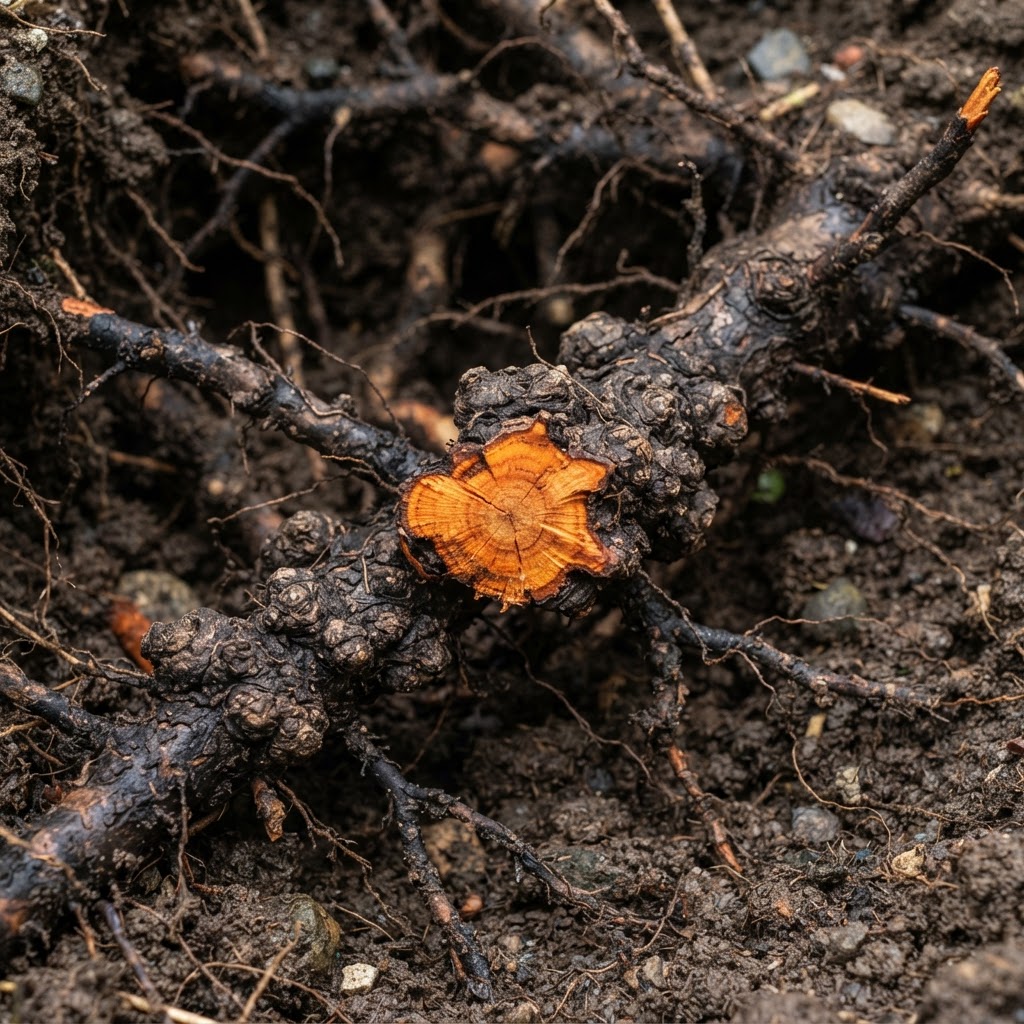
Rhizomes
The underground root system is dark brown or black on the outside and bright orange inside. Rhizomes can extend up to 7 metres from the plant and reach 3 metres deep, storing energy for rapid regrowth.
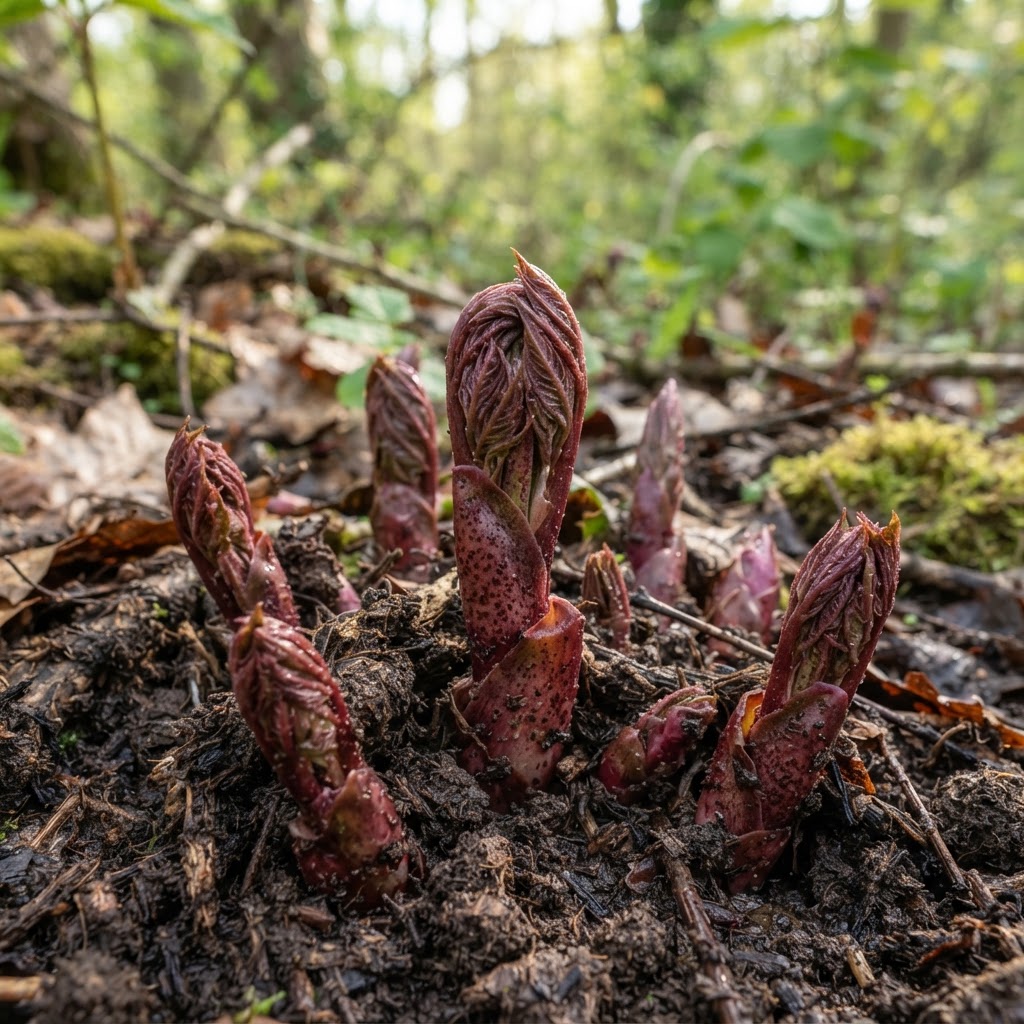
Shoots
In early spring, reddish-purple shoots emerge from the ground, often curled and asparagus-like. They grow rapidly and can reach several centimetres a day at peak season.
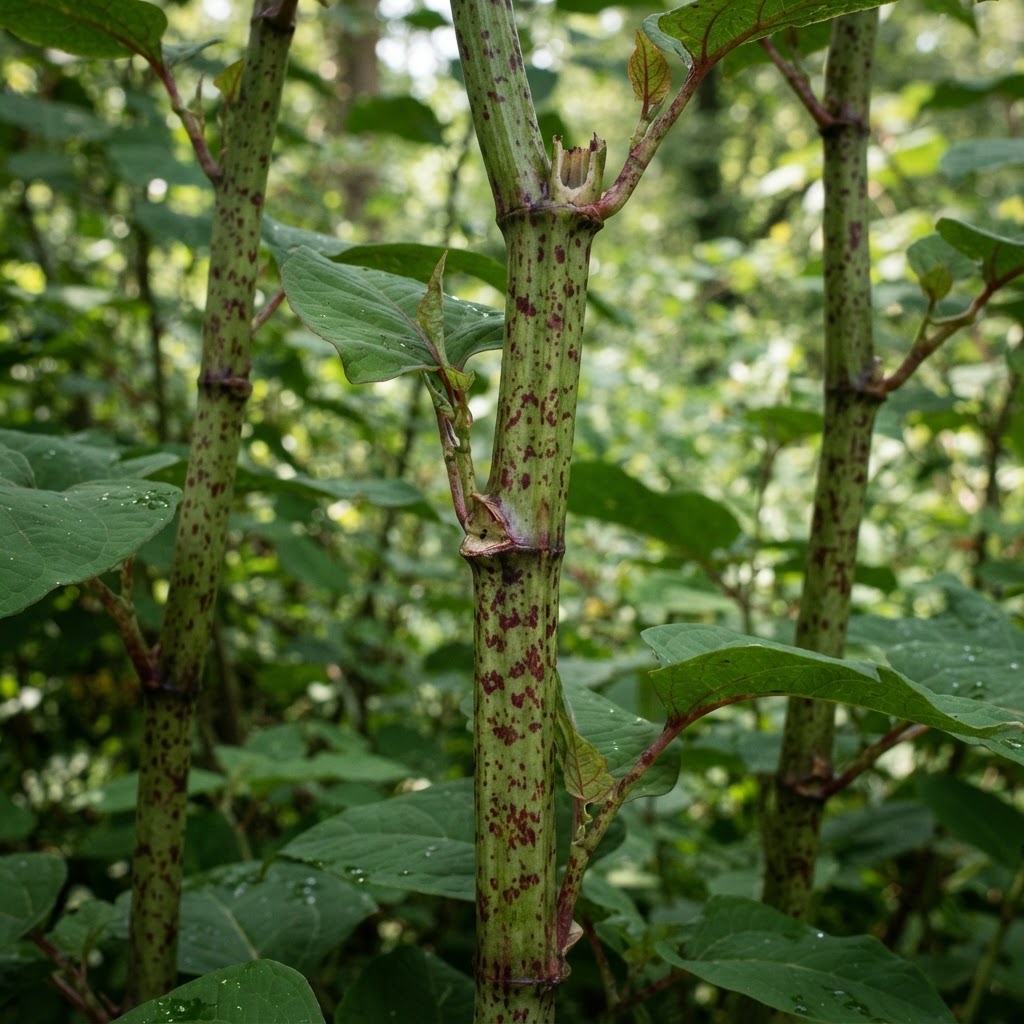
Stems
Tall, bamboo-like stems with raised nodes and a speckled appearance. They are green with purple-red patches in summer, hollow inside, and can grow up to 3 metres in height.
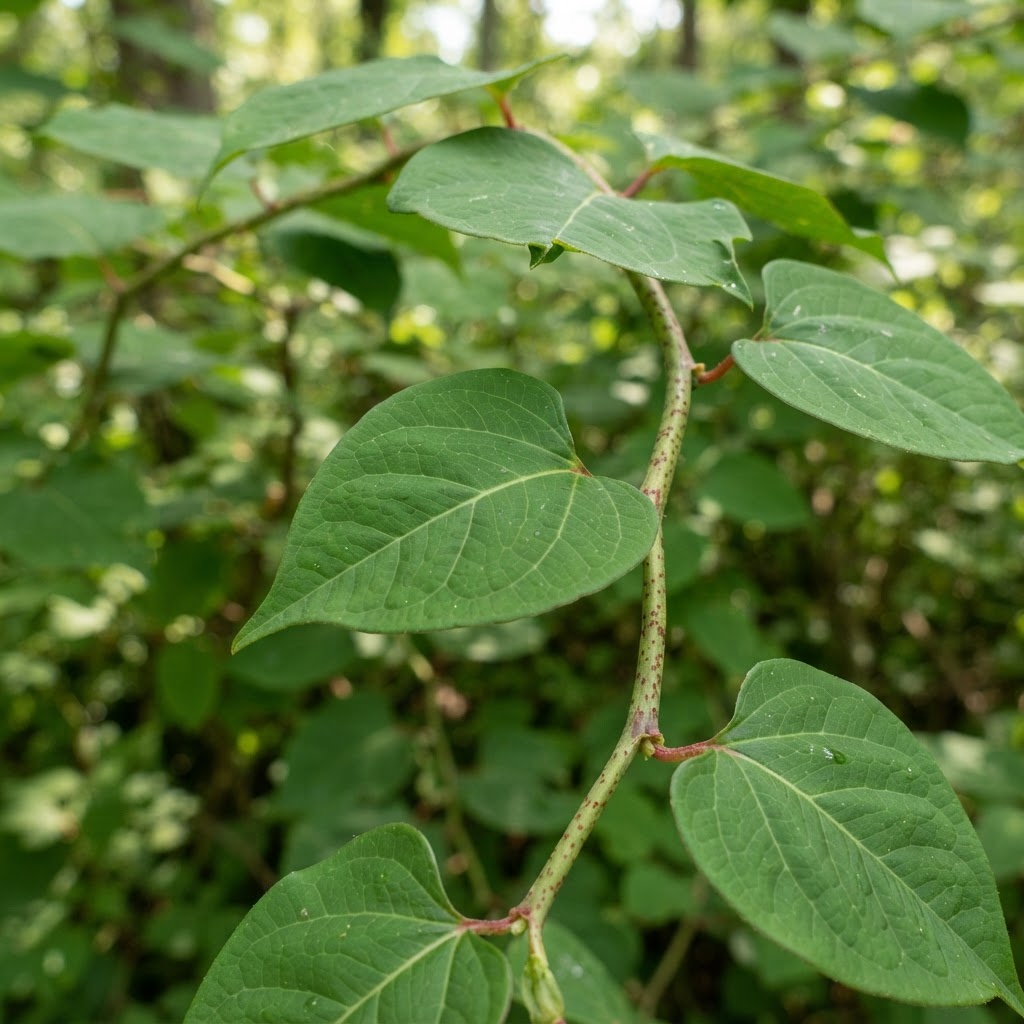
Leaves
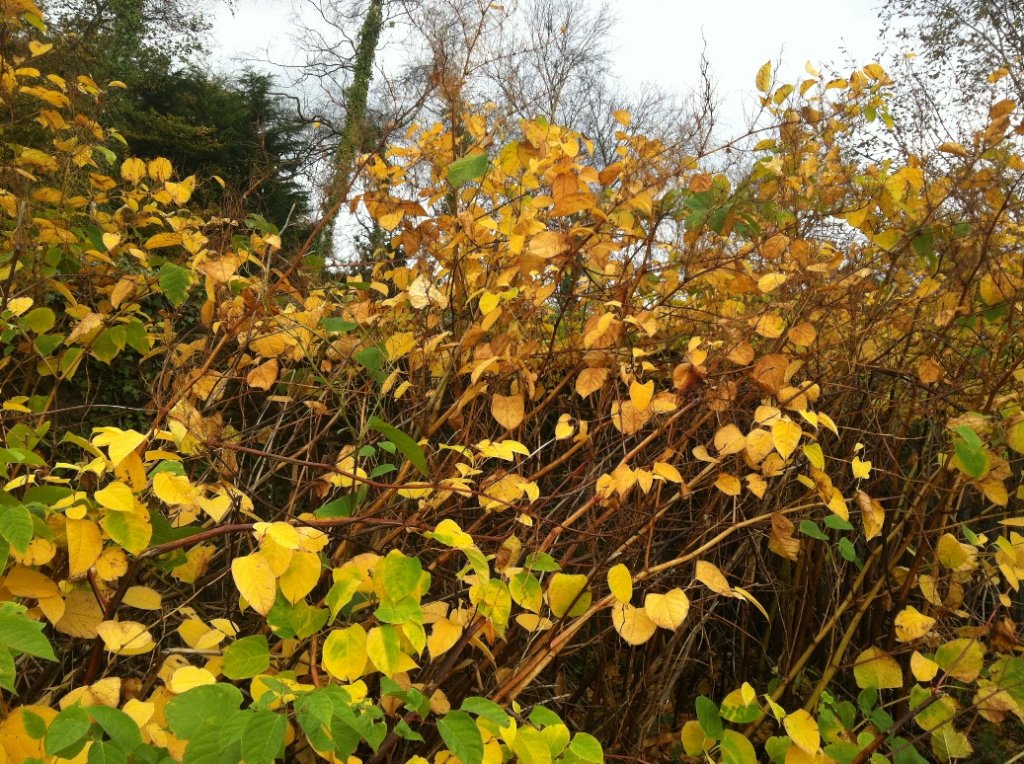
Broad, shield or heart-shaped leaves with a pointed tip and flat base. They grow in a zig-zag pattern along the stem and are a vibrant green through spring and summer before turning yellow in autumn.
Flowers
Small creamy-white clusters appear in late summer. The flower sprays grow in long, drooping tassels and are the last feature to appear before the plant dies back in autumn.
Dead Canes
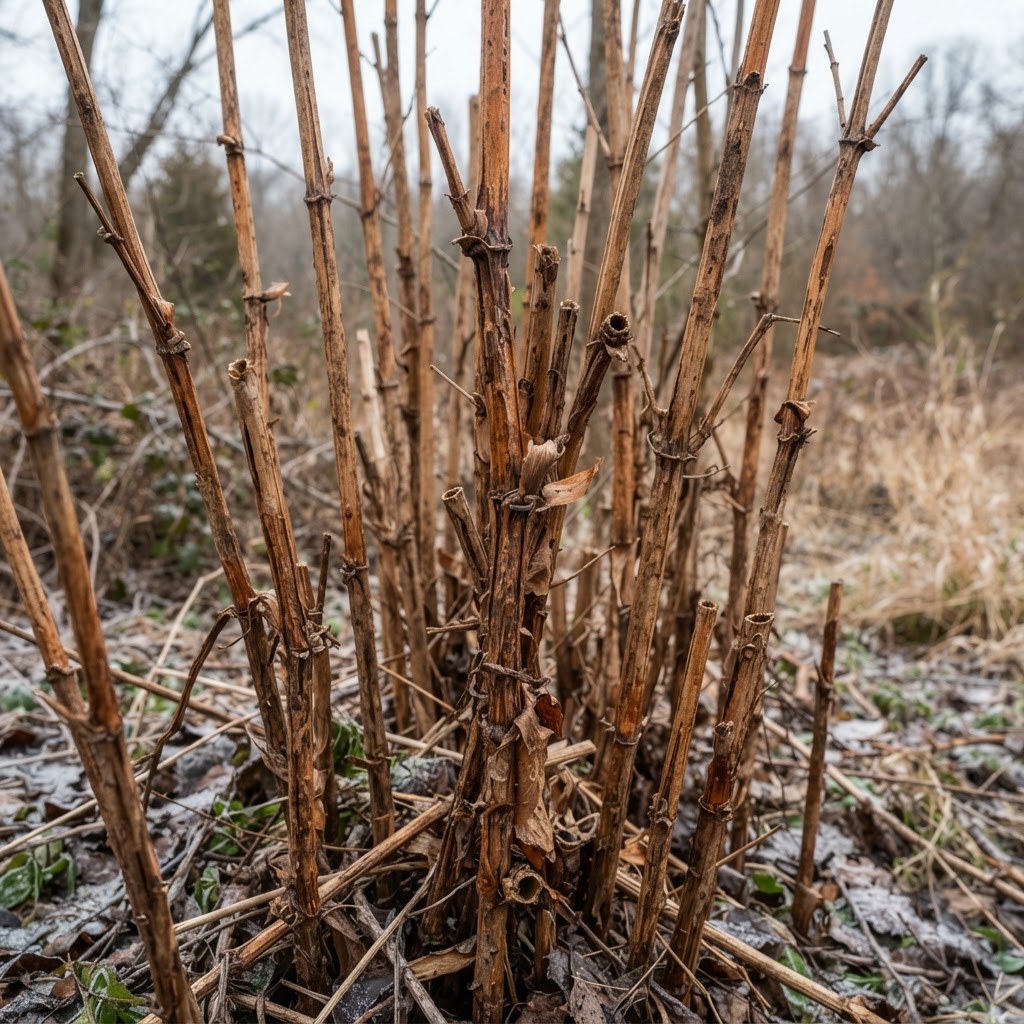
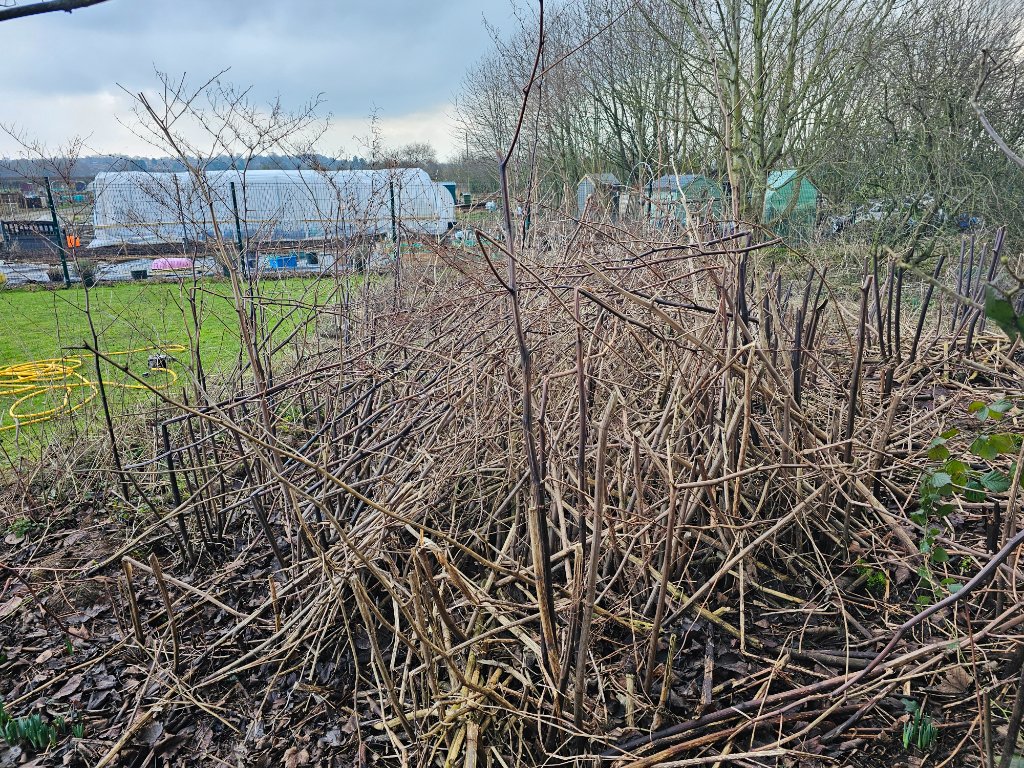
Over winter the plant dies back to leave brittle, hollow, brown-orange canes standing upright. These dead stems are a tell-tale sign of an active infestation that will regrow the following spring.
VIDEO GUIDE
Japanese Knotweed Identification Video Guide
Everything You Need to Know About Japanese Knotweed
Japanese Knotweed can be difficult to identify and even more challenging to manage without the right knowledge. Our comprehensive guide covers everything from seasonal identification and growth patterns to legal obligations, property impacts, and the most effective treatment and removal methods
SEASONAL GUIDE
Japanese Knotweed throughout the seasons
Identifying Japanese Knotweed is not always straightforward. The plant undergoes significant changes throughout the year, with its appearance varying across each season. Our seasonal guide explains how Japanese Knotweed develops, changes, and displays different identifying features throughout the year, helping you recognise the plant at every stage of its growth cycle.
SITE SURVEY
Site survey done by the experts
Our qualified surveyors carry out thorough site surveys to accurately identify Japanese Knotweed and assess the extent of any infestation. Every survey is conducted by experienced specialists who understand the plant’s growth patterns, seasonal behaviour, and the risks it can pose to your property.
Book a Survey