
Scout Hut, Swinton — Japanese Knotweed Remediation
A documented JKWA project: excavation, specialist vertical barrier installation and long-term thermo-electric management beside a railway embankment
From Unused Ground to Long-Term Protection
When a community Scout Hut in Swinton found its garden and play area overrun by mature Japanese knotweed spreading from an adjoining railway embankment, JKWA designed a combined physical and thermo-electric solution to reclaim the grounds and protect them for the long term.
Watch the Full Project
The complete JKWA remediation at the Scout Hut, Swinton — from original infestation to reinstatement.
The Challenge
The Scout Hut in Swinton provided a valuable community garden and play area — but mature Japanese knotweed had become established across the grounds, severely restricting usable space and presenting a real risk of further spread.
The situation was made more complex by the source of the infestation. A substantial, established knotweed stand remained immediately beyond the site boundary on an adjoining railway embankment. This meant that simply treating what was visible within the Scout Hut grounds would not be enough — any remediation had to account for the continuing external source pressing against the boundary.
JKWA was engaged to design a solution that would both reclaim the existing grounds and create a lasting physical defence against the neighbouring infestation, while respecting the client’s wish to retain established laurel planting along the boundary.
Crucially, the Scouts required a totally chemical-free solution. Because the building is used by children and young adults, herbicide treatment was never an option — the remediation had to be carried out without any chemical application, making JKWA’s excavation and thermo-electric approach the natural fit for the site.
Protecting the Site from the Infestation Next Door
The aerial plan demonstrates one of the most important aspects of this project. Although JKWA could excavate and remediate the Japanese knotweed within the Scout Hut grounds, a substantial established infestation remained immediately beyond the boundary on the adjoining railway embankment.
The red dotted line identifies the approximate alignment of the specialist vertical Japanese knotweed barrier installed by JKWA. Its purpose was to create a physical line of defence between the reclaimed Scout Hut grounds and the continuing external source of Japanese knotweed.
The alignment was complicated by existing established laurel bushes which the client wished to retain. This meant the remediation design had to respond to the existing site rather than simply installing a conventional straight barrier across the entire boundary.
This residual risk is one of the reasons the physical works were supplemented by a 10-year monitoring and thermo-electric management programme.
The JKWA Solution
JKWA combined physical excavation and remediation with a specialist vertical barrier and a long-term thermo-electric management programme — a layered approach designed to deal with both the infestation within the grounds and the ongoing threat from the neighbouring embankment.
Controlled excavation removed the knotweed and rhizome material from the Scout Hut grounds, after which the boundary was prepared and the vertical barrier installed along an alignment that worked around the retained laurel planting. The grounds were then reinstated, returning the garden and play area to community use.
From Unused Ground to Long-Term Protection
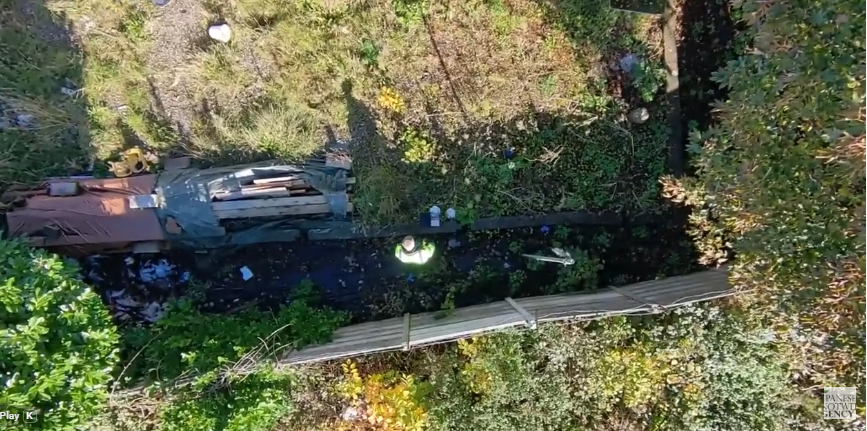
Twelve frames from the project video, in chronological order, telling the story from the original infestation through excavation, barrier installation and reinstatement.
50-Year Vertical Knotweed Barrier
The specialist vertical Japanese knotweed barrier installed along the boundary provides a physical line of defence designed to prevent rhizome intrusion from the adjoining railway embankment into the reclaimed Scout Hut grounds for the long term.
Because the client wished to retain the established laurel bushes, the barrier alignment was designed to respond to the existing site conditions rather than following a simple straight run — demonstrating JKWA’s ability to adapt remediation design to real-world constraints.
10-Year Thermo-Electric Management
The physical works were supplemented by a 10-year monitoring and thermo-electric management programme. This ongoing layer of protection addresses the residual risk from the continuing external infestation on the railway embankment, targeting any regrowth without the need for further excavation.
JKWA’s chemical-free thermo-electric method delivers controlled heat directly to the knotweed crown and rhizome network, offering an environmentally responsible approach to long-term management — particularly important on a community site adjacent to a railway corridor.
The Result
The Scout Hut’s garden and play area were returned to full community use, with the grounds excavated, remediated and reinstated. A specialist vertical barrier now stands between the reclaimed site and the neighbouring railway embankment, backed by a decade of thermo-electric monitoring and management.
The project demonstrates how JKWA combines physical remediation, specialist barrier installation and chemical-free thermo-electric management to deliver lasting protection — even where a substantial external source of Japanese knotweed remains immediately beyond the boundary.
Facing a Similar Situation?
If Japanese knotweed is affecting your property — or spreading from neighbouring land — our team can design a combined remediation and long-term protection plan tailored to your site.