
Japanese Knotweed Remediation Within a Mixed-Use Development Adjacent to a Railway
A complex excavation and reconstruction project involving extensive Japanese knotweed encroachment, contaminated drainage, cavity walls, foundations, boundary relocation and installation of both vertical and horizontal specialist barriers
Watch the Full Project
The complete JKWA remediation at the mixed-use development — from initial investigation through excavation, barrier installation and full reinstatement.
The Challenge
This mixed-use property presented a particularly complex remediation challenge. A substantial and mature Japanese knotweed infestation was present on adjoining railway land, and over time knotweed had encroached extensively into the subject property — not simply into the soil, but into and around elements of the built environment, including drainage infrastructure and the building itself.
The development is situated immediately adjacent to railway land where a significant infestation remained. This meant the remediation strategy had to account not only for the knotweed already within the development, but also for the potential for future rhizome encroachment from beyond the property boundary.
A conventional treatment programme dealing only with visible stems would not address the extent of the problem identified. The project required a systematic process of investigation, dismantling, excavation, clearance, protection and reconstruction.
The JKWA Solution
JKWA carried out a controlled excavation of the affected areas, exposing and investigating buried structures. Affected drainage was removed so the surrounding areas could be properly inspected and cleared, then reinstated following the invasive-species works.
Evidence of Japanese knotweed was identified entering areas associated with the cavity wall construction. Affected masonry was opened and dismantled, and sections of concrete foundation and brickwork were removed where necessary to expose and clear locations that would otherwise have remained inaccessible.
The existing fence line did not correspond with the correct boundary, so the boundary was corrected and a new fence installed in the appropriate position. Following excavation and clearance, specialist vertical and horizontal Japanese knotweed barrier systems were installed to provide ongoing physical protection.
From Infestation to Reinstatement
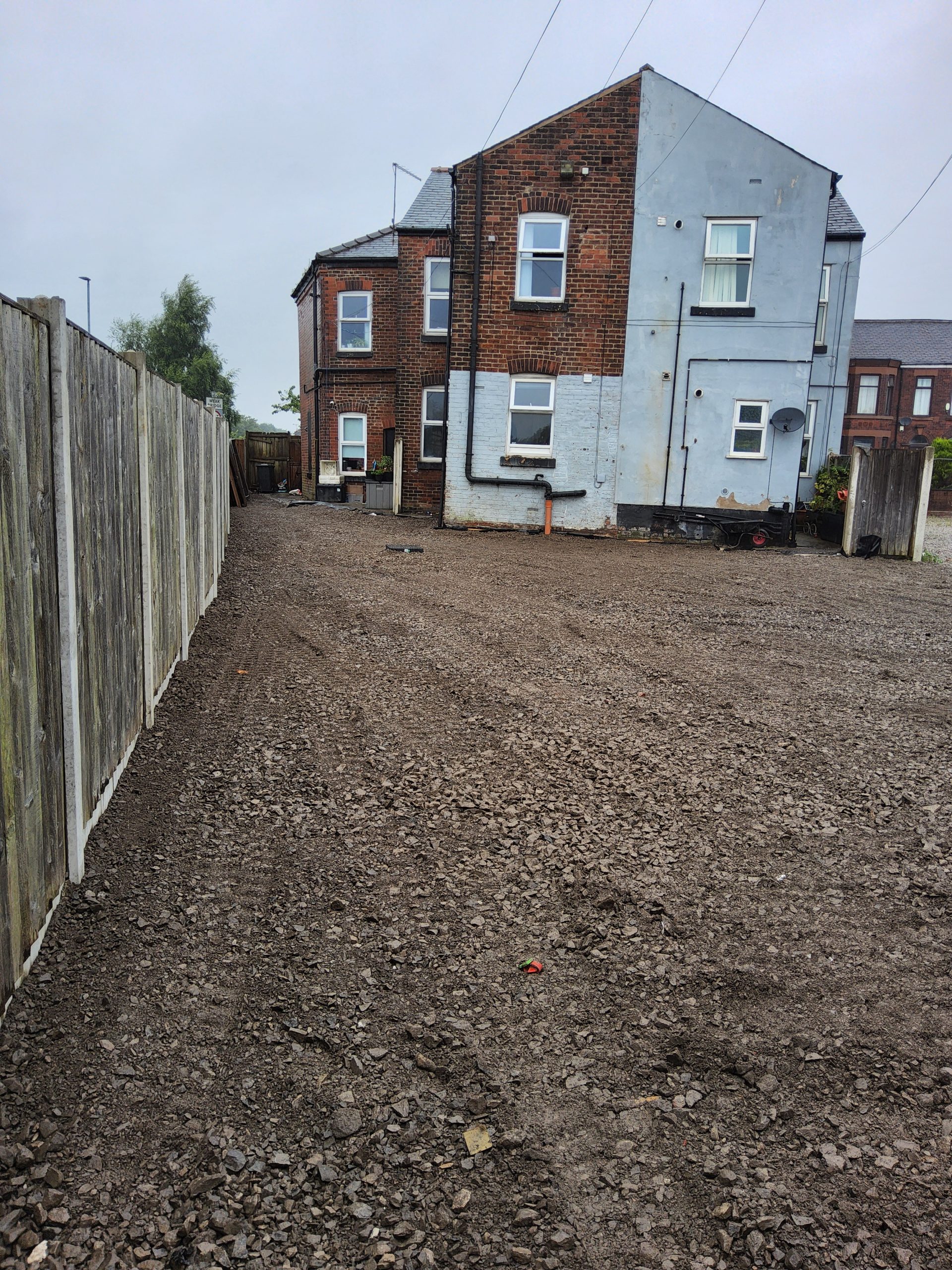
Eleven frames from the project, in chronological order, telling the story from the original infestation through excavation, barrier installation and reinstatement.
Vertical & Horizontal Barrier Protection
Following excavation and clearance, the remediation incorporated specialist Japanese knotweed barrier systems. Unlike a straightforward vertical boundary barrier, this project required both vertical and horizontal barrier protection, designed around the particular site conditions and areas requiring protection.
The barrier system provides physical separation and containment as part of the wider remediation strategy — the barrier itself does not kill Japanese knotweed, but creates a physical line of defence against rhizome intrusion.
Vertical Barrier Protection
Horizontal Barrier Protection
The Result
The affected areas were excavated and cleared. Specialist physical barriers — both vertical and horizontal — were installed to provide ongoing protection. Affected drainage and building infrastructure was reinstated, and the boundary fence was repositioned and replaced in accordance with the project boundary information.
The project addressed the infestation within the agreed works area and incorporated physical protection against the continuing external risk from the adjoining railway land — the result is a remediated, protected and fully reconstructed property.
Facing a Similar Situation?
If Japanese knotweed has spread beneath or into your property — interacting with buildings, drainage or boundaries — our team can design a remediation strategy around the actual construction and constraints of your site.