
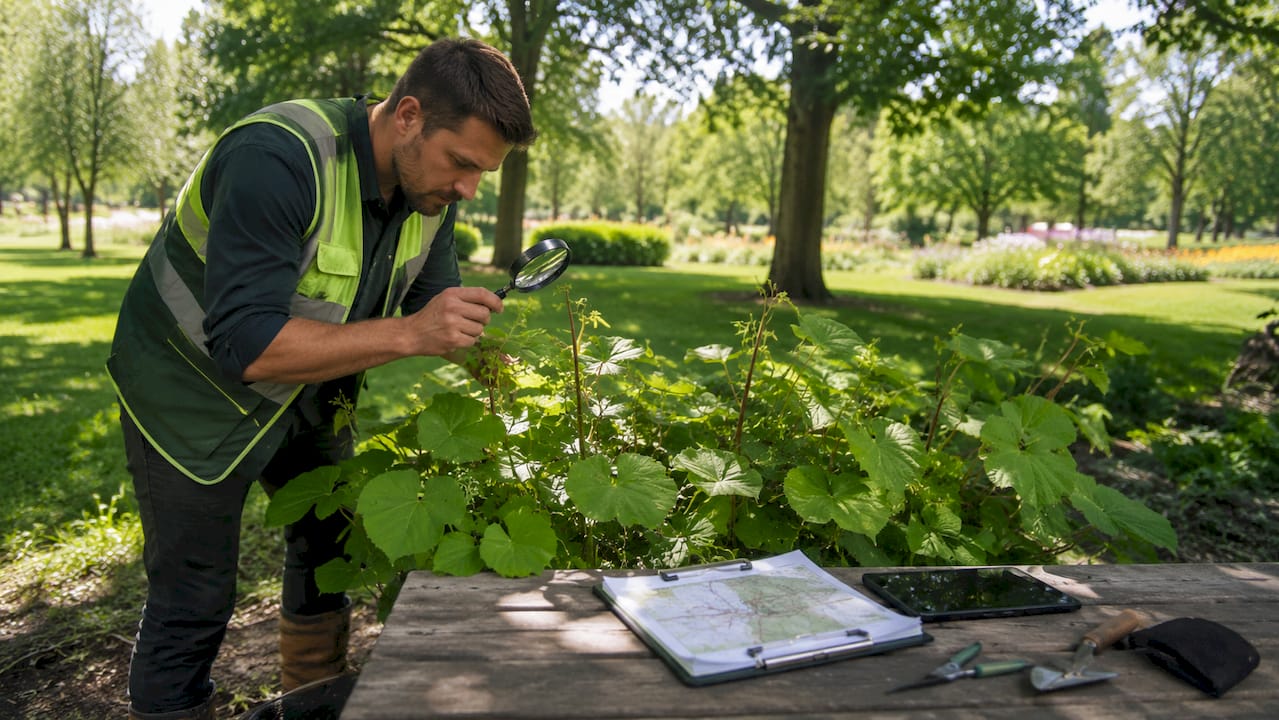
Weed surveying is defined as the systematic, methodical inspection of a property to identify the presence, species, quantity, and distribution of unwanted or invasive plants. For homeowners and property buyers, this process is far more than a gardening exercise. Unmanaged weed growth can reduce plant health by 25%–80% during early establishment stages, and invasive species like Japanese Knotweed carry serious financial and structural consequences. A professional weed identification survey gives you the evidence you need to act, negotiate, and protect your investment.
What is weed surveying and how does it work?
A weed survey is a structured site assessment carried out by a trained specialist. The surveyor walks the entire property, recording every weed species found, its location, approximate coverage, and condition. This goes well beyond a casual visual check. The goal is to produce a documented picture of the weed population across the site, from annual surface weeds to deep-rooted perennial species with extensive rhizome networks.
Professional surveys use a combination of methods to achieve this:
- Visual transect surveys: The surveyor walks set lines across the site, recording all species observed within a defined corridor on either side.
- Random quadrat sampling: Small sample areas are assessed at random points to estimate overall weed density and coverage.
- GPS and digital mapping: Professional weed surveys increasingly use GPS-enabled devices to log infestations with photographs and precise coordinates, producing accurate weed maps.
- Photographic records: Dated photographs support identification, track changes over time, and provide evidence for mortgage lenders or future buyers.
- Written report: The surveyor produces a formal report detailing species found, risk levels, distribution maps, and recommended management actions.
The time required depends on site size and complexity. A typical residential property survey takes one to three hours on site, with the written report delivered within a few working days.
Pro Tip: Commission your survey between april and october when most invasive species are in active growth. Japanese Knotweed, for example, is far easier to identify and map when its distinctive bamboo-like canes and heart-shaped leaves are fully visible.