
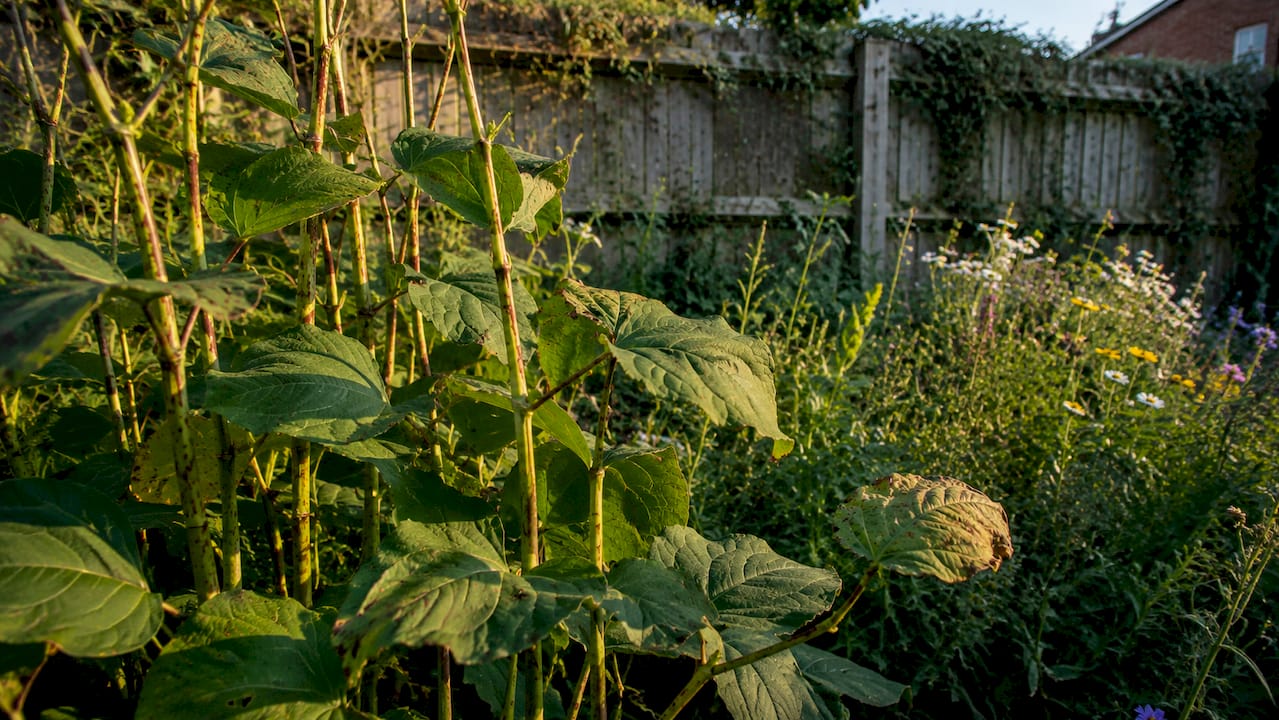
Japanese knotweed (Fallopia japonica) is defined as one of the most problematic invasive plant species in the United Kingdom, carrying real consequences for property value, mortgage applications, and legal disclosure obligations. Knowing how to recognise Japanese knotweed before you buy or sell a property is not optional. It is a practical necessity. This japanese knotweed identification guide covers every key visual feature, seasonal change, and common lookalike, so you can identify this plant with confidence and take the right steps to protect your property.
How do you recognise Japanese knotweed by its physical features?
Japanese knotweed has a set of physical characteristics that, taken together, make it unlike any other plant you will find in a British garden or boundary. The challenge is that these features change with the seasons, which is why so many homeowners miss it or misidentify it.
Leaves
Knotweed leaves are heart-shaped, sometimes described as shovel-shaped, and typically 10–15cm long. They grow in an alternating zig-zag pattern along the stem, with each leaf emerging from a different side. The tip of the leaf comes to a sharp point, and the base is flat rather than rounded. This flat base is one of the clearest distinguishing features when you hold a leaf in your hand.
Stems
Stems are hollow and bamboo-like, with clearly visible nodes at regular intervals. Fresh growth in spring and early summer often shows reddish-purple speckles on a green or purple stem. The stems are rigid and can reach considerable thickness by midsummer. In winter, the stems die back but remain standing as dry, hollow canes, which is a useful identification clue even when the plant is dormant.