

TL;DR:
- A professional weed survey systematically identifies and maps invasive plant species on a property.
- Timing during the growing season from April to October ensures more accurate detection, especially for species like Japanese Knotweed.
Weed surveying is defined as the systematic, methodical inspection of a property to identify the presence, species, quantity, and distribution of unwanted or invasive plants. For homeowners and property buyers, this process is far more than a gardening exercise. Unmanaged weed growth can reduce plant health by 25%–80% during early establishment stages, and invasive species like Japanese Knotweed carry serious financial and structural consequences. A professional weed identification survey gives you the evidence you need to act, negotiate, and protect your investment.
What is weed surveying and how does it work?
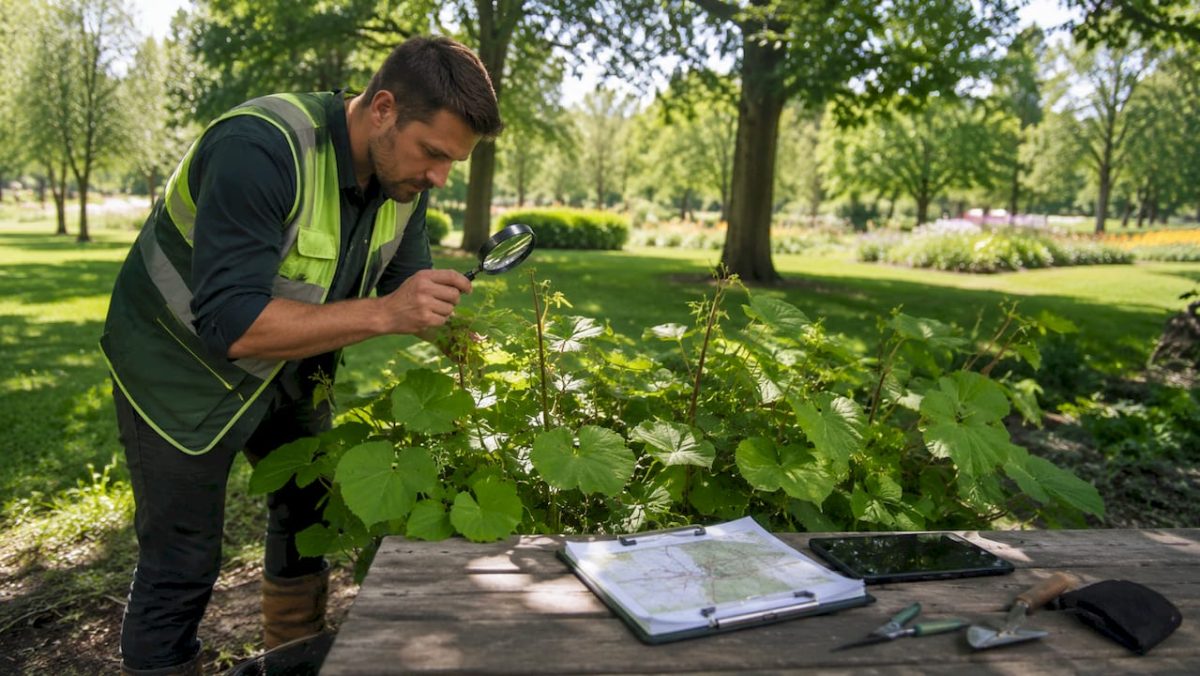
A weed survey is a structured site assessment carried out by a trained specialist. The surveyor walks the entire property, recording every weed species found, its location, approximate coverage, and condition. This goes well beyond a casual visual check. The goal is to produce a documented picture of the weed population across the site, from annual surface weeds to deep-rooted perennial species with extensive rhizome networks.
Professional surveys use a combination of methods to achieve this:
- Visual transect surveys: The surveyor walks set lines across the site, recording all species observed within a defined corridor on either side.
- Random quadrat sampling: Small sample areas are assessed at random points to estimate overall weed density and coverage.
- GPS and digital mapping: Professional weed surveys increasingly use GPS-enabled devices to log infestations with photographs and precise coordinates, producing accurate weed maps.
- Photographic records: Dated photographs support identification, track changes over time, and provide evidence for mortgage lenders or future buyers.
- Written report: The surveyor produces a formal report detailing species found, risk levels, distribution maps, and recommended management actions.
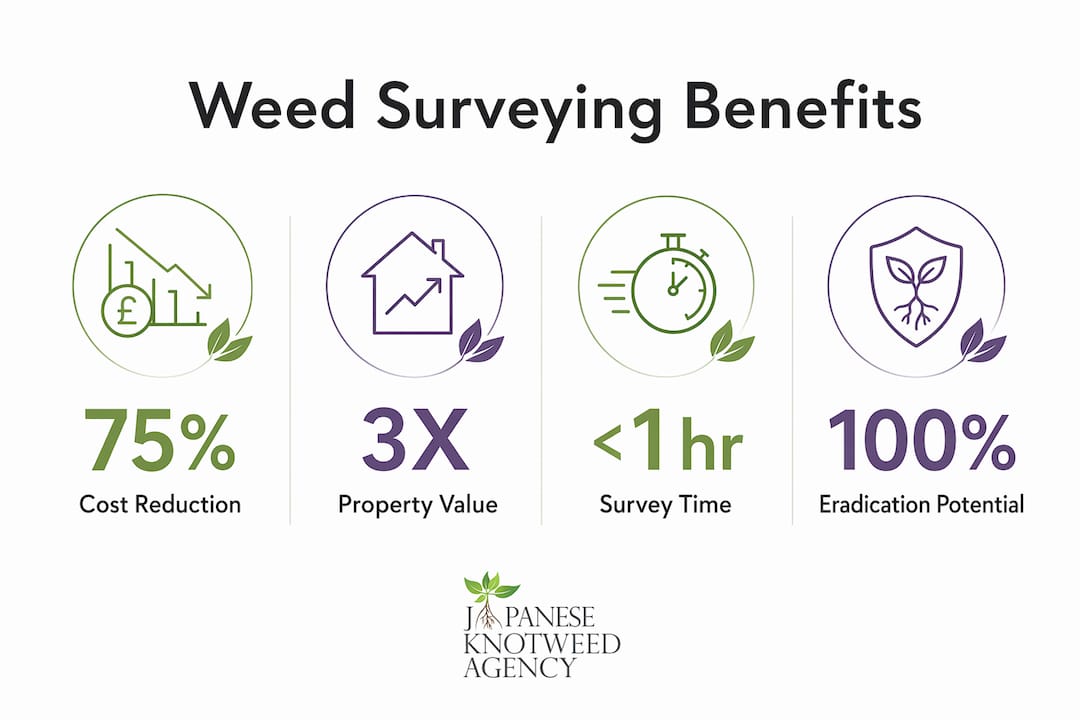
The time required depends on site size and complexity. A typical residential property survey takes one to three hours on site, with the written report delivered within a few working days.
Pro Tip: Commission your survey between april and october when most invasive species are in active growth. Japanese Knotweed, for example, is far easier to identify and map when its distinctive bamboo-like canes and heart-shaped leaves are fully visible.

Why does weed surveying matter for property value?
The financial case for weed surveying is clear. Annual global economic losses from invasive weed species are estimated at USD 32 billion. That figure reflects the combined cost of structural damage, agricultural yield loss, and remediation works. For individual homeowners, the numbers are smaller but no less serious.
Japanese Knotweed is the most prominent example in England, Wales, and Ireland. It can push through tarmac, undermine foundations, and block drainage systems. Mortgage lenders routinely decline applications or impose conditions on properties where knotweed is present without a management plan. The impact on property value can be significant, particularly where the infestation is close to structures.
A weed survey addresses this directly. It gives you:
- A documented baseline showing the current extent of any infestation
- A risk assessment that mortgage lenders and solicitors can review
- Evidence that you have taken the problem seriously, which supports sale negotiations
- A foundation for a targeted management plan that avoids unnecessary chemical use
Spot spraying guided by weed maps reduces herbicide costs compared to broadcast spraying across an entire site. That saving matters both financially and environmentally. Targeted treatment protects surrounding vegetation, soil biology, and biodiversity, all of which contribute to long-term property condition.
What are the common challenges in weed surveying?
The most significant challenge in weed surveying is the gap between what is visible above ground and what is active below it. Dormant weed roots and rhizomes can persist unnoticed for years, particularly in winter or during dry periods. A survey conducted outside the growing season may record no visible knotweed canes while the rhizome network remains fully intact beneath the surface.
Timing is therefore critical. The following considerations apply to every survey commission:
- Survey during the growing season. april to october gives the clearest picture of active infestations. Surveys in winter are possible but carry a higher risk of missing dormant perennial species.
- Do not rely on a standard home inspection. General home inspections lack invasive weed expertise. Surveyors qualified in structural matters are not trained to identify rhizome-based invasive species. Buyers of properties with mature gardens, derelict land, or proximity to waterways should commission a dedicated weed identification survey.
- Plan for follow-up surveys. A single survey is a snapshot. Integrated Weed Management requires repeated cycles of inspection, treatment, and monitoring. Annual follow-up surveys confirm whether treatment is working and catch any regrowth early.
- Consider soil and drainage conditions. Weed presence often signals underlying soil problems such as compaction or poor drainage. A thorough survey identifies these causal factors, enabling more lasting control.
- Verify the surveyor’s credentials. Look for specialists with demonstrable experience in invasive species identification, not general landscape contractors.
Pro Tip: If you are buying a property and the seller’s disclosure mentions Japanese Knotweed, request a copy of any existing management plan and survey reports. A property with documented treatment history is in a stronger position than one with no records at all.
How can homeowners use survey results to manage property risks?
A weed survey report is a working document, not a filing exercise. The most effective approach treats it as the starting point for an ongoing management cycle. Smartphone GIS apps now allow homeowners to maintain living records of weed status between professional surveys, supporting treatment tracking and providing proof of management for lenders or buyers.
Practical uses of survey results include:
- Negotiating on price or conditions: A survey confirming Japanese Knotweed presence gives a buyer grounds to renegotiate the purchase price or require the seller to fund a management plan before exchange.
- Securing a mortgage: Lenders require evidence of a professional management plan for properties affected by Japanese Knotweed. A survey report from a qualified specialist, combined with a treatment programme, satisfies most lender requirements.
- Planning targeted treatment: Survey maps show exactly where infestations are concentrated, enabling spot spraying or root barrier installation rather than blanket chemical application across the whole site.
- Monitoring progress: Dated survey records allow you to compare infestation extent year on year, demonstrating that management is effective.
The table below summarises how survey findings translate into practical property management decisions.
| Survey finding | Recommended action |
|---|---|
| Japanese Knotweed within 7 metres of a structure | Commission a professional management plan immediately; notify mortgage lender |
| Dormant rhizomes detected below surface | Schedule treatment for early spring growth flush; consider root barrier installation |
| Annual weeds only, no invasive species | Document findings; implement routine maintenance to prevent establishment |
| Multiple invasive species across site | Prioritise by proximity to structures and drainage; use weed maps to guide spot treatment |
| Weeds indicating soil compaction or drainage issues | Address underlying conditions alongside weed management for lasting results |
For a detailed walkthrough of the full survey process, the invasive weed survey guide published by Japaneseknotweedagency covers each stage from initial inspection through to treatment planning.
Key takeaways
A professional weed survey is the single most effective step a homeowner or property buyer can take to protect their investment from invasive species damage and the mortgage complications that follow.
| Point | Details |
|---|---|
| Weed surveying is a formal process | It identifies species, quantity, and distribution across a property using visual and digital methods. |
| Timing determines accuracy | Surveys conducted between april and october capture active growth and produce the most reliable results. |
| Standard inspections are not sufficient | Dedicated invasive species surveys are required for properties with mature gardens or proximity to waterways. |
| Survey reports support transactions | Documented findings and management plans satisfy mortgage lenders and support price negotiations. |
| Management is an ongoing cycle | Annual follow-up surveys confirm treatment effectiveness and catch regrowth before it escalates. |
Why I think homeowners underestimate weed surveying
The most common misconception I encounter is that a weed survey is only necessary when you can already see a problem. By the time Japanese Knotweed is visible above ground, the rhizome network below may already extend several metres in every direction. Waiting for visible evidence is the most expensive approach a property owner can take.
What I have found consistently is that homeowners who commission a survey before a problem becomes obvious are in a far stronger position, financially and legally, than those who act only after a lender or solicitor raises the issue. A survey conducted proactively costs a fraction of the remediation work that follows a missed or delayed diagnosis.
The other point worth making is that weed surveying is not a one-off task. Sustainable weed control requires repeated cycles of inspection and management. The properties I see managed most effectively are those where the owner treats the survey as an annual commitment rather than a single event. That discipline pays dividends when it comes to sale, remortgage, or simply maintaining the long-term condition of the land. For anyone considering their options, the comprehensive property risk assessment framework is worth reviewing as a starting point for understanding how survey data feeds into broader property risk management.
— Alan
Japaneseknotweedagency: expert weed surveys across England, Wales, and Ireland
Japaneseknotweedagency carries out professional property surveys for invasive weeds, with specialist expertise in Japanese Knotweed and other problematic species. Every survey includes detailed site mapping, photographic records, risk assessment, and a written report suitable for mortgage lenders and property solicitors.
Where treatment is required, Japaneseknotweedagency offers chemical-free thermo-electric treatment delivering up to 5,000 volts directly to the rhizome network, root barrier installation, and full excavation works. To arrange a survey or discuss your property’s specific situation, book a survey directly with the team.
FAQ
What is the weed survey definition used by professionals?
A weed survey is a systematic inspection of a site to identify, map, and quantify unwanted or invasive plant species. Professionals use visual assessment, transect methods, and GPS mapping to produce a formal report with risk ratings and management recommendations.
When is the best time to carry out a weed survey?
The growing season between april and october is the most reliable period for weed surveying. Invasive species like Japanese Knotweed are in active growth during this window, making identification and mapping significantly more accurate.
Does a standard home survey check for Japanese Knotweed?
Standard home surveys do not include specialist invasive weed assessments. Buyers should commission a dedicated invasive weed property survey separately, particularly for properties with mature gardens, derelict land, or nearby watercourses.
How do weed survey results affect a mortgage application?
Mortgage lenders require a professional management plan for properties with confirmed Japanese Knotweed. A survey report from a qualified specialist, combined with a documented treatment programme, is the standard evidence lenders accept before proceeding with an offer.
How often should a property weed survey be repeated?
Annual surveys are the recommended standard for properties with known invasive species. Repeated inspections confirm whether treatment is working, identify regrowth early, and maintain the documented management record that lenders and future buyers require.