

TL;DR:
- Drainage systems can carry invasive weed seeds and rhizome fragments, promoting rapid spread across sites. Proper management, including biosecurity protocols and physical barriers, reduces the risk of invasions and legal liabilities. Regular site monitoring and professional surveys are essential to prevent costly property damage and ecological harm.
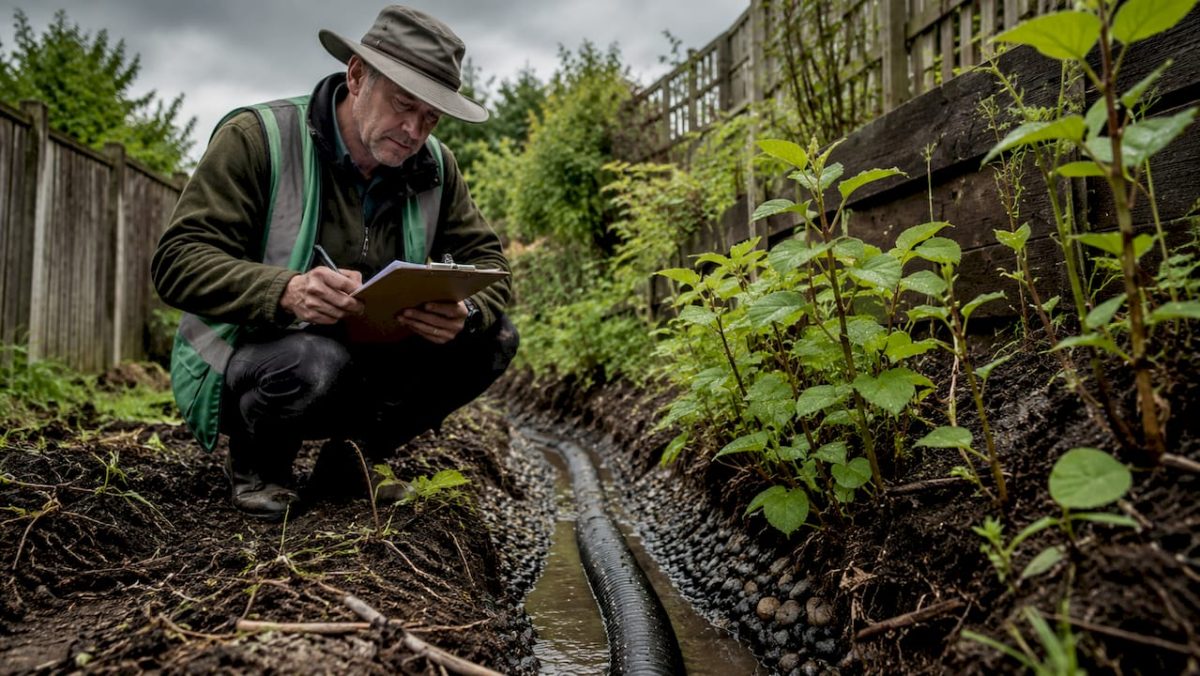
Drainage is defined as the primary mechanism by which water, soil particles, and plant material move across and through land, and the role of drainage in weed spread is far greater than most property owners and horticulturalists recognise. When drainage channels carry water, they also carry weed seeds, rhizome fragments, and propagules from one location to another, enabling invasive species such as Japanese knotweed and Himalayan balsam to colonise new ground rapidly. The Wildlife and Countryside Act 1981 Schedule 9 places a legal duty on landowners to prevent invasive non-native species from spreading, which makes understanding how drainage systems and weed spread interact a matter of both ecological responsibility and legal compliance.
How does drainage physically spread weeds across a site?
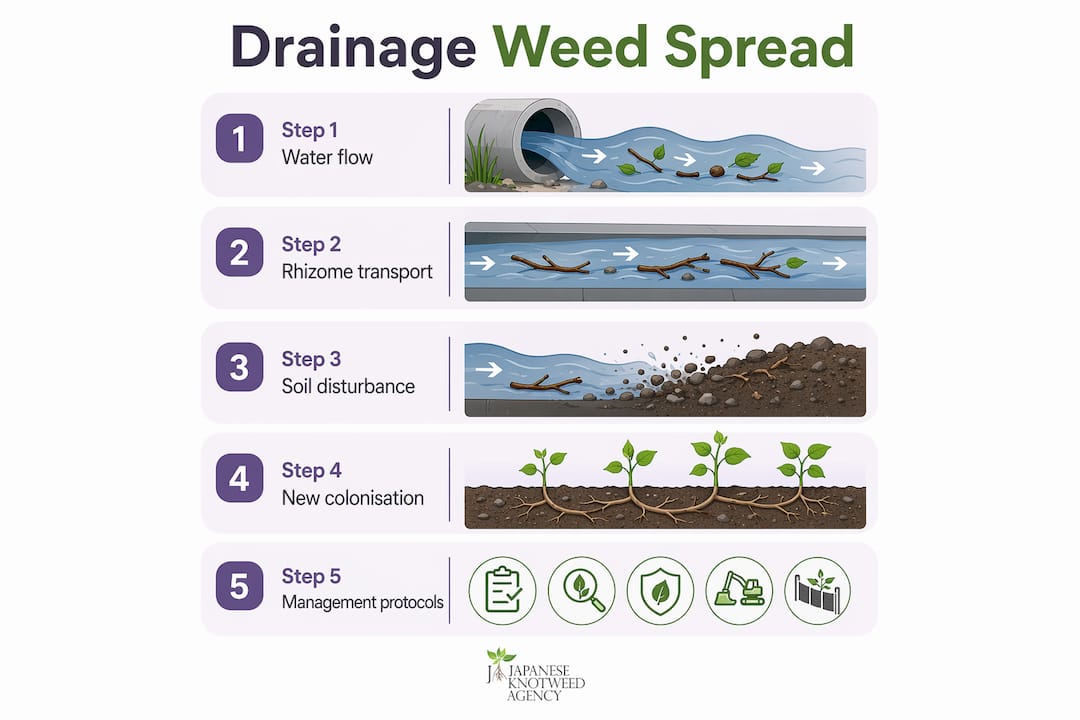
Water dispersal, known formally as hydrochory, is one of the most efficient natural mechanisms for transporting invasive plant propagules. Drainage channels, surface run-off pathways, and flood events all act as conveyors, moving seeds and rhizome fragments from established infestations into clean ground. Fluvial spread is a significant dispersal route for invasive plants, which explains why Japanese knotweed infestations cluster so heavily along riverbanks, drainage ditches, and culverts.
Japanese knotweed presents a particular challenge because its rhizomes are extraordinarily resilient. Rhizomes extend up to 7 metres laterally and 3 metres deep, and a fragment weighing as little as 1 gram can regenerate into a full plant. This means that drainage excavation work, which disturbs and fragments rhizome networks, creates one of the highest-risk vectors for spreading the species across a property or onto neighbouring land.
Soil disturbance during drainage installation and maintenance compounds the problem. Excavated spoil containing rhizome fragments, if moved without biosecurity controls, carries viable plant material to new locations. Himalayan balsam presents a different but equally serious risk: its seed pods explode on contact, dispersing seeds into drainage channels where water then transports them downstream. Both species exploit drainage systems as ready-made dispersal highways.
| Invasive species | Primary dispersal route | Rhizome/seed viability | Typical colonisation speed |
|---|---|---|---|
| Japanese knotweed | Rhizome fragments in water and spoil | Fragment from ~1g viable | Rapid; dense stand within one season |
| Himalayan balsam | Explosive seed dispersal into watercourses | Seeds viable in water | Colonises riverbanks and drainage margins quickly |
| Giant hogweed | Seeds carried by water flow | Seeds float and remain viable | Spreads along drainage corridors over multiple seasons |
Pro Tip: If you are planning any drainage work near an established invasive plant, commission a survey before excavation to map rhizome extent before a single spade enters the ground.
What drainage practices increase the risk of weed invasion?
Poor site management during drainage work is the leading cause of preventable invasive weed spread on UK properties. The following practices consistently increase risk:
- Moving excavated spoil off-site without testing. Soil containing rhizome fragments classified as controlled waste under the Environmental Protection Act 1990 must be handled and disposed of correctly. Moving contaminated spoil to a clean area of land is both an ecological and a legal offence.
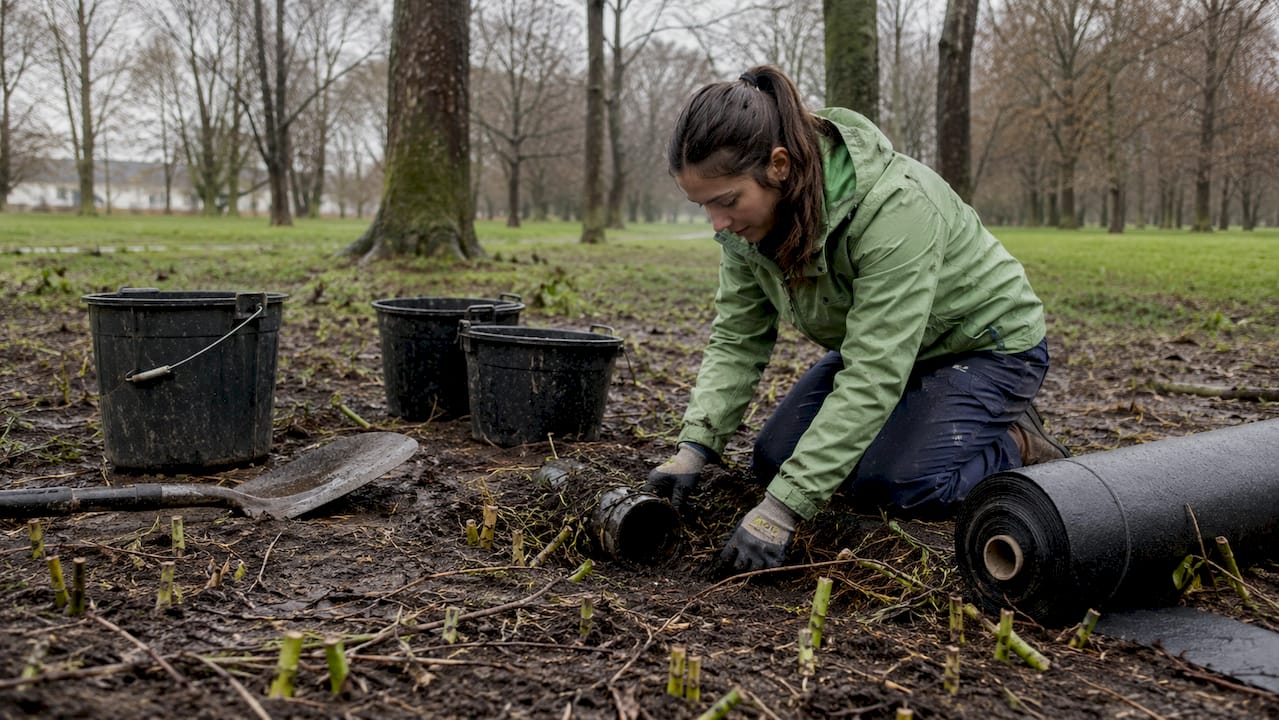
- Failing to clean machinery and footwear between zones. Plant and vehicle hygiene is essential to preventing spread. Designated boot wash stations and plant wash-down points reduce cross-contamination between infested and clean zones on the same site.
- Poor drainage design that creates stagnant water. Without suitable drainage, waterlogging occurs, creating damp, disturbed soil conditions that favour invasive plant establishment. Stagnant margins are particularly vulnerable to Himalayan balsam and reed-like invasives.
- Installing drainage without root protection measures. Drainage trenches cut through root barriers or impermeable liners create pathways for rhizomes to migrate laterally into previously protected ground.
- Ignoring legal obligations. The Wildlife and Countryside Act 1981 Schedule 9 prohibits causing invasive species to grow in the wild. Landowners who allow drainage work to spread knotweed onto neighbouring land face civil liability and potential enforcement action.
Pro Tip: Before any contractor begins drainage work on your land, ask specifically whether they have an invasive species management plan and biosecurity protocols. If they cannot produce one, that is a significant risk indicator.
How to manage drainage systems to minimise weed spread
Effective drainage management and invasive weed control are inseparable on sites where invasive species are present or suspected. The following measures reduce dispersal risk significantly.
- Install root barriers around drainage channels. High-density polyethylene root barriers installed vertically alongside drainage trenches prevent rhizome migration. Japaneseknotweedagency installs root barriers for invasive plant control as part of integrated site management programmes.
- Implement the ‘Check, Clean, Dry’ protocol. UK drainage authorities promote this protocol for all soil and equipment moving near water. Every item of machinery, every boot, and every vehicle should be checked for plant material, cleaned thoroughly, and dried before leaving an infested zone.
- Monitor drainage margins regularly. Early detection of new growth along drainage channels allows targeted removal before a colony establishes. Monthly inspections during the growing season (april through october) are the minimum standard for high-risk sites.
- Use stem injection near watercourses. Chemical use near watercourses is highly regulated, and herbicide consent from the Environment Agency is required. Stem injection is the preferred method because it delivers treatment directly into the plant, limiting run-off into drainage and aquatic environments.
- Integrate drainage plans with invasive species management plans. Any site with confirmed invasive species should have a written management plan that explicitly addresses drainage work sequencing, spoil handling, and post-work monitoring.
The comparison below shows how two drainage management approaches differ in weed spread risk:
| Management approach | Root barrier used | Biosecurity protocol | Weed spread risk |
|---|---|---|---|
| Uncontrolled drainage installation | No | None | High: rhizome fragments dispersed in spoil and water |
| Controlled drainage installation | Yes | Check, Clean, Dry applied | Low: dispersal pathways blocked and monitored |
Pro Tip: Chemical-free treatment methods such as thermo-electric treatment are particularly suitable near drainage channels and watercourses, where herbicide run-off poses an environmental risk.
What are the environmental and property risks of ignoring drainage’s role?
The consequences of failing to account for drainage’s influence on weed dispersal extend well beyond a garden nuisance. They affect property value, structural integrity, ecological health, and legal standing.
- Biodiversity loss. Invasive monocultures outcompete native vegetation along drainage margins, reducing habitat diversity and disrupting local ecosystems. Invasive monocultures increase soil erosion during winter die-back, accelerating run-off that clogs drainage systems and worsens flood risk on and around the property.
- Structural damage. Japanese knotweed rhizomes exploit weaknesses in drainage infrastructure, pushing through pipe joints, cracking culvert walls, and undermining foundations. The property damage potential of uncontrolled knotweed near drainage is well documented and can be costly to remediate.
- Financial risk. Mortgage lenders increasingly decline applications or require specialist management plans for properties with confirmed knotweed. The impact on property value is significant, particularly where drainage-related spread has allowed the plant to reach boundary walls or neighbouring land.
- Legal liability. Allowing invasive species to spread via poorly managed drainage exposes landowners to civil claims from neighbours and potential prosecution under the Wildlife and Countryside Act 1981. Contaminated spoil moved off-site without proper disposal also breaches controlled waste regulations.
Effective drainage systems that allow free water flow reduce stagnant conditions that otherwise foster weed seed germination and invasive plant proliferation. Proactive drainage design is therefore both an ecological and a financial safeguard.
Key takeaways
Drainage systems are active vectors for invasive weed dispersal, and managing them without biosecurity controls creates legal, financial, and ecological risks that are far costlier to resolve than to prevent.
| Point | Details |
|---|---|
| Drainage spreads rhizomes and seeds | Water flow carries viable plant fragments into clean ground, enabling rapid colonisation. |
| Excavation is high-risk | A rhizome fragment from ~1g can regenerate; drainage work must follow strict biosecurity protocols. |
| Legal duties apply | The Wildlife and Countryside Act 1981 Schedule 9 requires landowners to prevent invasive species spread. |
| Root barriers and ‘Check, Clean, Dry’ work | Physical barriers and hygiene protocols are the most effective controls during drainage installation. |
| Early detection reduces cost | Regular monitoring of drainage margins allows targeted removal before infestations establish. |
Drainage and weeds: what experience has taught me
Most property owners I speak with are surprised to learn that their drainage contractor may be the single biggest risk factor for a new knotweed infestation. The plant itself does not walk onto your land. It arrives in contaminated spoil, on unwashed machinery, or in water flowing through a drainage channel from an adjacent infested site. That is a preventable problem, and yet it remains one of the most common causes of new infestations I encounter on survey.
The other thing I have noticed over years of working with invasive species is that drainage and weed management are almost always planned in isolation. A drainage engineer designs a system for water management. An ecologist writes a knotweed management plan. Neither document references the other. The result is drainage trenches cut through containment zones, spoil moved without testing, and infestations that double in size within a single growing season.
My advice is straightforward. If your site has any invasive species present, or if you are buying land where drainage work has recently been carried out, commission a professional survey before you proceed. Understanding what is in the ground, and where the rhizome network extends, is the only basis for safe drainage planning. Sustainable, chemical-free management near watercourses is achievable, but it requires coordination between drainage design and invasive species control from the outset.
— Alan
Japaneseknotweedagency: professional support for drainage-related weed risks

Japaneseknotweedagency carries out professional weed surveys across England, Wales, and Ireland, providing property owners and horticulturalists with a clear picture of invasive species extent before any drainage or excavation work begins. Early detection is the most cost-effective intervention available, and a survey report provides the evidence base needed for mortgage applications, planning submissions, and contractor briefings.
Where treatment is required, Japaneseknotweedagency delivers thermo-electric treatment at up to 5,000 volts directly into the rhizome network, causing internal cell damage without the use of herbicides. This method is particularly suited to sites near drainage channels and watercourses where chemical run-off is a concern. Root barrier installation and controlled excavation are also available as part of a fully managed programme. To discuss your site or book a survey, contact Japaneseknotweedagency directly. Full answers to common questions are available on the Japaneseknotweedagency FAQ page.
FAQ
How does drainage spread Japanese knotweed?
Drainage channels transport rhizome fragments and seeds in moving water, depositing viable plant material in new locations. A fragment as small as 1 gram can regenerate into a full plant, making drainage one of the highest-risk dispersal vectors for Japanese knotweed.
Is it illegal to spread Japanese knotweed through drainage work?
Yes. The Wildlife and Countryside Act 1981 Schedule 9 prohibits causing Japanese knotweed to grow in the wild. Landowners and contractors who allow drainage work to spread the plant onto neighbouring land face civil liability and potential enforcement action.
What is the ‘Check, Clean, Dry’ protocol?
‘Check, Clean, Dry’ is a biosecurity protocol promoted by UK drainage authorities requiring all soil, equipment, and footwear to be inspected for plant material, cleaned thoroughly, and dried before leaving an infested zone. It is the standard measure for preventing invasive species spread during drainage work.
Can drainage design prevent weed spread?
Yes. Effective drainage design that incorporates root barriers, impermeable liners, and free-flowing water management reduces the stagnant conditions and physical pathways that enable invasive weeds to colonise new ground.
Do I need a survey before drainage work near invasive weeds?
A survey is strongly recommended before any drainage or excavation work on land where invasive species are present or suspected. Mapping the rhizome network in advance prevents accidental fragmentation and dispersal, reducing both remediation costs and legal risk.