

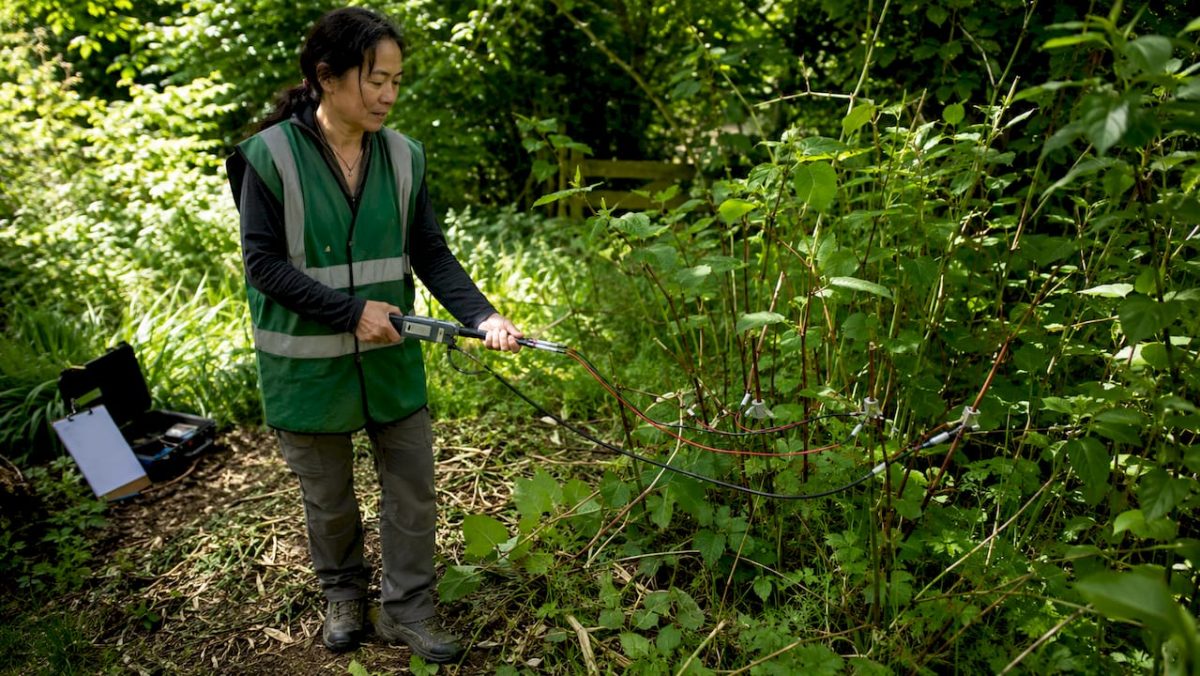
TL;DR:
- On-site energy treatment uses high-voltage electrical energy to target invasive plant roots without herbicides. It reduces environmental risks, property disruption, and costs by eliminating soil contamination and excavation needs. Proper site assessment and monitoring are essential for effective, environmentally friendly control of Japanese knotweed.
On-site energy treatment is defined as the direct delivery of electrical energy to invasive plant tissue at the location of the infestation, causing internal cell damage and depleting the rhizome network without the use of herbicides. For homeowners and property managers dealing with Japanese knotweed, this method offers a genuinely different approach. The benefits of on-site energy treatment include eliminating chemical risk, reducing logistical complexity, and protecting the surrounding environment. Japaneseknotweedagency delivers up to 5,000 volts directly to the plant on-site, targeting the root system with each treatment cycle. This article sets out the practical, environmental, and financial advantages of this approach so you can make an informed decision for your property.
1. What are the main environmental benefits of on-site energy treatment?

Thermo-electric treatment removes the need for herbicides entirely. This matters because chemical treatments carry a risk of soil contamination, groundwater run-off, and harm to non-target plant species. Properties near watercourses, wildlife habitats, or organic gardens are particularly exposed to these risks when conventional herbicide programmes are used.
On-site energy solutions cause no chemical residue in the soil. The electrical current targets the plant’s vascular system directly, leaving the surrounding soil biology intact. This supports biodiversity recovery on treated land, which is a growing priority for property managers working to meet green land management standards.
- No herbicide residue remains in the soil or groundwater after treatment.
- Neighbouring gardens and ecosystems face no risk of chemical drift or run-off.
- Soil structure and microbial activity are preserved throughout the treatment process.
- Wildlife habitats adjacent to the treatment zone are not compromised.
- The method aligns with chemical-free property management commitments increasingly required by local planning authorities.
The chemical-free treatment advantages of this approach are particularly relevant where planning conditions or conservation designations restrict herbicide use. Energy-based treatment gives you a compliant, effective alternative.
Pro Tip: If your property borders a Site of Special Scientific Interest (SSSI) or a watercourse, confirm with your local authority whether herbicide use is restricted before committing to any treatment programme. On-site energy treatment is typically unrestricted in these settings.
2. How does on-site energy treatment reduce costs and operational complexity?
The financial case for on-site energy treatment is grounded in reduced dependency on external suppliers and repeat chemical purchases. Traditional herbicide programmes require multiple applications over several growing seasons, each involving product procurement, licensed contractor attendance, and waste disposal. On-site treatment systems reduce the frequency of external logistics, simplifying site management and cutting operational costs over time.
Excavation is the most disruptive and expensive removal method. It requires heavy machinery, significant ground works, and the removal and disposal of contaminated soil as controlled waste. On-site energy treatment avoids all of this. There is no requirement to break ground, remove soil, or arrange specialist waste transport.
- No controlled waste disposal. Treated plant material degrades in situ, removing the cost and legal complexity of contaminated soil removal.
- Reduced contractor visits. Each treatment session is targeted and efficient, with no requirement for multiple licensed chemical applicators.
- No chemical procurement costs. The treatment relies on electrical energy delivered on-site, not on repeat herbicide purchases.
- Lower site disruption. Gardens, driveways, and structures remain undisturbed throughout the treatment programme.
- Faster deployment. Japaneseknotweedagency can mobilise treatment without the lead times associated with chemical supply chains or excavation planning.
For property developers and managers assessing real estate funding sources and project timelines, the reduced disruption and lower remediation costs of energy-based treatment can improve overall project viability.
Pro Tip: Request a written treatment plan before any work begins. A clear plan sets out the number of sessions required, the expected depletion timeline, and the monitoring schedule. This protects you if the infestation is later disputed during a property sale.
3. What are the key technical advantages of on-site energy solutions?
Japaneseknotweedagency delivers electrical energy at up to 5,000 volts directly into the plant’s stem and rhizome network. This voltage level causes internal cell rupture and progressively depletes the energy reserves stored in the root system. Each treatment session builds on the last, weakening the plant’s capacity to regenerate.
The method is well-suited to residential gardens, boundary disputes, and properties where access for machinery is limited. It does not require large equipment or significant site preparation. Treatment can be carried out in confined spaces, including alongside walls, fences, and hard surfaces where knotweed frequently establishes.
Integrated energy systems deliver greater value than standalone installations when generation, storage, and management are combined. The same principle applies to invasive plant treatment: the most effective programmes combine energy treatment with a structured monitoring schedule and, where appropriate, root barrier installation to prevent lateral spread.
Maintenance and active monitoring are critical to sustaining performance over time. Treatment sessions must be timed to the plant’s active growth phases to maximise depletion of the rhizome network.
| Method | Chemical use | Ground disruption | Suitable for confined spaces | Ongoing monitoring needed |
|---|---|---|---|---|
| On-site energy treatment | None | Minimal | Yes | Yes |
| Herbicide programme | Yes | Minimal | Yes (with restrictions) | Yes |
| Excavation | None | Significant | Limited | No |
4. When is on-site energy treatment the best choice?
On-site energy treatment is the strongest option when chemical use is restricted, when ground disruption must be avoided, or when the infestation is identified early and the rhizome network has not yet spread extensively. It is also the preferred method for properties where mortgage lenders require a management plan that avoids herbicide use.
Matching treatment capacity to the site profile is the starting point for any effective programme. A professional survey establishes the extent of the infestation, the depth of the rhizome system, and any structural risks before treatment begins. Proceeding without a survey risks under-treating the infestation or missing lateral spread beyond the visible growth.
- Properties with knotweed near boundary walls, drainage systems, or building foundations benefit most from non-invasive energy treatment.
- Sites subject to planning conditions restricting herbicide use require a chemical-free approach by default.
- Early-stage infestations respond well to energy treatment, with fewer sessions needed to achieve depletion.
- Properties being prepared for sale benefit from a documented, chemical-free treatment record that satisfies mortgage lender requirements.
- Where neighbours are affected, energy treatment avoids any risk of chemical trespass onto adjacent land.
A professional invasive weed survey is the correct first step. It defines the scope of the problem and ensures the treatment programme is calibrated to your specific site conditions. Skipping this stage is the most common and costly mistake property owners make.
Site-specific assessment is often the factor that determines whether a treatment programme succeeds or stalls. Permitting and planning requirements can delay projects when they are not identified early. The same applies to invasive plant management: early assessment prevents delays and cost overruns.
Key takeaways
On-site energy treatment is the most effective chemical-free method for managing Japanese knotweed, combining environmental safety, low site disruption, and a targeted approach to rhizome depletion.
| Point | Details |
|---|---|
| No chemical residue | Energy treatment leaves no herbicide in soil or water, protecting biodiversity and neighbouring land. |
| Lower operational costs | Reduced logistics, no waste disposal, and fewer contractor visits cut the overall cost of treatment. |
| Suited to confined sites | Up to 5,000 volts can be delivered in spaces where excavation machinery cannot operate. |
| Survey first | A professional site assessment is required to calibrate treatment to the actual extent of the infestation. |
| Monitoring sustains results | Active monitoring between sessions is critical to confirm rhizome depletion and prevent regeneration. |
Why I think the industry is finally catching up with what on-site energy treatment offers
Having worked across a wide range of invasive plant projects in England and Wales, I have seen the same pattern repeat itself. Property owners arrive having already spent two or three seasons on a herbicide programme, frustrated that the knotweed keeps returning. The rhizome network was never fully depleted. The chemical treatment suppressed the visible growth without addressing the energy reserves stored underground.
What strikes me most about thermo-electric treatment is that it targets the plant where it actually lives. Knotweed does not survive above ground. It survives in the rhizome network, sometimes extending three metres deep and seven metres laterally. Every treatment method that does not address that network is, at best, a delay.
The misunderstanding I encounter most often is that chemical-free means less effective. The evidence from completed projects does not support that view. What chemical-free treatment requires is patience, a proper survey, and a structured monitoring schedule. The energy-based removal process is not a single-visit solution, and neither is any other responsible treatment approach.
The future of invasive plant management in the UK is moving towards methods that satisfy both ecological and regulatory requirements. On-site energy treatment sits at that intersection. Property managers who adopt it now are ahead of where planning and mortgage lending requirements are heading.
— Alan
How Japaneseknotweedagency approaches on-site energy treatment
Japaneseknotweedagency specialises in chemical-free eradication of Japanese knotweed and other invasive species across England, Wales, and Ireland. Every treatment programme begins with a professional property survey to establish the extent of the infestation and identify any structural risks.

Treatment delivers direct electrical energy at up to 5,000 volts into the plant’s stem and rhizome network, causing progressive cell damage and depleting the root system with each session. For properties where lateral spread is a concern, root barrier installation is available alongside the energy treatment programme. The chemical-free solutions guide sets out how these methods work together. To start with a professional assessment of your property, book a survey with Japaneseknotweedagency today.
FAQ
What is on-site energy treatment for Japanese knotweed?
On-site energy treatment delivers direct electrical voltage into the knotweed plant and its rhizome network, causing internal cell damage and depleting the root system without herbicides. Japaneseknotweedagency uses up to 5,000 volts per treatment session.
How many treatment sessions are needed?
The number of sessions depends on the extent and depth of the rhizome network, which a professional survey establishes before treatment begins. Most programmes involve multiple sessions timed to the plant’s active growing phases.
Is on-site energy treatment safe for neighbouring properties?
Yes. The electrical energy is delivered directly to the target plant with no chemical residue, no soil contamination, and no risk of run-off onto adjacent land or watercourses.
Does energy treatment satisfy mortgage lender requirements?
A documented, professional treatment programme using chemical-free methods is accepted by many mortgage lenders as evidence of responsible knotweed management. A property survey and written treatment plan are the starting point for any lender-compliant programme.
Can on-site energy treatment be used near buildings and hard surfaces?
Yes. The method requires no excavation and no heavy machinery, making it suitable for confined spaces including areas adjacent to walls, foundations, driveways, and drainage systems.