
TL;DR:
- Property weed risk mapping identifies invasive plant threats on a property through site inspections and detailed reports. It influences property value, mortgage approvals, and management strategies by assessing infestation severity and spread risks. Early mapping enables proactive treatment, reducing long-term costs and avoiding sale delays.
Property weed risk mapping is a site-specific environmental assessment that identifies, locates, and evaluates invasive plant species on a property to determine their threat to ecology, infrastructure, and market value. The process is formally known in ecological practice as an invasive species survey or injurious weed survey, and it sits at the intersection of environmental compliance and property law. With over 1.58 million UK properties affected by Japanese knotweed alone as of 2026, understanding what property weed risk mapping involves is no longer optional for property owners, buyers, or organisations managing land. Japaneseknotweedagency carries out these surveys across England, Wales, and Ireland, applying specialist knowledge to protect both ecological integrity and property value.
What is property weed risk mapping and how is it conducted?
Property weed risk mapping is the structured process of surveying land for invasive plant species, recording their location and density, and producing a professional report that guides remediation. Ecological consultants use a combination of desktop research and physical site inspection to build a complete picture of infestation risk. The output informs planning decisions, mortgage applications, and long-term management plans.
The process follows a clear sequence:
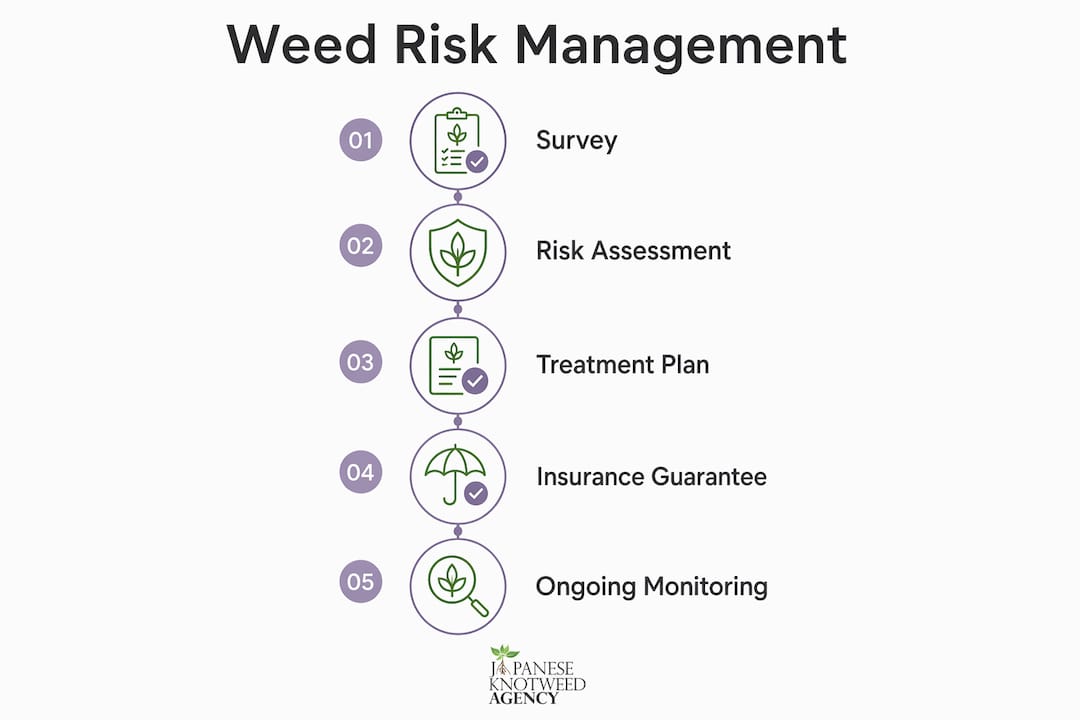
- Desktop research. The surveyor reviews historical maps, aerial imagery, and land registry data to identify areas with known invasive species activity before visiting the site.
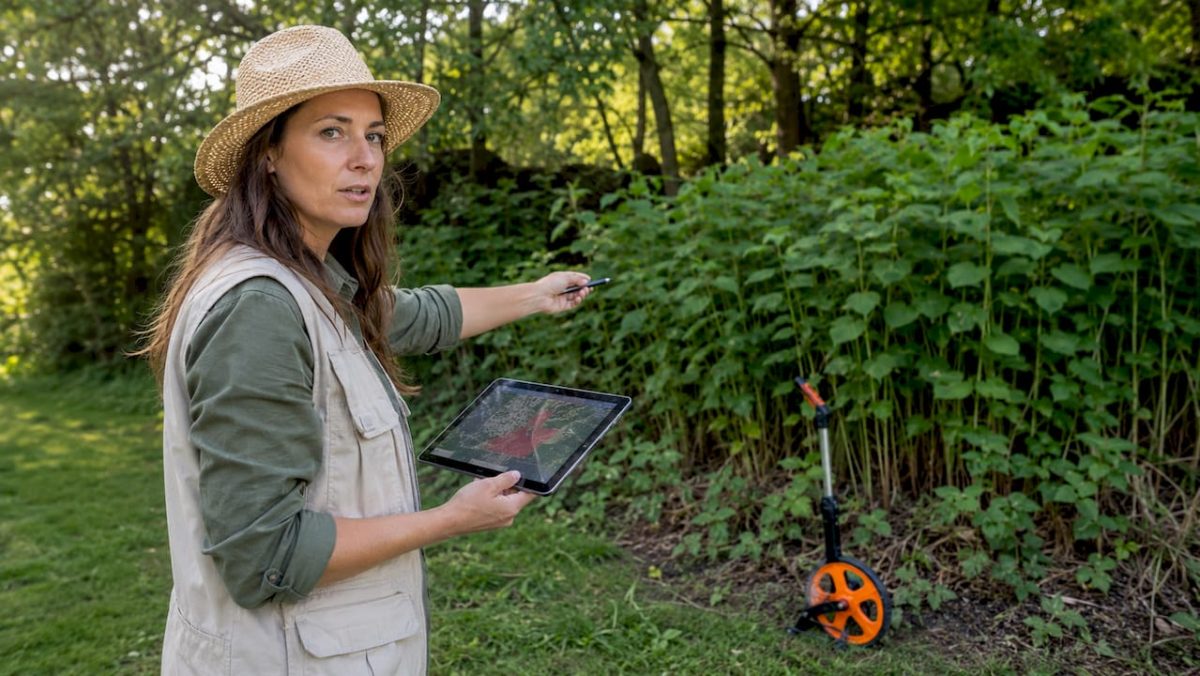
- Physical site inspection. A qualified ecologist visits the property to identify species by visual characteristics, growth patterns, and seasonal indicators. Accurate species identification at this stage is critical, as misidentification leads to incorrect risk scores and inadequate management plans.
- Infestation mapping. The surveyor records the precise location, density, and extent of each infestation using GPS or GIS-based mapping tools. Detailed infestation mapping documents spread potential and proximity to structures, drainage systems, and neighbouring land.
- Spread risk analysis. The report assesses how far rhizomes or seeds could travel, whether drainage or soil disturbance has accelerated spread, and what structures are at immediate risk.
- Management plan development. The surveyor produces a professional remediation plan, which typically includes treatment methods, timelines, and an insurance-backed guarantee to satisfy mortgage lenders.
Pro Tip: Book a property weed survey before listing a property for sale. Lenders and buyers increasingly request survey reports upfront, and having one ready prevents delays at the point of exchange.
Property weed risk scoring is the numerical or categorical output of this process. It ranks the severity of infestation by proximity to structures, species aggressiveness, and spread potential. A high risk score triggers a formal management plan; a low score may require only monitoring.
How does weed risk mapping affect property value and mortgage lending?
Invasive weeds carry a financial penalty that extends well beyond the cost of removal. Japanese knotweed reduces property value by approximately 5%, equating to around £13,500 per affected home, with a combined national housing market loss estimated at £21.4 billion. That figure reflects not just treatment costs but the persistent stigma attached to affected properties.
Buyer behaviour reinforces this. A third of British adults would refuse to purchase a property with Japanese knotweed under any circumstances. A further 31% would consider buying only if a professional management plan is in place and the price is reduced. This “knotweed stigma” can stall a sale entirely, even when the infestation is minor and fully treatable.
Mortgage lenders respond to this risk with strict criteria:
- Most mainstream lenders require an insurance-backed management plan before approving a mortgage on an affected property.
- Sellers have been legally obliged to disclose knotweed on the TA6 property information form since 2013. Failure to disclose is a legal liability.
- Mortgage approval on knotweed properties is possible, but only with a specialist survey report and a lender-accepted remediation plan.
- Some lenders will not lend at all if knotweed is within seven metres of a habitable structure, regardless of management plans.
Andrew McColl notes that the financial burden of mandatory multi-year management and the stigma attached to knotweed can derail property sales beyond the biological risk itself. The mapping report is therefore not just an ecological document. It is a financial instrument that determines whether a sale can proceed.
Which invasive weed species are surveyed and what risks do they pose?
Several invasive species appear regularly in UK property surveys, each carrying distinct structural and ecological risks. Accurate identification during mapping determines the correct risk score and the appropriate management response.

| Species | Primary risk to property | Ecological impact |
|---|---|---|
| Japanese knotweed | Pushes through tarmac, patios, drains, and foundations | Outcompetes native plants, reduces biodiversity |
| Giant hogweed | Causes severe skin burns; restricts safe land use | Colonises riverbanks, increases erosion risk |
| Himalayan balsam | Rapid spread along watercourses | Destabilises riverbanks, increases flood risk |
| Rhododendron ponticum | Damages woodland structure | Suppresses native understorey, harbours Phytophthora |
| Buddleia | Colonises walls and masonry | Structural damage through root penetration |
Japanese knotweed remains the most surveyed species because its root network spreads over a metre deep, competing aggressively with native vegetation and penetrating drainage systems and building foundations. Untreated infestations spread to neighbouring land, creating legal liability for the landowner under the Wildlife and Countryside Act 1981 and the Infrastructure Act 2015. Japaneseknotweedagency surveys cover all major invasive species, not just knotweed, because mixed infestations are common and each species requires a tailored response.
What weed management strategies follow a risk mapping survey?
A completed risk mapping report is the starting point for treatment, not the end of the process. Effective weed management strategies depend on species, infestation size, proximity to structures, and lender requirements.
The main post-survey management options are:
- Thermo-electric treatment. Japaneseknotweedagency delivers direct energy up to 5,000 volts into the plant, causing internal cell damage and depleting the rhizome network’s energy reserves. This chemical-free treatment achieves around 95% success with professional implementation and ongoing monitoring.
- Root barrier installation. Physical HDPE root barriers are installed to contain rhizome spread, particularly where excavation is not feasible near structures or boundaries.
- Excavation. Full removal of contaminated soil is the fastest resolution but carries the highest cost. Permanent removal averages £1,910, though complex sites cost considerably more.
- Long-term monitoring. All management plans include scheduled monitoring visits. Treatment and control of invasive weeds require 5–10 years of commitment for lender-acceptable remediation.
Pro Tip: Request an insurance-backed guarantee with any management plan. Without it, most mortgage lenders will not accept the plan as sufficient security, regardless of the treatment method used.
The Royal Institution of Chartered Surveyors (RICS) guidance on Japanese knotweed sets the benchmark for how surveyors assess and categorise risk. Management plans that align with RICS categories carry greater weight with lenders and buyers alike.
Key takeaways
Property weed risk mapping is the most reliable method for identifying invasive species threats early, satisfying mortgage lender requirements, and protecting long-term property value.
| Point | Details |
|---|---|
| Definition of weed risk mapping | A site-specific survey that identifies, maps, and scores invasive plant threats to a property. |
| Financial impact | Japanese knotweed reduces property value by approximately 5%, with a national market loss of £21.4 billion. |
| Mortgage compliance | Lenders require an insurance-backed management plan; disclosure via the TA6 form has been legally required since 2013. |
| Treatment options | Chemical-free thermo-electric treatment achieves around 95% success; excavation and root barriers are additional options. |
| Remediation timeline | Effective management typically spans 5–10 years; early professional involvement reduces overall cost and risk. |
Why early mapping matters more than most property owners realise
The most common mistake I see is property owners treating weed risk mapping as a reactive measure, something they commission only after a surveyor flags a problem during a sale. By that point, the infestation has often been growing for years, the rhizome network is well established, and the management timeline stretches further than it needed to.
Early identification changes the outcome significantly. A small, contained infestation identified three years before a planned sale gives a property owner time to complete treatment, obtain an insurance-backed guarantee, and present a clean record to buyers and lenders. The same infestation discovered during conveyancing creates a crisis: delayed exchange, renegotiated price, and a buyer who may walk away entirely.
The other misunderstanding I encounter regularly is around remediation speed. Property owners expect a single treatment season to resolve the problem. The biology does not work that way. The rhizome network stores energy reserves that sustain regrowth across multiple seasons. Professional management plans account for this, which is why lenders require multi-year commitments rather than one-off treatments.
Viewing weed risk mapping as proactive asset protection, rather than a compliance burden, is the shift that makes the biggest practical difference. It is the same logic as a structural survey before purchase. You commission it to understand what you are buying and to make informed decisions, not because you expect the worst.
— Alan
How Japaneseknotweedagency can help with your property weed survey
Japaneseknotweedagency carries out specialist invasive weed surveys across England, Wales, and Ireland, producing detailed risk mapping reports that meet mortgage lender and planning authority requirements.

The survey process covers all major invasive species, with precise infestation mapping, spread risk analysis, and a professional management plan where required. Treatment options include chemical-free thermo-electric methods, root barrier installation, and excavation, all backed by insurance-backed guarantees that satisfy mainstream lenders. Whether you are buying, selling, or managing land with a known infestation, book a professional survey to get a clear picture of your risk and a clear path forward. For further guidance on treatment and management, the plant eradication survey guide covers the full process in detail.
FAQ
What is property weed risk mapping?
Property weed risk mapping is a professional survey that identifies and records invasive plant species on a site, assesses their spread potential, and produces a risk-scored report to guide management and satisfy mortgage lender requirements.
Does Japanese knotweed always reduce property value?
Japanese knotweed reduces property value by approximately 5% on average, though the impact depends on infestation size, proximity to structures, and whether a lender-accepted management plan is in place.
Do I need to disclose Japanese knotweed when selling?
Sellers have been legally required to disclose Japanese knotweed on the TA6 property information form since 2013. Failure to disclose creates legal liability after completion.
How long does invasive weed treatment take?
Effective treatment and control of invasive weeds typically requires 5–10 years of professional management. Single-season treatments rarely satisfy mortgage lender requirements without a multi-year monitoring commitment.
What is property weed risk scoring?
Property weed risk scoring is the numerical or categorical rating assigned during a weed risk assessment. It reflects infestation severity, proximity to structures, and spread potential, and it determines whether a formal management plan is required for mortgage or planning purposes.