

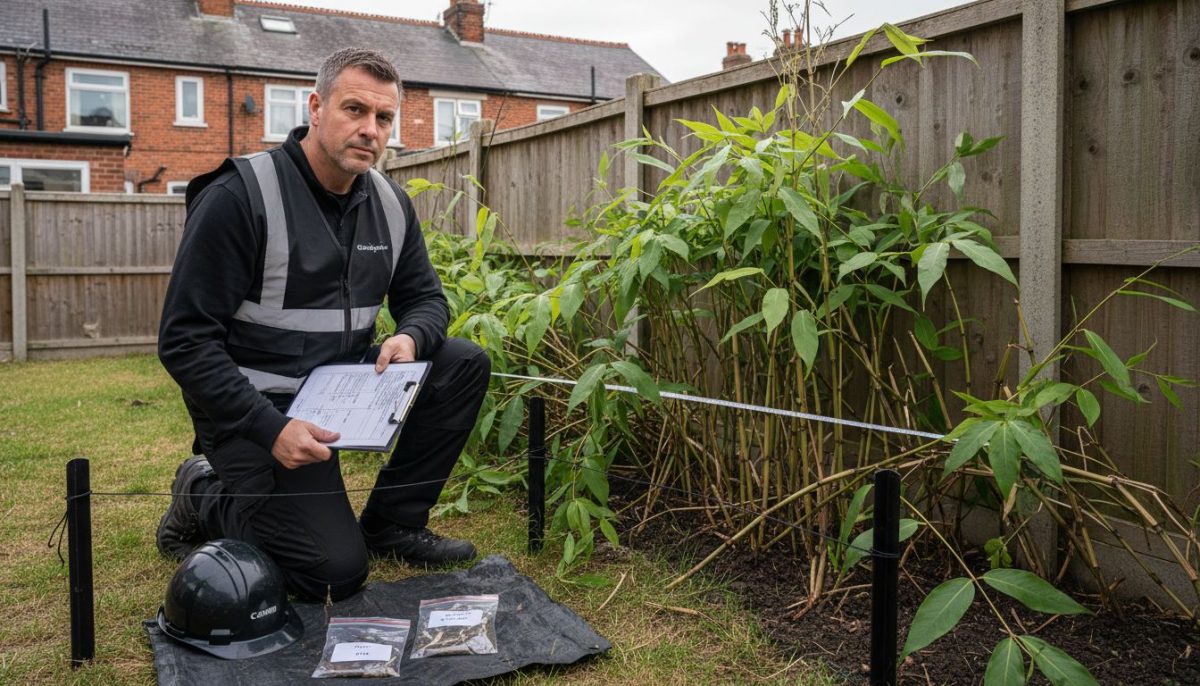
Most american homeowners have never faced a weed quite like Japanese knotweed, yet its spread in the United Kingdom is causing serious concern. This plant’s underground rhizome network can reach up to seven meters, making complete removal extremely complex and costly. Misconceptions about Japanese knotweed often lead to poor management and legal headaches. Understanding the truth behind these myths empowers you to recognize the real risks and take practical steps before minor sightings turn into major problems.
Table of Contents
- Japanese Knotweed Defined And Common Myths
- Recognizing Japanese Knotweed Growth And Spread
- Legal Status And Homeowner Obligations In The UK
- Modern Chemical-Free Eradication Methods
- Risks Of Inaction And Property Implications
Key Takeaways
| Point | Details |
|---|---|
| Japanese Knotweed Characteristics | This invasive plant grows aggressively, spreading primarily through its extensive underground rhizome network, making eradication challenging. |
| Common Myths | Popular misconceptions include beliefs that knotweed can grow through concrete or that cutting it will eliminate it, which are false. |
| Legal Responsibilities | Homeowners are not required to remove knotweed but must prevent its spread to neighboring properties and follow legal waste disposal guidelines. |
| Risks of Inaction | Ignoring knotweed can lead to decreased property values, potential legal liabilities, and increased remediation costs over time. |
Japanese Knotweed Defined And Common Myths
Japanese knotweed (Fallopia japonica) is an incredibly resilient invasive plant species that has become a significant environmental and property management challenge across the United Kingdom. According to Gov UK, this plant was introduced to the UK in the 19th century and is notorious for its aggressive growth patterns and potential to cause substantial structural damage.
The plant’s most distinctive characteristic is its extensive rhizome network, which allows it to spread rapidly underground. Garden Organic highlights that contrary to popular belief, Japanese knotweed rarely produces viable seeds in the UK, instead propagating through its complex root system. This underground network can extend several meters horizontally and vertically, making eradication extremely challenging.

Numerous myths surround Japanese knotweed, often exaggerating its capabilities. Common misconceptions include:
- The plant can grow through solid concrete (False: it exploits existing structural weaknesses)
- Knotweed seeds are the primary method of spread (False: rhizome network is the main propagation method)
- Small patches can be easily removed by homeowners (False: professional intervention is typically required)
- Cutting the plant will kill it (False: this can actually stimulate more aggressive growth)
Understanding the true nature of Japanese knotweed is crucial for property owners and land managers. For a deeper exploration of these misconceptions, check out our guide on Japanese Knotweed Misconceptions.
Recognizing Japanese Knotweed Growth And Spread
Recognizing Japanese knotweed requires understanding its unique and aggressive growth characteristics. Natural Resources Wales reports that this invasive plant can grow up to 3 meters tall, with distinctive reddish shoots emerging in early spring, signaling its rapid growth potential.
The plant’s most alarming feature is its extraordinary spread mechanism. According to NNNSI, Japanese knotweed’s rhizome network can extend up to 7 meters horizontally and 3 meters deep, making complete eradication incredibly challenging. What makes this plant particularly dangerous is its ability to regenerate from tiny fragments – new plants can sprout from pieces as small as 1 centimeter.
Key Visual Identification Markers:
- Stem Characteristics: Bamboo-like hollow stems with distinctive purple speckles
- Leaf Shape: Alternating, shield-shaped leaves with pointed tips
- Growth Pattern: Dense, tall clusters that can quickly dominate an area
- Seasonal Changes: Reddish shoots in spring, green foliage in summer, brown dies-back in winter
Understanding these growth patterns is crucial for early detection.
For property owners and land managers seeking deeper insights, our guide on the consequences of Japanese knotweed spread provides comprehensive information about potential risks and management strategies.
Legal Status And Homeowner Obligations In The UK
Japanese knotweed presents significant legal complexities for property owners across the United Kingdom. Gov UK clarifies that under the Wildlife and Countryside Act 1981, while homeowners are not legally mandated to remove Japanese knotweed from their own property, they are strictly prohibited from allowing it to grow in the wild or spread to neighboring lands.
The legal implications of Japanese knotweed management are substantial. Natural Resources Wales emphasizes that property owners can potentially face legal action if they negligently allow the plant to spread into adjacent properties. Moreover, any waste material from Japanese knotweed is classified as controlled waste, which means it must be disposed of exclusively at licensed waste management facilities.
Key Legal Considerations for Homeowners:
- Prevent spread to neighboring properties
- Dispose of knotweed waste through licensed facilities
- Disclose knotweed presence during property sales
- Potentially liable for damage caused by plant migration
- Risk of prosecution if intentionally spreading the plant
For property owners dealing with this invasive species, understanding these legal obligations is crucial. Property buyers and sellers should be especially aware, as Japanese knotweed can significantly impact property values and mortgage eligibility. For more comprehensive insights into the potential consequences, explore our guide on the consequences of letting Japanese knotweed spread.
Modern Chemical-Free Eradication Methods
Eradicating Japanese knotweed without chemical interventions requires a strategic and persistent approach. Garden Organic highlights that organic control methods are possible, though they demand significant patience and consistent effort. The primary non-chemical techniques involve repeated cutting and systematic excavation of the plant’s extensive root system.
Recent scientific developments are providing more sophisticated alternatives to traditional removal methods. NHSN has launched an interactive mapping study aimed at understanding knotweed spread, which will help develop targeted, non-chemical control strategies. These emerging approaches focus on disrupting the plant’s complex underground rhizome network through precise, energy-based interventions.
Key Chemical-Free Eradication Techniques:
- Repeated cutting and removing above-ground growth
- Systematic root excavation and removal
- Precise energy-based disruption of rhizome networks
- Comprehensive root barrier installations
- Persistent monitoring and treatment cycles
For property owners seeking comprehensive guidance on managing this invasive species, our blog on Japanese knotweed management offers additional insights into emerging eradication strategies.
Risks Of Inaction And Property Implications
The potential consequences of ignoring Japanese knotweed can be far-reaching and financially significant. Agriland reports a staggering 28% increase in confirmed Japanese knotweed cases across the UK over five years, underscoring the growing risk to properties and infrastructure if left unmanaged.
Interestingly, the actual threat may be more nuanced than commonly perceived. University of Leeds research suggests that while Japanese knotweed can potentially cause structural damage, reported instances of significant harm to residential properties are relatively rare. However, this does not mean homeowners should be complacent.
Potential Risks of Ignoring Japanese Knotweed:
- Decreased property market value
- Potential mortgage application rejections
- Legal liability for neighboring property damage
- Escalating treatment costs over time
- Potential structural integrity compromises
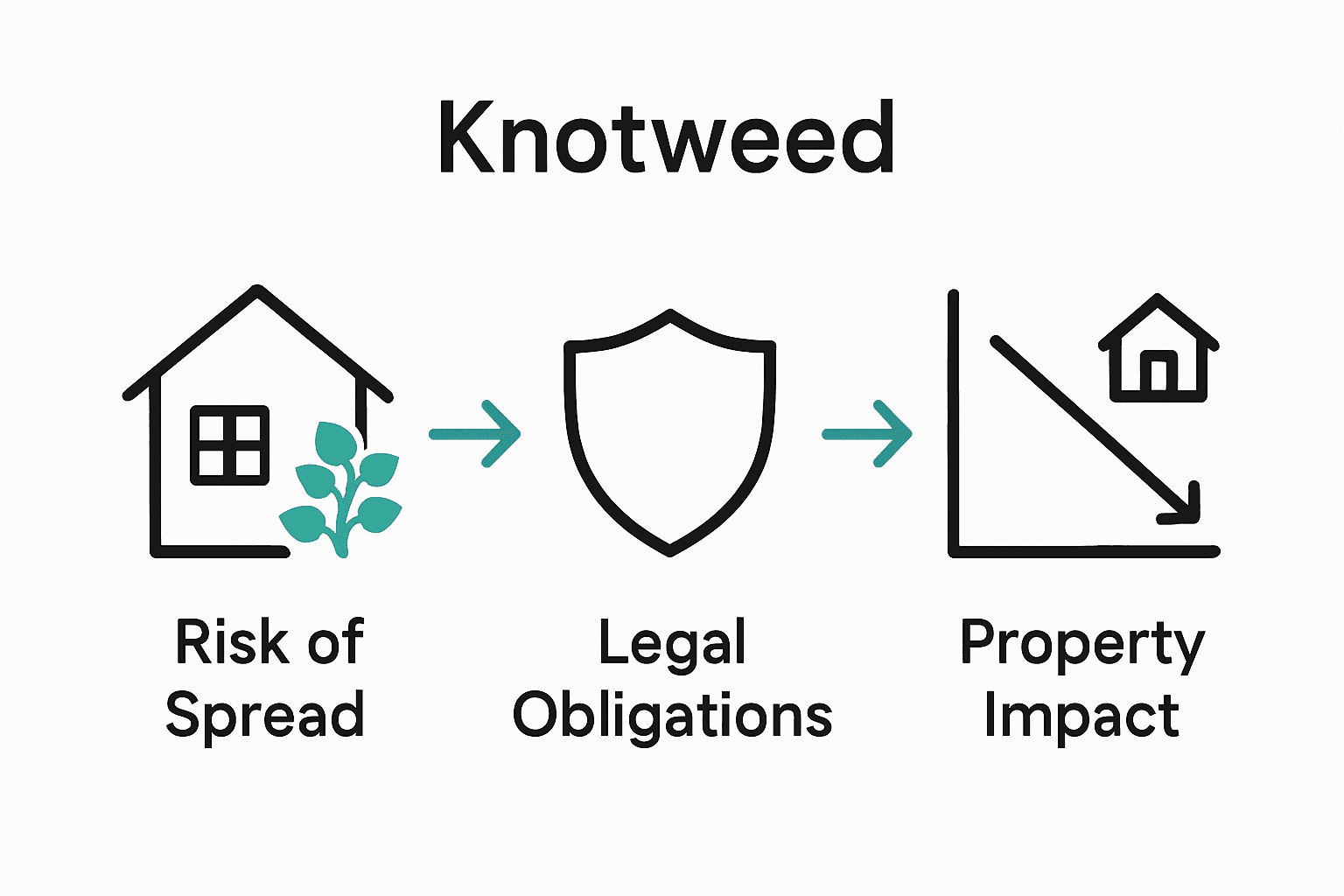
- Significant landscaping and remediation expenses
Property owners facing this invasive plant should take immediate action. For comprehensive strategies and detailed insights into managing Japanese knotweed, explore our guide on the consequences of letting Japanese knotweed spread.
Take Control of Japanese Knotweed With Proven Chemical-Free Solutions
The rapid spread and deep-rooted resilience of Japanese knotweed pose serious challenges for many property owners across the UK. This invasive plant does not just threaten your garden but can affect property values and legal standing if left unmanaged. If you have spotted reddish shoots or noticed dense clusters of bamboo-like stems on your land, acting quickly is essential to prevent further damage.

At Japanese Knotweed Agency, we specialize in pioneering chemical-free treatments that target the knotweed’s extensive rhizome network with up to 5000 volts of direct energy. Our approach depletes the plant’s vitality safely and effectively, sparing your property from invasive excavation or harsh chemicals. Alongside eradication, we offer expert root barrier installations and thorough property surveys across England, Wales and Ireland to give you peace of mind.
Don’t let Japanese knotweed take control and affect your property’s future. Explore how we can help you rid your land of this threat by visiting our main website today. For deeper understanding on why swift action matters, check out our detailed guide on the consequences of letting Japanese knotweed spread and learn more about chemical-free management strategies. Your property deserves expert care — start protecting it now.
Frequently Asked Questions
What is Japanese knotweed?
Japanese knotweed is an invasive plant species known for its aggressive growth and potential to cause structural damage through its extensive underground rhizome network.
How does Japanese knotweed spread?
Japanese knotweed primarily spreads through its complex rhizome system, which can extend several meters underground and sideways. It rarely produces viable seeds in the UK.
What are the legal obligations for homeowners regarding Japanese knotweed?
Homeowners must prevent Japanese knotweed from spreading to neighboring lands and properly dispose of any waste through licensed facilities. They are liable for damage caused by its migration.
What methods are available for eradicating Japanese knotweed without chemicals?
Non-chemical eradication methods include repeated cutting, systematic excavation of the root system, and emerging techniques focused on disrupting the rhizome network using energy-based interventions.