
Over 60 percent of american homeowners worry about the risks of invasive plants, yet few realize how myths and misinformation shape their concerns. Japanese knotweed, with its reputation for destruction, sparks confusion and unease in communities far beyond its origins. Understanding the facts behind this notorious invader empowers property owners to distinguish alarm from reality and make smarter decisions about management and legal responsibilities.
Table of Contents
- Defining Japanese Knotweed And Common Myths
- Key Identification Signs And Life Cycle Stages
- Legal Responsibilities And Property Implications
- Non-Chemical Eradication And Treatment Methods
- Property Surveys, Buying, And Remortgaging Risks
Key Takeaways
| Point | Details |
|---|---|
| Japanese Knotweed Overview | Japanese knotweed is an invasive plant that poses significant challenges for property owners due to its aggressive growth and propagation capabilities. |
| Legal Responsibilities | Property owners must manage Japanese knotweed to avoid legal ramifications, including fines and impacts on property values. |
| Impact on Property Transactions | The presence of Japanese knotweed can affect mortgage approvals and property valuations, necessitating thorough surveys and disclosure during transactions. |
| Non-Chemical Treatment Options | Effective management often requires innovative non-chemical methods, such as root barrier installation and targeted mechanical removal. |
Defining Japanese Knotweed and Common Myths
Japanese knotweed is an aggressive invasive plant species that poses significant challenges for property owners and landscapers across the United Kingdom. Originally introduced as an ornamental plant in the 19th century, this perennial plant has since become one of the most destructive non-native species in the country.
According to Natural Resources Wales, Japanese knotweed spreads through fragments of rhizome or stem, forming dense stands that effectively outcompete native vegetation. The plant’s remarkable ability to propagate through even tiny root fragments makes it exceptionally challenging to eradicate. Contrary to popular belief, it cannot actually grow through solid concrete, but it can exploit existing structural weaknesses with remarkable efficiency.
Interestingly, the UK House of Commons Science and Technology Committee suggests that the impact of Japanese knotweed is often overstated, potentially leading to unnecessary alarm among property owners. While the plant can cause damage, its reputation sometimes exceeds its actual destructive potential. Here are some common myths about Japanese knotweed:
- Myth: Japanese knotweed can grow through solid concrete
- Reality: It exploits pre-existing cracks and structural weaknesses
- Myth: A small piece of root will instantly destroy an entire building
- Reality: Damage occurs gradually through persistent growth and root expansion
Understanding the true nature of Japanese knotweed is crucial for effective management. While it presents significant challenges, informed and strategic approaches can help control and mitigate its spread. For more insights into common misconceptions, check out our guide on Japanese Knotweed Misconceptions.
Key Identification Signs and Life Cycle Stages
Japanese knotweed is a master of survival, with distinctive characteristics that make it both fascinating and challenging to manage. Natural Resources Wales provides critical insights into the plant’s unique identification features and complex life cycle.
Visual identification is crucial for early detection. The plant exhibits distinctive bamboo-like stems that are hollow and segmented, typically bright green with red or purple speckles in spring and early summer. Its heart-shaped leaves emerge alternately along the stem, creating a dense canopy that can grow up to 3 meters tall.
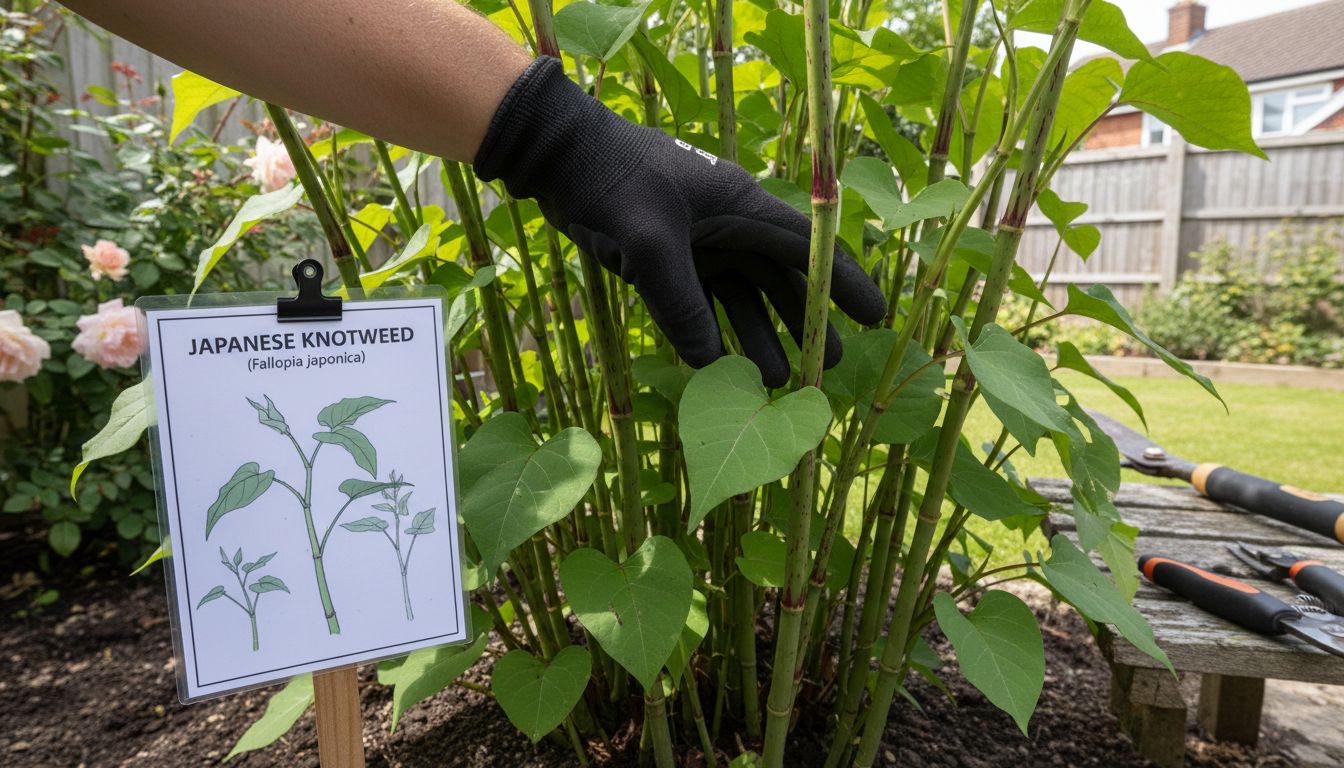 In late summer, the plant produces characteristic clusters of small white flowers, which might seem innocuous but represent a sophisticated reproductive strategy.
According to the UK House of Commons Science and Technology Committee, the plant’s growth pattern follows a predictable yet aggressive annual cycle:
- Spring Emergence: Rapid shoot growth from underground rhizomes
- Early Summer: Reaching full height, creating dense vegetation
- Late Summer: Flowering period with white cluster blooms
- Autumn: Above-ground parts die back, but underground rhizomes remain viable
- Winter: Dormant period with rhizomes storing energy for next season’s growth
Understanding these life cycle stages is critical for property owners and landscapers seeking to manage this invasive species effectively. The plant’s underground rhizome network remains its most powerful survival mechanism, capable of regenerating from tiny root fragments and lying dormant for extended periods. For a deeper understanding of managing these complex growth patterns, explore our guide on Japanese Knotweed Misconceptions.
Legal Responsibilities and Property Implications
Japanese knotweed presents significant legal challenges for property owners, transforming what might seem like a simple landscaping issue into a complex legal and financial liability. Natural Resources Wales highlights that landowners bear a critical responsibility for controlling this invasive plant to prevent its uncontrolled spread.
Under the Wildlife and Countryside Act 1981, property owners face serious legal consequences for mismanaging Japanese knotweed. It is a criminal offense to intentionally cause the plant to grow in the wild, which means property owners must take proactive steps to control and contain the plant. Potential penalties can include substantial fines and legal action, making proper management not just an environmental concern, but a legal imperative.
According to the UK House of Commons Science and Technology Committee, the presence of Japanese knotweed can dramatically impact property transactions and values. Mortgage lenders have become increasingly cautious, often requiring detailed surveys and treatment plans before approving loans.
Key legal implications include:
- Disclosure Requirement: Mandatory reporting during property sales
- Potential Liability: Legal claims from neighboring properties
- Mortgage Restrictions: Potential loan denials or reduced property values
- Treatment Costs: Significant expenses for professional eradication
Navigating these legal complexities requires professional guidance and proactive management. Property owners must document their treatment efforts, maintain comprehensive records, and work with qualified experts to mitigate potential legal and financial risks. For a comprehensive understanding of managing these challenges, check out our guide on Japanese Knotweed Misconceptions.
Non-Chemical Eradication and Treatment Methods
Japanese knotweed presents a formidable challenge for property owners seeking environmentally friendly and sustainable removal strategies. Natural Resources Wales cautions that traditional non-chemical methods like cutting and digging are often ineffective due to the plant’s extraordinary regenerative capabilities.
Excavation represents one of the most direct non-chemical approaches, involving complete removal of contaminated soil and root systems. However, this method requires extreme precision and careful management. The UK House of Commons Science and Technology Committee emphasizes that excavation can be prohibitively expensive and carries significant risks of unintentional plant spread if not executed with professional expertise.
Alternative non-chemical techniques that property owners might consider include:
- Root Barrier Installation: Preventing rhizome spread through physical barriers
- Targeted Mechanical Removal: Careful extraction of contaminated soil zones
- Continuous Monitoring: Regular cutting to weaken plant’s energy reserves
- Soil Screening: Precise removal and sifting of contaminated earth
For property owners seeking innovative solutions, understanding the nuanced challenges of non-chemical treatments is crucial. Each approach demands meticulous planning and expert implementation to prevent unintended plant propagation.
INFOGRAPHIC:infographic_content] To explore comprehensive strategies for managing this invasive species, review our [guide on Japanese Knotweed Misconceptions.
Property Surveys, Buying, and Remortgaging Risks
Japanese knotweed represents a critical consideration for property transactions, casting a long shadow over buying, selling, and financing real estate. According to the UK House of Commons Science and Technology Committee, the plant’s presence can significantly impact property valuations and mortgage approvals, creating complex challenges for potential buyers and homeowners.
Natural Resources Wales emphasizes the critical importance of full disclosure during property transactions. Sellers are legally obligated to report any known Japanese knotweed infestations, with potential legal consequences for failing to do so. Prospective buyers must conduct thorough surveys to identify potential infestations, understanding that the plant’s presence can dramatically affect property value and mortgage eligibility.
Key risks for property transactions include:
- Mortgage Restrictions: Lenders may refuse loans or require extensive treatment plans
- Property Valuation Impacts: Significant potential decrease in market value
- Legal Liability: Potential claims from neighboring properties
- Survey Requirements: Mandatory detailed investigations during property transfers
Navigating these complex risks requires professional expertise and comprehensive understanding. Potential buyers should prioritize detailed property surveys and professional assessments to mitigate potential financial and legal challenges. For more specific guidance on managing mortgage challenges, explore our guide on getting a mortgage with Japanese knotweed.
Take Control of Japanese Knotweed with Proven Chemical-Free Solutions
Japanese knotweed is a tough invasive plant that demands careful and effective management. This complete guide has highlighted how challenging it is to eradicate due to its extensive rhizome network and legal implications for property owners. If you are facing issues with Japanese knotweed on your property, you understand the urgency to act before damage spreads and property values drop.

At Japanese Knotweed Agency, we specialize in innovative chemical-free treatments that deliver up to 5000 volts of energy directly to the rhizomes causing lasting root damage. This method targets the plant’s survival system, making eradication possible without harsh chemicals. We also provide expert property surveys for invasive weeds and offer professional root barrier installations and excavation works to prevent further spread. Take the next step to protect your property, regain peace of mind, and comply with legal responsibilities. Visit our website now to learn how our expertise can help you overcome Japanese knotweed challenges effectively.
Frequently Asked Questions
What is Japanese knotweed and why is it a problem?
Japanese knotweed is an aggressive invasive plant species that can outcompete native vegetation and cause structural damage to buildings due to its extensive root system. Its rapid spread and ability to propagate from small fragments make it a significant challenge for property owners.
How can I identify Japanese knotweed?
Japanese knotweed has distinctive bamboo-like stems that are hollow and segmented, bright green with red or purple speckles. It features heart-shaped leaves and produces small white flowers in late summer. The plant can grow up to 3 meters tall and forms dense stands.
What legal responsibilities do property owners have regarding Japanese knotweed?
Property owners must manage Japanese knotweed to prevent its spread, as neglect can lead to legal penalties under the Wildlife and Countryside Act 1981. This includes mandatory disclosure during property transactions and potential liability for spreading the plant to neighboring properties.
What are effective non-chemical methods for eradicating Japanese knotweed?
Effective non-chemical methods include excavation of the plant and its rhizomes, root barrier installation, targeted mechanical removal of contaminated soil, continuous monitoring through regular cutting, and soil screening to prevent regrowth.