

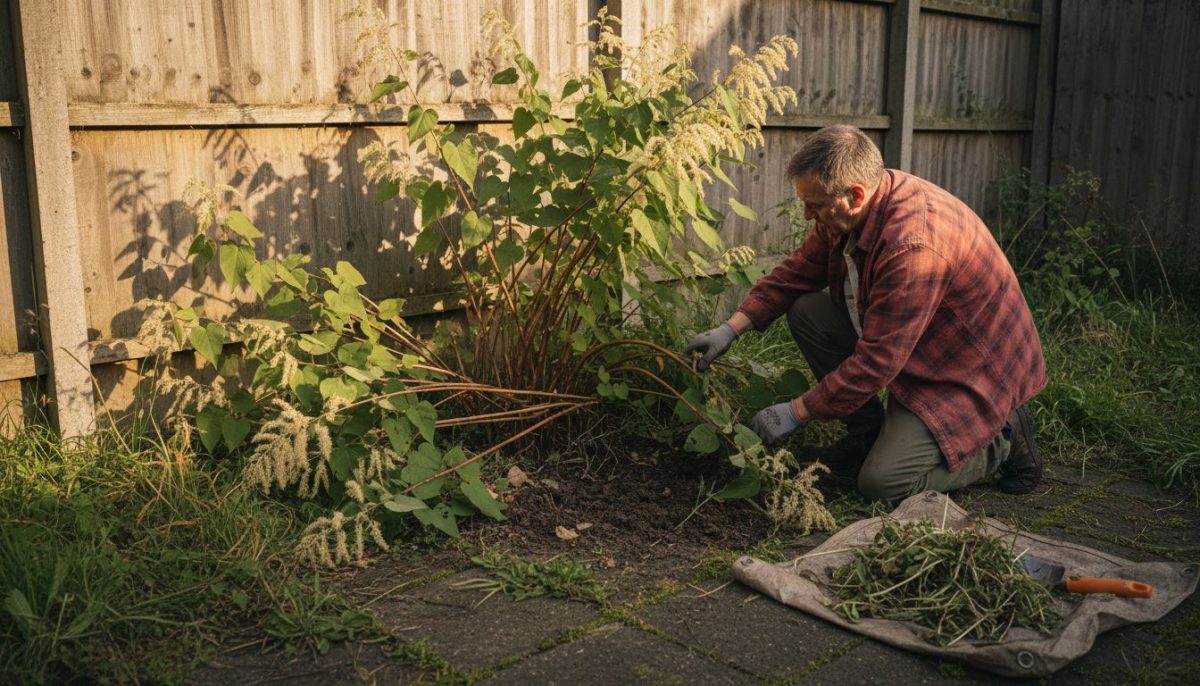
Most American homeowners underestimate how quickly Japanese knotweed can take over a yard. This invasive plant is capable of growing up to 10 centimeters per day, making it one of the fastest-growing threats to properties across the United States. Early detection is the key to preventing costly damage, and knowing the clearest signs can help protect everything from garden landscapes to home foundations.
Table of Contents
- 1. Recognizing Rapid Growth And Tall Stems
- 2. Identifying Heart-Shaped Leaves
- 3. Spotting Dense Bamboo-Like Canes
- 4. Observing Red Or Purple Shoots In Spring
- 5. Noting Creamy White Flower Clusters In Summer
- 6. Checking For Extensive Underground Rhizomes
- 7. Understanding Seasonal Dieback And Dead Canes
Quick Summary
| Takeaway | Explanation |
|---|---|
| 1. Identify Rapid Growth | Japanese knotweed can grow up to 10 centimeters daily, making it crucial to spot early signs for timely intervention. |
| 2. Recognize Distinctive Leaves | Look for large, heart-shaped leaves that are 10-15 centimeters long with a glossy surface and zigzag arrangement along stems. |
| 3. Observe Flower Clusters | Late summer brings cream to white flower clusters, indicating established growth and a potential increase in spread. |
| 4. Check for Underground Rhizomes | Japanese knotweed has extensive underground rhizomes that can regenerate from small fragments, complicating removal efforts. |
| 5. Don’t Ignore Dieback | Dead canes during winter may seem inactive but indicate a robust underground network that can regrow in spring. |
1. Recognizing Rapid Growth and Tall Stems
Japanese knotweed is a plant that can transform your property landscape faster than you might imagine. Rapid growth rates make this invasive species a serious threat to homeowners.
This plant is an extraordinary botanical sprinter. Research shows Japanese knotweed can grow up to 10 centimeters daily and reach impressive heights of 3 to 4 meters within just 10 weeks. That means in less than three months, this plant can tower over most garden fences and create a dense green barrier across your property.
What to Look For:
- Bamboo-like stems with distinctive green and purple coloration
- Stems growing straight up in dense clusters
- Potential height reaching 3 to 4 meters within a short timeframe
- Rapid emergence during spring and early summer months
Homeowners should pay special attention during spring when Japanese knotweed emerges. Its growth pattern is so aggressive that you might notice significant changes in your landscape within weeks. The plant’s ability to spread quickly means early identification is crucial to preventing extensive property damage.
Pro Tip: If you notice stems growing more than 10 centimeters per day, immediately contact a Japanese knotweed specialist for professional assessment.
Understanding these growth characteristics can help you spot Japanese knotweed before it becomes an expensive, hard to manage problem. Quick recognition could save you thousands in potential property restoration costs.
2. Identifying Heart-Shaped Leaves
The distinctive leaf shape of Japanese knotweed is one of its most recognizable features. Distinctive leaves serve as a critical identifying marker for this invasive plant.
Japanese knotweed leaves are unique in their appearance and structure. Research indicates these leaves are typically large shovel or heart-shaped, measuring 10 to 15 centimeters long with a smooth and glossy surface that catches the eye.
Key Leaf Characteristics:
- Large green heart-shaped or oval structure
- Smooth and glossy leaf surface
- Zigzag arrangement along the plant stem
- Typically 10-15 centimeters in length
- Bright green coloration
What sets Japanese knotweed leaves apart is their distinctive zigzag pattern along the stem. This unique arrangement means the leaves alternate in a somewhat staggered configuration, creating a visual pattern that differs from most other garden plants.
Pro Tip: Compare leaf shape and arrangement carefully. Mistaking Japanese knotweed for another plant could delay critical intervention.
Careful observation of leaf characteristics can help you identify this invasive species before it spreads extensively across your property. Understanding these visual markers is your first line of defense against potential landscape damage.
3. Spotting Dense Bamboo-Like Canes
Japanese knotweed’s distinctive stems are one of its most recognizable features. Dense thickets of bamboo-like stems can quickly transform your landscape into an impenetrable green barrier.
Research reveals that Japanese knotweed produces hollow stems remarkably similar to bamboo, forming dense clusters that can spread several metres deep. These canes are not just visually striking but also incredibly resilient.
Stem Characteristics to Watch:
- Hollow stems resembling bamboo
- Purple speckled coloration
- Distinct zigzag growth pattern
- Stems growing in dense, interconnected clusters
- Bright green to reddish brown color transitions
The stems have a unique growth pattern that sets them apart from other plants. They emerge in a distinctive zigzag arrangement, creating a dense network that can quickly overwhelm gardens, driveways, and building foundations. Each stem can grow straight and tall, creating an almost architectural appearance.
Pro Tip: The hollow nature of these stems means they can easily break and regrow, making manual removal extremely challenging.
Recognizing these bamboo-like canes early can help you take swift action before the Japanese knotweed establishes a deep root system. Understanding their growth pattern is your first step in preventing potential property damage.
4. Observing Red or Purple Shoots in Spring
Spring brings a critical moment for Japanese knotweed detection. Reddish-purple shoots emerge as a distinctive warning sign for homeowners and property managers.
Ground-level emergence reveals the plant’s unique reproductive strategy. These crimson-pink buds quickly transform into fleshy reddish-purple shoots that signal the beginning of the plant’s aggressive growth cycle.
Springtime Identification Markers:
- Crimson-pink buds at ground level
- Fleshy reddish-purple shoots
- Rapid emergence from dormant root system
- Distinctive coloration unlike native plants
- Quick transformation from small shoots to large stems
The vibrant purple and red coloration serves as a natural alarm system. These shoots stand out dramatically against typical spring vegetation, making them easier to spot in gardens, lawns, and landscaped areas. The color intensity is particularly striking during the early weeks of spring.
Pro Tip: Take photos of suspected shoots and consult a professional. Early identification can prevent extensive property damage.
Understanding these springtime characteristics provides homeowners with a crucial window to identify and address Japanese knotweed before it establishes a complex root network. Vigilance during these early growth stages can save significant time and expense in future remediation efforts.
5. Noting Creamy White Flower Clusters in Summer
Late summer brings a distinctive visual marker for Japanese knotweed identification. White flower sprays emerge as a critical signal of the plant’s reproductive cycle.
Cream colored flower clusters typically appear between August and October, creating a deceptively delicate appearance that masks the plant’s invasive nature. These flowers might look innocent, but they represent a significant stage in the knotweed’s aggressive spread.
Flower Identification Features:
- Cream to white color
- Small clustered flower arrangement
- Typically appearing in late summer
- Hanging in loose spray formations
- Approximately 10 centimeters long
The flower clusters might seem attractive at first glance, but they are actually a warning sign of potential landscape invasion. These delicate blooms can produce numerous seeds, contributing to the plant’s remarkable ability to propagate and spread across different terrains.
Pro Tip: Do not be fooled by the flowers’ beauty. These blooms indicate an established and potentially destructive plant system.
Understanding the flowering stage provides homeowners with another crucial identification window. Recognizing these white clusters can help you take proactive steps before the plant establishes an even more extensive root network.
6. Checking for Extensive Underground Rhizomes
The true threat of Japanese knotweed lies beneath the surface. Underground root systems can spread far beyond what is visible to the naked eye.
Extensive rhizome networks make Japanese knotweed a particularly challenging invasive species. These underground structures can extend up to three metres in depth and span seven metres in all directions, with individual rhizomes reaching up to 10 centimeters in diameter.
Underground Rhizome Characteristics:
- Potential spread of seven metres from parent plant
- Depth reaching two metres or more underground
- Rhizomes up to 10 centimeters in diameter
- Ability to regenerate from tiny root fragments
- Interconnected network of underground stems
What makes these rhizomes particularly dangerous is their remarkable regenerative capacity. A single tiny fragment left in the ground can potentially sprout an entirely new plant. This means that traditional removal methods like cutting or pulling are often ineffective and can actually encourage further spread.
Pro Tip: Professional assessment is critical. Even seemingly complete removal can fail if a single rhizome fragment remains underground.
Homeowners should understand that what appears to be a small surface problem could represent a massive underground network. Professional evaluation and specialized treatment are often the most effective approaches to managing Japanese knotweed’s complex root system.
7. Understanding Seasonal Dieback and Dead Canes
Don’t be fooled by Japanese knotweed’s winter appearance. Seasonal dieback does not mean the plant has disappeared.
Brown dried stems mark the plant’s seasonal cycle, typically occurring between September and November. These dead canes remain standing as a deceptive reminder of the plant’s persistent underground root system.
Winter Identification Features:
- Plant dies back to ground level
- Dry brown canes remain visible
- Canes can persist for several months
- Underground rhizomes remain alive and active
- Stems turn from green to brown
The presence of these dead canes is actually an important identification marker. While the above ground growth appears dormant, the extensive underground rhizome network remains fully alive and capable of regenerating in spring. Homeowners often mistakenly believe the plant has died when they see these brown stems.
Pro Tip: Never assume Japanese knotweed is gone just because the visible stems look dead. The root system remains viable and ready to regrow.
These seemingly lifeless stems are a critical warning sign. They represent the plant’s remarkable survival strategy a testament to its ability to persist through harsh conditions and quickly reestablish growth when temperatures warm.
This table summarizes the main characteristics and identification strategies for Japanese knotweed as discussed in the article.
| Feature | Description | Key Identification Points |
|---|---|---|
| Rapid Growth | Japanese knotweed grows up to 10 cm daily, reaching heights of 3-4 meters. | Bamboo-like stems with green and purple coloration; dense clusters; rapid emergence in spring. |
| Leaf Shape | Leaves are large, shovel or heart-shaped. | Smooth, glossy surface; zigzag arrangement; 10-15 cm in length; bright green color. |
| Stems | Hollow, bamboo-resembling stems in dense clusters. | Purple speckled coloration; zigzag growth pattern; bright green to reddish brown transitions. |
| Spring Shoots | Reddish-purple shoots emerge in spring. | Crimson-pink buds; rapid growth from dormant roots; distinctive coloration. |
| Summer Flowers | Cream to white flowers appear in late summer. | Small clusters hanging in loose sprays; approximately 10 cm long. |
| Rhizomes | Extensive underground network of roots. | Rhizomes spread up to 7 meters; regenerate from fragments; up to 10 cm diameter. |
| Winter Dieback | Plant appears dead but roots remain active. | Brown dried stems remain visible; underground rhizomes alive. |
Take Control of Japanese Knotweed Before It Takes Over Your Property
Japanese Knotweed’s rapid growth, dense bamboo-like stems, and extensive underground rhizomes create a serious challenge for homeowners. If you have noticed the heart-shaped leaves, red or purple shoots in spring, or creamy white flower clusters in summer, time is critical. Ignoring these clear signs can lead to costly damage and frustrating removal attempts. That is why expert intervention using proven methods is essential to stop this invasive plant in its tracks.

At Japanese Knotweed Agency, we specialize in chemical free treatment that targets the invasive root system with direct energy technology. This innovative process delivers up to 5000 volts onsite damaging the internal cell structure and conquering even deep rhizome networks. We also offer property surveys, root barrier installations, and excavation services designed to fully protect your land from future harm. Don’t let Japanese Knotweed control your landscape. Act now and reclaim your property’s safety and value by visiting our website today at Japanese Knotweed Agency to schedule your professional survey and treatment.
Frequently Asked Questions
How can I identify Japanese Knotweed in my garden?
You can identify Japanese Knotweed by looking for its bamboo-like stems, large heart-shaped leaves, and its rapid growth, especially in the spring. Check for stems growing straight up in dense clusters, which can reach heights of 3 to 4 meters within weeks.
When is the best time to spot Japanese Knotweed?
The best time to spot Japanese Knotweed is during spring and early summer when it emerges from dormancy. Look for reddish-purple shoots at ground level, as these are strong indicators of its presence.
What should I do if I find Japanese Knotweed on my property?
If you find Japanese Knotweed, contact a specialist for professional assessment and management. Early intervention is crucial to prevent extensive root system establishment and potential property damage.
Are the flowers of Japanese Knotweed harmful?
While the creamy white flower clusters may seem harmless, they indicate that the plant is actively reproducing and can spread even further. It’s important to address the plant before it flowers in late summer, typically between August and October.
What happens to Japanese Knotweed in the winter?
In winter, Japanese Knotweed dies back to the ground level, leaving behind dry brown canes. However, the underground rhizomes remain viable, making it essential to remain vigilant even when the visible parts appear dormant.
How deep do Japanese Knotweed rhizomes grow?
Japanese Knotweed rhizomes can grow up to two meters deep and spread seven meters in all directions. Understanding this extensive underground network is key; even tiny fragments can regrow, so comprehensive management is necessary.