Most american homeowners are surprised to learn that a single patch of Japanese knotweed can reduce property value by up to 15 percent. This aggressive plant spreads quickly and silently threatens foundations, driveways, and drainage systems. Understanding Japanese knotweed containment is vital if you want to protect your property from costly damage and legal headaches while learning which control methods actually work best.
Table of Contents
- What Is Japanese Knotweed Containment?
- Types of Containment Methods in the UK
- How Physical and Chemical-Free Solutions Work
- Legal Responsibilities and Property Implications
- Risks, Costs, and Common Pitfalls to Avoid
Key Takeaways
| Point | Details |
|---|---|
| Containment Importance | Japanese knotweed poses significant risks to property; effective containment is crucial to prevent structural damage. |
| Legal Responsibilities | Landowners must manage knotweed professionally to avoid legal liabilities and maintain property value. |
| Cost Implications | Inadequate treatment can lead to increased costs and extensive damage; proactive management is essential. |
| Effective Strategies | A combination of physical barriers, chemical treatments, and monitoring techniques is vital for successful management. |
What Is Japanese Knotweed Containment?
Japanese Knotweed Containment is a strategic approach designed to prevent the spread of an aggressive invasive plant species that poses significant risks to property and infrastructure. According to UK Parliamentary Publications, Japanese knotweed is notorious for its rapid growth and potential to cause extensive structural damage.
Containment involves a comprehensive set of methods aimed at controlling the plant’s expansion and preventing its further proliferation. SCSI defines containment as strategies specifically targeting the restriction of Japanese knotweed beyond a designated area. These strategies typically include:
- Physical root barrier installations
- Regular monitoring and surveillance
- Precise mapping of infested zones
- Legal compliance with invasive species regulations
- Controlled removal techniques
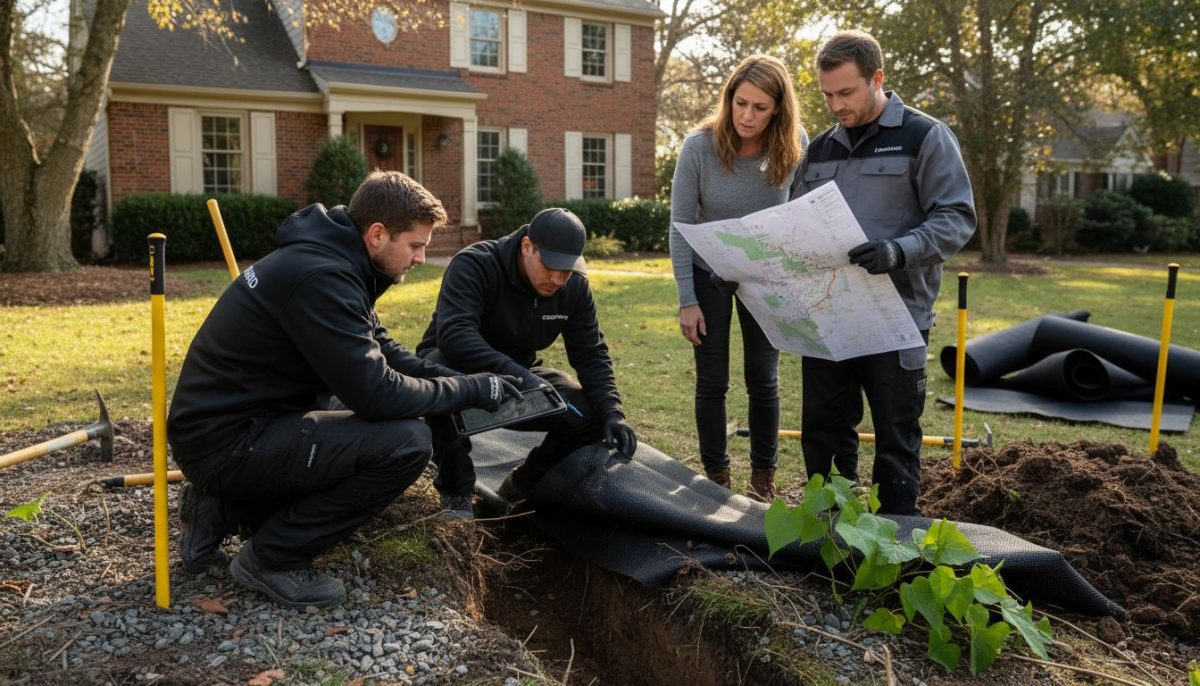
The primary goal of Japanese knotweed containment is to mitigate potential ecological and structural risks. Property owners must implement proactive measures to prevent the plant’s underground rhizome network from spreading, which can cause significant damage to foundations, drainage systems, and landscaping. Effective containment requires a multifaceted approach that combines scientific understanding, legal compliance, and strategic intervention to manage this highly resilient invasive species.
Types of Containment Methods in the UK
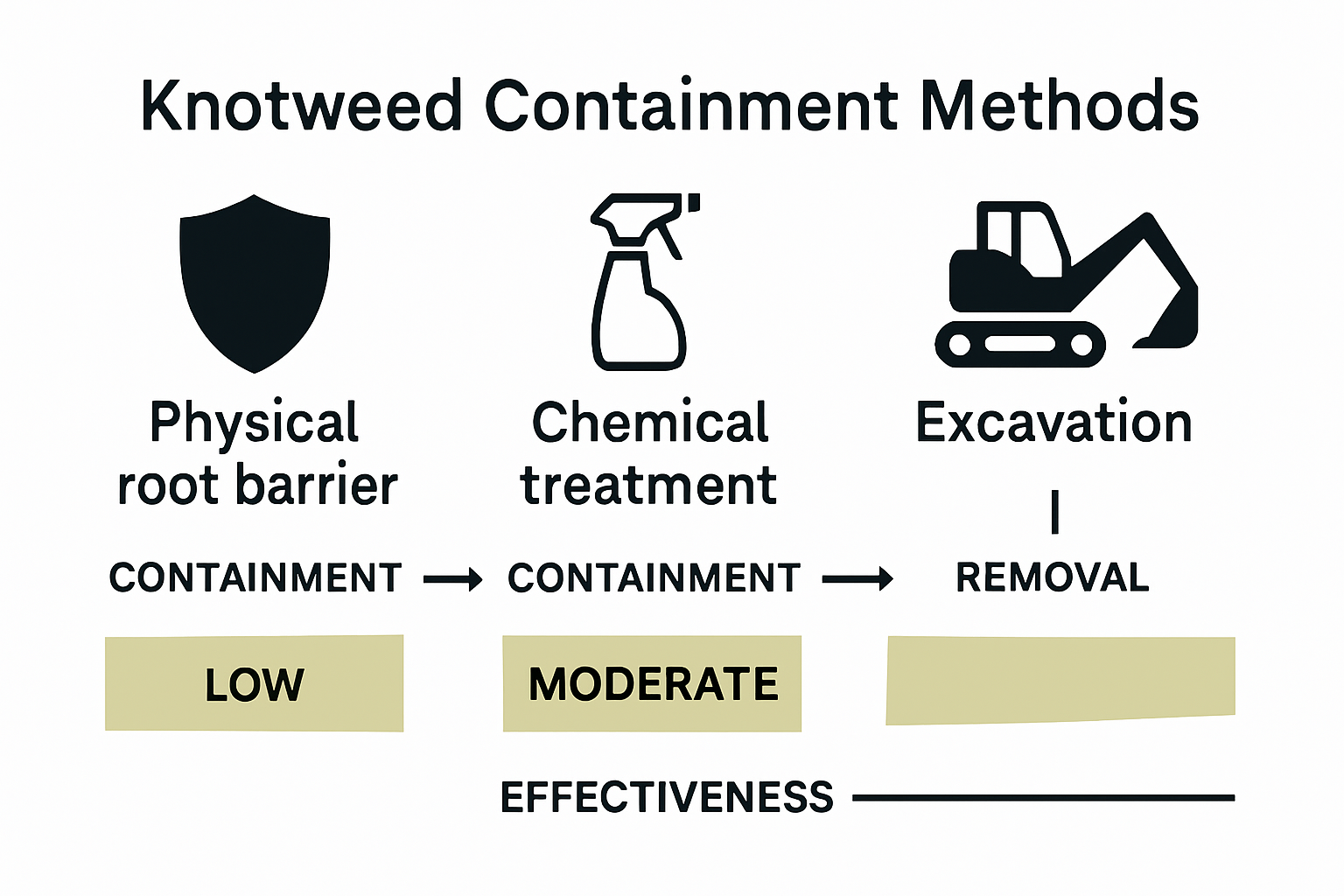
Japanese Knotweed containment methods in the United Kingdom represent a critical approach to managing this highly invasive plant species. UK Parliamentary Publications identifies three primary strategies for controlling Japanese knotweed: physical barriers, chemical treatments, and complete excavation.
Each containment method offers unique advantages and challenges. SCSI highlights that the effectiveness of these techniques depends on specific factors like infestation extent, property location, and environmental conditions. The most common containment approaches include:
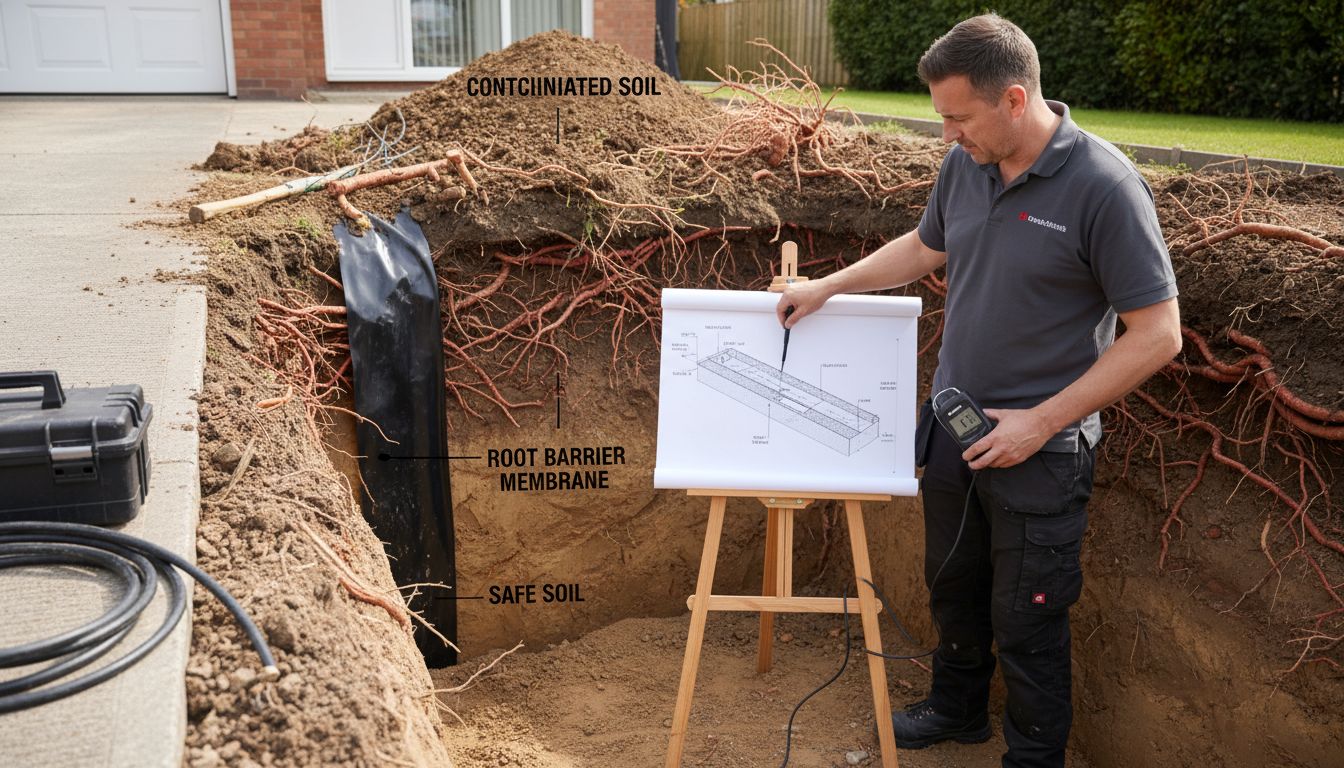
- Physical Root Barriers: Installing underground membranes to prevent rhizome spread
- Chemical Treatment: Targeted herbicide applications to systematically kill plant networks
- Excavation: Complete removal of contaminated soil and root systems
- Monitoring Techniques: Regular surveillance to track potential reemergence
- Biological Control: Emerging experimental methods using specialized organisms
Successful containment requires a comprehensive strategy that combines multiple techniques. Property owners and land managers must carefully assess their specific situation, considering factors like soil composition, proximity to structures, and local ecological conditions. The goal is not just temporary suppression but long-term prevention of Japanese knotweed’s destructive potential.
How Physical and Chemical-Free Solutions Work
Physical and chemical-free containment methods provide innovative approaches to managing Japanese knotweed without relying on traditional chemical treatments. UK Parliamentary Publications highlights that these solutions focus on mechanical interventions designed to isolate, suppress, and ultimately control the invasive plant’s spread.
SCSI outlines several key strategies for physical containment that property owners can implement. These methods are particularly effective because they directly address the plant’s aggressive underground root system:
- Root Barrier Installation: Underground membrane systems that create physical boundaries
- Geotextile Membrane Covering: Blocking sunlight and preventing photosynthesis
- Mechanical Cutting: Regular removal of above-ground growth to weaken plant energy
- Soil Excavation: Complete removal of contaminated soil and root networks
- Controlled Covering: Using specialized materials to suppress growth
The fundamental principle behind these chemical-free solutions is disrupting the plant’s ability to photosynthesize and spread. By preventing light exposure, blocking root expansion, and systematically removing growth, property owners can effectively manage Japanese knotweed without introducing potentially harmful chemical treatments. Success requires consistent monitoring and a comprehensive, multilayered approach to containment.
Legal Responsibilities and Property Implications
Japanese Knotweed legal obligations represent a critical aspect of property management that can significantly impact homeowners and land developers. UK Parliamentary Publications emphasizes that landowners have a strict legal responsibility to prevent the spread of this invasive plant to adjacent properties, with potential consequences ranging from substantial fines to legal action.
SCSI highlights the extensive implications of Japanese knotweed on property transactions and valuations. The presence of this invasive species can create significant challenges for property owners, including:
- Reduced Property Value: Potential decrease of up to 10-15% in property market value
- Mortgage Restrictions: Difficulty obtaining financing for affected properties
- Legal Liability: Potential lawsuits from neighboring property owners
- Mandatory Disclosure: Legal requirement to reveal knotweed presence during property sales
- Enforcement Actions: Potential local authority interventions and penalties
Navigating the legal landscape of Japanese knotweed requires proactive management and thorough documentation. Property owners must implement comprehensive containment strategies, maintain detailed records of treatment efforts, and work closely with professional invasive species experts to mitigate potential legal and financial risks. The goal is not just compliance, but protecting the long-term value and integrity of the property.
Risks, Costs, and Common Pitfalls to Avoid
Japanese Knotweed management involves navigating a complex landscape of substantial risks and potential financial challenges. UK Parliamentary Publications warns that inadequate treatment can lead to extensive structural damage and significant legal liabilities, with containment and removal costs potentially escalating quickly.
SCSI highlights the most critical risks and common pitfalls property owners must carefully consider:
- Underestimation of Spread: Failing to recognize the plant’s extensive underground root network
- Improper Disposal: Accidentally propagating the plant through incorrect removal techniques
- Delayed Treatment: Allowing the infestation to grow more complex and expensive
- Incomplete Documentation: Lacking comprehensive records for legal and insurance purposes
- DIY Removal Attempts: Risking further contamination without professional expertise
Successful Japanese knotweed management requires a proactive, comprehensive approach. Property owners must invest in professional assessments, implement thorough containment strategies, and maintain meticulous documentation. The potential costs of inaction far outweigh the initial investment in professional treatment, potentially saving thousands in future property damage and legal complications.
Take Control of Japanese Knotweed with Proven Chemical-Free Solutions
Dealing with Japanese Knotweed containment requires more than just basic knowledge it calls for expert action to stop this invasive threat from damaging your property and lowering its value. The article highlights key challenges such as root barrier installation, proper excavation, and the importance of consistent monitoring to prevent costly structural harm and legal risks. At Japanese Knotweed Agency we specialize in innovative chemical-free treatments that deliver powerful direct energy to eradicate knotweed at the cellular level while preserving your land and surroundings.

Don’t wait until the knotweed spreads further or your property faces irreversible damage explore our comprehensive services including root barrier installation and expert excavation works. Discover how our professional property surveys across England Wales and Ireland can give you peace of mind and long-term protection from invasive weeds. Act now to secure your investment and restore your property by contacting Japanese Knotweed Agency today and learn more about our cutting-edge treatment techniques and containment strategies. Visit our main site and explore the difference of chemical-free eradication.
Frequently Asked Questions
What is Japanese Knotweed containment?
Japanese Knotweed containment refers to strategic methods aimed at preventing the spread of this invasive plant species. It involves techniques such as physical barriers, chemical treatments, monitoring, and precise mapping of infested areas to mitigate ecological and structural risks.
What are the common methods used for Japanese Knotweed containment?
Common containment methods include physical root barriers, chemical treatments, complete excavation, monitoring techniques, and emerging biological control methods. Each strategy has its advantages and is chosen based on specific infestation circumstances and property conditions.
How do physical and chemical-free solutions work for controlling Japanese Knotweed?
Physical and chemical-free solutions disrupt the plant’s ability to photosynthesize and spread. Techniques include root barrier installation, geotextile membrane covering, mechanical cutting, and soil excavation, all aiming to isolate and suppress the plant without harmful chemicals.
What are the legal responsibilities of property owners regarding Japanese Knotweed?
Property owners have a strict legal obligation to prevent the spread of Japanese Knotweed to neighboring areas. Legal consequences can include fines, lawsuits from affected neighbors, and mandatory disclosure of the infestation during property sales, emphasizing the importance of effective management and containment.