TL;DR:
- Glyphosate is currently authorized for use in Great Britain until December 2026, with the renewal process ongoing. Advocacy groups seek to ban specific applications like pre-harvest desiccation, but it remains legal within safety limits. Regulatory divergence exists between Great Britain and Northern Ireland, affecting usage and import-export standards.
Glyphosate is defined as a broad-spectrum herbicide currently authorised for use in Great Britain, with its licence extended to 15 december 2026 pending a formal renewal decision. The question of whether glyphosate is banned in the UK is one that generates considerable confusion, largely because media headlines oversimplify what are actually targeted restrictions on specific applications rather than a total prohibition. The Health and Safety Executive (HSE) regulates glyphosate use in Great Britain, while the Soil Association and other campaign groups are pushing for a ban on one particular use: pre-harvest desiccation. Understanding the distinction between overall authorisation and specific use restrictions is the clearest way to make sense of the current situation.
Is glyphosate banned in the UK right now?
Glyphosate is not banned in the UK as of june 2026. The HSE extended authorisation to december 2026 to allow a thorough regulatory review of new scientific evidence before any renewal decision is made. That extension reflects a deliberate, evidence-led process rather than a signal of imminent prohibition.
The renewal process works in defined stages. The HSE assesses toxicological, environmental, and safety data submitted by manufacturers and independent researchers. A two-month public consultation is planned for summer 2026, during which scientific, technical, and regulatory evidence will be considered. The outcome of that consultation will inform whether glyphosate’s authorisation is renewed, restricted, or refused beyond december 2026.
Regulatory decisions of this kind are not taken quickly. The HSE weighs agricultural necessity against consumer safety, biodiversity impact, and evolving scientific consensus. Glyphosate has been through multiple renewal cycles across the EU and UK, and each cycle has produced refinements to approved uses rather than outright bans.
- Licence extended: Authorisation runs to 15 december 2026.
- Consultation planned: A public review is scheduled for summer 2026.
- Evidence-based outcome: The HSE will decide based on scientific and safety data.
- No total ban proposed: Current regulatory debate centres on specific applications.
Pro Tip: Monitor the HSE’s pesticide registration pages directly for updates on the consultation outcome. The decision published after december 2026 will set the terms for glyphosate use well into the next decade.
Why are campaigners focused on pre-harvest use?
The strongest pressure in the UK targets one specific application: using glyphosate as a pre-harvest desiccant. Pre-harvest desiccation is the practice of spraying glyphosate onto crops such as wheat, oats, and oilseed rape shortly before harvest to dry them down uniformly and speed up the harvesting process. Campaigners argue this leaves residues in food at levels that raise concern, even if regulators maintain those levels remain within legal safety limits.
The EU acted on this concern in 2023. Pre-harvest glyphosate use was banned across EU member states, reflecting a precautionary approach to residue management. The UK has not followed suit, and the HSE’s current position is that residues remain within legal limits when the product is used correctly.
The Soil Association has led the campaign in the UK. Their petition calling for a ban on pre-harvest glyphosate use has neared 70,000 signatures, demonstrating significant public concern about biodiversity and food safety. That level of public engagement is likely to carry weight during the summer 2026 consultation.
“The UK should follow the EU’s lead and ban the use of glyphosate as a pre-harvest desiccant. Consumers deserve food free from unnecessary pesticide residues.” — Soil Association campaign position
Alternatives suggested for farmers include mechanical desiccation, adjusted harvest scheduling, and improved grain drying infrastructure. These options carry higher operational costs, which is why the farming sector has resisted a straightforward ban without transition support.
- Pre-harvest desiccation applies glyphosate to crops days before harvest.
- The EU banned this specific use in 2023.
- The Soil Association’s petition has approached 70,000 signatures.
- GB regulators maintain residues remain within legal safety limits.
- Farmer alternatives exist but carry additional costs.
How do GB and northern ireland regulations differ?
Post-Brexit regulatory divergence has created a meaningful split in how glyphosate is governed across the UK. Great Britain follows the HSE’s independent authorisation process, while Northern Ireland remains aligned with EU pesticide regulations under post-Brexit arrangements.
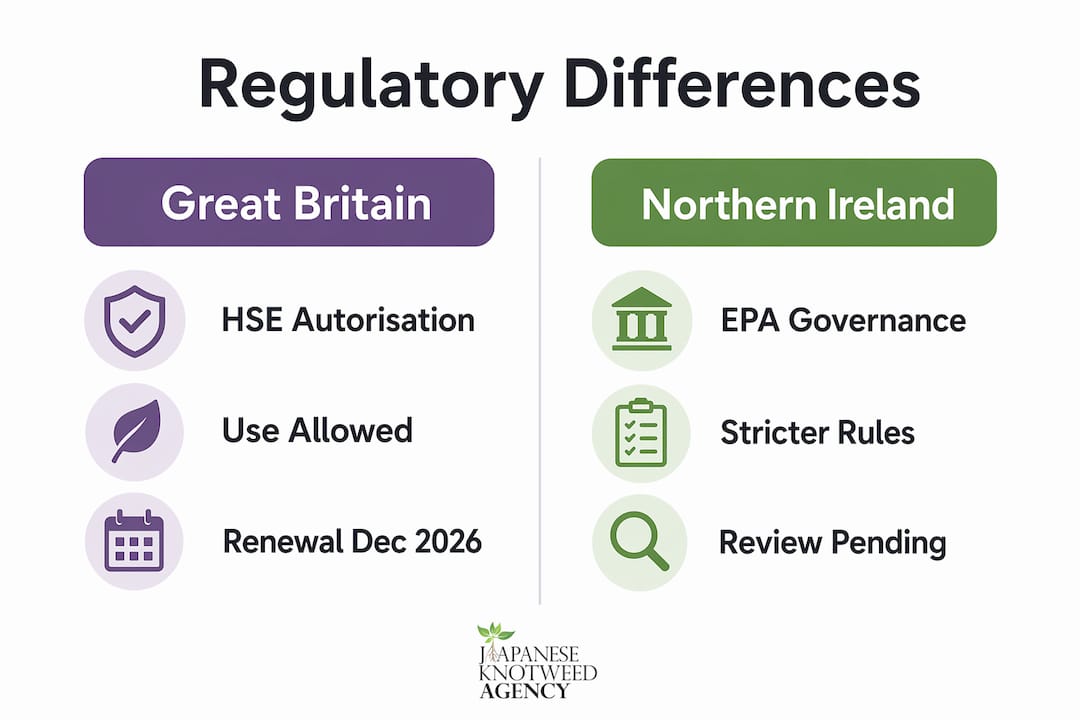
| Region | Regulatory Body | Glyphosate Status | Renewal Timeline |
|---|---|---|---|
| England, Scotland, Wales | HSE (GB) | Authorised to dec 2026 | Renewal decision pending |
| Northern Ireland | EU framework | Aligned with EU approval | Authorised to 2033 |
This divergence has practical consequences. A farmer in County Down operates under different rules to one in Shropshire, even though they may be growing the same crops for the same markets. Northern Ireland’s alignment with the EU means its glyphosate authorisation runs to 2033, providing considerably more regulatory certainty than the GB position.
For import and export, the divergence matters too. Crops grown in GB under current HSE-approved conditions may face scrutiny if exported to EU markets where pre-harvest desiccation is prohibited. Retailers sourcing from both regions must manage residue compliance across different regulatory standards, adding complexity to supply chain management.
The regulatory divergence post-Brexit illustrates how governance differences now have tangible effects on growers, exporters, and consumers across the UK.
What does this mean for gardeners and property owners?
For UK residents and gardeners, glyphosate products such as Roundup remain legally available for purchase and use in 2026. The current glyphosate UK regulations do not restrict domestic garden use, and products sold through retailers like B&Q and Homebase continue to carry HSE approval. The regulatory debate is primarily an agricultural one, focused on large-scale pre-harvest applications rather than garden weed control.
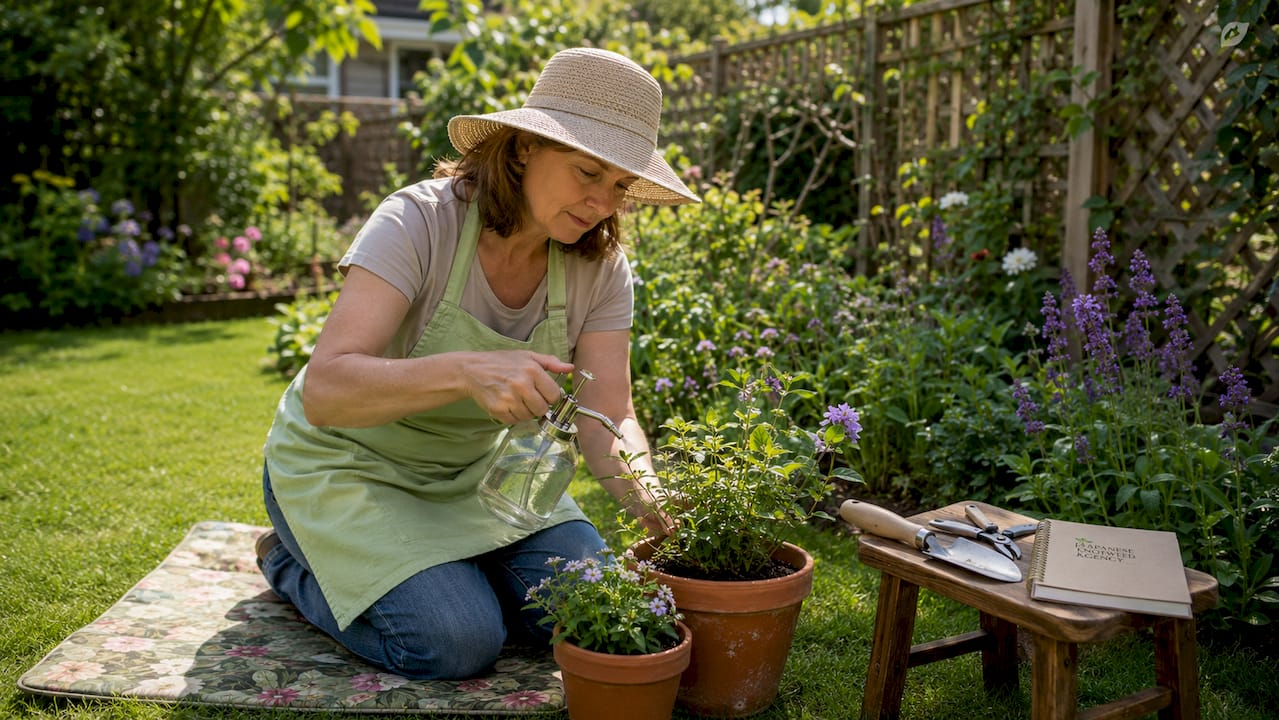
That said, the outcome of the december 2026 renewal decision could affect product availability. If the HSE introduces new restrictions or conditions on authorisation, some formulations may be withdrawn or reformulated. Staying informed about the glyphosate ban news UK developments is worthwhile for anyone who relies on glyphosate-based products for amenity weed control.
For property professionals and homeowners managing invasive species such as Japanese Knotweed, the picture is more nuanced. Supermarkets are increasingly restricting pre-harvest residues in response to consumer pressure, which signals a broader cultural shift towards reduced chemical reliance. That shift is already influencing how land managers and property owners approach weed control.
- Glyphosate garden products remain legally available in GB in 2026.
- The december 2026 renewal decision may affect future product availability.
- Domestic use is not the focus of current regulatory debate.
- Property owners managing invasive weeds should consider chemical-free alternatives.
- Local authorities in cities including Bristol and Bath have already introduced local glyphosate restrictions.
Pro Tip: If you are managing Japanese Knotweed or other invasive species on your property, commission a professional survey before december 2026. Regulatory changes may affect which treatment methods are available, and early documentation protects your position with mortgage lenders.
Key takeaways
Glyphosate remains legal in Great Britain until at least december 2026, but the renewal decision and growing pressure on pre-harvest use mean the regulatory position is unlikely to stay unchanged beyond that date.
| Point | Details |
|---|---|
| Not banned outright | Glyphosate is authorised in GB until 15 december 2026, with renewal pending. |
| Pre-harvest use under pressure | Campaigners and the Soil Association seek a ban on desiccation use, following the EU’s 2023 restriction. |
| GB and NI differ | Northern Ireland follows EU rules, with authorisation running to 2033; GB follows HSE independently. |
| Garden use unaffected currently | Domestic glyphosate products remain available, though the december 2026 decision may change this. |
| Chemical-free options exist | For invasive species management, thermo-electric treatment and root barriers offer viable alternatives. |
The nuance behind the headlines
The phrase “glyphosate banned UK” appears in search engines thousands of times each month, and the gap between that question and the actual regulatory reality is significant. Having worked in invasive species management for years, I have seen how that confusion directly affects property owners, farmers, and land managers making decisions under uncertainty.
The honest position is this: glyphosate is not banned, but it is under genuine scrutiny. The pre-harvest desiccation debate is not a fringe concern. The Soil Association’s near-70,000-signature petition, combined with the EU’s 2023 ban on that specific use, represents a credible policy direction that the UK may eventually follow. The summer 2026 consultation will be the clearest signal yet.
What concerns me more is the tendency to wait for regulatory certainty before acting. If you are a homeowner with Japanese Knotweed on your property, the question of whether glyphosate will remain available after december 2026 is secondary to the question of whether your current management plan is working. Chemical-free methods, including thermo-electric treatment, are already delivering results without the regulatory uncertainty that glyphosate now carries.
The glyphosate ban in Bath and similar local authority decisions show that community-level restrictions are already ahead of national policy. That is worth noting if you are planning a long-term land management strategy.
My advice: treat the december 2026 renewal as a prompt to review your approach, not a deadline to panic about.
— Alan
Manage invasive weeds without the regulatory uncertainty
The ongoing glyphosate debate underlines why chemical-free invasive plant management is gaining ground across the UK. Japaneseknotweedagency specialises in thermo-electric treatment, delivering up to 5,000 volts directly to the rhizome network of Japanese Knotweed and other invasive species, causing internal cell damage without any chemical application.
For homeowners and property professionals who want a treatment approach that sits entirely outside the glyphosate regulatory debate, Japaneseknotweedagency offers chemical-free invasive plant solutions alongside root barrier installation and excavation works. Surveys are carried out across England, Wales, and Ireland. Book a survey to understand your property’s position before regulatory changes alter the options available to you.
FAQ
Is glyphosate currently legal to buy and use in the UK?
Yes. Glyphosate products remain authorised for sale and use in Great Britain as of june 2026, with the HSE licence extended to 15 december 2026 pending a renewal decision.
What is pre-harvest desiccation and why is it controversial?
Pre-harvest desiccation involves spraying glyphosate on crops shortly before harvest to dry them uniformly. The EU banned this practice in 2023, and UK campaigners including the Soil Association are calling for the same restriction in Great Britain.
Will glyphosate be banned in the UK after december 2026?
No decision has been made. The HSE will conduct a public consultation in summer 2026 and review scientific evidence before determining whether to renew, restrict, or refuse authorisation beyond december 2026.
Does the glyphosate debate affect garden weed killers?
Current regulatory debate focuses on agricultural pre-harvest use rather than domestic garden products. However, the december 2026 renewal outcome could affect which formulations remain available to consumers.
Are there chemical-free alternatives for managing invasive plants?
Yes. Thermo-electric treatment, root barrier installation, and excavation are all effective methods for managing Japanese Knotweed and other invasive species without reliance on glyphosate or other herbicides.