Most British homeowners are shocked to learn that Japanese Knotweed causes over £170 million in property damage each year. This invasive plant triggers complex planning permission hurdles and can derail mortgage approvals across England and Wales. Understanding the strict local legal frameworks, survey requirements, and safe, chemical-free removal methods could save you thousands while protecting your investment. Discover how the latest ecological approaches and expert surveys offer practical solutions for long-term peace of mind.
Table of Contents
- Japanese Knotweed and Planning Permission Defined
- Key Legal Frameworks for Invasive Plants
- Survey Requirements Before Building or Buying
- Planning Permission Conditions and Management Plans
- Risks, Liabilities and Mortgage Implications
- Chemical-Free Knotweed Solutions for Homeowners
Key Takeaways
| Point | Details |
|---|---|
| Understanding Legal Obligations | Familiarise yourself with key legislation affecting Japanese Knotweed management to avoid potential legal consequences and financial penalties. |
| Importance of Professional Surveys | Commission a specialised Japanese Knotweed survey before any property transaction to assess risks and develop a management plan. |
| Planning Permission Impact | Japanese Knotweed presence can significantly influence planning permission outcomes; thorough management plans are often required by local authorities. |
| Exploring Alternative Solutions | Investigate environmentally-friendly methods for Japanese Knotweed management that minimise ecological impact while effectively controlling the plant. |
Japanese Knotweed and Planning Permission Defined
Navigating the complex landscape of Japanese Knotweed and planning permission requires understanding the critical legal framework that governs this invasive plant species. In the United Kingdom, Japanese Knotweed represents a significant environmental and property development challenge, with specific regulations that can impact homeowners and potential property transactions. The UK government recognises Japanese knotweed as a major invasive non-native plant that demands careful management and strategic intervention.
Under current legislation, local planning authorities have substantial discretion when assessing development proposals where Japanese Knotweed is present. The presence of this plant can fundamentally alter planning permission decisions, with authorities often requiring comprehensive management plans to mitigate potential environmental and structural risks. The Environment Agency’s code of practice specifically outlines that managing Japanese Knotweed is a crucial consideration for development projects, potentially making specialised treatment protocols a mandatory condition for gaining planning approval.
Homeowners and developers must understand that while there is no legal requirement to remove Japanese Knotweed from private land, authorities can mandate action if its presence poses a risk to neighbouring properties or represents a potential nuisance. This means that during planning permission applications, evidence of a professional, structured approach to Japanese Knotweed management can significantly influence the outcome of your proposal. Detailed surveys, comprehensive treatment plans, and documentation demonstrating responsible management are often critical elements in securing planning permission when this invasive species is identified on a site.
Pro tip: Always commission a professional Japanese Knotweed survey before submitting any planning permission application to understand the full extent of potential challenges and develop a proactive management strategy.
Key Legal Frameworks for Invasive Plants
The legal landscape surrounding invasive plant species in the United Kingdom is complex and multifaceted, with several key legislative frameworks designed to address environmental and property management challenges. Management of Japanese Knotweed is governed by multiple critical pieces of legislation, including the Wildlife and Countryside Act 1981, the Environmental Protection Act 1990, and the Anti-social Behaviour, Crime and Policing Act 2014.
These legislative instruments create a comprehensive legal framework that places significant responsibilities on landowners and property managers. The Wildlife and Countryside Act 1981 specifically makes it an offence to intentionally plant or cause Japanese Knotweed to grow in the wild, while the Environmental Protection Act 1990 provides guidelines for the controlled disposal of contaminated soil. Notably, the Anti-social Behaviour, Crime and Policing Act 2014 enables local authorities to take more direct action against property owners who fail to manage invasive plant infestations effectively.
Understanding these legal frameworks is crucial for homeowners, developers, and property managers. The legislation not only addresses the environmental risks posed by invasive plants but also provides mechanisms for local authorities to intervene when plant species threaten neighbouring properties or public spaces. This means that property owners can be compelled to take action, with potential legal consequences for non-compliance, including financial penalties and enforcement notices that could impact property development plans.
Here’s a summary of the key UK laws governing Japanese Knotweed:
| Legislation | Main Focus | Enforcement Authority | Typical Penalties |
|---|---|---|---|
| Wildlife and Countryside Act 1981 | Prevents spread into the wild | Police, Local Authorities | Fines, prosecution |
| Environmental Protection Act 1990 | Controls disposal of contaminated soil | Environment Agency | Waste notices, fines |
| Anti-social Behaviour, Crime and Policing Act 2014 | Addresses nuisance and neglect | Local Authorities | Legal orders, financial penalties |
Pro tip: Consult a legal professional specialising in environmental law to fully understand your specific obligations regarding invasive plant management on your property.
Survey Requirements Before Building or Buying
Property surveys play a critical role in identifying and managing Japanese Knotweed risks before purchasing or developing land. The Royal Institution of Chartered Surveyors (RICS) has established comprehensive standards for surveying properties with potential invasive plant infestations, ensuring that potential buyers and developers receive detailed information about environmental risks.
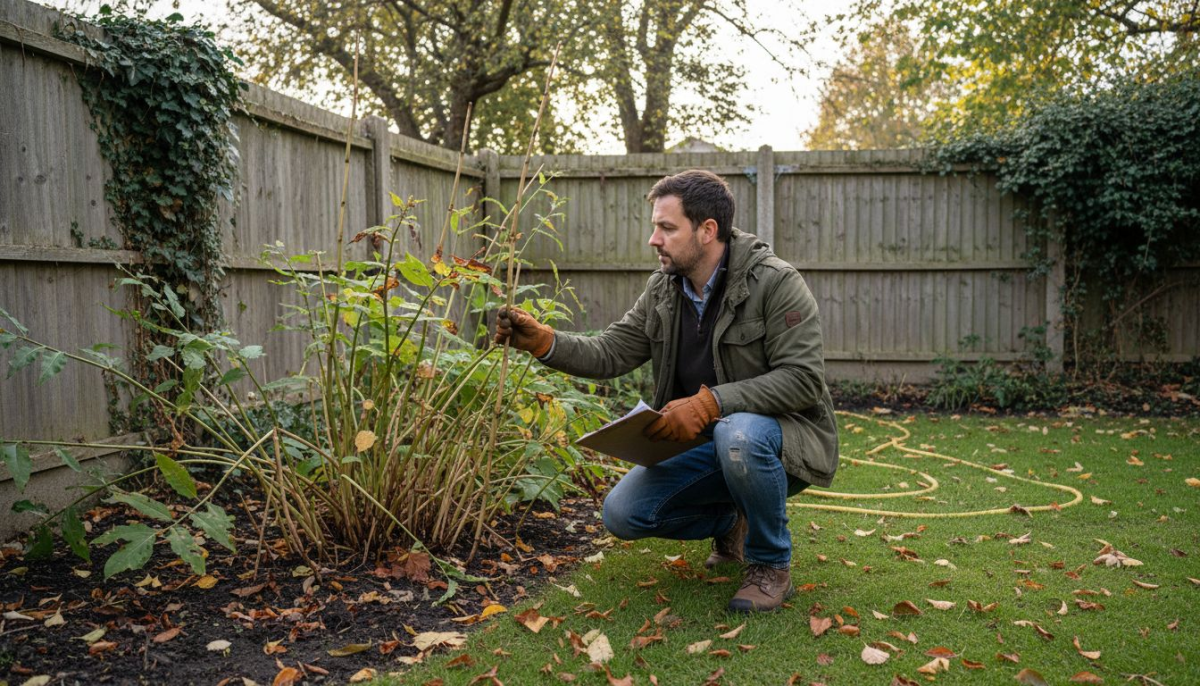
Professional surveyors must conduct thorough investigations that go beyond standard property assessments. Professional guidance for valuers and surveyors emphasises the importance of comprehensive site inspections specifically targeting Japanese Knotweed identification. These investigations typically involve detailed site mapping, visual assessments, and potential ground-penetrating radar or soil testing to determine the precise extent and location of any knotweed infestation.
The survey process is particularly crucial for mortgage applications and property transactions. Lenders and financial institutions now require comprehensive documentation demonstrating that any Japanese Knotweed presence has been professionally assessed and can be effectively managed. This means surveyors must not only identify the plant but also provide a detailed management plan that outlines potential treatment strategies, estimated costs, and long-term mitigation approaches. Failure to conduct a rigorous survey could result in delayed property transactions, reduced property values, or even complete mortgage rejections.
Pro tip: Always request a specialised Japanese Knotweed survey from a qualified professional before finalising any property purchase or development project.
Planning Permission Conditions and Management Plans
Developers and property owners must navigate complex requirements when Japanese Knotweed is present on a development site. The Environment Agency provides comprehensive guidance on management plan submissions for planning permission, establishing critical standards for invasive plant control and documentation.

A robust Japanese Knotweed management plan typically encompasses several key components that local planning authorities carefully scrutinise. These include detailed site surveys documenting the precise extent of knotweed infestation, comprehensive control strategies outlining treatment methodologies, clear responsibility allocations for implementation, and specific protocols for safe disposal of contaminated plant materials. Planning conditions frequently mandate ongoing monitoring and reporting, ensuring that potential environmental risks are systematically addressed throughout the development process.
The implications of inadequate management plans can be significant for property developers and landowners. Local authorities may withhold planning permission, impose additional conditions, or require expensive remediation work if knotweed management strategies are deemed insufficient. This means that developers must approach knotweed management proactively, working closely with ecological specialists to develop thorough, scientifically robust plans that demonstrate a comprehensive understanding of the plant’s potential environmental and structural impacts.
Pro tip: Engage a specialist knotweed management consultant early in your planning process to develop a comprehensive, authoritative management plan that will satisfy planning authority requirements.
Risks, Liabilities and Mortgage Implications
Japanese Knotweed represents a significant financial and legal risk for property owners and potential buyers. Parliamentary evidence highlights the substantial challenges Japanese Knotweed poses for mortgage lenders and property transactions, creating complex implications for property ownership and valuation.
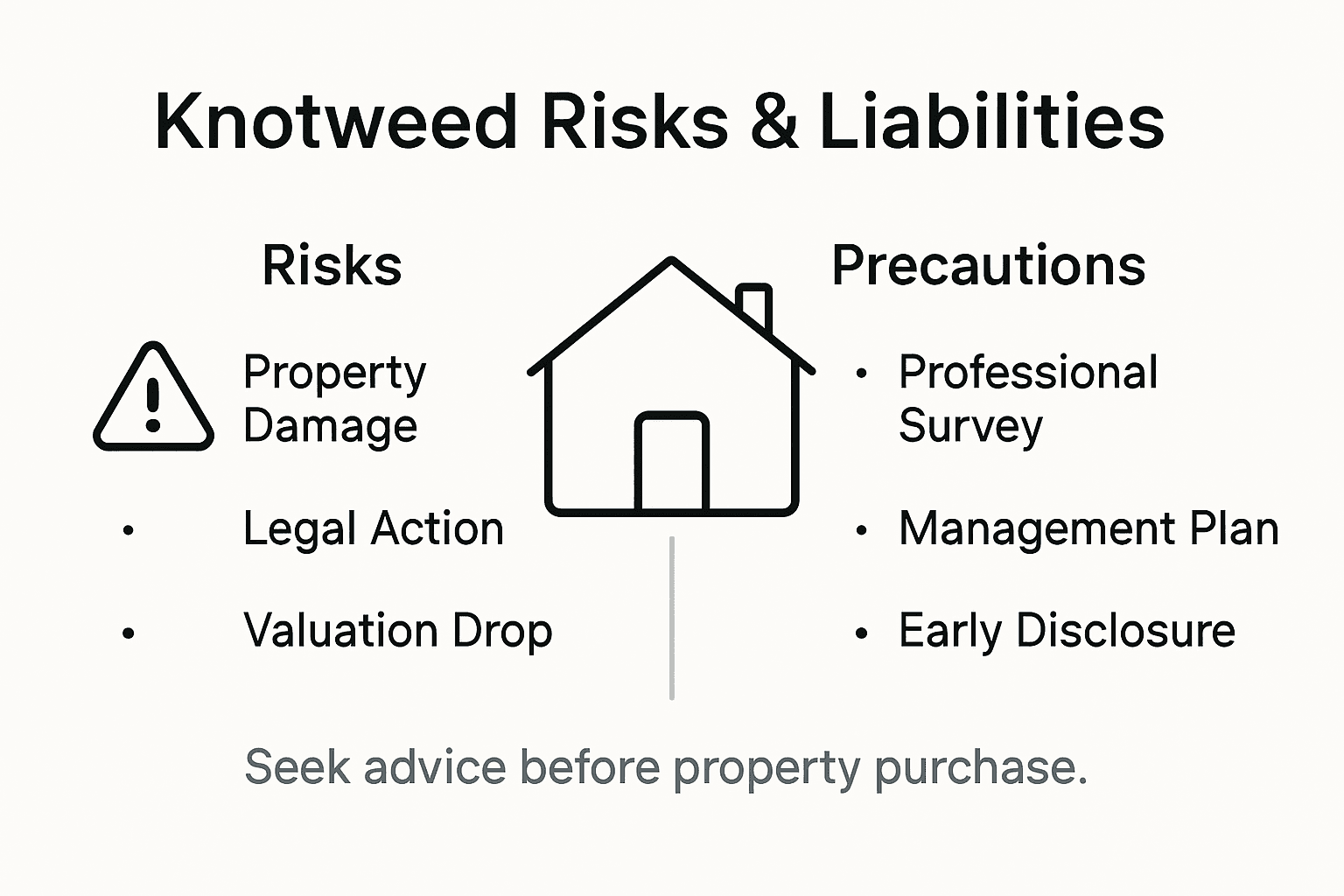
Mortgage lenders have become increasingly stringent in their assessment of properties with Japanese Knotweed presence. Financial institutions typically require comprehensive professional management plans before considering mortgage applications, and the mere presence of this invasive plant can dramatically reduce property values. Potential buyers may find themselves facing significant obstacles, including reduced lending options, increased survey and treatment costs, and potential legal complications that can arise from improper management of the plant.
The legal liabilities associated with Japanese Knotweed extend beyond immediate property transactions. Property owners can be held responsible for allowing the plant to spread to neighbouring properties, potentially facing costly legal disputes and enforcement actions. Insurance providers may impose additional restrictions or refuse coverage for properties with known knotweed infestations, creating long-term financial and legal challenges that can persist well beyond the initial property purchase or development project.
Pro tip: Obtain a comprehensive Japanese Knotweed survey and management plan before purchasing a property to mitigate potential financial and legal risks.
Chemical-Free Knotweed Solutions for Homeowners
Homeowners confronting Japanese Knotweed increasingly seek environmentally responsible alternatives to traditional chemical treatments. Innovative research by the North Wales Wildlife Trust is pioneering chemical-free methods such as deep-soil steaming, offering promising solutions that minimise environmental impact while effectively eradicating this invasive plant species.
Biological control represents another cutting-edge approach to managing Japanese Knotweed without harsh chemicals. The Japanese Knotweed Alliance, in collaboration with research partners like CABI and Defra, is exploring biological control strategies, including trials with the psyllid insect Aphalara itadori. These methods offer a sustainable alternative to traditional herbicide treatments, focusing on long-term ecological management that addresses the root causes of knotweed spread.
Emergent technologies are transforming how homeowners approach knotweed management. Techniques such as targeted thermal treatment, which uses precise heat application to destroy root systems, and advanced physical removal methods provide effective alternatives to chemical interventions. These approaches not only eliminate the immediate knotweed threat but also preserve soil health and surrounding ecosystem integrity, offering a more holistic approach to invasive plant management.
Pro tip: Consult ecological specialists who can provide tailored, chemical-free solutions specific to your property’s unique knotweed challenges.
Comparing chemical-free knotweed solutions for homeowners:
| Method | Typical Application | Environmental Impact | Effectiveness |
|---|---|---|---|
| Deep-soil steaming | Direct soil treatment | Low; no residues | High for small areas |
| Psyllid insects | Biological control | Minimal; natural method | Moderate, longer term |
| Targeted thermal | Heat root systems | Low; preserves soil | Good for local patches |
| Physical removal | Manual excavation | Low; soil disruption | Effective but labour intensive |
Take Control of Japanese Knotweed for Planning Permission Success
Dealing with Japanese Knotweed during your planning permission process can feel overwhelming and stressful. The article highlights the importance of professional surveys, detailed management plans, and clear evidence of responsible knotweed control to meet legal obligations and satisfy local planning authorities. If you want to safeguard your property value, avoid costly delays, and comply confidently with regulations like the Environmental Protection Act 1990 and Wildlife and Countryside Act 1981, expert help is essential.

At Japanese Knotweed Agency, we specialise in cutting-edge chemical-free treatment that targets the invasive root network directly. Our services include precise property surveys across England, Wales and Ireland, effective root barrier installations and expert excavation works. Acting now means you can secure a thorough management plan that accelerates your planning permission approval and removes the knotweed risk for good. Don’t let Japanese Knotweed jeopardise your property investment. Visit Japanese Knotweed Agency to book your survey and explore sustainable treatment solutions today.
Frequently Asked Questions
What should homeowners know about Japanese Knotweed and planning permission?
Homeowners should understand that the presence of Japanese Knotweed can significantly affect planning permission applications. Local authorities may require comprehensive management plans to mitigate risks associated with this invasive plant.
Do I need to remove Japanese Knotweed before applying for planning permission?
While not legally required, homeowners should consider taking action if Japanese Knotweed poses a risk to neighbouring properties. Demonstrating a professional management strategy can help facilitate a smoother planning permission process.
What components should be included in a Japanese Knotweed management plan for planning submissions?
A robust management plan should include detailed site surveys, control strategies for treatment methodologies, responsibilities for implementation, and protocols for safe disposal of contaminated materials. Ongoing monitoring and reporting are also crucial elements.
How does Japanese Knotweed affect property values and mortgage applications?
The presence of Japanese Knotweed can reduce property values and complicate mortgage applications, as lenders often require comprehensive management plans. Failure to address knotweed issues can lead to financial and legal risks for property owners.