
Japanese Knotweed lurks as a costly risk for British homeowners, with studies showing it can cut property values by up to 10 percent. If you are buying or remortgaging in England or Wales, tackling this invasive plant legally and safely is much more than a garden worry. This guide helps you understand your responsibilities, the current laws, and how eco-friendly solutions can protect your property and peace of mind.
Table of Contents
- Japanese Knotweed – Invasive Plant and Legal Status
- Current Laws on Knotweed in England and Wales
- Legal Responsibilities for Property Owners
- Knotweed Disclosure in Homebuying and Remortgaging
- Financial and Legal Consequences for Non-Compliance
Key Takeaways
| Point | Details |
|---|---|
| Invasive Species Legal Status | Japanese Knotweed is classified as a controlled plant under the Wildlife and Countryside Act 1981, imposing legal obligations on property owners to manage its spread. |
| Financial Implications | The presence of Japanese Knotweed can significantly reduce property values and complicate mortgage approvals and insurance coverage. |
| Responsibilities of Property Owners | Landowners are legally required to prevent Japanese Knotweed from spreading and must manage its disposal as controlled waste. |
| Due Diligence in Property Transactions | Homebuyers must conduct professional surveys to identify Japanese Knotweed infestations, as non-disclosure can result in serious legal consequences. |
Japanese Knotweed – Invasive Plant and Legal Status
Japanese Knotweed represents one of the most aggressive and problematic invasive plant species in the United Kingdom, with significant legal implications for property owners and land managers. The UK government classifies Japanese Knotweed as a controlled plant under the Wildlife and Countryside Act 1981, making its management and spread a serious legal concern.
The plant’s extraordinary ability to propagate rapidly through tiny root fragments creates substantial challenges for homeowners and property developers. Even minuscule sections of root can regenerate into full plant systems, enabling it to penetrate building foundations, disrupt infrastructure, and cause extensive structural damage. Property valuations, mortgage approvals, and legal responsibilities are directly impacted by the presence of this invasive species.
Legal frameworks in the United Kingdom mandate specific responsibilities for landowners encountering Japanese Knotweed. Failure to manage or control the plant can result in significant penalties, including potential legal action from neighbouring properties or local authorities. The potential for environmental and structural damage means that comprehensive understanding of invasive plant risks is crucial for responsible property management.
Pro tip: Always conduct a professional survey before purchasing property to identify potential Japanese Knotweed infestations and understand the associated legal and financial implications.
Current Laws on Knotweed in England and Wales
The legal landscape surrounding Japanese Knotweed in England and Wales is complex and multifaceted, with several key legislative frameworks governing its management and control. Multiple statutes create comprehensive obligations for property owners and land managers, establishing clear guidelines for handling this invasive plant species.
Critical legislation includes the Wildlife and Countryside Act 1981, which explicitly prohibits planting or allowing Japanese Knotweed to grow in the wild. The Environmental Protection Act 1990 further complicates management by classifying knotweed-infested soil and removed plant material as controlled waste, requiring specialised disposal procedures. Additionally, the Anti-social Behaviour, Crime and Policing Act 2014 empowers local authorities to issue Community Protection Notices against individuals who fail to manage knotweed effectively.
Welsh government guidance reinforces these national regulations, emphasising strict legal requirements for knotweed control. Property owners face significant potential consequences for non-compliance, including financial penalties and legal actions. The laws are designed to prevent environmental spread and protect neighbouring properties from potential damage caused by this aggressive invasive species.
Pro tip: Consult a legal professional specialising in property law and environmental regulations to understand the full extent of your responsibilities when dealing with Japanese Knotweed.
Here is a summary of the primary UK laws governing Japanese Knotweed:
| Legislation | Main Requirement | Penalty for Breach |
|---|---|---|
| Wildlife and Countryside Act 1981 | Prohibits intentional planting or spread in the wild | Fines, prosecution |
| Environmental Protection Act 1990 | Classifies knotweed waste as controlled; special disposal | Heavy fines, legal action |
| Anti-social Behaviour, Crime & Policing | Community Protection Notices for poor management | Mandatory action, potential fines |
| Welsh Government Guidance | Reinforces national regulations and control standards | Local authority enforcement |
Legal Responsibilities for Property Owners
Property owners in the United Kingdom bear significant legal obligations when it comes to managing Japanese Knotweed on their land. Comprehensive legal frameworks impose strict requirements for preventing the spread of this invasive species, with potential serious consequences for non-compliance.

The primary legal responsibility centres on preventing Japanese Knotweed from spreading to neighbouring properties or into wild environments. Owners must take proactive measures to control and manage the plant, which includes regular monitoring, appropriate treatment, and responsible disposal. Failure to do so can result in substantial legal challenges, including potential nuisance claims from neighbours, government-issued fines, and Community Protection Notices that mandate specific actions.
Disposal of Japanese Knotweed presents another critical legal consideration. The Environmental Protection Act 1990 mandates that all knotweed-contaminated materials must be treated as controlled waste, requiring disposal only at licensed waste management facilities. Improper disposal methods, such as placing infested soil or plant material in standard refuse or composting systems, can lead to significant legal penalties and environmental contamination risks.
Pro tip: Document all Japanese Knotweed management efforts, including professional surveys, treatment records, and disposal certificates, to protect yourself from potential legal disputes.
Knotweed Disclosure in Homebuying and Remortgaging
Professional property surveyors must now categorise and disclose Japanese Knotweed infestations as a critical component of property transactions, fundamentally transforming how homebuying and remortgaging processes operate in the United Kingdom. These disclosure requirements have significant implications for both property sellers and potential buyers, creating a complex legal landscape surrounding invasive plant management.
The Law Society’s TA6 property form now explicitly requires sellers to declare Japanese Knotweed presence on, adjacent to, or abutting their property boundaries. This mandatory disclosure means that withholding information about knotweed can result in serious legal consequences, including potential contract rescission, financial penalties, and legal disputes. Mortgage lenders have become increasingly stringent, often requiring comprehensive management plans and professional surveys before approving financing for properties with knotweed history.
Mortgage providers and financial institutions now treat Japanese Knotweed as a significant risk factor, which can substantially impact property valuations and lending decisions. Potential buyers must conduct thorough due diligence, including professional surveys and comprehensive environmental assessments, to understand the full extent of any knotweed-related risks. The presence of Japanese Knotweed can potentially reduce property values, complicate insurance coverage, and create long-term financial challenges for unsuspecting homeowners.
Pro tip: Always commission a professional environmental survey that specifically checks for Japanese Knotweed before completing any property purchase or remortgaging application.
The table below highlights how Japanese Knotweed can affect property values and transactions:
| Scenario | Impact on Property Value | Mortgage Approval Risk | Insurance Coverage Issues |
|---|---|---|---|
| Knotweed present, not managed | Significant reduction | High risk | Likely exclusions |
| Knotweed present, management plan | Moderate reduction | Possible, with conditions | Limited or higher premiums |
| No knotweed on property | No negative impact | Standard process | Standard coverage |
Financial and Legal Consequences for Non-Compliance
Government regulations establish severe penalties for property owners who fail to manage Japanese Knotweed appropriately, creating a complex legal framework that extends far beyond simple environmental concerns. Property owners can face significant financial and legal repercussions when they do not comply with established guidelines for controlling this invasive plant species.
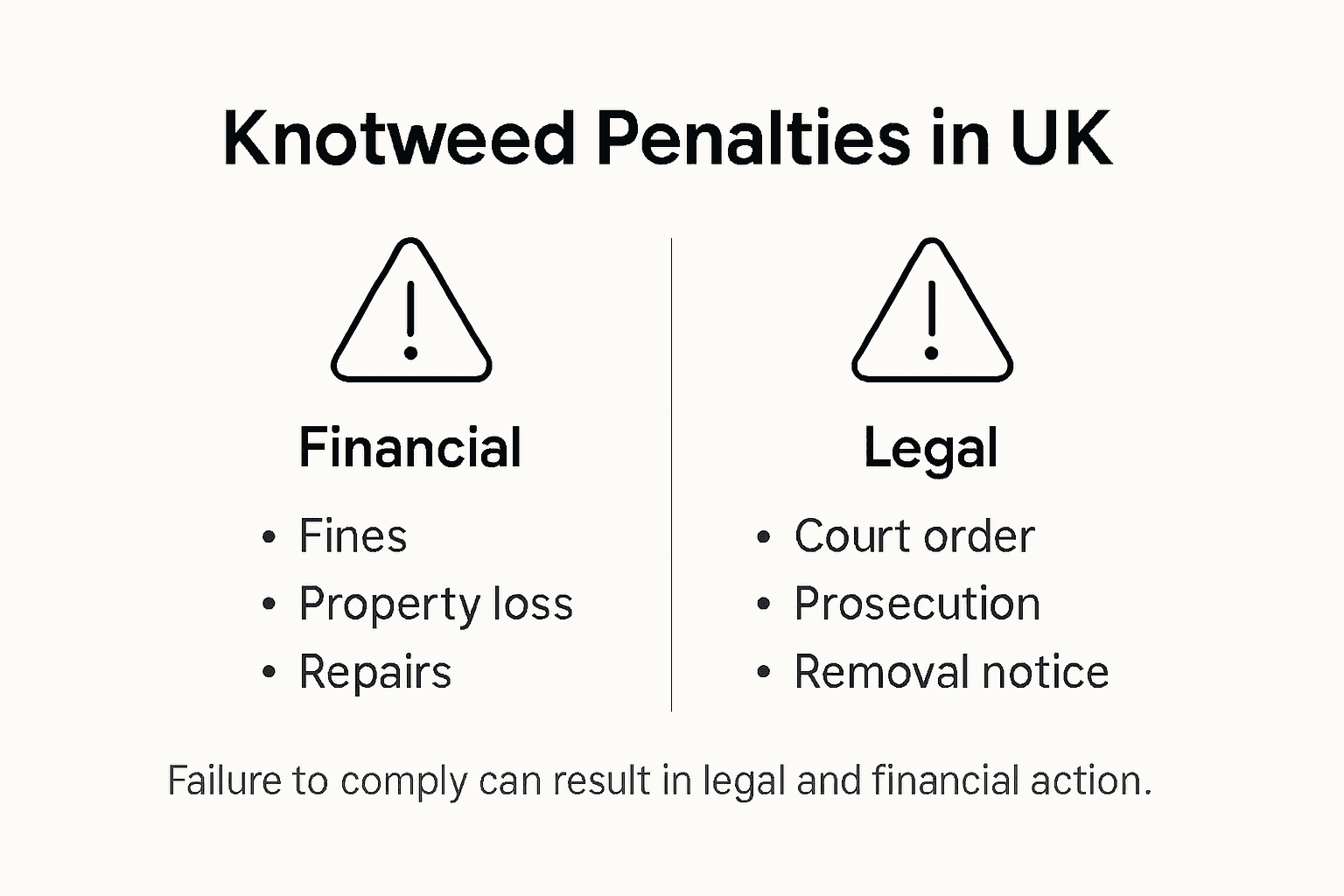
The Environmental Protection Act 1990 provides a robust legal mechanism for prosecution, allowing authorities to issue substantial fines and compel property owners to undertake mandatory remediation efforts. Criminal charges can be brought against individuals who intentionally or negligently allow Japanese Knotweed to spread, with potential penalties including hefty financial sanctions, court-mandated treatment programmes, and even criminal records that can impact future property transactions and personal reputation.
Beyond direct legal penalties, non-compliance can trigger extensive financial consequences that extend to property valuation, mortgage approvals, and insurance coverage. Potential impacts include reduced property market value, difficulty obtaining mortgage financing, increased insurance premiums, and potential civil litigation from neighbouring property owners who suffer damage from uncontrolled knotweed spread. These financial risks can significantly outweigh the initial costs of professional knotweed management and treatment.
Pro tip: Maintain comprehensive documentation of all Japanese Knotweed management efforts, including professional surveys, treatment records, and disposal certificates, to protect yourself from potential legal and financial complications.
Take Control of Japanese Knotweed with Expert Legal Compliance Support
Navigating the complex UK legislation surrounding Japanese Knotweed can be overwhelming for homeowners facing legal responsibilities to prevent its spread and costly penalties. The risks of property devaluation, mortgage complications and enforcement actions from local authorities make professional intervention essential. Our advanced, chemical free treatment targets the invasive rhizome network directly, providing a legal and effective solution to eradicate Japanese Knotweed while protecting your property and peace of mind.

Choose the pioneers in safe Japanese Knotweed treatment. Visit Japanese Knotweed Agency today to arrange a thorough property survey that identifies infestation risks early. Act now to meet your legal duties, avoid financial penalties and secure your home’s future with our expert treatment and root barrier services. Every delay risks further spread and mounting costs.
Frequently Asked Questions
What is Japanese Knotweed and why is it a concern for homeowners?
Japanese Knotweed is an aggressive invasive plant species that can cause significant structural damage to properties. Its ability to propagate rapidly through small root fragments presents challenges for homeowners, impacting property valuations and mortgage approvals.
What legal responsibilities do property owners have regarding Japanese Knotweed?
Property owners must prevent Japanese Knotweed from spreading onto neighbouring properties and manage its presence on their land. This includes monitoring, treatment, and responsible disposal according to established legal frameworks to avoid fines and legal action.
How does Japanese Knotweed affect property transactions and mortgage approvals?
The presence of Japanese Knotweed can lead to reduced property valuations and complicate mortgage approvals, as lenders often require comprehensive management plans and professional surveys before financing properties with knotweed history.
What are the penalties for failing to manage Japanese Knotweed?
Failure to manage Japanese Knotweed appropriately can lead to severe penalties, including substantial fines, mandatory remediation efforts, and potential criminal charges for negligence, which may impact future property transactions and personal reputation.