Most american property owners might be surprised to learn that Japanese knotweed is responsible for billions in damages worldwide each year. This fast-growing plant does not just ruin gardens, it can also crack foundations and lower property values with astonishing speed. Understanding the risks tied to Japanese knotweed can help homeowners protect their investment, avoid legal trouble, and make informed choices about insurance and treatment.
Table of Contents
- What Is Japanese Knotweed and Its Risks
- How Knotweed Affects Homeowners Insurance
- Mortgage Lenders’ Policies on Knotweed Presence
- Legal Duties and Disclosure Requirements
- Treatment Options and Proof for Insurers
Key Takeaways
| Point | Details |
|---|---|
| Invasive Nature of Japanese Knotweed | Japanese knotweed is a highly invasive plant that can cause significant property damage and disrupt local ecosystems. Its robust root system makes eradication extremely challenging. |
| Legal Obligations for Property Owners | Property owners are legally required to prevent the spread of Japanese knotweed and disclose its presence during real estate transactions to avoid legal repercussions. |
| Impact on Homeowners Insurance | Homeowners with Japanese knotweed infestations may face higher insurance premiums, coverage limitations, and additional conditions for securing insurance against property damage. |
| Mortgage Lender Challenges | Mortgage lenders require extensive documentation and treatment plans for properties with knotweed, complicating the loan approval process and potentially impacting property marketability. |
What Is Japanese Knotweed and Its Risks
Japanese knotweed is an extraordinarily aggressive invasive plant species that poses significant risks to property owners and ecosystems across the United Kingdom. Originally introduced in the 19th century as an ornamental garden plant, this seemingly innocuous vegetation has transformed into a major environmental and property management challenge. Japanese knotweed can grow in most soil conditions, particularly thriving in man-made habitats like roadsides and railway embankments.
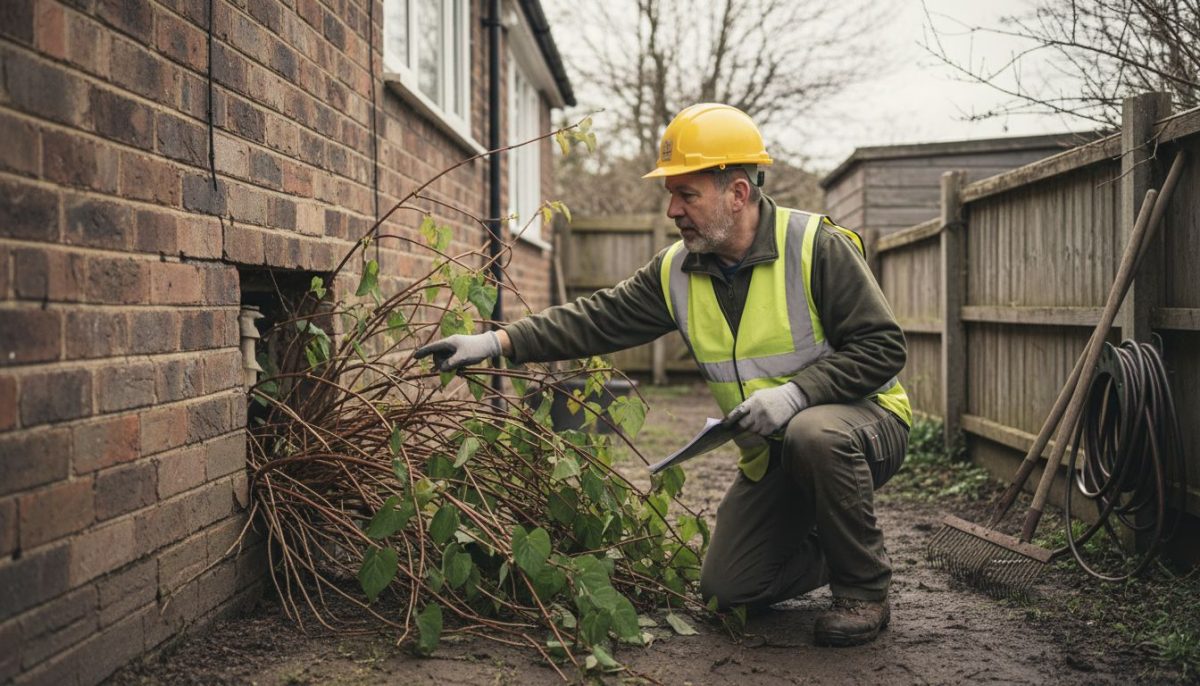
The plant’s most dangerous characteristic is its incredibly robust root system, known as rhizomes, which can spread aggressively and cause substantial structural damage. These underground networks are so resilient that plant fragments as small as 1 centimeter can regenerate into entirely new plants, making complete eradication extremely difficult. The consequences of letting Japanese knotweed spread can be devastating, with potential to compromise building foundations, disrupt pavements, and undermine structural integrity.
The risks associated with Japanese knotweed extend far beyond simple property damage. The plant forms dense stands that effectively outcompete native vegetation, dramatically altering local ecosystems. Its ability to exploit joints and cracks in hard surfaces means it can penetrate concrete, drainage systems, and building foundations with alarming ease. Property owners facing a Japanese knotweed infestation can experience significant financial consequences, including reduced property values, costly removal processes, and potential legal complications if the spread is not promptly and professionally managed.
Key risks of Japanese knotweed include:
- Structural damage to buildings and infrastructure
- Rapid and unpredictable growth patterns
- Significant reduction in property market value
- Potential legal liability for spread to neighboring properties
- Expensive professional removal requirements
- Ecosystem disruption and displacement of native plant species
How Knotweed Affects Homeowners Insurance
Japanese knotweed presents significant challenges for homeowners seeking property insurance, dramatically impacting coverage options and potential financial risks. Japanese knotweed house insurance has become increasingly complex due to the plant’s potential to cause structural damage and reduce property values. Insurers view this invasive species as a serious risk factor that can significantly complicate property ownership and mortgage approvals.

Research from leading universities suggests that the risks might be somewhat overstated, with studies indicating that the plant may pose less structural threat than previously believed. However, most insurance providers remain cautious, often requiring specialized surveys and treatment plans before offering comprehensive coverage. Homeowners with confirmed knotweed infestations frequently face higher premiums, reduced coverage options, and potential difficulties in obtaining mortgage approvals.
The financial implications of Japanese knotweed can be substantial. Insurance companies typically approach knotweed-affected properties with significant scrutiny, potentially refusing coverage or imposing stringent conditions. Homeowners may need to invest in professional eradication services, provide detailed treatment documentation, and demonstrate ongoing management to secure adequate insurance protection. Mortgage issues related to knotweed can further complicate property transactions, potentially reducing market value and making refinancing challenging.
Key insurance considerations for knotweed-affected properties include:
- Higher insurance premiums
- Potential coverage limitations
- Required professional survey documentation
- Mandatory treatment and management plans
- Potential reduction in property marketability
- Additional costs for specialized removal services
Mortgage Lenders’ Policies on Knotweed Presence
Mortgage lenders have developed increasingly strict policies regarding properties with Japanese knotweed, creating significant challenges for homeowners and potential buyers. Getting a mortgage with Japanese knotweed has become a complex process that requires careful documentation and specialized treatment plans. Most financial institutions now require comprehensive evidence of knotweed management and potential eradication before considering loan approval.
Research from university studies suggests that the current lending policies might be disproportionately cautious. The scientific evidence indicates that Japanese knotweed may pose less structural risk than traditionally assumed, yet many mortgage providers continue to maintain conservative lending standards. This approach often results in additional hurdles for property owners, including mandatory professional surveys, treatment certifications, and potential loan denials.
The UK Parliament’s Science and Technology Committee has recommended a more nuanced approach to knotweed assessment, suggesting that lending decisions should be proportionate to the actual physical risks. Despite these recommendations, most mortgage lenders continue to implement stringent policies that can significantly impact property transactions. Potential borrowers with knotweed-affected properties must typically provide extensive documentation, including professional survey reports, comprehensive treatment plans, and ongoing management strategies to demonstrate the property’s long-term viability.
Key considerations for mortgage applicants with knotweed-affected properties include:
- Mandatory professional knotweed surveys
- Detailed treatment and eradication documentation
- Potential requirement for specialized insurance
- Higher likelihood of loan application scrutiny
- Possible need for additional financial guarantees
- Potential additional costs for professional assessments
Legal Duties and Disclosure Requirements
Landowners face significant legal obligations when it comes to managing Japanese knotweed on their property. Government guidance clearly outlines critical responsibilities that property owners must understand to avoid potential legal complications. The primary legal duty centers on preventing the spread of this invasive plant, with serious consequences for those who fail to manage knotweed effectively.
Under the Wildlife and Countryside Act, property owners are legally prohibited from deliberately allowing Japanese knotweed to spread into wild areas. This restriction means that simply ignoring the plant’s presence can result in prosecution. Property sellers must be particularly cautious, as failing to disclose a known knotweed infestation can lead to legal action and potential financial penalties.
The legal landscape surrounding Japanese knotweed extends beyond simple removal requirements. Property transactions now typically involve mandatory disclosure of knotweed presence, with potential buyers having the right to request comprehensive information about any existing infestations. Homeowners may be held liable for damages if they knowingly fail to address a knotweed problem that subsequently impacts neighboring properties or causes structural damage. This creates a complex legal environment where proactive management is not just recommended, but essentially required.
Key legal considerations for property owners include:
- Mandatory prevention of knotweed spread
- Legal obligation to disclose knotweed presence during property sales
- Potential prosecution for intentional or negligent spread
- Liability for damages to neighboring properties
- Required documentation of treatment and management
- Potential financial penalties for non-compliance
Treatment Options and Proof for Insurers
Insurers demand comprehensive documentation and evidence of professional Japanese knotweed treatment to consider coverage for affected properties. Japanese knotweed and its detrimental impact on the property industry highlights the critical importance of systematic eradication strategies that provide verifiable proof of effective management.
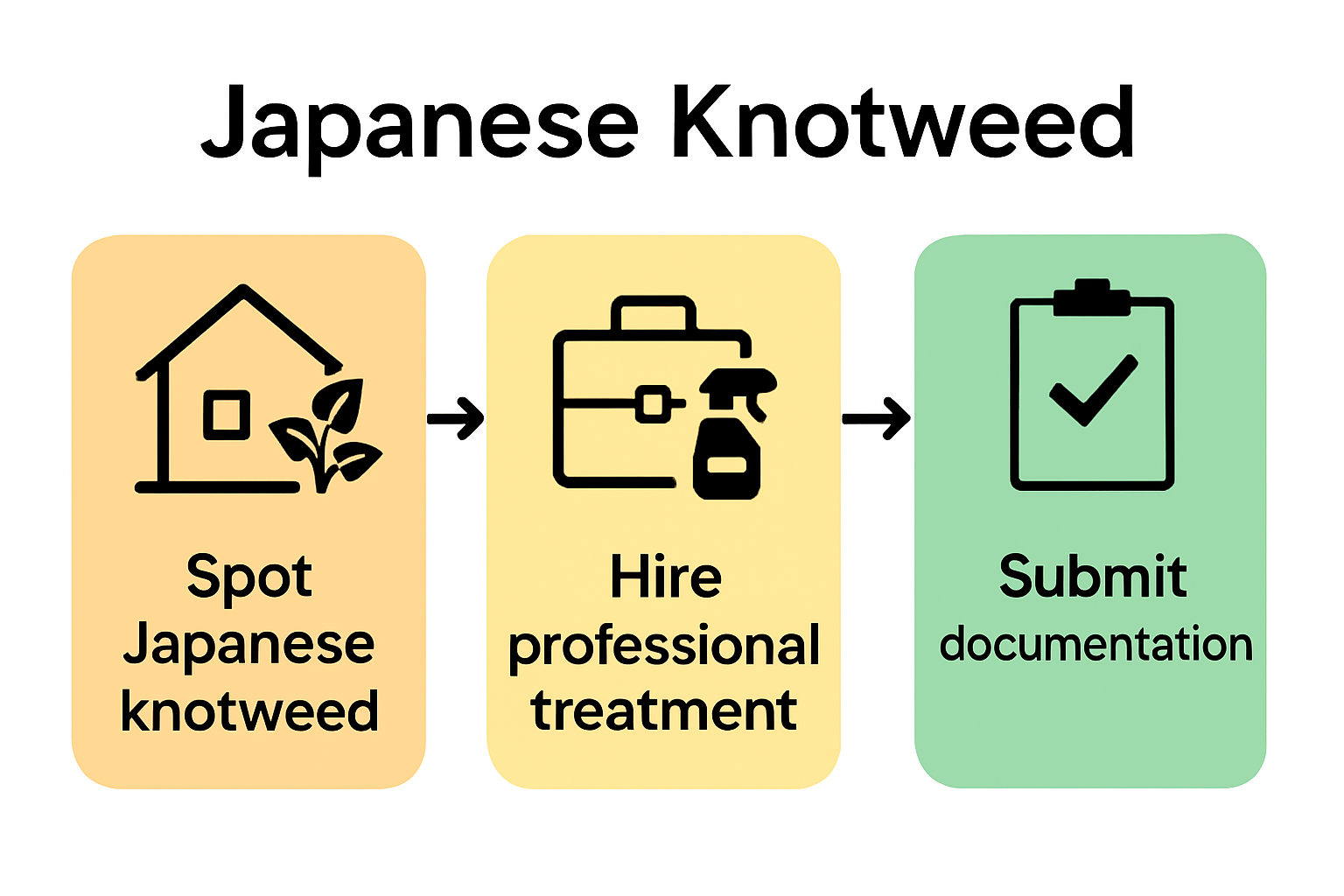
Professional treatment recommendations emphasize the use of specialized herbicide treatments, typically glyphosate-based solutions applied during late summer or autumn. These treatments require professional application and often span two to three years to achieve complete eradication. Insurance providers typically require detailed documentation including treatment plans, professional survey reports, and ongoing management strategies to validate the property’s reduced risk profile.
The most effective treatment approaches combine multiple strategies to demonstrate comprehensive knotweed management. Physical removal techniques, chemical treatments, and root barrier installations provide insurers with multiple layers of evidence that the infestation is being systematically controlled. Property owners must maintain meticulous records of all treatment interventions, including professional assessments, chemical application logs, and follow-up inspection reports to satisfy the stringent documentation requirements of most insurance providers.
Key documentation requirements for insurers include:
- Comprehensive professional survey reports
- Detailed treatment and eradication plans
- Chemical application logs and treatment history
- Ongoing management and monitoring documentation
- Professional certification of treatment effectiveness
- Photographic evidence of treatment progress
Protect Your Property Against Japanese Knotweed Risks Today
Japanese Knotweed presents serious challenges affecting property insurance, mortgage approval, and costly treatments. If you are facing issues like higher premiums, strict lender requirements, or legal obligations to prove effective eradication, you need a solution designed to tackle these pain points head-on. Our chemical-free treatment delivers powerful energy directly to knotweed rhizomes, ensuring thorough control that insurers will recognize. With root barrier installations and expert excavation services, we help you protect your property value and meet the stringent documentation demands outlined throughout this guide.
Take control of the risks linked to Japanese Knotweed by partnering with trusted experts. Visit Japanese Knotweed Agency to explore our treatment options, arrange a professional property survey, and access the reliable documentation needed for your insurance and mortgage processes. Act now to secure your home and avoid the financial and legal pitfalls discussed in this guide.
Frequently Asked Questions
What is Japanese knotweed and why is it a problem for homeowners?
Japanese knotweed is an invasive plant species that can cause significant structural damage to properties due to its aggressive growth and robust root system. It can undermine foundations, pathways, and drainage systems, leading to substantial repair costs and decreased property values.
How does Japanese knotweed affect home insurance coverage?
Japanese knotweed can complicate home insurance coverage, as insurers often see it as a serious risk. Homeowners with infestations may face higher premiums, reduced coverage options, and requirements for specialized surveys and treatment plans before obtaining insurance.
What documentation is required for insurance if Japanese knotweed is present?
Insurers typically require comprehensive documentation, including professional survey reports, detailed treatment plans, chemical application logs, and ongoing management records to validate effective knotweed management.
Are mortgage lenders concerned about properties with Japanese knotweed?
Yes, mortgage lenders have strict policies regarding properties affected by Japanese knotweed. They often require evidence of proper management and treatment before considering lending approval, which can complicate property transactions.