
One in eight British property sales face delays or lost value due to Japanese Knotweed infestations. For homeowners in England and Wales, this stubborn plant can instantly complicate mortgage approval and shrink offers from buyers. The impact reaches deep into legal, financial, and insurance requirements that only certified specialists can properly address. Learn how professional surveys and guaranteed treatment plans protect your home’s value and clear the path for a successful sale.
Table of Contents
- Japanese Knotweed: Impact On Property Sales
- Types Of Knotweed Certification Available
- Legal Requirements For Uk Homeowners
- Mortgage Lender Expectations And Compliance
- Risks Of Uncertified Knotweed Treatment
- Choosing A Reputable Certification Provider
Key Takeaways
| Point | Details |
|---|---|
| Impact on Property Transactions | Japanese knotweed complicates property sales, potentially depreciating value by 10-20% and causing mortgage approval difficulties. |
| Legal Obligations | Homeowners must adhere to strict legal requirements for knotweed management, including professional treatment and disclosure of infestations during sales. |
| Certification Importance | Engaging certified specialists for knotweed management ensures compliance with regulations and enhances property marketability. |
| Risks of Amateur Treatment | Uncertified treatment poses environmental and legal risks, making professional intervention critical for effective management and future property value preservation. |
Japanese knotweed: Impact on property sales
Japanese knotweed represents a significant threat to property transactions across the United Kingdom, creating substantial challenges for homeowners and potential buyers. Published parliamentary research indicates that this invasive plant affects over 1.25% of residential properties, triggering complex legal and financial complications during property sales.
The economic impact of Japanese knotweed extends far beyond mere plant management. Mortgage lenders often hesitate to finance properties with knotweed infestations, creating substantial barriers for sellers. Properties with confirmed knotweed presence can experience property value depreciation between 10-20%, transforming what might seem like a minor botanical issue into a significant financial liability. Surveyors routinely flag knotweed as a serious concern, which can dramatically extend market listing times and reduce potential selling prices.
Professional intervention becomes critical when dealing with Japanese knotweed. Mortgage providers typically require comprehensive treatment plans with insurance guarantees before approving financing. This means property owners must engage certified specialists who can provide documented evidence of complete eradication. The treatment process involves not just removing visible plant growth, but comprehensively addressing the extensive underground rhizome network to prevent future regrowth.
Here is a summary of how Japanese knotweed influences property sales in the UK:
| Area of Impact | Effect on Sellers | Effect on Buyers | Effect on Property Value |
|---|---|---|---|
| Mortgage Approval | Strict documentation required | Increased scrutiny and caution | Often reduced by 10–20% |
| Legal Complications | Risk of enforcement or litigation | Potential legal liability | Added cost for legal compliance |
| Market Time | Listing period often extends | Delayed purchase completion | Lower likelihood of quick sale |
| Remediation Costs | Must fund professional treatment | May inherit ongoing obligations | Financial burden for management |
Pro Tip: Always commission a professional Japanese knotweed survey before listing your property to understand potential risks and develop a strategic management plan.
Types of knotweed certification available
Professional knotweed certification represents a critical pathway for property owners and specialists seeking to manage this invasive plant effectively. The Royal Institution of Chartered Surveyors (RICS) has established professional standards that define comprehensive certification processes, which include detailed risk assessments, surveying protocols, and treatment documentation.
Several key certification types exist within the knotweed management landscape. The ABBE Level 4 Award stands out as a significant qualification, providing professionals with in-depth knowledge about legal responsibilities and management practices. This certification equips specialists with comprehensive understanding of treatment methods, legislative requirements, and industry-standard protocols for managing invasive plant species.

Certification typically involves multiple layers of professional assessment. Qualified surveyors produce comprehensive reports that include detailed site investigations, precise mapping of knotweed spread, potential structural impact assessments, and recommended treatment strategies. These certified documents are crucial for mortgage lenders, who often require explicit evidence of professional intervention and management plans before approving property transactions.
Pro Tip: Ensure any knotweed certification you obtain includes an insurance-backed guarantee to provide maximum protection and credibility for potential property transactions.
The table below compares key knotweed certification standards for UK property management:
| Certification Type | Main Focus Area | Recognising Body | Typical Use Case |
|---|---|---|---|
| ABBE Level 4 Award | Legal and treatment protocols | ABBE | Professional specialists |
| RICS Guidelines | Surveying and risk assessment | RICS | Surveyors and inspectors |
| Insurance-backed Guarantee | Protection post-treatment | Multiple insurers | Mortgage/legal evidence |
Legal requirements for UK homeowners
UK homeowners face significant legal obligations when managing Japanese knotweed on their properties. Government guidance mandates strict protocols for preventing the spread of this invasive plant, with potentially serious consequences for non-compliance. Homeowners are legally required to control and prevent the migration of knotweed to neighbouring properties, ensuring that any management or removal follows rigorous environmental regulations.
The legal framework surrounding knotweed management is complex and multifaceted. Property owners cannot simply treat or dispose of knotweed through informal methods. Any soil or plant material contaminated by knotweed must be treated as controlled waste and can only be removed by licensed professionals. Attempting to manage knotweed without appropriate qualifications can result in significant legal repercussions, including potential enforcement actions by local authorities and substantial financial penalties.
Moreover, the legal implications extend beyond immediate treatment requirements. Homeowners have a duty of care to disclose the presence of Japanese knotweed when selling their property. Failure to reveal known knotweed infestations can lead to potential legal claims, property devaluation, and potential litigation from subsequent property owners. This creates a complex landscape where transparency, professional intervention, and documented management become critical legal and financial considerations.
Pro Tip: Always maintain comprehensive documentation of professional knotweed assessments and treatments to protect yourself legally and financially during property transactions.
Mortgage lender expectations and compliance
Mortgage lenders in the United Kingdom approach Japanese knotweed with exceptional caution, viewing its presence as a significant financial risk. Lenders require comprehensive documentation demonstrating professional management and treatment strategies, making knotweed certification a critical component of successful property transactions. The stringent requirements reflect the potential for structural damage and property value depreciation associated with this invasive plant.
The documentation process is comprehensive and demanding. Potential borrowers must provide professional surveys conducted by accredited specialists, detailed management plans that outline precise treatment protocols, and insurance-backed guarantees that protect against future knotweed regrowth. These guarantees are particularly crucial, as lenders want assurance that the invasive plant will not resurface and compromise the property’s structural integrity or market value.
Each mortgage lender maintains unique yet similar compliance standards regarding Japanese knotweed. While specific requirements may vary slightly between institutions, the core expectations remain consistent: complete transparency, professional assessment, and a robust treatment strategy. Some lenders might require ongoing monitoring reports, while others may demand proof of complete eradication before considering mortgage approval. This creates a complex landscape where property owners must navigate intricate documentation and professional certification processes.
Pro Tip: Engage a specialised knotweed management professional early in the property transaction process to streamline mortgage approval and minimise potential complications.
Risks of uncertified knotweed treatment
Uncertified knotweed treatment represents a significant hazard for property owners, potentially leading to catastrophic environmental and legal consequences. Government guidelines emphasise the critical nature of professional intervention when managing this invasive plant, highlighting the complex risks associated with amateur treatment attempts.
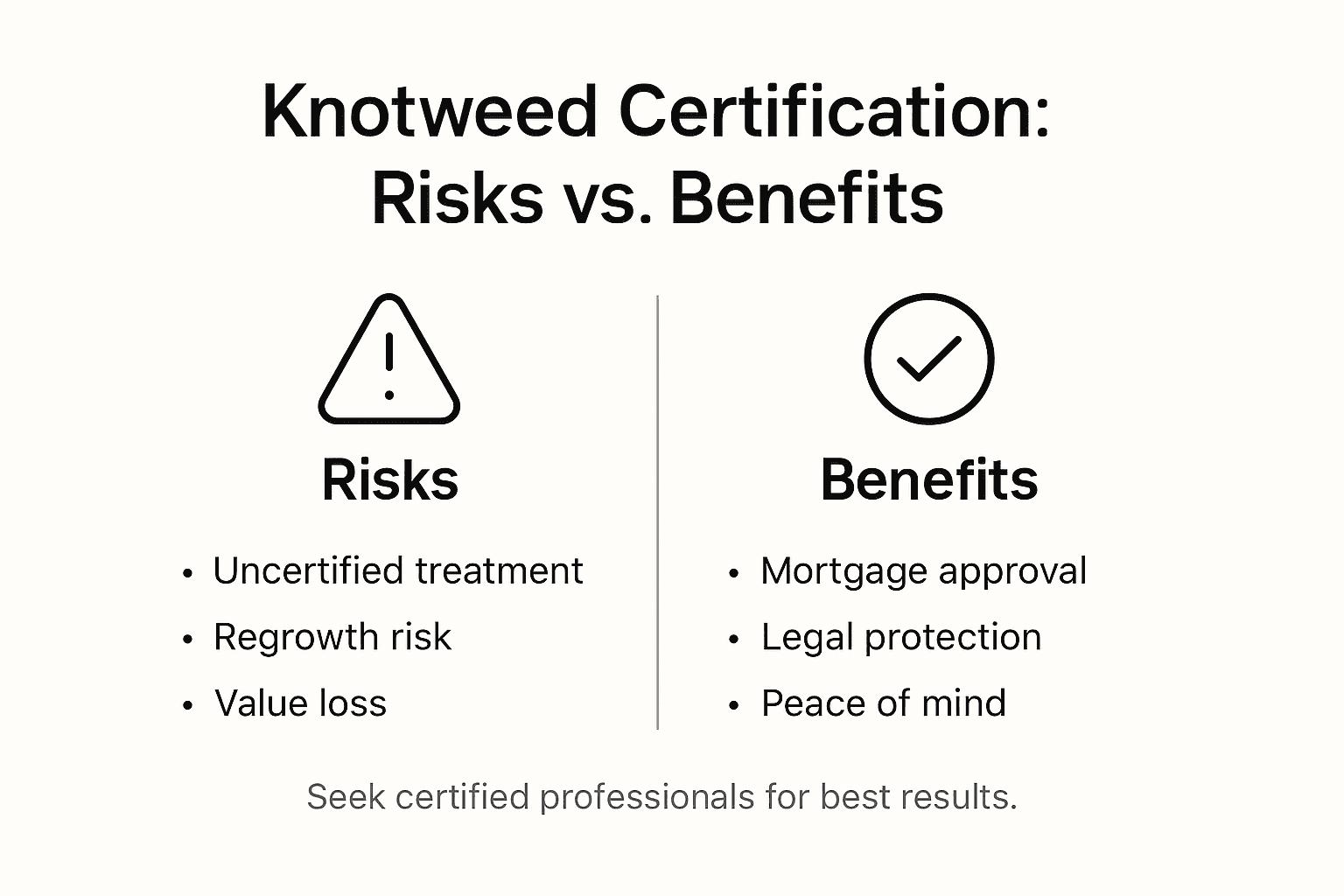
The primary danger lies in the plant’s extraordinary regenerative capabilities. Even microscopic fragments of knotweed rhizomes can trigger rapid regrowth, transforming what seems like a simple removal into a complex ecological challenge. Untrained individuals might inadvertently spread contaminated soil or plant material, potentially creating multiple new infestation sites. This unintentional dispersal can result in substantial legal liabilities, with property owners facing potential enforcement actions and significant financial penalties for improper handling.
Moreover, uncertified treatments compromise several critical aspects of knotweed management. Mortgage lenders and property insurers demand professional documentation and treatment plans, meaning amateur interventions can render a property virtually unmarketable. The lack of certified documentation creates substantial barriers to property transactions, potentially reducing market value and creating long-term financial complications. Professional certification ensures not just effective treatment, but provides the necessary legal documentation that demonstrates responsible environmental management.
Pro Tip: Always engage certified knotweed specialists who can provide comprehensive treatment plans with verifiable documentation to protect your property’s legal and financial integrity.
Choosing a reputable certification provider
Professional certification for Japanese knotweed management requires careful consideration of multiple critical factors. Homeowners must evaluate potential providers based on their technical expertise, legal compliance, and demonstrated track record in successfully managing this invasive plant species. The most reputable certification providers will possess comprehensive understanding of both ecological management and regulatory frameworks.
Key criteria for selecting a certification provider include verifiable professional qualifications, extensive field experience, and recognised industry accreditations. Prospective clients should seek specialists who can demonstrate a proven methodology for knotweed detection, treatment, and ongoing monitoring. This involves comprehensive site surveys, detailed management plans, insurance-backed treatment guarantees, and transparent reporting that satisfies mortgage lender and legal requirements.
Beyond technical competence, a trustworthy certification provider should offer transparent documentation and clear communication throughout the treatment process. This includes providing detailed risk assessments, outlining precise treatment strategies, and delivering comprehensive documentation that can be presented to mortgage lenders, insurers, and potential property buyers. The ability to provide long-term warranties and ongoing monitoring represents a critical differentiator between exceptional and merely adequate knotweed management services.
Pro Tip: Request comprehensive professional portfolios and independently verified client testimonials before engaging any knotweed certification specialist to ensure their credibility and effectiveness.
Secure Your Mortgage Success with Expert Japanese Knotweed Certification
Understanding the critical role of professional knotweed certification in property sales can make the difference between mortgage approval or costly delays. The article highlights how mortgage lenders demand comprehensive documentation and proven management plans as part of their compliance requirements. This is precisely where Japanese Knotweed Agency can help by providing cutting-edge, chemical free treatment that effectively targets the extensive rhizome network, combined with thorough property surveys across England, Wales and Ireland.

Take control of your property’s future now by trusting our proven eradication methods and expert certification. With services ranging from root barrier installation to excavation and detailed invasive weed surveys, we ensure your treatment plan meets lender standards and protects your property value. Don’t let uncertified or incomplete knotweed management stand in your way. Visit Japanese Knotweed Agency to discover how our professional solutions can deliver peace of mind, fast mortgage approval and a smooth sales process. Learn more about our chemical free treatment and property survey services today and secure your mortgage success.
Frequently Asked Questions
What is Japanese knotweed certification?
Japanese knotweed certification is a professional endorsement that confirms effective management and treatment of this invasive plant. It ensures that property owners have complied with legal and ecological guidelines for dealing with knotweed, providing essential documentation for mortgage lenders.
Why do mortgage lenders require knotweed certification?
Mortgage lenders require knotweed certification to mitigate financial risks associated with potential property damage and value depreciation caused by Japanese knotweed. Certified documentation provides assurance that proper treatment has been undertaken, which influences their lending decisions.
What types of knotweed certification are available?
Key types of knotweed certification include the ABBE Level 4 Award, which focuses on legal and treatment protocols, and RICS guidelines that encompass surveying and risk assessment. Insurance-backed guarantees are also crucial for protecting against future issues related to the plant.
What are the risks of uncertified knotweed management?
Uncertified knotweed management can lead to significant legal and environmental consequences, including property devaluation and liabilities due to improper handling. Amateur attempts to treat knotweed may also fail, leading to further infestations and compliance issues with mortgage lenders.