

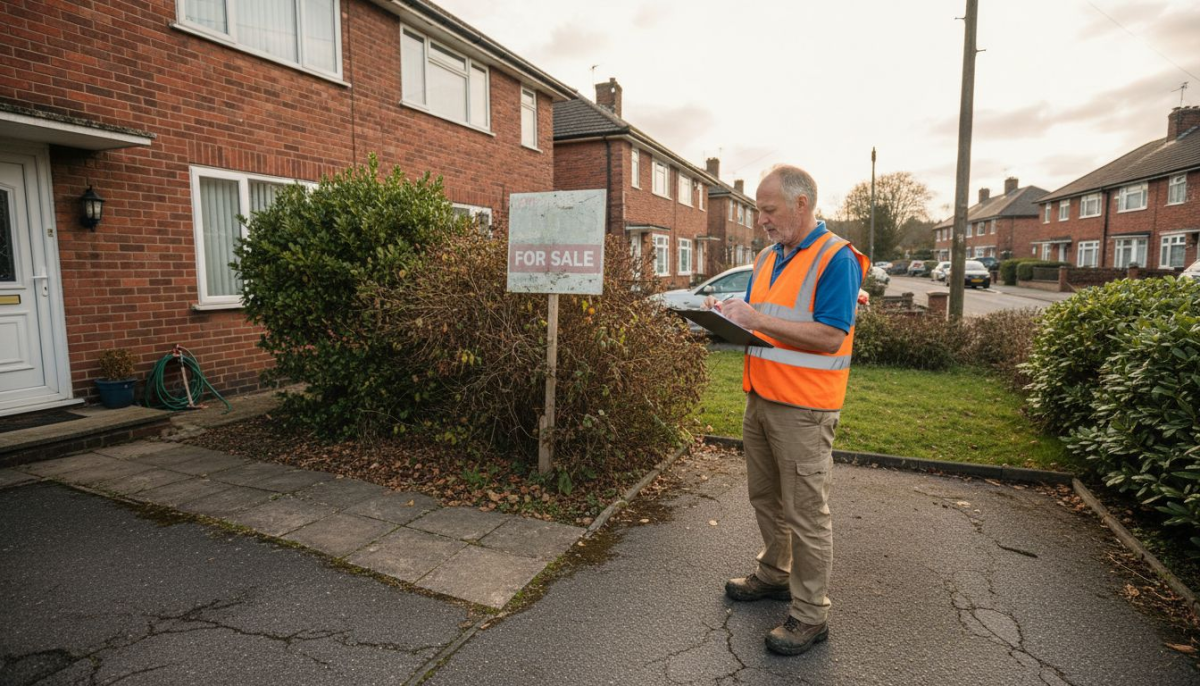
Dealing with Japanese Knotweed is a serious concern for british homeowners and buyers because this invasive species can slash property values by up to 10 percent. If you are buying or remortgaging, understanding and documenting every detail during property surveys is vital. This guide helps you tackle knotweed issues step by step, focusing on chemical-free solutions that protect your investment and satisfy lenders.
Table of Contents
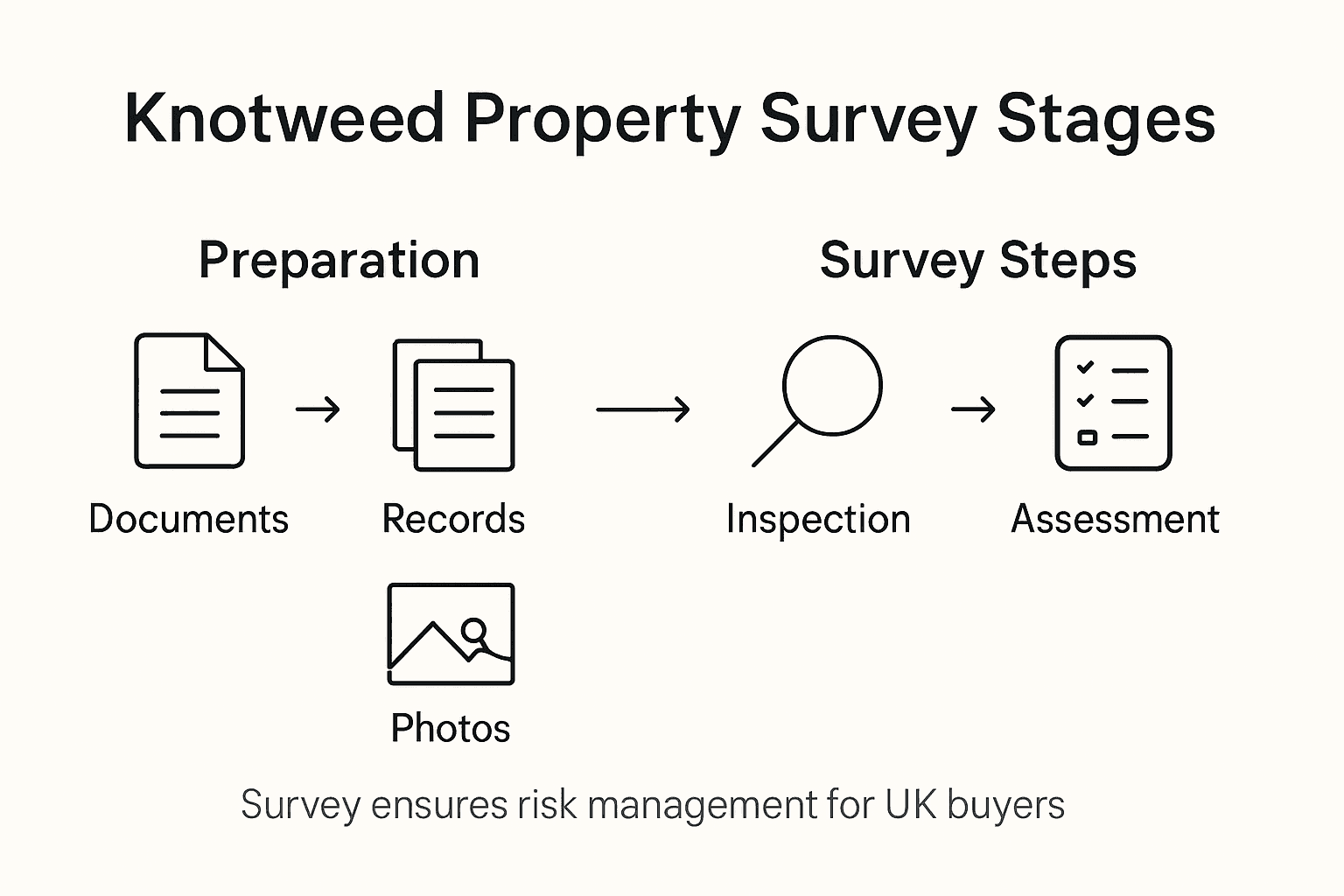
- Step 1: Prepare Key Property Details And Historic Records
- Step 2: Conduct Thorough Onsite Inspection For Knotweed Presence
- Step 3: Assess Extent And Infrastructure Impacts Of Infestation
- Step 4: Verify Chemical-Free Treatment Feasibility And Options
- Step 5: Confirm Survey Findings For Buyer And Lender Requirements
Quick Summary
| Key Point | Explanation |
|---|---|
| 1. Gather Comprehensive Records | Collect essential documents like land registry and historical surveys to understand knotweed history. |
| 2. Perform Detailed Site Inspections | Conduct thorough inspections with trained surveyors to identify knotweed presence and risks. |
| 3. Assess Structural Impact | Evaluate the potential damage knotweed could cause to property infrastructure and document findings. |
| 4. Explore Chemical-Free Treatments | Investigate non-chemical methods for knotweed eradication with experts to protect the environment. |
| 5. Compile a Detailed Report | Create a comprehensive report to meet buyer and lender requirements, detailing findings and management plans. |
Step 1: Prepare key property details and historic records
When dealing with a potential Japanese Knotweed situation, gathering comprehensive property records becomes your first strategic move. Think of this stage as building a detailed evidence trail that will help mortgage lenders, surveyors, and potential buyers understand the complete history of your property’s potential invasive plant challenges.
Start by collecting all relevant property documentation including land registry documents, historic property surveys, architectural plans, and any previous environmental assessments. Your local council might hold valuable historical information about land use and potential knotweed presence. Key documents to gather include property search records from the Land Registry, which can reveal previous land ownership and potential environmental issues. Request copies of building control records, old aerial photographs, and any neighbourhood development plans that might indicate previous landscaping or ground disturbances where knotweed could have been introduced.
While compiling these records, create a chronological folder that includes every piece of documentation. This organised approach will prove invaluable during property surveys and potential legal discussions about knotweed presence. Take time to annotate documents with dates and relevant observations that might help experts understand the potential timeline of any invasive plant growth.
The following table summarises the main types of property documents useful for Japanese Knotweed investigations:
| Document Type | Key Purpose | Where to Obtain |
|---|---|---|
| Land Registry Records | Confirm ownership and environmental history | Government database |
| Historical Surveys | Reveal prior landscaping and plant issues | Council archives |
| Building Control Files | Evidence of building works and disturbances | Local authority |
| Aerial Photographs | Identify past site changes and potential risks | Photographic archives |
| Neighbourhood Plans | Indicate landscaping trends and ground use | Council planning office |
Expert Advice: Create digital backups of all physical documents and store them in a secure cloud storage system to ensure you never lose critical property information.
Step 2: Conduct thorough onsite inspection for knotweed presence
Onsite inspections form the critical cornerstone of identifying potential Japanese Knotweed risks in any property transaction. Your goal during this stage is to thoroughly examine the entire property landscape for any signs of this invasive plant species that could compromise structural integrity or future property value.
Surveyors trained in invasive species identification conduct precise site assessments that go far beyond casual visual scanning. These experts methodically investigate every section of the property including garden areas, boundary lines, driveways, and potential hidden zones where knotweed might establish itself. Pay special attention to areas with previous ground disturbance, landscaping changes, or locations with historical moisture retention. Look for distinctive characteristics such as bamboo-like stems, distinctive red shoots emerging in spring, heart-shaped leaves, and distinctive zigzag growth patterns that are hallmarks of Japanese Knotweed.
During the inspection, document everything meticulously. Take high-resolution photographs from multiple angles, capture GPS coordinates of any potential growth areas, and create a comprehensive written record of your findings. This documentation will be crucial for future treatment plans, mortgage applications, and potential legal discussions regarding the property’s condition.
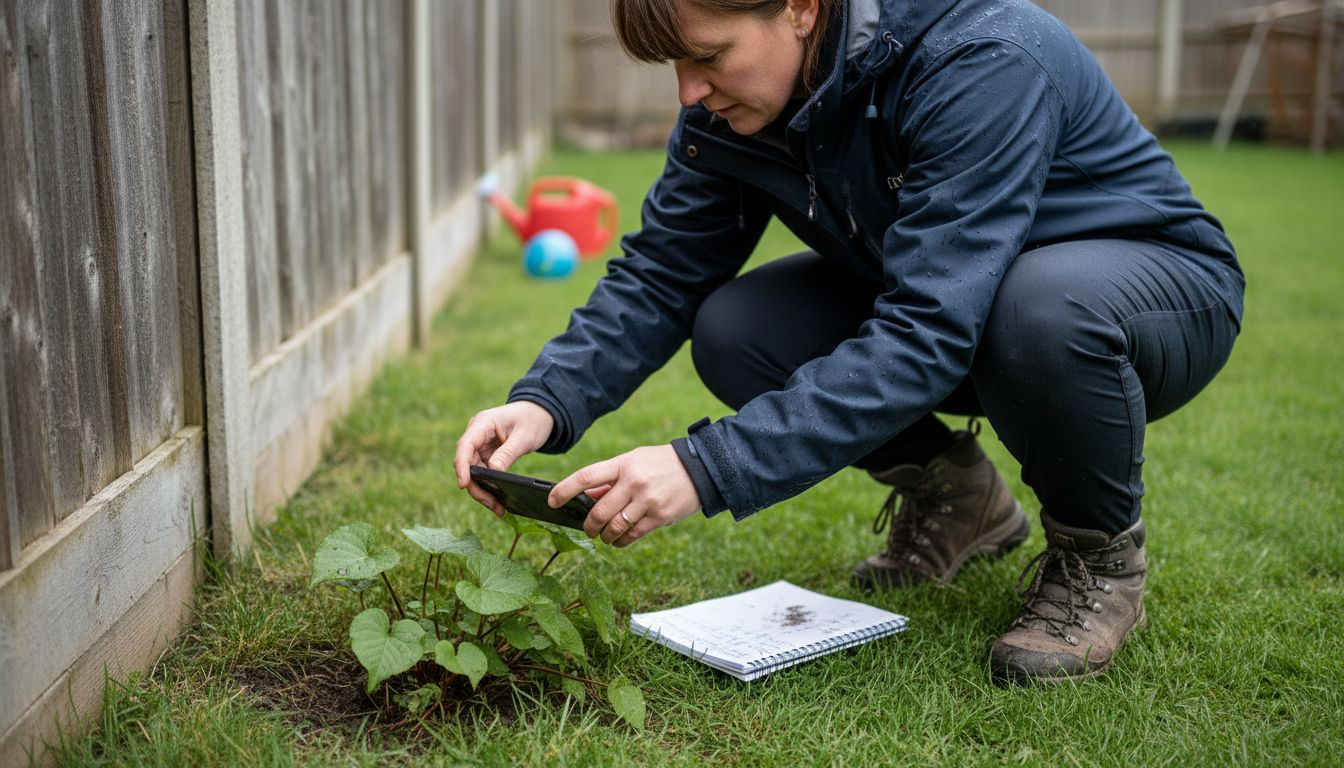
Expert Advice: Always bring a measuring tape and notebook during onsite inspections to record precise growth dimensions and specific location details of any suspected knotweed presence.
Step 3: Assess extent and infrastructure impacts of infestation
Understanding the full scope of a Japanese Knotweed infestation requires a comprehensive evaluation of its potential damage to property infrastructure and surrounding landscape. This critical step goes beyond simple visual identification and delves into the potential long term structural risks posed by this invasive plant.
Surveyors trained in infrastructure damage assessment conduct meticulous investigations that examine the plant’s root system and its proximity to critical structural elements. Their expert analysis considers how knotweed can penetrate foundations, compromise wall structures, and disrupt drainage systems. Pay particular attention to underground root networks that can extend several metres from the visible plant growth. These roots possess remarkable strength and can exert significant pressure on building foundations, concrete surfaces, and underground pipework.
Careful documentation becomes paramount during this assessment. Create detailed maps marking the exact location of knotweed growth, measure the distance between the plant and critical infrastructure, and note any signs of existing structural damage. Photographic evidence should include close-up shots of root systems, growth patterns, and any visible impact on surrounding structures. This comprehensive documentation will be crucial for future treatment plans, insurance claims, and potential property negotiations.
Expert Advice: Request a professional root mapping survey to precisely understand the underground spread and potential structural risks of Japanese Knotweed before making any property investment decisions.
Step 4: Verify chemical-free treatment feasibility and options
Navigating the landscape of Japanese Knotweed treatment requires a strategic approach that balances environmental responsibility with effective eradication techniques. Your primary objective is to explore alternative treatment methods that eliminate the invasive plant without relying on traditional chemical interventions.
Verification of chemical-free treatment strategies involves a comprehensive assessment of site conditions, infestation characteristics, and potential non chemical approaches. Professional experts will evaluate factors such as root system complexity, proximity to critical infrastructure, and environmental constraints to determine the most appropriate treatment method. Options might include thermal treatment techniques, root barrier installations, or targeted excavation approaches that minimise environmental disruption and provide long term eradication.
Consult with specialised invasive plant management professionals who can provide a detailed treatment plan tailored to your specific property conditions. They will conduct precise measurements, assess root network spread, and recommend the most effective chemical-free solution that meets mortgage lender requirements and environmental regulations. Documentation of the proposed treatment plan becomes crucial for securing property transactions and demonstrating proactive management of the knotweed infestation.
Here is a comparison of common chemical-free knotweed treatment methods and their suitability in different property scenarios:
| Treatment Method | Best Applied When | Impact on Environment |
|---|---|---|
| Thermal Eradication | Roots accessible, small infestations | Minimal soil disruption |
| Root Barrier Installation | Near structural elements, future risk zones | Prevents underground spread |
| Targeted Excavation | Large or deep-root infestations | Soil removal needed |
Expert Advice: Request a comprehensive written treatment proposal that explicitly outlines the chemical-free methodology, expected timelines, and guarantee of complete plant eradication.
Step 5: Confirm survey findings for buyer and lender requirements
The final stage of your Japanese Knotweed investigation involves synthesising all collected evidence into a comprehensive report that meets the stringent requirements of potential property buyers and mortgage lenders. Your goal is to create a transparent, detailed document that clearly communicates the extent of any knotweed presence and proposed management strategies.
Carefully compile all documentation from previous survey stages including photographic evidence, root mapping data, precise measurements, and treatment recommendations. Each mortgage lender has specific criteria for accepting Japanese Knotweed survey reports, so ensure your documentation addresses key areas such as current infestation status, potential structural risks, proposed eradication methods, and long term management plans. Include professional assessments that demonstrate a clear understanding of the plant’s impact and a structured approach to complete removal.
Work closely with your surveying professional to review the final report, ensuring all technical details are accurately presented and all potential concerns are comprehensively addressed. Request a formal written statement that can be directly submitted to mortgage providers, outlining the survey findings, treatment methodology, and confirmation of the property’s potential for successful knotweed management. This documentation becomes your critical tool for negotiating property transactions and securing lending approvals.
Expert Advice: Request an official survey report that includes a guarantee of treatment effectiveness and potential reinspection timelines to provide maximum reassurance to potential lenders and buyers.
Secure Your Property Investment with Expert Japanese Knotweed Solutions
Navigating the detailed knotweed property survey workflow can be overwhelming, especially when you face challenges like thorough onsite inspections, root system assessments, and the need for chemical-free treatment verification. The risks to your investment and future home value are real when invasive species threaten property infrastructure.
At Japanese Knotweed Agency, we specialise in chemical-free eradication methods that are both environmentally responsible and highly effective. From delivering up to 5000 volts directly to the rhizome network to expert root barrier installation and excavation, our approach ensures long-lasting results. We also provide comprehensive property surveys across England, Wales, and Ireland, supplying the crucial documentation lenders and buyers require to make confident decisions.
Take control of your Japanese Knotweed concerns today. Access our expert property survey services to get a detailed assessment tailored to your needs. Protect your property value and facilitate smooth transactions by partnering with industry pioneers in knotweed management. Visit Japanese Knotweed Agency now to book your survey or consultation.
Frequently Asked Questions
What documents should I prepare before a Knotweed property survey?
Gather key property details, including land registry records, historic property surveys, and any previous environmental assessments. Collect this documentation to provide a complete picture of your property’s potential knotweed challenges.
How can I conduct an effective onsite inspection for Japanese Knotweed?
Inspect the entire property landscape meticulously, focusing on garden areas and boundary lines. Document any signs of knotweed using high-resolution photographs and precise GPS coordinates to support future treatment plans.
What is the best method for assessing the impact of knotweed on my property’s infrastructure?
Engage a professional surveyor to evaluate the root system’s proximity to structural elements. This assessment helps you understand the potential structural risks and necessary remedial actions.
How do I verify the feasibility of chemical-free treatment options for knotweed?
Consult with specialised invasive plant management professionals to assess your property’s conditions and infestation specifics. They will recommend suitable non-chemical solutions based on provided measurements and site conditions.
What should be included in the final survey report for potential buyers and lenders?
Your final report must encapsulate all collected evidence, including infestation status, structural risks, and proposed management strategies. Ensure it addresses the specific requirements of mortgage lenders to facilitate transaction approvals.
How can I ensure the effectiveness of knotweed treatment and management?
Request a comprehensive written treatment proposal that outlines the methodology, estimated timelines, and guarantees of eradication. This documentation reassures lenders and buyers of your proactive approach to managing the knotweed issue.