

Most British homeowners are unaware that Japanese Knotweed can slash property values by up to 15 percent, creating a nightmare for anyone looking to sell or remortgage. This fast-spreading plant is far more than a garden annoyance in the United Kingdom. If left unchecked, knotweed encroachment may damage buildings, spark legal disputes, and leave you facing large financial burdens. Discover why quick action matters and what every British property owner must know about this silent invader.
Table of Contents
- What Knotweed Encroachment Means
- How Japanese Knotweed Spreads Underground
- Legal Duties And Nuisance Claims
- Costs, Property Value And Mortgage Issues
- Chemical‑Free Control And Prevention Steps
Key Takeaways
| Point | Details |
|---|---|
| Knotweed Encroachment Risk | Japanese Knotweed can cause significant structural damage and reduce property values by up to 15%. Early detection and professional management are crucial. |
| Legal Responsibilities | Property owners are legally obliged to manage knotweed or face potential lawsuits and financial penalties from neighbours. Documenting management efforts is vital. |
| Financial Implications | Treatment costs for knotweed can range from £2,000 to £20,000, impacting property marketability and mortgage approvals. Comprehensive surveys are recommended before transactions. |
| Sustainable Control Options | Chemical-free methods are effective for knotweed management, minimising environmental impact while preventing the plant’s spread. Regular monitoring and professional intervention are essential. |
What knotweed encroachment means
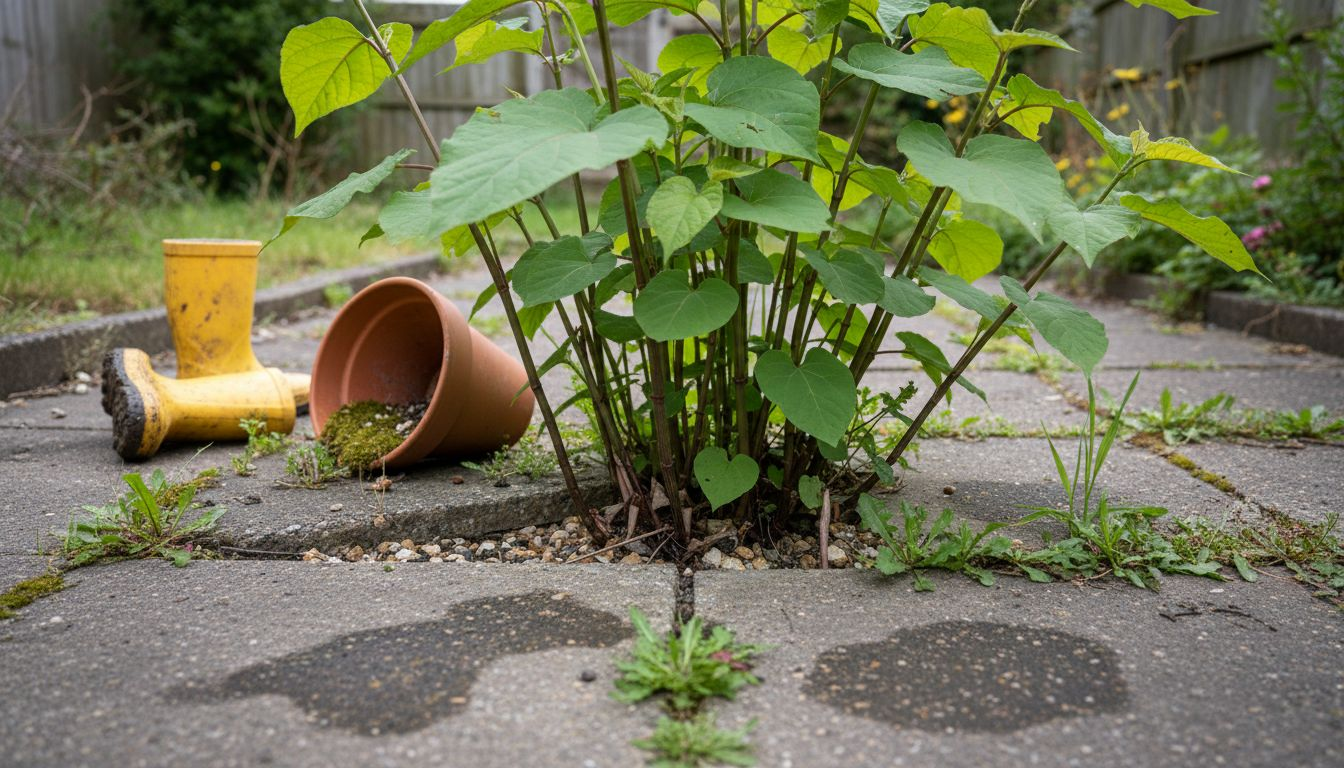
Knotweed encroachment represents an invasive botanical phenomenon where Japanese Knotweed systematically spreads and infiltrates property boundaries, causing significant structural and legal challenges for UK homeowners. This aggressive plant species can penetrate concrete foundations, compromise building structures, and create substantial financial risks through property devaluation and potential legal disputes.
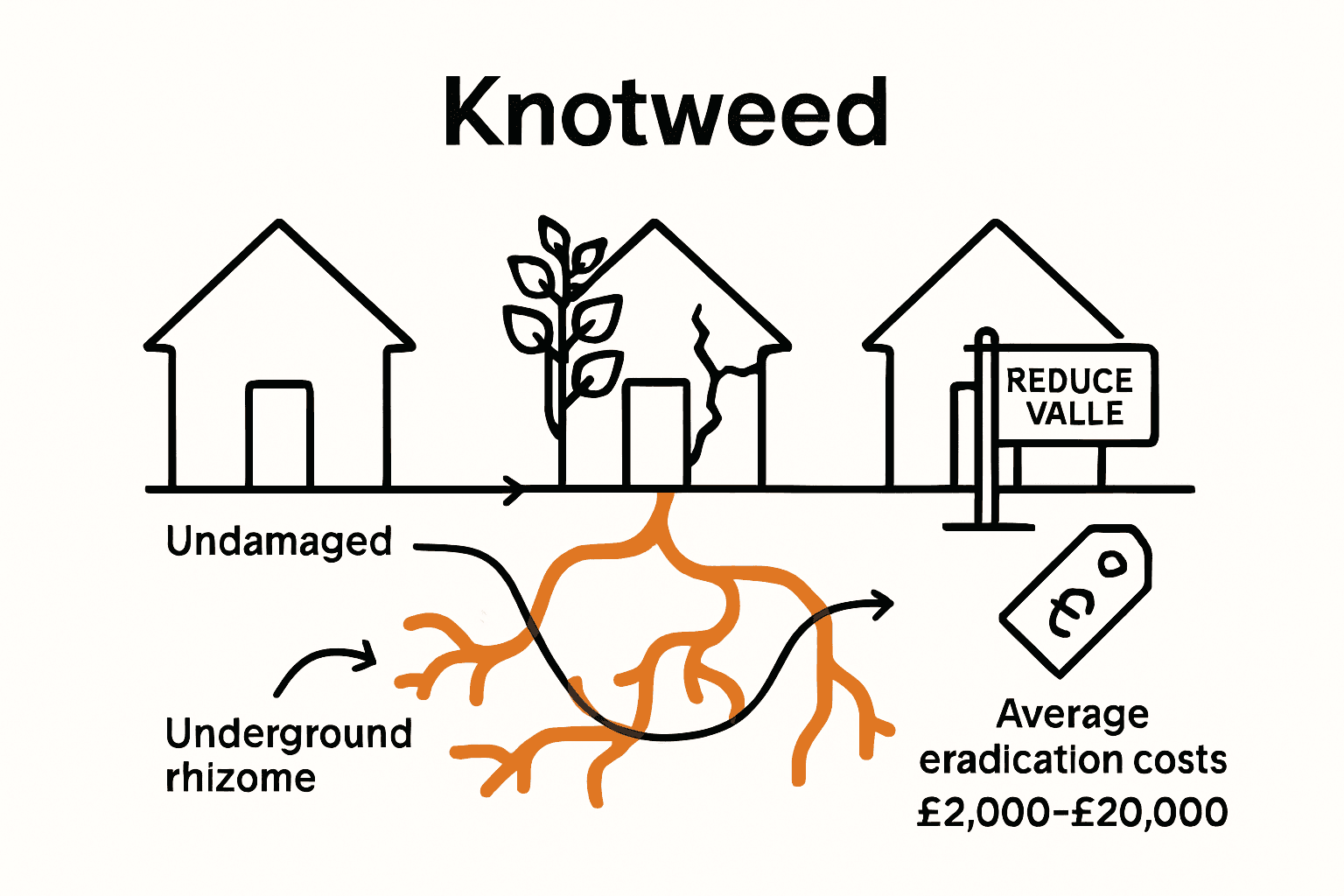
The process of knotweed encroachment begins underground through its extensive rhizome network, which can extend up to 7 metres horizontally and penetrate 3 metres deep. These underground root systems allow the plant to spread rapidly, often breaching property lines without visible surface indication. The consequences of letting Japanese Knotweed spread demonstrate how quickly these plants can transform from a seemingly innocuous garden presence to a significant property threat.
Legal implications of knotweed encroachment are particularly complex in the UK property market. Mortgage lenders and surveyors now routinely assess properties for knotweed presence, with confirmed infestations potentially reducing property values by up to 15%. Neighbours can even pursue legal action if knotweed from one property spreads and damages adjacent land, making early detection and professional management crucial.
Pro Tip: Early Detection Strategy: Conduct professional annual property surveys to identify potential knotweed growth before it becomes an extensive and costly problem, potentially saving thousands in remediation and legal expenses.
Here is a summary of the primary impacts of Japanese knotweed encroachment on UK homeowners:
| Impact Area | Key Consequence | Typical Severity |
|---|---|---|
| Property Structure | Potential foundation and wall damage | Significant risk |
| Legal Liability | Risk of neighbour disputes and lawsuits | High in infested areas |
| Property Value | Up to 15% market value reduction | Major for sellers |
| Mortgage Approval | Survey, treatment, or loan denial required | Considerable difficulty |
How Japanese knotweed spreads underground
Japanese knotweed’s underground spread represents a complex and highly aggressive botanical invasion mechanism that makes it one of the most dangerous invasive plant species in the United Kingdom. How Japanese Knotweed Spreads reveals the extraordinary resilience of this plant’s underground root system, known as rhizomes, which enable rapid and near-uncontrollable expansion across property boundaries.

Underground propagation occurs through an intricate network of rhizome fragments that can regenerate from pieces as small as 1 centimetre. According to government research, these rhizome fragments possess extraordinary regenerative capabilities, allowing new plants to emerge rapidly even from minuscule root sections. This biological characteristic means that traditional removal methods like cutting or digging can paradoxically contribute to the plant’s spread if not executed with extreme precision and professional expertise.
The underground spread of Japanese knotweed follows a strategic pattern of horizontal and vertical expansion. Rhizomes can extend up to 7 metres horizontally and penetrate 3 metres deep, creating an extensive subterranean network that can compromise building foundations, drainage systems, and underground infrastructure. The plant’s ability to grow through tarmac, concrete, and building foundations makes it particularly dangerous for property owners, potentially causing significant structural damage and reducing property values.
Pro Tip: Root Management Strategy: Always engage professional knotweed specialists who use specialised techniques to completely extract rhizome networks, ensuring no fragment remains that could potentially regenerate and restart the invasion.
Legal duties and nuisance claims
Japanese knotweed presents a complex legal landscape for property owners, with significant potential for nuisance claims and legal liability. Comprehensive legal guidance on knotweed responsibilities highlights that landowners bear direct responsibility for controlling and preventing the spread of this invasive plant species across property boundaries.
Under UK property law, Japanese knotweed constitutes a serious legal nuisance that can trigger civil liability claims between neighbours. Property owners who knowingly allow knotweed to spread can face substantial financial penalties, including compensation for damage to adjacent properties, remediation costs, and potential legal proceedings. Courts have consistently ruled that property owners have a legal duty to prevent knotweed from encroaching onto neighbouring land, with failure to act potentially resulting in significant monetary damages.
The legal implications extend beyond simple property boundaries, affecting mortgage approvals, property valuations, and potential sale transactions. Mortgage lenders increasingly require detailed knotweed surveys and treatment plans, with unresolved infestations potentially preventing property sales or refinancing. Potential buyers can also pursue legal action against sellers who fail to disclose known knotweed presence, making transparent communication and proactive management crucial for property owners.
Pro Tip: Legal Protection Strategy: Document all knotweed management efforts, retain professional treatment certificates, and disclose any historical or current knotweed presence during property transactions to mitigate potential legal risks.
Costs, property value and mortgage issues
Japanese knotweed represents a significant financial threat to property owners, with potential impacts ranging from direct treatment costs to substantial reductions in property marketability. Why Knotweed Spreads Fast: Complete UK Guide illustrates the complex economic challenges associated with this invasive plant species, highlighting the potential for extensive financial consequences.
Professional knotweed eradication can cost between £2,000 and £20,000 depending on the infestation’s severity and property size. Property devaluation is particularly concerning, with confirmed knotweed presence potentially reducing market value by up to 15%. Mortgage lenders have become increasingly stringent, often requiring comprehensive treatment plans and professional certification before approving loans. Some financial institutions may refuse mortgage applications entirely or demand significant additional guarantees when knotweed is detected.
The financial implications extend beyond immediate treatment costs. Potential buyers will typically require extensive surveys and may negotiate significant price reductions to account for potential future remediation expenses. Insurance companies are also adapting, with many policies now explicitly excluding knotweed-related damage, leaving property owners financially vulnerable. Ongoing management can involve recurring treatment costs, legal expenses for potential disputes, and potential structural repair investments if the plant has compromised building foundations.
Pro Tip: Financial Protection Strategy: Obtain professional knotweed surveys before property transactions, maintain comprehensive documentation of all treatment efforts, and budget for potential remediation to mitigate unexpected financial risks.
Chemical‑free control and prevention steps
Chemical-free knotweed management represents an innovative approach to controlling this invasive plant species, focusing on sustainable and environmentally responsible eradication techniques. Why Knotweed Persists – Unpacking Roots and Risks highlights the critical importance of comprehensive, non-chemical treatment strategies that target the plant’s complex underground root system.
The primary non-chemical control methods involve targeted physical interventions designed to systematically deplete the plant’s energy resources. These techniques include repeated cutting, excavation, and targeted electrical treatment that disrupts the plant’s internal cellular structure. Professionals use specialised approaches like precise root barrier installations, which prevent horizontal rhizome spread, and thermo-electric treatments that deliver controlled energy directly to the plant’s root network, causing internal cell damage without introducing harmful chemical agents.
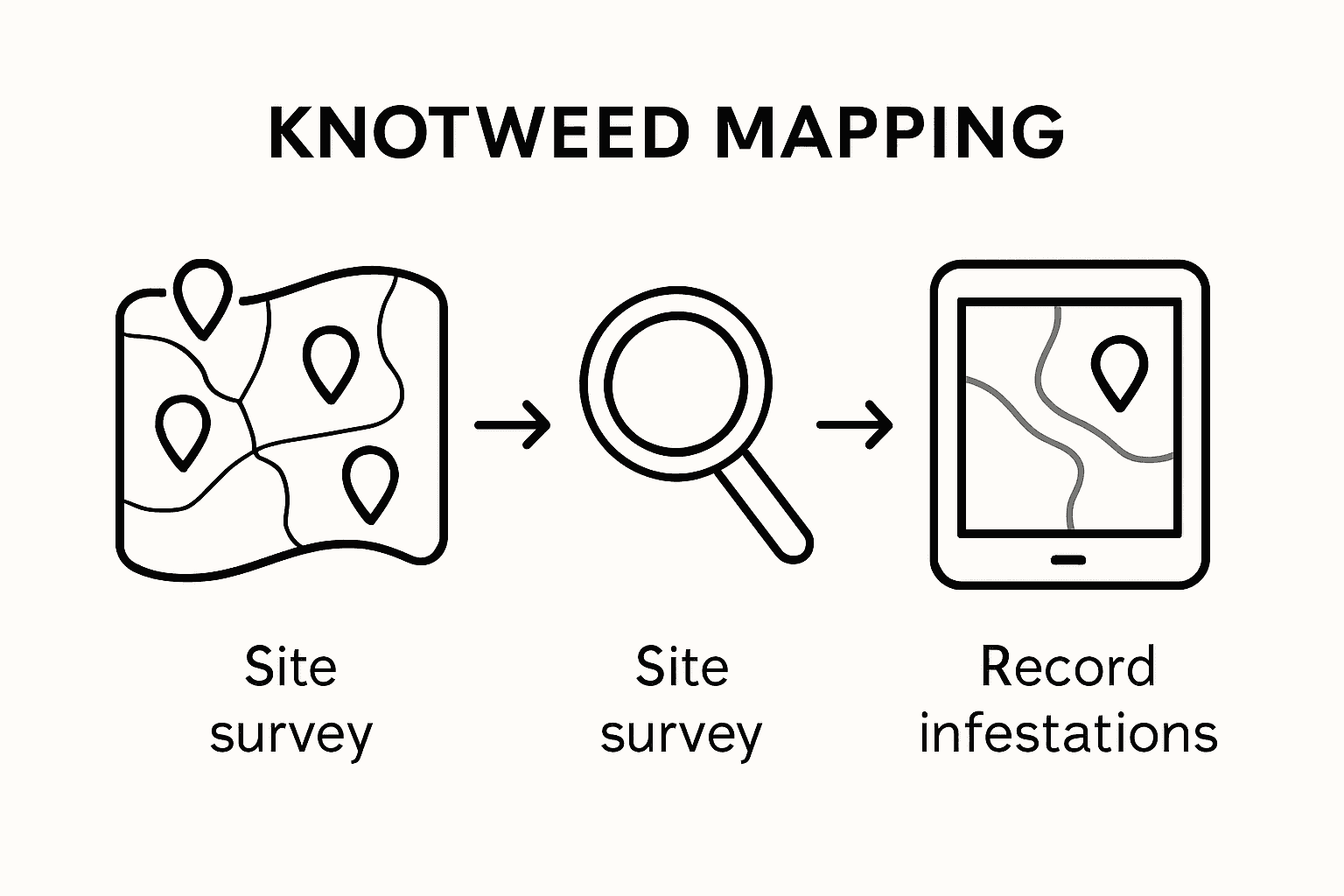
Prevention strategies are equally crucial in chemical-free knotweed management. Property owners should implement comprehensive monitoring programmes, conduct regular ground surveys, and maintain strict landscaping practices that limit potential spread. This includes careful soil management, immediate identification of potential growth areas, and creating physical barriers that prevent rhizome expansion. Collaborative approaches with neighbouring properties can also enhance overall containment efforts, reducing the likelihood of cross-boundary contamination and establishing a proactive defence against potential infestations.
Pro Tip: Sustainable Containment Strategy: Implement a consistent monitoring programme, maintain meticulous ground records, and engage professional specialists who can provide targeted, chemical-free interventions tailored to your specific property’s environmental conditions.
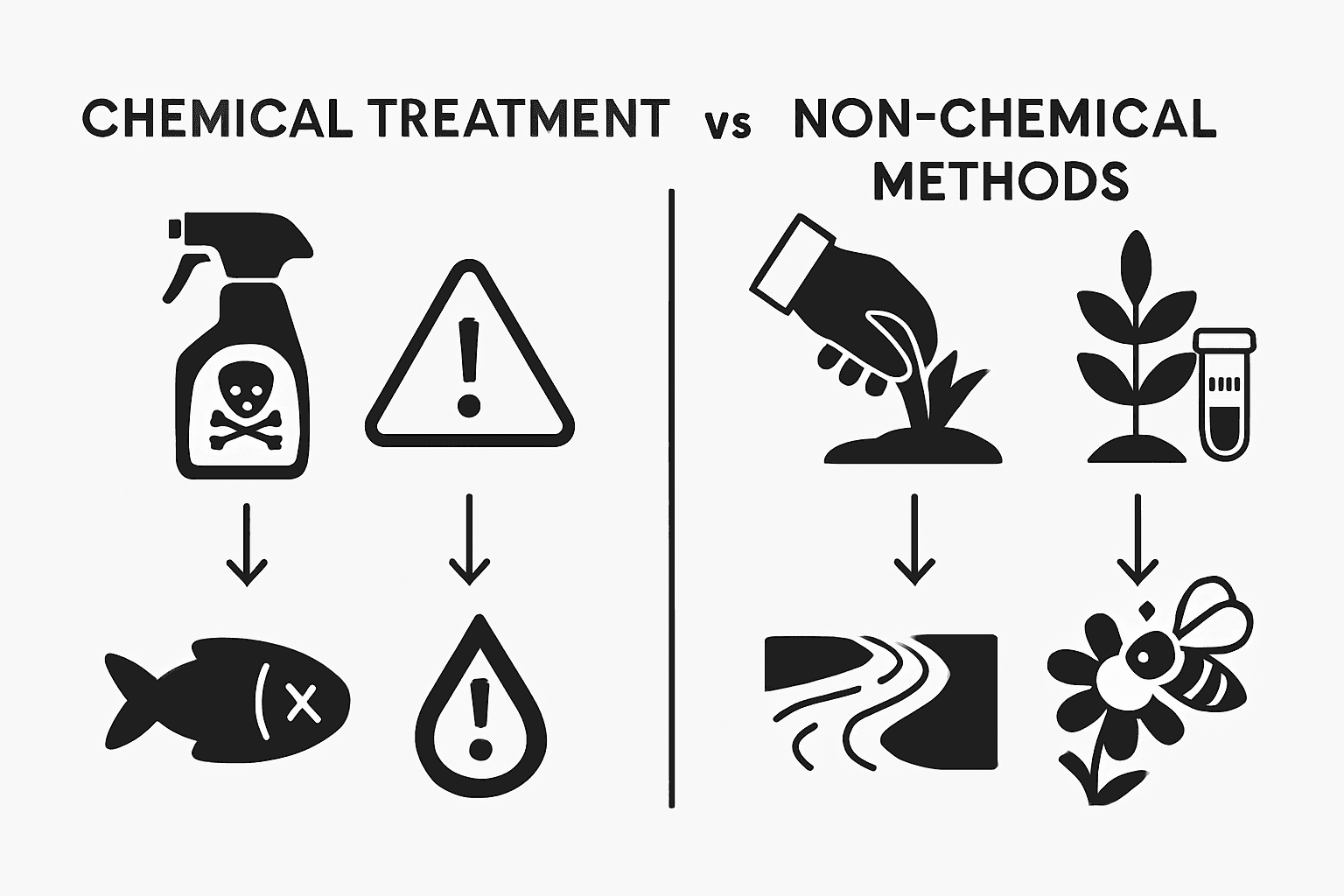
This table compares chemical-free knotweed control methods with traditional chemical approaches:
| Control Approach | Main Tools Used | Environmental Impact | Suitability for Homes |
|---|---|---|---|
| Chemical-Free | Cutting, excavation, root barriers | Minimal, eco-friendly | Very suitable |
| Traditional Chemical | Herbicides and pesticides | High, may harm local flora | Suitable, with caveats |
Protect Your Property from Knotweed Encroachment Today
Japanese Knotweed encroachment poses a serious threat to your property’s structure and value. The extensive underground rhizome network can silently spread beneath your home, causing costly damage and creating legal risks between neighbours. If you want to avoid financial loss and headaches associated with knotweed, early and effective intervention is essential.
At Japanese Knotweed Agency, we specialise in chemical free treatment methods that deliver direct energy up to 5000 volts to deplete the plant’s internal energy reserves. Our expert team also offers root barrier installations and excavation works tailored to halt the underground spread. We conduct comprehensive property surveys for invasive weeds across England, Wales and Ireland so that no infestation goes undetected.
Take control of your property’s future. Visit Japanese Knotweed Agency now to arrange your survey and explore our proven eradication solutions—because acting swiftly can save thousands in structural repairs and legal costs.
Frequently Asked Questions
What is knotweed encroachment?
Knotweed encroachment refers to the invasive spread of Japanese Knotweed, which can penetrate property boundaries and cause significant structural damage and legal challenges for homeowners.
How does Japanese knotweed spread underground?
Japanese knotweed spreads through an intricate network of rhizomes that can extend up to 7 metres horizontally and 3 metres deep, allowing rapid and uncontrollable expansion, often breaching property lines without visible signs.
What are the legal implications of knotweed encroachment for homeowners?
Homeowners are legally responsible for controlling Japanese knotweed on their property. Failure to manage its spread can lead to significant financial penalties, neighbour disputes, and complications concerning mortgage approvals and property sales.
How can property owners manage Japanese knotweed effectively?
Effective management includes conducting professional annual surveys, employing targeted root management strategies, and using chemical-free control methods like cutting and excavation to prevent its further spread.