

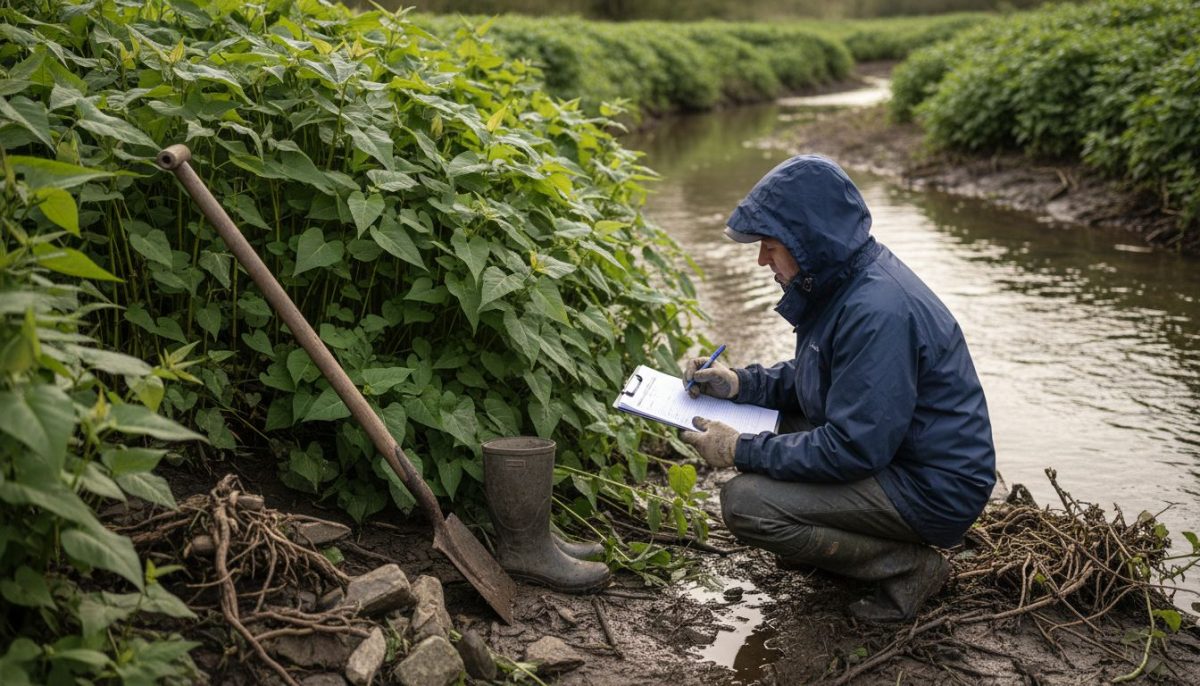
More than 80 percent of American homeowners are unaware of the hidden dangers lurking in their gardens from invasive species like Japanese knotweed. While it may look harmless, Japanese knotweed rapidly overruns landscapes and devastates native ecosystems, posing challenges far beyond basic weed control. Learning how this aggressive plant disrupts American biodiversity and property is essential for anyone seeking practical ways to protect their environment and community.
Table of Contents
- What Makes Knotweed Environmentally Harmful
- Effects on Native Plants and Wildlife
- Ecosystem Disruption and Waterways
- Legal Duties for Homeowners and Authorities
- Chemical-Free Removal: Methods and Benefits
Key Takeaways
| Point | Details |
|---|---|
| Environmental Threat | Japanese Knotweed aggressively disrupts local ecosystems by overwhelming native plant populations and degrading biodiversity. |
| Legal Responsibilities | Homeowners and local authorities must actively manage Knotweed to avoid legal penalties and maintain property values. |
| Chemical-Free Removal | Sustainable, non-chemical methods for removing Knotweed focus on disrupting its root system without harming the environment. |
What Makes Knotweed Environmentally Harmful
Japanese knotweed represents an extraordinary environmental threat that extends far beyond simple plant invasion. This aggressive non-native species disrupts entire ecological systems through its remarkable capacity to outcompete and overwhelm indigenous plant populations. Extensive research from Natural Resources Wales reveals that knotweed forms dense vegetation stands which systematically eliminate native plant diversity.
The environmental harm stems from knotweed’s extraordinary biological characteristics. Its underground rhizome network can extend up to 10 feet deep and spread laterally across 65 feet, enabling rapid colonization of landscapes. These extensive root systems create significant disruption by destroying soil structure, preventing native plant germination, and reducing biodiversity. Moreover, the plant’s aggressive growth pattern means it can penetrate concrete foundations, disrupt riverbank ecosystems, and cause substantial infrastructure damage.
Ecological Disruption Mechanisms:
- Rapid horizontal and vertical root expansion
- Complete suppression of native plant species
- Alteration of soil chemical composition
- Destruction of natural habitat structures
- Reduction in local wildlife food sources
Reports from The Guardian highlight that this invasive species costs the United Kingdom approximately 4 billion pounds annually through environmental and infrastructural damage. The economic and ecological consequences underscore why comprehensive management strategies are crucial for mitigating knotweed’s widespread environmental impact.
Effects on Native Plants and Wildlife
The impact of Japanese knotweed on native ecosystems represents a catastrophic disruption to biological diversity and habitat integrity. Research from Natural Resources Wales demonstrates that this invasive species creates dense vegetation stands capable of completely overwhelming indigenous plant communities, effectively eliminating their ability to survive and reproduce.

Native wildlife suffers profound consequences from knotweed’s aggressive expansion. The plant’s rapid growth and extensive root network systematically destroy habitat structures, reducing food sources and shelter for local animal populations. Insects, small mammals, and ground-dwelling species experience significant habitat compression, as knotweed’s dense foliage blocks sunlight and prevents understory vegetation from establishing. This ecological suffocation means native species lose critical microhabitats that support their survival and reproductive cycles.
Ecological Disruption Consequences:
- Elimination of native plant biodiversity
- Destruction of ground-level wildlife habitats
- Reduction of food sources for native insects and animals
- Blocking of natural sunlight penetration
- Soil nutrient depletion and chemical composition alteration
Invasive species research from The Guardian highlights the broader implications of such biological invasion, demonstrating how knotweed represents more than a localized environmental challenge. The systematic suppression of native ecosystems creates long-term ripple effects that can fundamentally transform landscape ecology, threatening the delicate balance of indigenous biological systems across entire regions.
Ecosystem Disruption and Waterways
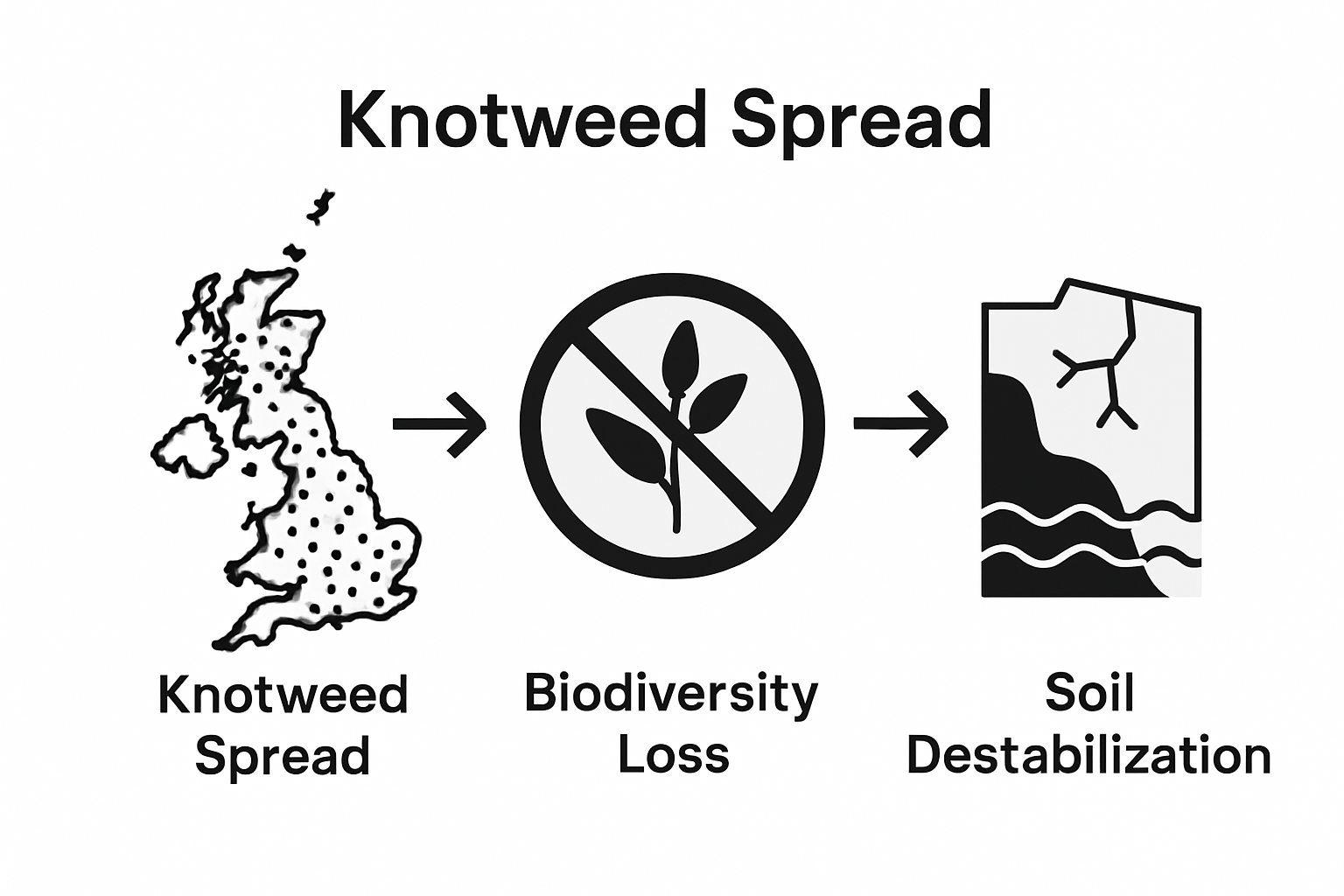
Japanese knotweed’s invasive spread along riverbanks presents a profound threat to aquatic and riparian ecosystems. The plant’s extraordinary ability to propagate through microscopic fragments creates a uniquely destructive mechanism for ecological disruption, particularly within sensitive water corridor environments. Its rhizome network can rapidly colonize riverbanks, destabilizing soil structures and fundamentally altering natural water system dynamics.
The plant’s reproduction strategy represents an ecological nightmare for waterway management. Research from Natural Resources Wales reveals that even tiny stem or root fragments measuring less than a centimeter can generate entirely new plant colonies. This means that river erosion, flooding, or human intervention can inadvertently spread knotweed across extensive geographical areas, creating cascading ecological disruption.
Waterway Ecosystem Impacts:
- Destabilization of riverbank structural integrity
- Displacement of native riparian vegetation
- Reduction of aquatic habitat biodiversity
- Interruption of natural water flow patterns
- Increased soil erosion potential
- Compromised water quality through aggressive root systems
The complex root network of Japanese knotweed fundamentally transforms aquatic environments. By outcompeting native vegetation and creating dense monocultural stands, the plant eliminates critical microhabitats that support fish spawning, insect populations, and diverse riverine ecosystems. The long-term consequences extend beyond immediate visual changes, potentially triggering systemic ecological transformations that can persist for decades.
Legal Duties for Homeowners and Authorities
Government guidelines mandate strict legal responsibilities for property owners and local authorities regarding Japanese knotweed management. The legal framework surrounding this invasive species creates comprehensive obligations that extend beyond simple property maintenance, transforming knotweed control into a critical environmental and legal imperative. Homeowners must proactively prevent the plant’s spread, understanding that any negligence can result in significant financial and legal consequences.
Key Legal Obligations:
- Preventing knotweed from spreading beyond property boundaries
- Properly disposing of contaminated soil and plant material
- Reporting confirmed knotweed infestations
- Implementing approved treatment strategies
- Maintaining detailed documentation of management efforts
Under the Wildlife and Countryside Act 1981, property owners face potential criminal prosecution for intentionally or negligently allowing knotweed to spread. The legal framework classifies knotweed-contaminated soil as controlled waste, requiring specialized disposal methods that can incur substantial expenses. Local authorities bear additional responsibilities, including monitoring public spaces, implementing community awareness programs, and coordinating comprehensive eradication strategies.
The financial and legal risks associated with knotweed management are substantial. Property owners can face significant fines, potential litigation from neighboring properties, and dramatic reductions in property values if knotweed infestations are not professionally managed. Authorities must balance enforcement with supportive guidance, recognizing that effective knotweed control requires a collaborative approach between government entities, property owners, and environmental specialists.
Chemical-Free Removal: Methods and Benefits
Chemical-free Japanese knotweed removal represents a sophisticated approach to invasive species management that prioritizes ecological preservation and long-term sustainability. By targeting the plant’s complex root system through non-chemical interventions, property owners can effectively combat knotweed without introducing potentially harmful environmental contaminants. These methods require strategic planning, consistent effort, and a deep understanding of the plant’s biological characteristics.
Core Chemical-Free Removal Techniques:
- Repeated manual excavation
- Systematic root network disruption
- Targeted energy treatment
- Controlled root zone depletion
- Comprehensive monitoring and intervention
Research indicates that regular pulling can eventually exhaust the rhizome network, though this method demands persistent and calculated intervention. Successful chemical-free removal requires a multifaceted approach that combines mechanical disruption with precise energy application techniques. By systematically depleting the plant’s underground energy reserves, specialists can interrupt its reproductive cycle and prevent further spread.
The benefits of chemical-free removal extend far beyond immediate knotweed eradication. This approach minimizes environmental contamination, preserves soil ecosystem integrity, and eliminates potential health risks associated with chemical treatments. Property owners gain a sustainable solution that addresses the root cause of knotweed proliferation while maintaining ecological balance, ultimately providing a more responsible and comprehensive strategy for invasive species management.
Take Control of Japanese Knotweed’s Environmental Threat Today
Japanese Knotweed’s invasive growth and destructive root networks pose serious risks to native plants, wildlife, and property integrity across the UK. Its ability to disrupt ecosystems and damage infrastructure demands a reliable, chemical-free solution that targets the problem at its source. At Japanese Knotweed Agency, we specialize in exactly that with pioneering treatments that deliver direct energy up to 5000 volts onsite. This unique method causes internal cell damage and depletes the plant’s energy reserves within its extensive rhizome network, preventing regrowth and safeguarding your land without harmful chemicals.

Don’t wait until knotweed spreads beyond control causing costly damage and legal complexities. Benefit from our expert property surveys and proven eradication techniques including precision energy treatments, root barrier installation, and excavation works. Explore how our chemical-free approach preserves soil health and protects native ecosystems. Take action now by visiting Japanese Knotweed Agency to schedule your survey and reclaim your property from this persistent invader.
Frequently Asked Questions
What is Japanese knotweed and why is it considered environmentally harmful?
Japanese knotweed is an aggressive non-native plant species known for its exceptional ability to outcompete native flora, leading to ecological disruption. Its extensive rhizome network damages soil structure and reduces biodiversity, causing significant harm to local ecosystems.
How does Japanese knotweed affect native plants and wildlife?
Japanese knotweed creates dense vegetation that overwhelms indigenous plant communities, resulting in habitat destruction for local wildlife. This negatively impacts food sources for insects and animals while blocking sunlight necessary for other plants to thrive.
What impact does Japanese knotweed have on waterways and riverbank ecosystems?
Knotweed destabilizes riverbanks and alters natural water flow patterns, which can lead to increased soil erosion and displacement of native riparian vegetation. Its aggressive spread can compromise aquatic habitats, affecting fish and other wildlife.
What are the legal responsibilities of homeowners regarding Japanese knotweed?
Homeowners must prevent the spread of Japanese knotweed beyond their property boundaries, dispose of contaminated materials properly, and report infestations. Failure to comply can result in significant financial penalties and legal repercussions.