


Most American homeowners are surprised to learn that Japanese knotweed can grow through concrete and cost thousands in property damage. Tackling this invasive plant is more than just a nuisance—it can impact your home’s value, safety, and even legal standing. Practical strategies that stop knotweed at its source give you real power to protect your property for the long term.
Table of Contents
- Step 1: Assess Existing Knotweed Infestations Thoroughly
- Step 2: Remove Visible Shoots And Invasive Rhizomes Safely
- Step 3: Install Root Barriers To Stop Underground Spread
- Step 4: Apply Direct Energy Treatments For Internal Cell Damage
- Step 5: Monitor Treated Areas And Verify Regrowth Prevention
Quick Summary
| Key Insight | Explanation |
|---|---|
| 1. Thoroughly assess knotweed infestations | Conduct detailed visual inspections to identify Japanese knotweed and its spread across your property. Focus on areas with prior disturbances. |
| 2. Safely remove visible shoots and rhizomes | Cut and collect all visible plant material, using disinfected tools, and dispose of it properly to prevent regrowth. |
| 3. Install effective root barriers | Excavate a trench and install high-density polyethylene membranes to block knotweed roots from spreading into new areas. |
| 4. Apply direct energy treatments | Use electrical currents to disrupt knotweed’s cellular structure, ensuring multiple treatment sessions for comprehensive coverage. |
| 5. Monitor treated areas regularly | Inspect treated zones every three to six months for signs of regrowth, documenting findings to confirm effective eradication. |
Step 1: Assess existing knotweed infestations thoroughly
Thoroughly assessing a Japanese knotweed infestation requires careful visual inspection and systematic evaluation of your property. The first step involves identifying the distinctive characteristics of this invasive plant species and understanding its potential spread across your landscape.
Begin by examining the areas most likely to harbor knotweed growth, such as property boundaries, garden edges, and areas with previous ground disturbance. Japanese knotweed typically presents with bamboo like stems, reddish purple shoots in spring, and large heart shaped green leaves that can grow up to 10 centimeters wide. Pay special attention to patches where the ground seems unusually dense or where previous landscaping work might have occurred. The UK government guidelines emphasize that knotweed can spread rapidly through underground rhizome networks, making a comprehensive visual survey critical.
Warning: Even small patches of knotweed can indicate a much larger underground root system. Professionals recommend mapping out the entire potential infestation area and noting the specific locations of visible plant growth. Your next step will involve determining the extent of the spread and preparing for targeted removal strategies.
Step 2: Remove visible shoots and invasive rhizomes safely
Removing Japanese knotweed requires a strategic and careful approach to prevent further spread of this aggressive invasive plant. Your primary goal is to eliminate both visible plant material and the extensive underground root system without risking additional contamination.
Begin by carefully cutting and removing all visible shoots at ground level, ensuring you use clean cutting tools that can be thoroughly disinfected between uses. Invasive plant management requires precision to minimize the risk of spreading rhizome fragments. Government guidelines emphasize the critical importance of collecting all plant material in sealed plastic bags for proper disposal at licensed waste facilities. Never attempt to compost knotweed material or dispose of it in standard green waste collections, as even tiny root fragments can regenerate into new plants.
Warning: Mechanical removal is complex and potentially ineffective if not done comprehensively. Small root fragments as tiny as 0.7 grams can regenerate into entirely new plants, making complete extraction challenging. Professional treatment methods often involve specialized techniques that target the entire underground rhizome network to prevent regrowth. Your next step will involve carefully documenting the removal process and preparing for potential follow up treatments to ensure complete eradication.
Step 3: Install root barriers to stop underground spread
Installing root barriers is a critical strategy for preventing Japanese knotweed from spreading across your property. These specialized barriers create a physical blockade that stops the aggressive underground rhizome network from expanding into unaffected areas.
To install an effective root barrier, you will need to excavate a trench around the infected area that is deep enough to intercept the knotweed’s extensive root system. Root barrier installation requires precision and careful material selection. Government guidelines recommend using high density polyethylene membranes that are at least 1 millimeter thick and can withstand root penetration. The trench should extend approximately 3 meters deep and be lined completely with the impermeable membrane, ensuring that all potential underground pathways are sealed.

Warning: Improper installation can render the root barrier ineffective. Professional installation is often recommended because even small gaps or punctures can allow knotweed roots to escape and continue spreading. Your next step will involve monitoring the barrier and surrounding areas to confirm the containment of the invasive plant species.
Step 4: Apply direct energy treatments for internal cell damage
Direct energy treatments represent an innovative approach to permanently eradicating Japanese knotweed by targeting its internal cellular structure. This method goes beyond traditional removal techniques by delivering precise electrical energy directly into the plant’s root system.
Thermo-electric eradication involves applying high voltage electrical currents that penetrate deep into the knotweed’s rhizome network. Government guidelines suggest using specialized equipment capable of delivering controlled electrical pulses that disrupt the plant’s cellular metabolism. The treatment works by causing internal cell damage that prevents photosynthesis and gradually depletes the plant’s energy reserves, effectively stopping its ability to regenerate or spread.
Warning: Professional application is crucial because improper energy treatment can lead to incomplete eradication. The electrical current must be precisely calibrated to penetrate the entire root system without causing environmental damage. Experts recommend multiple treatment sessions to ensure comprehensive coverage and complete elimination of the invasive plant species. Your next step will involve monitoring the treated area for any signs of regrowth and preparing for potential follow up treatments.
Step 5: Monitor treated areas and verify regrowth prevention
Monitoring treated areas is a critical final step in permanently eliminating Japanese knotweed from your property. This ongoing surveillance ensures that your previous eradication efforts have been successful and prevents potential reemergence of this persistent invasive species.
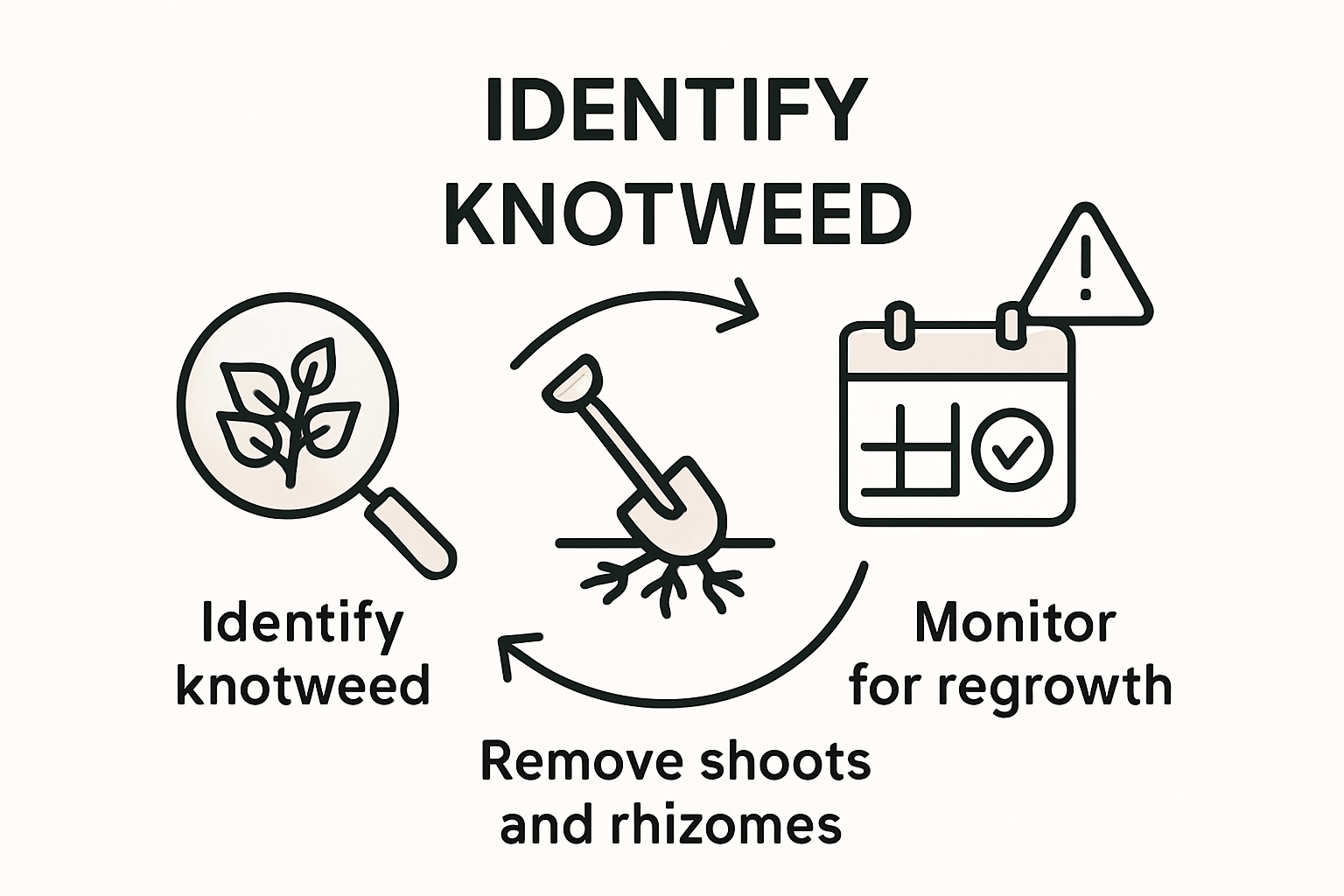
Japanese knotweed management requires systematic inspection of the treated zones at regular intervals. Government guidelines recommend conducting thorough visual examinations every three to six months, looking for any signs of new shoot growth or emerging rhizome activity. Pay special attention to previously infected areas and surrounding zones, checking for distinctive reddish purple shoots, bamboo like stems, or unusual ground disturbances that might indicate underground root regeneration.
Warning: Even after comprehensive treatment, Japanese knotweed can remain dormant and suddenly reappear years later. Professional monitoring is strongly recommended, as tiny root fragments can potentially restart the entire infestation. Create a detailed documentation log tracking each inspection, including dates, observations, and any suspicious plant growth. Your diligence during this monitoring phase will be crucial in confirming the complete eradication of this resilient invasive plant.
Stop Japanese Knotweed Regrowth with Proven Natural Solutions
Preventing knotweed regrowth is a tough challenge that demands effective strategies beyond simple removal. The article highlights key pain points like thorough assessment, safe extraction of rhizomes, and innovative treatments like direct energy to cause internal cell damage. For anyone struggling to control this invasive plant naturally without harmful chemicals, understanding and accessing professional help is vital.
Japanese Knotweed Agency offers groundbreaking chemical-free treatment using direct energy up to 5000 volts. This technology targets the extensive underground rhizome network, depleting its energy and stopping regrowth at the source. Plus, with expert root barrier installation and comprehensive property surveys, our team helps secure your entire property against new infestations.

Take control of Japanese knotweed today by partnering with specialists who understand the complex biology and persistent nature of this invasive species. Visit Japanese Knotweed Agency now to schedule a professional survey or learn more about our direct energy eradication and root barrier installation services. Act quickly before dormant roots reemerge — your property deserves lasting relief.
Frequently Asked Questions
How can I assess my property for Japanese knotweed infestations?
To assess your property for Japanese knotweed, conduct a thorough visual inspection, focusing on areas like property boundaries and previous ground disturbances. Look for distinctive features such as bamboo-like stems and large heart-shaped leaves to identify infestations.
What steps should I take to safely remove visible knotweed shoots?
Begin by carefully cutting down all visible knotweed shoots at ground level, using clean tools to prevent spreading. Collect all plant material in sealed plastic bags and dispose of them properly to avoid regeneration.
How can root barriers be effectively installed to prevent knotweed spread?
To install a root barrier, excavate a trench around the infected area that is at least 3 meters deep. Line the trench with high-density polyethylene membranes that are at least 1 millimeter thick, ensuring no gaps for roots to escape.
What is the procedure for applying direct energy treatments to knotweed?
Apply direct energy treatments by delivering electrical currents into the knotweed’s root system to damage its cells. Use specialized equipment to ensure the current penetrates effectively, often requiring multiple sessions for complete eradication.
How often should I monitor treated areas for signs of knotweed regrowth?
Monitor treated areas every three to six months for any signs of new growth or rhizome activity. Conduct thorough visual examinations to ensure that no new shoots or disturbances are present, and maintain detailed documentation of your findings.