
Over two percent of development sites in Great Britain have already documented Japanese knotweed infestations, showing how quickly this invasive threat spreads. The battle against this relentless plant goes far beyond garden upkeep. When Japanese knotweed takes hold, it can crowd out native species and even damage property foundations. Knowing how to distinguish between invasive plants and native vegetation can help property owners and conservationists protect local wildlife and prevent costly repairs.
Table of Contents
- Defining Japanese Knotweed And Native Plants
- Identifying Invasive Versus Native Species
- Environmental And Property Impacts Compared
- Legal Responsibilities And Survey Requirements
- Chemical-Free Eradication And Prevention Methods
Key Takeaways
| Point | Details |
|---|---|
| Invasive Nature of Japanese Knotweed | Japanese knotweed is an aggressive invasive species that significantly threatens native ecosystems and biodiversity. Its rapid growth and robust root system allow it to outcompete local flora. |
| Legal Responsibilities for Property Owners | Landowners must prevent the spread of Japanese knotweed and manage its disposal according to strict regulations to avoid legal penalties. |
| Environmental and Property Risks | Japanese knotweed can severely damage property structures and decrease property values, while also disrupting local wildlife habitats and reducing ecosystem resilience. |
| Chemical-Free Management Strategies | Effective eradication requires non-chemical methods such as repeated cutting and root zone excavation, with ongoing monitoring and preventive measures essential for long-term management. |
Defining Japanese Knotweed and Native Plants
Japanese knotweed represents one of the most aggressive and destructive invasive plant species across the United Kingdom. According to RHS, this herbaceous perennial was originally introduced as an ornamental garden plant but has since transformed into a significant environmental threat.
The plant’s characteristics make it particularly dangerous to native ecosystems. Wildlife Trusts highlights that Japanese knotweed frequently colonizes riverbanks, waste grounds, and roadside areas, systematically preventing native species from establishing and growing. Its rapid spread and resilient root system allow it to outcompete local plant populations with remarkable efficiency.
Native plants, by contrast, represent the indigenous vegetation naturally occurring in a specific geographic region without human introduction. These plants have evolved within local ecosystems, forming complex interdependent relationships with native wildlife, insects, and microorganisms. They play crucial roles in maintaining biodiversity, soil health, and environmental stability.
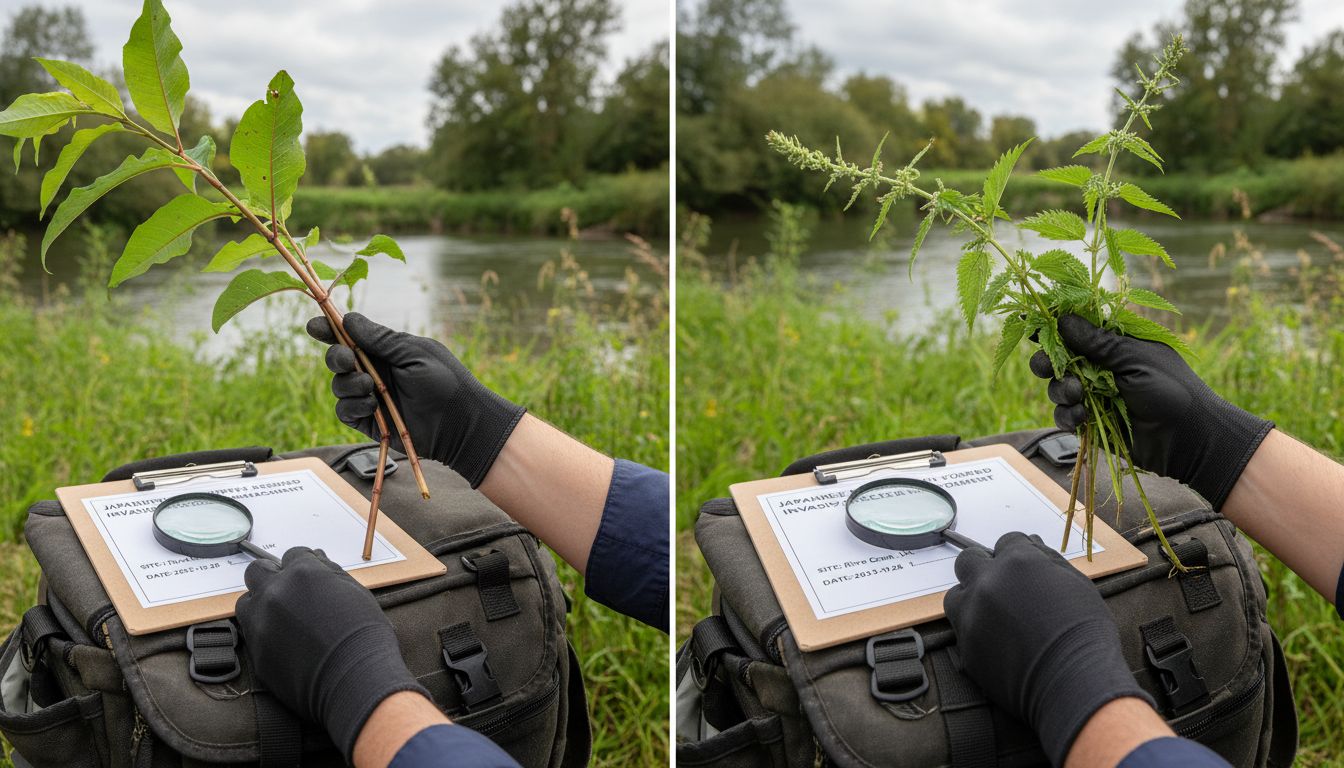
Understanding the fundamental differences between Japanese knotweed and native plants becomes essential for property owners, environmental managers, and conservation professionals. Learn more about Japanese knotweed identification to recognize and address potential invasive plant challenges effectively.
Identifying Invasive Versus Native Species
Identifying invasive species requires a keen understanding of their ecological impact and distinctive characteristics. According to Groundwork, Invasive Non-Native Species (INNS) are plants or animals introduced to an ecosystem that disrupt native biodiversity by aggressively competing for essential resources like food, shelter, and territory.
NNNSI highlights Japanese knotweed as a prime example of an invasive alien species, noting its introduction in the 19th century as an ornamental plant that has since spread dramatically across landscapes, forming dense thickets that systematically overwhelm native vegetation.
Key characteristics for identifying invasive species include:
- Rapid and uncontrolled growth patterns
- Ability to reproduce quickly and spread aggressively
- Minimal natural predators or control mechanisms
- Capacity to adapt to multiple environmental conditions
Recognizing these traits becomes crucial for property owners and environmental managers seeking to protect native ecosystems.
More on invasive weeds regulation can help you understand the broader implications of managing these challenging plant species.
Environmental and Property Impacts Compared
Japanese knotweed represents a significant threat to both environmental ecosystems and property infrastructure. According to Publications, the plant has been documented affecting over 2% of development sites and 1.25% of residential properties across Great Britain, demonstrating its extensive potential for damage.
NNNSI reveals the plant’s destructive mechanism, which spreads through vegetative reproduction from even tiny root or stem fragments. This unique propagation method allows Japanese knotweed to rapidly colonize areas, causing substantial environmental disruption by smothering native vegetation and potentially contributing to serious ecological challenges like riverbank erosion and increased flood risks.
The environmental and property impacts can be compared through several critical dimensions:
- Ecological Impact
- Eliminates native plant biodiversity
- Disrupts local wildlife habitats
- Reduces ecosystem resilience
- Property Structural Risks
- Penetrates building foundations
- Damages pavements and infrastructure
- Decreases property value
- Complicates construction and development projects
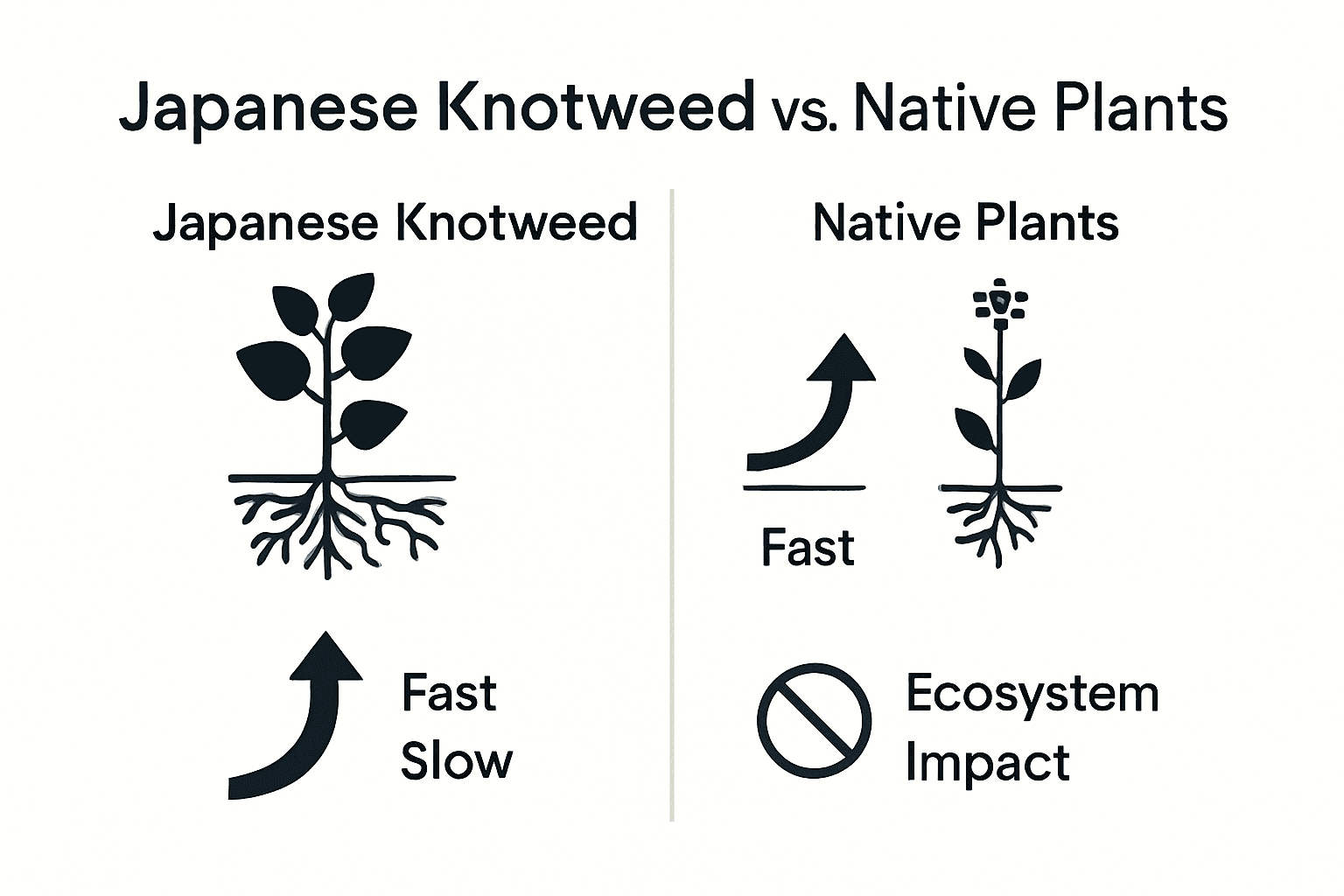
Property owners and environmental managers must recognize these multifaceted risks to implement effective management strategies. Learn more about invasive weeds regulation to understand comprehensive approaches to mitigating these challenges.
Legal Responsibilities and Survey Requirements
Property owners and land managers face critical legal obligations when dealing with invasive plant species like Japanese knotweed. According to Gov.uk, landowners must prevent Japanese knotweed from spreading beyond their property boundaries, with contaminated soil or plant material classified as controlled waste that requires specialized handling.
RHS emphasizes the complex legislative landscape surrounding invasive non-native species, warning that certain plants cannot be legally grown, transported, sold, or maintained without strict compliance with existing regulations.
Key Legal Responsibilities Include:
- Preventing spread of Japanese knotweed to neighboring properties
- Proper disposal of contaminated soil and plant material
- Reporting significant infestations to local authorities
- Maintaining comprehensive documentation of treatment efforts
Survey requirements are equally stringent, necessitating professional assessment to:
- Identify precise extent of knotweed infestation
- Determine potential property and ecological damage
- Develop comprehensive eradication strategies
- Provide legal documentation for property transactions
Property owners seeking professional guidance can complete the surveyor registration form to initiate a comprehensive invasive species assessment and management plan.
Chemical-Free Eradication and Prevention Methods
Japanese knotweed eradication demands a multifaceted approach that goes beyond traditional chemical treatments. According to Garden Organic, this invasive rhizomatous perennial requires persistent management techniques that focus on disrupting its extensive root system.
RHS recommends professional intervention, acknowledging that non-chemical methods can be challenging but not impossible. The key is understanding the plant’s complex reproductive mechanisms and targeting its core vulnerabilities.
Effective Chemical-Free Eradication Strategies:
- Repeated Cutting: Systematically cutting growth to exhaust root energy reserves
- Root Zone Excavation: Removing entire root network to depths of 3 meters
- Root Barrier Installation: Preventing lateral root spread
- Targeted Energy Disruption: Utilizing specialized non-chemical treatment techniques
Prevention Methods Include:
- Regular site monitoring
- Immediate identification of new growth
- Implementing physical barriers
- Maintaining robust landscape management practices
Property owners seeking comprehensive insights can explore our latest blog resources for advanced non-chemical knotweed management strategies.
Take Control of Japanese Knotweed to Protect Your Property and Native Plants
Dealing with the invasive threat of Japanese knotweed is more than just a gardening challenge it is about safeguarding your property value and preserving native plants that sustain local ecosystems. If you recognize the rapid spread and destructive power of this aggressive weed as described in the guide you need a solution that goes beyond cutting and chemical treatments. Japanese Knotweed Agency specializes in chemical free treatments that deliver direct energy shocks to the knotweed’s root system effectively damaging it from within and preventing further growth.

Stop the knotweed from invading your land and damaging your property foundations. Our expert team also offers root barrier installation and excavation works to provide a comprehensive defense. For thorough support start by booking your professional property survey for invasive weeds today so you can make the right decisions early. Visit Japanese Knotweed Agency now and protect your assets with proven, eco-friendly control strategies designed to restore balance between invasive species and native plants.
Frequently Asked Questions
What is Japanese knotweed and why is it considered invasive?
Japanese knotweed is a highly aggressive invasive plant species that outcompetes native plants. Originally introduced as an ornamental plant, it now poses a significant environmental threat, colonizing areas and disrupting local ecosystems.
How can I identify Japanese knotweed from native plants?
Key characteristics of Japanese knotweed include rapid growth, dense thickets, and a resilient root system that allows it to spread aggressively. In contrast, native plants typically have established growth patterns and support local wildlife.
What are the environmental impacts of Japanese knotweed?
Japanese knotweed can severely reduce native plant biodiversity, disrupt local habitats, and pose risks like riverbank erosion and increased flooding due to its invasive nature and ability to smother other vegetation.
What are my legal responsibilities regarding Japanese knotweed?
Property owners must manage Japanese knotweed to prevent its spread, properly dispose of contaminated soil, and report significant infestations. Legal compliance includes maintaining documentation of treatment and survey efforts.