Trying to keep your property free from Japanese Knotweed can feel daunting when traditional treatments pose risks to your garden and the wider environment. More homeowners across England and Wales are looking for solutions that offer lasting control without compromising local biodiversity. By focusing on chemical-free weed eradication methods, you can protect both your property and surrounding habitats, all while staying within legal guidelines and embracing eco-friendly strategies.
Table of Contents
- Defining The Role Of Weed Control Agencies
- Understanding Chemical-Free Weed Eradication
- Key Legal Duties For Invasive Plant Control
- Eco-Friendly Solutions And Their Effectiveness
- Risks, Costs, And Homeowner Responsibilities
Key Takeaways
| Point | Details |
|---|---|
| Role of Weed Control Agencies | Weed control agencies are vital for managing invasive plant species; they develop strategies for identification, prevention, and control. |
| Sustainable Weed Management | Chemical-free methods and integrated management approaches are effective in controlling invasives while preserving ecological balance. |
| Legal Responsibilities | Property owners must comply with regulations regarding invasive plant management to avoid legal and financial repercussions. |
| Homeowner Engagement | Homeowners should invest in professional surveys and comprehensive management plans to mitigate risks associated with invasive plants. |
Defining the Role of Weed Control Agencies
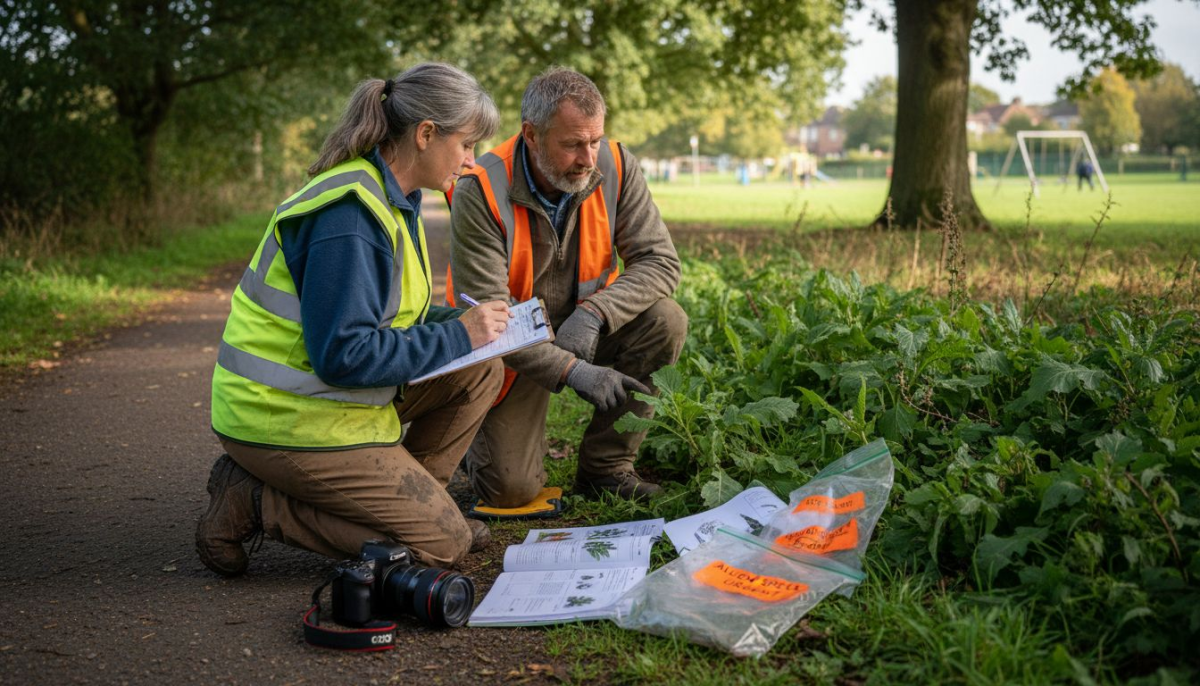
Weed control agencies play a critical role in managing invasive plant species across public and private landscapes. These professional organisations develop comprehensive strategies to identify, prevent, and mitigate the spread of harmful vegetation that can damage infrastructure, disrupt ecosystems, and create significant environmental challenges.
Under the framework established by the Environmental Protection Act, weed control agencies have specific statutory responsibilities to manage vegetation effectively. Their core functions encompass several key areas:
- Mapping and identifying invasive plant populations
- Developing targeted removal strategies
- Implementing sustainable management protocols
- Conducting environmental impact assessments
- Providing expert guidance to local authorities and landowners
These agencies utilise advanced techniques that go beyond traditional chemical treatments. Integrated Weed Management approaches now emphasise ecological balance, considering factors like biodiversity, environmental preservation, and long-term sustainability. By adopting holistic strategies, they aim to control invasive species while minimising ecological disruption.
Local councils and environmental departments collaborate closely with these specialised agencies to create systematic approaches for weed management. Their work involves complex planning, including risk assessment, treatment selection, and ongoing monitoring to ensure effective vegetation control.
Pro tip: Always request a comprehensive survey and management plan from professional weed control agencies before initiating any large-scale vegetation removal project.
Understanding Chemical-Free Weed Eradication
Chemical-free weed eradication represents a sustainable approach to managing invasive plant species while minimising environmental impact. By moving away from traditional chemical treatments, landowners and environmental professionals can effectively control vegetation through innovative and ecologically responsible methods.
The Royal Horticultural Society recommends several non-chemical control techniques that offer environmentally friendly alternatives to traditional herbicides. These methods include:
- Manual hand removal of weeds
- Precise trimming and cutting techniques
- Installing physical barriers to prevent weed growth
- Smothering techniques using organic materials
- Targeted hoeing in garden and landscaped areas
Integrated Weed Management strategies emphasise a holistic approach to vegetation control. These comprehensive methods combine multiple techniques to suppress weed growth without relying on chemical interventions. By understanding plant lifecycles, growth patterns, and ecological interactions, professionals can develop targeted approaches that minimise environmental disruption.
Thermal and biological control methods are emerging as powerful alternatives in chemical-free weed eradication. Techniques such as targeted heat application, strategic ground cover management, and introducing natural predators can effectively reduce invasive plant populations while maintaining ecological balance. These approaches require careful planning and expert knowledge to ensure long-term success.

The table below contrasts traditional chemical weed control with modern integrated and chemical-free approaches:
| Approach | Environmental Impact | Long-Term Effectiveness | Required Expertise |
|---|---|---|---|
| Chemical Control | High ecological risk | Often requires repeat use | Basic application skills |
| Integrated Management | Low, preserves biodiversity | Supports ecosystem health | Advanced planning needed |
| Chemical-Free Methods | Minimal, eco-friendly | Promotes sustainable control | Specialist advice advised |
Pro tip: Consult with professional ecological experts who specialise in chemical-free weed management to develop a tailored, sustainable vegetation control strategy for your specific landscape conditions.
Key Legal Duties for Invasive Plant Control
Legal responsibilities surrounding invasive plant management have become increasingly complex and critical for environmental preservation in the United Kingdom. Property owners, land managers, and environmental agencies must navigate a sophisticated framework of regulations designed to prevent the spread of harmful non-native species.
Great Britain’s Invasive Non-Native Species Strategy establishes comprehensive guidelines for managing and controlling potentially destructive vegetation. The key legal duties encompass several crucial areas:
- Preventing introduction of invasive species
- Detecting and reporting potential invasive plant populations
- Implementing immediate control measures
- Developing long-term management strategies
- Collaborating with local and national environmental authorities
Statutory Obligations under legislation like the Wildlife and Countryside Act mandate strict protocols for managing invasive plants. Agencies are empowered to take decisive action, including issuing Species Control Agreements that require specific interventions to mitigate ecological risks. These legal mechanisms ensure a proactive approach to preventing environmental damage caused by aggressive plant species.

Local authorities and environmental protection agencies play a critical role in enforcing these regulations. They are responsible for monitoring, investigating, and taking enforcement actions against individuals or organisations failing to comply with invasive species control requirements. The legal framework provides clear guidelines for remediation, potential penalties, and the broader ecological management process.
Pro tip: Maintain detailed documentation of any invasive plant management actions and consult with legal experts specialising in environmental regulations to ensure full compliance with current legislation.
Eco-Friendly Solutions and Their Effectiveness
Environmental consciousness has transformed weed control strategies, pushing professionals towards sustainable and innovative approaches that protect both landscapes and ecosystems. Modern ecological management demands solutions that effectively control invasive plants while minimising environmental disruption.
Integrated Weed Management techniques represent a comprehensive approach to vegetation control, combining multiple environmentally responsible methods. These strategies focus on minimising chemical interventions and maximising ecological balance:
- Manual hand removal techniques
- Thermal treatment methods
- Biological control strategies
- Physical barrier installations
- Strategic ground cover management
Mechanical Intervention remains one of the most direct and environmentally sound approaches to weed control. Techniques such as precise cutting, systematic removal, and targeted ground disturbance can significantly reduce invasive plant populations without introducing harmful chemical substances. Professional agencies utilise specialised equipment designed to extract plant systems comprehensively, ensuring minimal ecosystem disruption.
Thermal and biological control methods are emerging as powerful alternatives in eco-friendly weed management. Targeted heat application can destroy plant cellular structures, while introducing natural predators provides a long-term, self-regulating approach to population control. These methods require extensive ecological knowledge and careful implementation to ensure effectiveness and maintain local biodiversity.
Pro tip: Consult ecological experts who can develop a tailored, multi-strategy approach specific to your landscape’s unique environmental conditions and invasive plant challenges.
Risks, Costs, and Homeowner Responsibilities
Managing invasive plant species involves complex financial and legal considerations that extend far beyond simple garden maintenance. Homeowners must understand the potential risks and financial implications associated with weed control to protect their property and comply with environmental regulations.
Integrated Weed Management guidelines highlight the critical responsibilities homeowners face in preventing invasive plant spread. The key financial and legal risks include:
- Potential property value depreciation
- Legal liability for neighbouring property damage
- Significant remediation and treatment costs
- Potential enforcement actions by local authorities
- Long-term ecological and environmental impacts
Regulatory Compliance represents a crucial aspect of homeowner responsibilities. Failure to manage invasive plant species can result in substantial financial penalties and legal challenges. Professional agencies recommend comprehensive monitoring, immediate intervention, and documented management strategies to mitigate potential risks and demonstrate proactive ecological stewardship.
The financial implications of invasive plant management can be substantial. Professional treatment, potential property repairs, and ongoing monitoring can create significant expenses. Homeowners must balance immediate intervention costs with the potential long-term financial risks of uncontrolled invasive plant growth, which can compromise structural integrity and reduce property value.
Here is a summary of key homeowner responsibilities and their associated risks:
| Responsibility | Associated Risk | Potential Cost Level |
|---|---|---|
| Regular weed monitoring | Missed early infestations | Low (prevention) |
| Immediate intervention | Unchecked weed spread | Medium (remediation) |
| Compliance with legal duties | Regulatory fines, legal action | High (penalties/litigation) |
| Documenting management actions | Inability to prove compliance | Variable (legal defense) |
Pro tip: Invest in professional surveys and develop a comprehensive management plan to address invasive plant risks before they escalate into more costly environmental and legal challenges.
Take Control of Invasive Weeds with Expert Chemical-Free Solutions
The challenges outlined in the article show how crucial effective and eco-friendly management of invasive plants is for protecting your property and the environment. You may be concerned about the risks, costs, and legal duties involved in weed control, especially with aggressive species like Japanese Knotweed. Japanese Knotweed Agency specialises in chemical-free treatment methods that align perfectly with the integrated weed management and non-chemical strategies discussed. Our pioneering direct energy treatment disables invasive rhizome networks safely and sustainably, avoiding the harmful effects of traditional chemicals.
Do not let invasive species threaten your property value or expose you to legal risks. Act now and benefit from a thorough survey, expert advice, and specialist eradication services available across England, Wales, and Ireland. Visit Japanese Knotweed Agency to learn more about our cutting-edge treatments and related services such as root barrier installs and excavation works. Take the first step towards long-term, eco-friendly weed control by exploring our property surveys and comprehensive management plans tailored to your needs.
Frequently Asked Questions
What are the primary responsibilities of weed control agencies?
Weed control agencies are responsible for mapping invasive plant populations, developing removal strategies, conducting environmental impact assessments, and providing guidance to local authorities and landowners.
How do integrated weed management approaches differ from traditional chemical methods?
Integrated weed management focuses on ecological balance and uses a combination of manual, thermal, and biological techniques rather than solely relying on chemical herbicides, emphasising long-term sustainability.
What are some eco-friendly methods for weed eradication?
Eco-friendly methods include manual hand removal, thermal treatment, biological control strategies, and installing physical barriers to prevent weed growth.
What legal duties do homeowners have regarding invasive plant management?
Homeowners must prevent the introduction of invasive species, report any infestations, implement control measures, and ensure compliance with local environmental regulations to avoid legal penalties.