

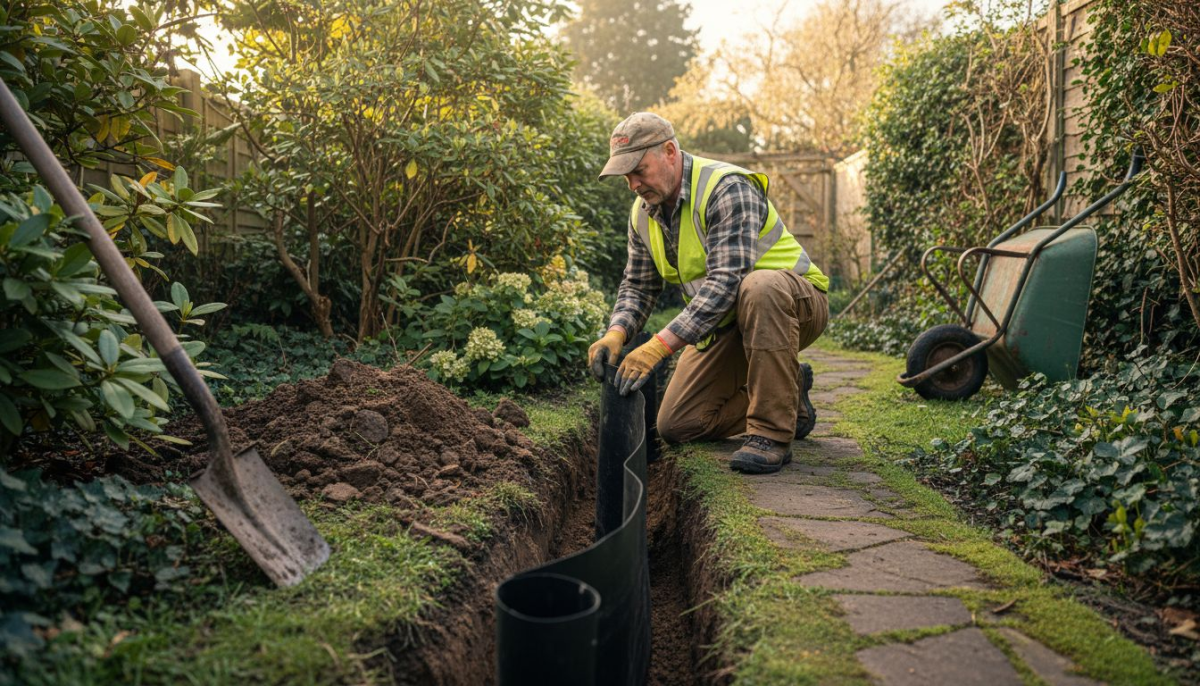
Finding a solution to Japanese Knotweed can feel like an uphill battle for homeowners across the United Kingdom, especially when trying to avoid harsh chemicals during a property purchase or refinancing. This invasive plant’s underground rhizomes are notorious for breaking through concrete and tarmac, putting homes and garden structures at risk. Root barrier methods offer a proven, chemical-free way to contain knotweed and secure your property investment, with options to suit even the most challenging locations.
Table of Contents
- Root Barriers – Definition And Key Functions
- Different Types Of Root Barrier Systems
- How Root Barriers Prevent Knotweed Spread
- Installation Process And Practical Applications
- Legal Responsibilities And Potential Risks
- Comparing Root Barriers To Alternative Solutions
Key Takeaways
| Point | Details |
|---|---|
| Root Barriers Are Essential | Root barriers effectively contain Japanese knotweed by preventing the spread of its aggressive rhizomes. |
| Professional Installation Is Crucial | Engaging specialists for proper installation ensures comprehensive protection and functionality of root barriers. |
| Legal Responsibilities Are Significant | Property owners must be aware of legal obligations surrounding Japanese knotweed management to avoid potential liabilities. |
| Consider Multiple Management Strategies | Combining root barriers with other control methods can enhance overall effectiveness in managing knotweed infestations. |
Root Barriers – Definition And Key Functions
Japanese knotweed is a highly invasive plant species capable of causing significant structural damage through its aggressive underground root network, known as rhizomes. Root barriers are specialised physical containment systems designed to prevent these destructive underground stems from spreading beyond a designated area. Root barrier techniques offer property owners a critical method of controlling this challenging invasive plant.
At its core, a root barrier functions as an impenetrable underground shield that stops rhizome growth and expansion. These physical barriers are typically constructed from robust, durable materials engineered to withstand root penetration. Key characteristics of effective root barriers include:
- Complete impermeability to root systems
- High durability against underground environmental pressures
- Flexibility for installation around existing structures
- Long-term resistance to root degradation
- Ability to create precise boundary restrictions
The primary objective of root barriers is to restrict the lateral movement of Japanese knotweed rhizomes, effectively containing the plant’s potential for structural damage. Unlike chemical treatments, root barriers provide a physical, non-invasive solution that creates a definitive underground boundary. Root barrier methods can prevent rhizome advancement while simultaneously enabling faster ecological regeneration.
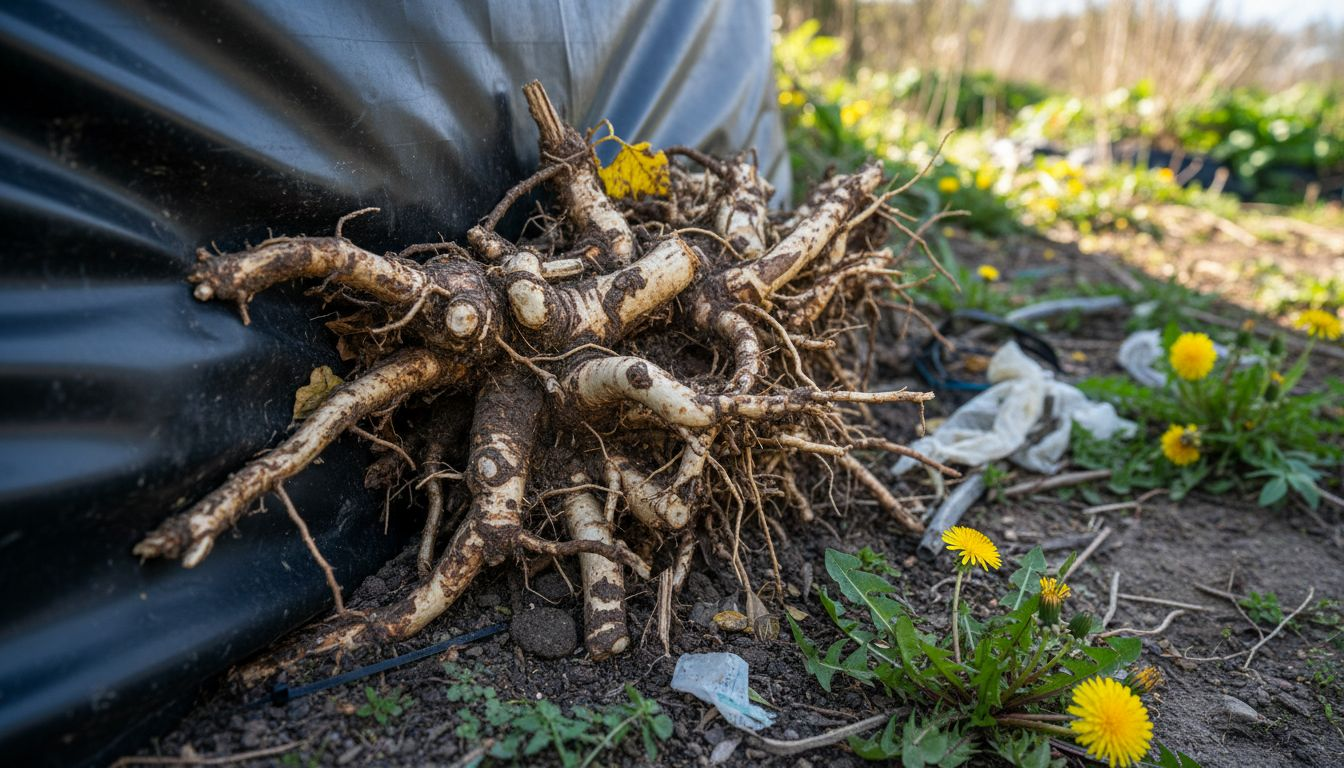
Professional root barrier installations require precise measurement and strategic placement to ensure comprehensive protection. Experts typically install these barriers at depths ranging from 2-3 metres, creating an underground wall that blocks rhizome spread in critical directions. Property owners must work with specialist teams who understand the complex growth patterns of Japanese knotweed to design and implement an effective root barrier strategy.
Pro tip: Always consult a professional Japanese knotweed specialist before installing root barriers to ensure comprehensive coverage and maximum effectiveness against potential rhizome migration.
Different Types Of Root Barrier Systems
Root barrier systems represent a critical technology in managing Japanese knotweed’s aggressive underground spread. Root barrier fabrics have evolved to provide comprehensive protection against rhizome migration, with multiple specialised designs tailored to different environmental conditions.
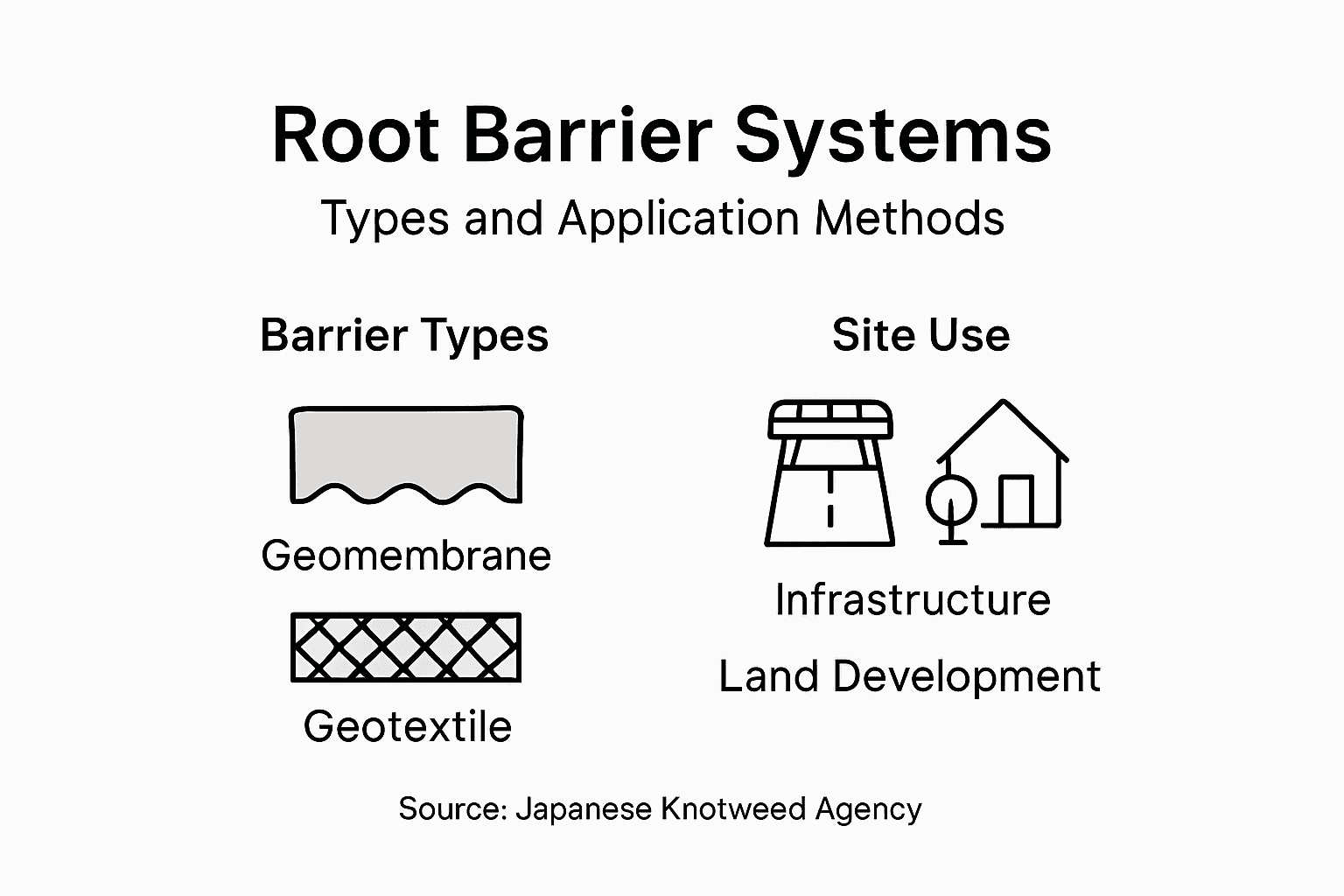
These root barrier systems can be categorised into several distinct types based on material composition and installation methodology:
- Geomembrane Barriers: Heavy-duty plastic sheets engineered for maximum rhizome resistance
- Geotextile Fabrics: Woven synthetic materials designed to restrict root penetration
- Reinforced Polyethylene Barriers: Laminated sheets with enhanced durability
- Composite Barrier Systems: Multi-layered solutions combining different materials
- Vertical Root Barriers: Underground walls preventing lateral rhizome spread
Each barrier type offers unique advantages depending on site-specific requirements. Some systems focus on complete impermeability, while others prioritise long-term durability and flexibility. Innovative root management approaches like the Roots Reset method demonstrate how root barriers can be integrated with ecological restoration strategies.
The following table compares root barrier systems by their material properties and best-use scenarios:
| Barrier Type | Material Composition | Ideal Application Scenario |
|---|---|---|
| Geomembrane Barrier | High-density plastic sheets | Urban property boundary protection |
| Geotextile Fabric | Woven synthetic fibres | Areas requiring flexible coverage |
| Reinforced Polyethylene | Laminated, multi-layered polymer | Deep excavation near infrastructure |
| Composite Barrier System | Combined layers of plastics/fabrics | Sensitive ecological restoration |
| Vertical Root Barrier | Rigid panels or rolled sheets | Preventing lateral rhizome spread |
Professional installation is crucial for root barrier effectiveness. Specialists conduct detailed site assessments to determine the most appropriate barrier type, considering factors such as soil composition, proximity to structures, and potential rhizome growth patterns. Proper installation typically involves creating a continuous underground barrier extending to significant depths, usually 2-3 metres, to ensure comprehensive protection against Japanese knotweed spread.
Pro tip: Always engage a professional Japanese knotweed specialist to conduct a comprehensive site survey before selecting and installing your root barrier system.
How Root Barriers Prevent Knotweed Spread
Japanese knotweed represents one of the most challenging invasive plant species in the United Kingdom, with its extraordinary ability to spread through microscopic rhizome fragments. Rhizome spread prevention is crucial in managing this aggressive plant’s territorial expansion.
Root barriers function through several critical mechanisms to interrupt knotweed’s underground propagation:
- Physically block horizontal rhizome movement
- Create an impenetrable underground boundary
- Prevent regeneration from root fragments
- Isolate contaminated soil areas
- Protect adjacent structures and landscapes
Underground barrier techniques involve precise vertical installation of specialised materials, typically extending 2-3 metres deep to comprehensively sever potential rhizome pathways. This strategic approach ensures that even the most resilient root fragments cannot breach the protective perimeter, effectively containing the potential for uncontrolled spread.
The installation process requires meticulous planning and expert implementation. Specialists conduct thorough site assessments to map potential rhizome networks, identifying critical intervention points. By creating a continuous, unbroken underground barrier, these professionals can dramatically reduce the risk of knotweed migration, protecting property foundations, infrastructure, and surrounding ecological systems from potential damage.
Pro tip: Engage a professional knotweed specialist to conduct a comprehensive site survey and design a customised root barrier strategy tailored to your specific environmental conditions.
Installation Process And Practical Applications
Root barrier installation requires a systematic and precise approach to effectively control Japanese knotweed spread. Site survey protocols are crucial first steps in developing a comprehensive containment strategy.
The installation process involves several critical stages:
- Comprehensive site investigation
- Detailed mapping of rhizome network
- Excavation to appropriate depths
- Barrier membrane selection
- Precise vertical barrier installation
- Perimeter sealing and verification
Geosynthetic barrier techniques demand meticulous execution, typically requiring excavation to depths of 1-3 metres depending on specific site conditions. Specialists use advanced geomembranes and reinforced liners to create an impenetrable underground barrier that prevents rhizome migration.
Practical applications extend beyond simple containment, encompassing critical infrastructure protection, land development, and ecological management. Root barriers are particularly essential in scenarios involving construction projects, property boundaries, transportation infrastructure, and environmentally sensitive areas where knotweed invasion could cause significant structural or ecological disruption.
Pro tip: Engage certified invasive plant management professionals who can provide comprehensive site-specific root barrier solutions tailored to your unique environmental challenges.
Legal Responsibilities And Potential Risks
Japanese knotweed management carries significant legal implications for property owners and professionals. Professional legal obligations extend beyond simple plant control, encompassing comprehensive risk mitigation and potential liability.
Key legal responsibilities include:
- Preventing knotweed spread to neighbouring properties
- Implementing documented control strategies
- Maintaining accurate treatment records
- Disclosing knotweed presence during property transactions
- Ensuring compliance with environmental regulations
Potential legal risks associated with Japanese knotweed mismanagement can be substantial, potentially resulting in:
- Civil litigation from neighbouring property owners
- Significant financial penalties
- Reduction in property market value
- Mandatory remediation costs
- Potential criminal prosecution for environmental negligence
Property owners must understand that legal frameworks impose proactive management requirements. Failure to address Japanese knotweed can lead to complex legal challenges, with courts increasingly holding landowners accountable for controlling invasive plant species that potentially damage adjacent properties or infrastructure.
Pro tip: Maintain comprehensive documentation of all Japanese knotweed management activities and consult legal professionals specialising in environmental law to understand your specific obligations.
Comparing Root Barriers To Alternative Solutions
Managing Japanese knotweed requires a comprehensive understanding of various control strategies. Root barrier systems offer a targeted physical approach, but they are not the sole method for addressing this invasive plant’s challenging spread. Integrated management techniques now provide multifaceted alternatives to traditional containment methods.
Key alternative solutions to root barriers include:
- Chemical treatment methods
- Biological control strategies
- Excavation and removal techniques
- Thermal treatment approaches
- Integrated ecological restoration methods
Each alternative solution presents unique advantages and limitations compared to root barrier installation. Chemical treatments, while potentially effective, often require prolonged application and may pose environmental risks. Excavation methods provide complete removal but can be extremely costly and disruptive to existing landscapes.
Below is a summary table outlining common Japanese knotweed management methods and their relative strengths:
| Method | Primary Strength | Typical Limitation |
|---|---|---|
| Root Barrier Installation | Non-invasive containment | Requires expert placement |
| Chemical Treatment | Gradual eradication of rhizomes | Environmental and regulatory risks |
| Excavation and Removal | Complete physical elimination | High cost, site disruption |
| Biological Control | Natural reduction of knotweed | Slow, uncertain results |
| Thermal Treatment | Effective for small infestations | Limited scalability |
The comparative effectiveness of these approaches varies significantly based on specific environmental conditions, site characteristics, and infestation severity. Root barriers remain particularly valuable in scenarios requiring minimal landscape disruption, offering a non-invasive method of controlling rhizome spread while preserving existing terrain integrity. Emerging innovative approaches like the Roots Reset method demonstrate the potential for combining physical containment with ecological regeneration strategies.
Pro tip: Consult invasive plant management specialists to develop a tailored strategy that combines multiple control techniques for comprehensive Japanese knotweed management.
Secure Your Property From Japanese Knotweed With Expert Root Barrier Solutions
Dealing with the aggressive underground spread of Japanese Knotweed rhizomes is a major concern for property owners seeking to protect their investment and surrounding land. The article highlights how root barriers act as a powerful physical defence by creating an impenetrable underground shield to restrict lateral rhizome movement and prevent costly structural damage. For those facing this challenge, taking swift, professional action is essential.
At Japanese Knotweed Agency, we specialise in chemical-free, advanced treatments alongside precision root barrier installations that halt invasive plant expansion. Our team offers comprehensive property surveys across England, Wales and Ireland to tailor root barrier strategies to your specific site conditions. By choosing our expert services, you leverage proven techniques that combine cutting-edge technology with in-depth knotweed knowledge to safeguard your property effectively.
Do not wait until Japanese Knotweed causes irreversible harm. Visit our root barrier installation page now to request a professional survey and learn how our innovative solutions can provide immediate containment and lasting control.
Frequently Asked Questions
What are root barriers and how do they work against Japanese knotweed?
Root barriers are specialised physical containment systems designed to prevent the underground rhizomes of Japanese knotweed from spreading. They function by providing an impenetrable, underground shield that blocks the lateral movement of the plant’s roots, effectively containing its growth within a designated area.
How deep should root barriers be installed to effectively control knotweed spread?
Root barriers are typically installed at depths of 2-3 metres. This depth is critical for ensuring that even resilient rhizome fragments cannot breach the protective barrier, helping to prevent the spread of Japanese knotweed effectively.
What are the different types of root barrier systems available for knotweed management?
Root barrier systems can be categorised into several types, including geomembrane barriers made of heavy-duty plastic, geotextile fabrics, reinforced polyethylene barriers, composite barrier systems, and vertical root barriers. Each type has its unique advantages based on material composition and installation methodology.
Why is it important to consult a professional for root barrier installation?
Professional consultation is vital for ensuring precise measurement and strategic placement of root barriers. Experts conduct detailed site assessments to determine the most appropriate barrier type and installation technique, which is essential for effective management of Japanese knotweed and minimising potential damage to structures or landscapes.