

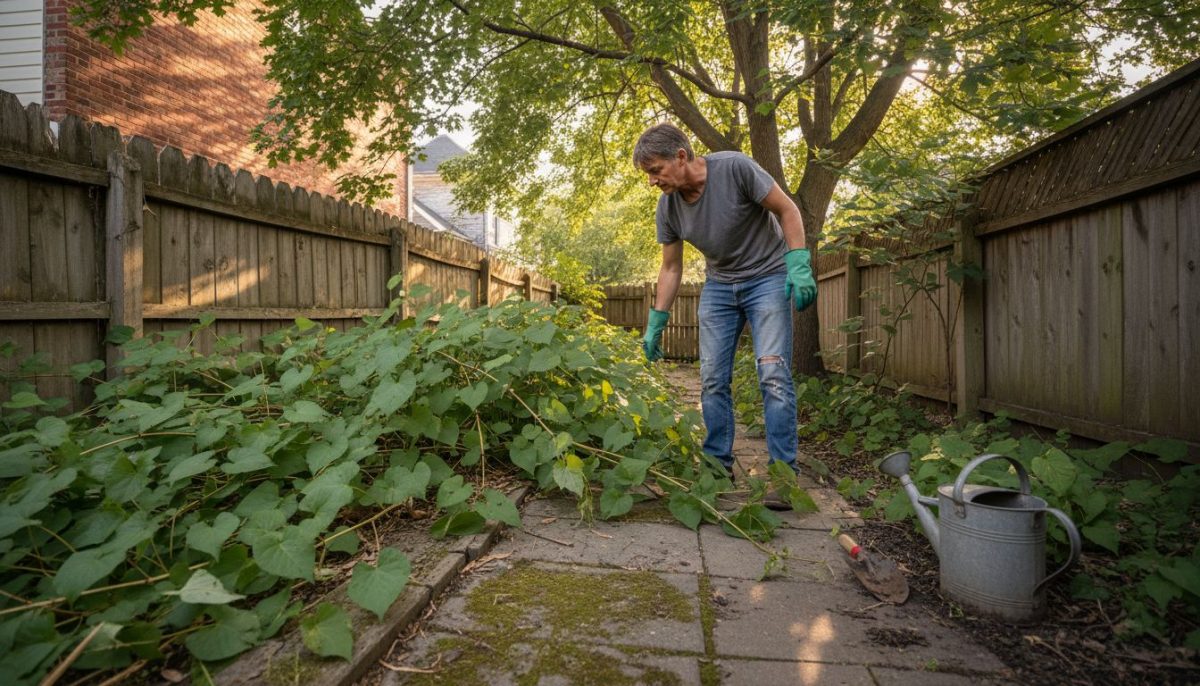
Most American property owners are shocked to learn that Japanese knotweed can push through concrete and survive even after being dug up or sprayed. This aggressive plant was brought from East Asia as a simple garden feature, yet today, it ranks as one of the most destructive invasive species threatening both homes and natural spaces. If you want to protect your property and understand how Japanese knotweed spreads so quickly, you need clear facts backed by real science.
Table of Contents
- What Is Japanese Knotweed and Why It Spreads
- Rhizome Networks: The Secret to Knotweed Survival
- Why Traditional Treatments Often Fail
- Legal and Environmental Challenges in the UK
- Chemical-Free Eradication Methods Explained
Key Takeaways
| Point | Details |
|---|---|
| Japanese Knotweed’s Aggressiveness | This invasive perennial plant rapidly spreads through resilient rhizome networks, creating significant environmental and property damage risks. |
| Challenges of Eradication | Traditional removal techniques often fail to address knotweed’s underground systems, leading to its persistent regrowth. |
| Legal Implications | Property owners face stringent legal obligations regarding Japanese knotweed, with severe consequences for non-compliance. |
| Chemical-Free Solutions | Advanced, non-chemical methods effectively target knotweed’s survival mechanisms without introducing harmful substances into the ecosystem. |
What Is Japanese Knotweed and Why It Spreads
Japanese knotweed is a highly aggressive perennial plant that has become notorious for its extraordinary ability to spread and cause significant damage. Originally introduced as an ornamental garden plant, this invasive species has since transformed from a seemingly harmless decorative addition to a serious environmental and property threat.
Originally imported from East Asia, Japanese knotweed (Reynoutria japonica) rapidly colonizes new areas through its incredibly resilient root system, known as rhizomes. These underground networks can extend up to 10 feet deep and spread laterally across an impressive 65 feet, making complete eradication challenging. Property damage risks are substantial, as the plant’s powerful root structure can penetrate concrete foundations, disrupt infrastructure, and compromise building structural integrity.
The plant’s remarkable survival mechanisms contribute to its persistent spread. Japanese knotweed can regenerate from tiny root fragments as small as 0.7 grams, meaning even minimal disturbance can trigger new growth. Its reproductive strategy allows it to outcompete native vegetation by growing up to 4 inches per day during peak growing seasons, creating dense thickets that effectively crowd out other plant species. This aggressive growth pattern makes Japanese knotweed a significant ecological concern, transforming landscapes and disrupting natural biodiversity.
Rhizome Networks: The Secret to Knotweed Survival
Japanese knotweed’s extraordinary survival strategy hinges on its incredibly complex and adaptive rhizome network – an underground communication and propagation system that makes this plant one of the most resilient invasive species. These subterranean root structures operate like a biological survival machine, allowing the plant to regenerate and spread with remarkable efficiency.
Advanced modeling techniques have revealed the intricate nature of these rhizome networks, which can extend horizontally across vast distances. Researchers have discovered that these underground systems are not just simple root networks, but sophisticated interconnected structures capable of rapid regeneration. Even a tiny fragment measuring less than an inch can potentially generate an entirely new plant, making complete eradication extremely challenging.
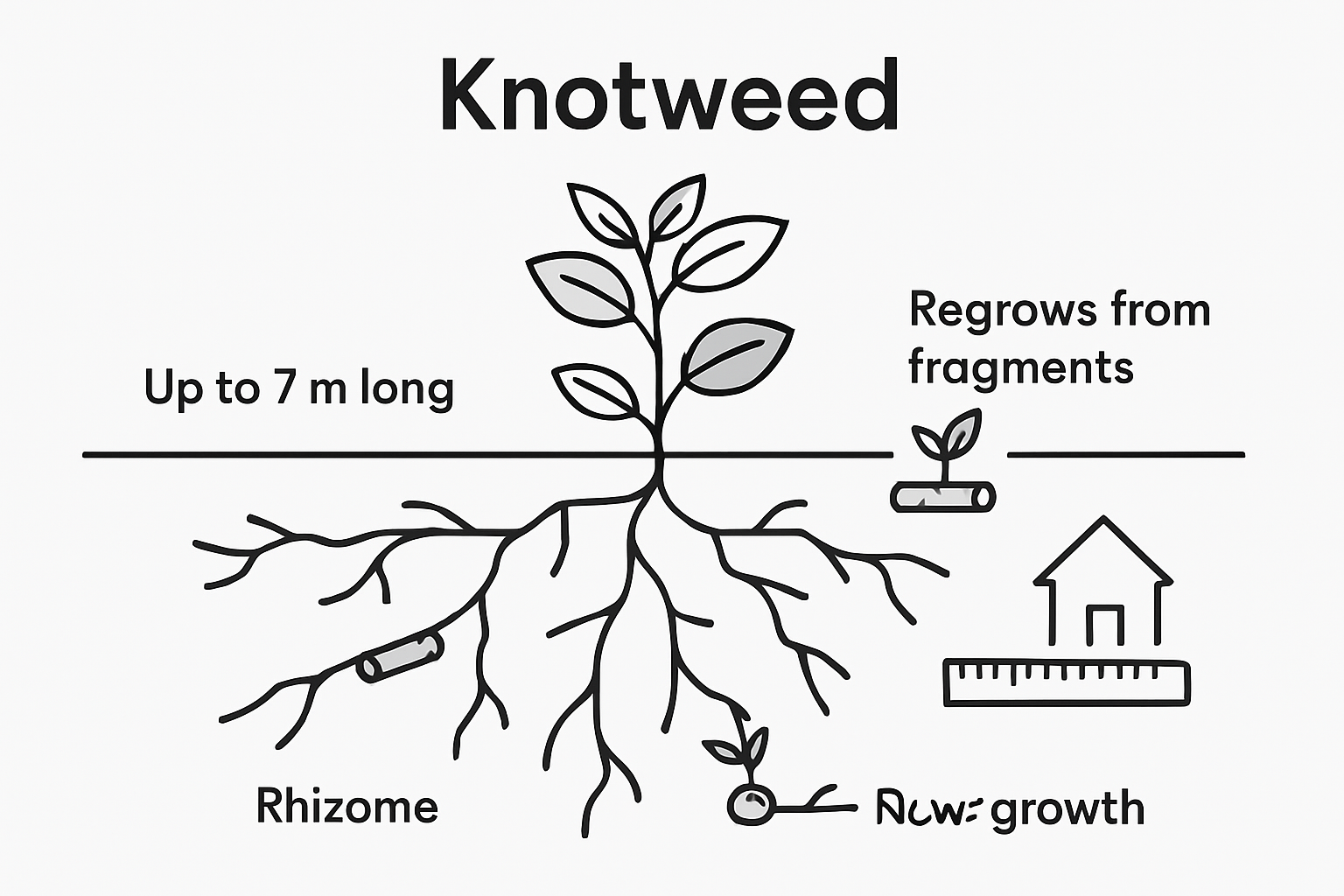
The phenotypic plasticity of Japanese knotweed’s rhizome network enables it to colonize diverse environments with incredible adaptability. Scientific studies have demonstrated that these root systems can penetrate through concrete, asphalt, and building foundations, creating significant structural risks. The rhizomes store substantial energy reserves, allowing the plant to survive harsh conditions and quickly re-emerge after apparent destruction. This remarkable survival mechanism transforms Japanese knotweed from a simple plant into an ecological challenge that can devastate landscapes, infrastructure, and native ecosystems.
Why Traditional Treatments Often Fail
Traditional approaches to Japanese knotweed eradication consistently underestimate the plant’s remarkable resilience and adaptive capabilities. Herbicides, excavation, and standard removal techniques have repeatedly proven ineffective against this invasive species, primarily because they fail to address the plant’s complex underground rhizome network.

Conventional treatment methods typically focus on surface-level destruction, which inadvertently triggers the plant’s most potent survival mechanism. When knotweed is cut, burned, or chemically treated, its underground root system interprets these actions as a threat and responds by generating even more aggressive regeneration. A single root fragment as small as 0.7 grams can potentially spawn an entirely new plant, rendering most traditional eradication attempts essentially futile.
Researchers have discovered that Japanese knotweed’s resilience stems from its extraordinary phenotypic plasticity, allowing it to adapt to diverse environmental conditions. Scientific investigations have revealed that standard treatment protocols often create more problems than solutions. The plant’s ability to rapidly regenerate, combined with its sophisticated underground communication system, means that mechanical disruption can actually accelerate its spread. This adaptive strategy has transformed Japanese knotweed from a garden nuisance into a formidable ecological challenge that demands innovative, comprehensive treatment approaches.
Legal and Environmental Challenges in the UK
Japanese knotweed presents a complex legal and environmental challenge that extends far beyond typical invasive plant management. Legal obligations surrounding this plant are stringent, with significant consequences for property owners, developers, and land managers who fail to address its presence appropriately.
Under the Wildlife and Countryside Act 1981, Japanese knotweed is classified as a controlled species, making it an offense to deliberately plant or allow its spread in wild environments. The plant’s presence can dramatically impact property transactions, potentially preventing mortgage approvals and creating substantial legal complications. Property owners must be exceptionally vigilant, as even unintentional spread can result in legal proceedings and significant financial penalties.
The environmental implications of Japanese knotweed extend beyond legal frameworks. Its aggressive growth pattern threatens native biodiversity by outcompeting indigenous plant species and transforming ecological landscapes. Misidentification remains a critical challenge, with many property owners and professionals struggling to accurately recognize the plant. This uncertainty can lead to unnecessary panic or, conversely, dangerous neglect. Comprehensive management requires a nuanced understanding of the plant’s biology, legal status, and potential ecological impact, making it crucial for landowners to seek expert guidance when confronting this persistent invasive species.
Chemical-Free Eradication Methods Explained
Chemical-free Japanese knotweed eradication represents a sophisticated approach that goes beyond traditional herbicide treatments, targeting the plant’s complex underground network with precision and technological innovation. The goal is to disrupt the plant’s fundamental survival mechanisms without introducing potentially harmful chemical agents into the environment.
Biosecurity protocols play a critical role in preventing knotweed spread during removal processes. Professionals must meticulously clean equipment, implement strict containment procedures, and ensure that even microscopic root fragments are prevented from establishing new growth zones. This methodical approach requires comprehensive tracking and strategic intervention to interrupt the plant’s regenerative capabilities.
Advanced non-chemical techniques leverage targeted energy delivery systems that can penetrate the extensive rhizome network directly. By applying precise electrical treatments, these methods cause internal cellular damage and deplete the plant’s energy reserves without introducing external chemicals. This approach disrupts the knotweed’s ability to regenerate, effectively starving the plant’s underground system. Successful eradication demands a holistic strategy that combines technological intervention, meticulous monitoring, and a deep understanding of the plant’s complex biological resilience.
Take Control of Japanese Knotweed’s Rooted Threat Today
The stubborn persistence of Japanese Knotweed lies in its vast rhizome network and adaptive survival tactics. If you are facing the frustration of traditional treatments failing or the risk of property damage from underground roots, you are not alone. At Japanese Knotweed Agency, we specialize in chemical free solutions that directly target your knotweed problem beneath the surface. Our unique energy delivery up to 5000 volts disrupts the plant’s cell structures and drains its energy reserves, stopping regrowth at its root.

Don’t let this invasive species continue to threaten your property or land value. Discover how our expert property surveys and advanced eradication methods can protect your investment and restore your environment. Act now to secure a future free from Japanese Knotweed by visiting Japanese Knotweed Agency and explore our root barrier installation and excavation services. The sooner you act, the faster you stop the spread and damage.
Frequently Asked Questions
What is Japanese knotweed and why is it a problem?
Japanese knotweed is an aggressive perennial plant known for its ability to spread rapidly and cause significant property damage. Its extensive underground rhizome network can penetrate concrete and disrupt infrastructure.
How does Japanese knotweed spread so efficiently?
Japanese knotweed spreads through a resilient root system known as rhizomes, which can regenerate from tiny fragments and expand laterally across vast distances. This allows the plant to outcompete native vegetation and crowds out other species.
Why do traditional eradication methods often fail against Japanese knotweed?
Traditional eradication methods usually focus on surface destruction, which can stimulate further growth from the root system. Cutting or treating the plant can cause it to regenerate more aggressively due to its adaptive survival mechanisms.
Are there effective chemical-free methods for eradicating Japanese knotweed?
Yes, chemical-free methods involve advanced techniques that disrupt the knotweed’s underground rhizome network using targeted energy treatments. These methods focus on damaging the plant’s internal structure without chemicals, effectively inhibiting its ability to regenerate.