

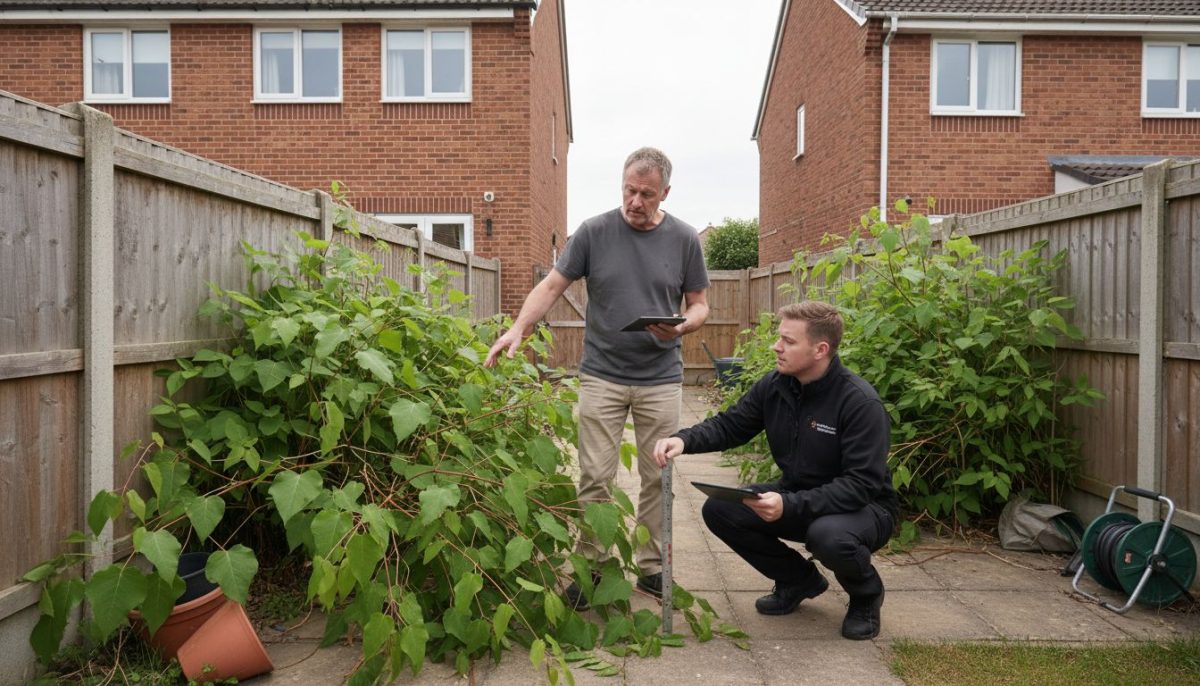
Few plants spark as much concern among american gardeners and landowners as Japanese knotweed. This invasive species can regenerate from fragments as tiny as 0.5 grams, making it nearly impossible to eliminate through ordinary means. The resilience and persistence of knotweed create serious challenges for anyone aiming to protect their property or local ecosystem. Discover why knotweed persists despite countless removal attempts, what truly drives its regrowth, and how understanding these traits is key to effective management.
Table of Contents
- Defining Knotweed Regrowth And Persistence
- Biology Of Knotweed And Rhizome Survival
- Common Causes Of Treatment Failure
- Legal And Environmental Factors In The UK
- Effective Chemical-Free Eradication Methods
Key Takeaways
| Point | Details |
|---|---|
| Invasive Regeneration | Japanese knotweed can regenerate from very small fragments, making it exceptionally difficult to control. |
| Legal Responsibilities | Property owners must prevent the spread of knotweed and manage proper disposal to avoid legal repercussions. |
| Treatment Challenges | Traditional removal methods often fail due to the extensive underground rhizome system, necessitating a more comprehensive approach. |
| Chemical-Free Methods | Effective eradication can be achieved through careful, persistent techniques such as desiccation and manual removal without chemicals. |
Defining Knotweed Regrowth and Persistence
Japanese knotweed represents an extraordinary botanical challenge, characterized by its remarkable ability to regenerate and persist across diverse environments. According to gov.uk, this invasive species can spread through direct rhizome growth and develop new plants from stem and root fragments as minuscule as 1 centimeter, making it exceptionally resilient.
The regenerative capacity of Japanese knotweed is nothing short of remarkable. Research from eprints.whiterose.ac.uk reveals that incredibly small plant material fragments – as little as 0.5 grams of rhizome – can successfully regenerate into an entirely new plant. This extraordinary reproductive mechanism allows knotweed to establish itself rapidly, transforming landscapes with alarming efficiency.
Knotweed’s persistence is rooted in its adaptive biology. It thrives in various soil conditions, demonstrating particular success in man-made environments such as roadsides and railway embankments. Studying the consequences of letting Japanese knotweed spread reveals critical insights into its aggressive colonization strategies.
Key Regeneration Characteristics:
- Regenerates from fragments smaller than 1cm
- Survives in diverse soil conditions
- Can establish new growth from minimal plant material
- Highly adaptable to artificial landscapes
Understanding these regenerative capabilities is crucial for effective management and prevention of knotweed spread.
Biology of Knotweed and Rhizome Survival
The remarkable survival mechanism of Japanese knotweed lies in its intricate rhizome network, a complex underground system that enables extraordinary regenerative capabilities. Research from eprints.whiterose.ac.uk reveals astonishing insights into its biological resilience, demonstrating that fragments as small as 0.5 grams can successfully regenerate into a fully formed plant.
Scientific investigation has uncovered the precise regeneration requirements for this invasive species. According to eprints.whiterose.ac.uk, Japanese knotweed’s rhizomes can extend several meters underground, creating an extensive and interconnected root system. This remarkable biological characteristic makes the plant incredibly challenging to control and eradicate.
The plant’s survival strategy is rooted in its adaptive biology. Each rhizome fragment requires at least one node to regenerate, which means even the smallest piece of root can potentially spawn a new infestation. Understanding the origins of Japanese knotweed provides critical context for comprehending its extraordinary survival mechanisms.
Key Rhizome Survival Characteristics:
- Regenerates from fragments as small as 0.5g
- Requires at least one node for successful growth
- Rhizome networks can extend several meters
- Highly resistant to traditional removal methods
Understanding these biological intricacies is essential for developing effective eradication strategies against this persistent invasive species.
Common Causes of Treatment Failure
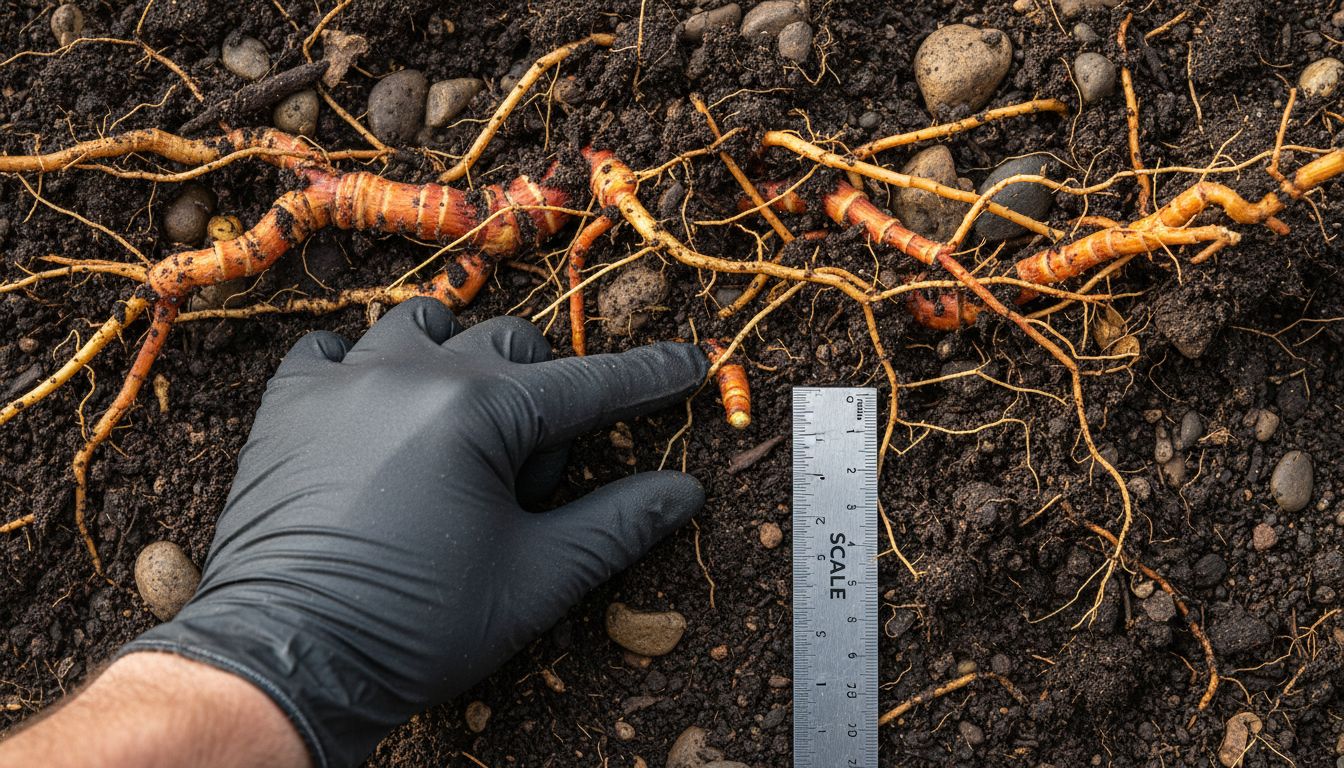
Japanese knotweed treatment often fails due to fundamental misunderstandings about the plant’s extraordinary resilience. According to naturalresourceswales.gov.uk, traditional methods like cutting and digging are fundamentally ineffective against established knotweed populations because of its extensive underground rhizome system.
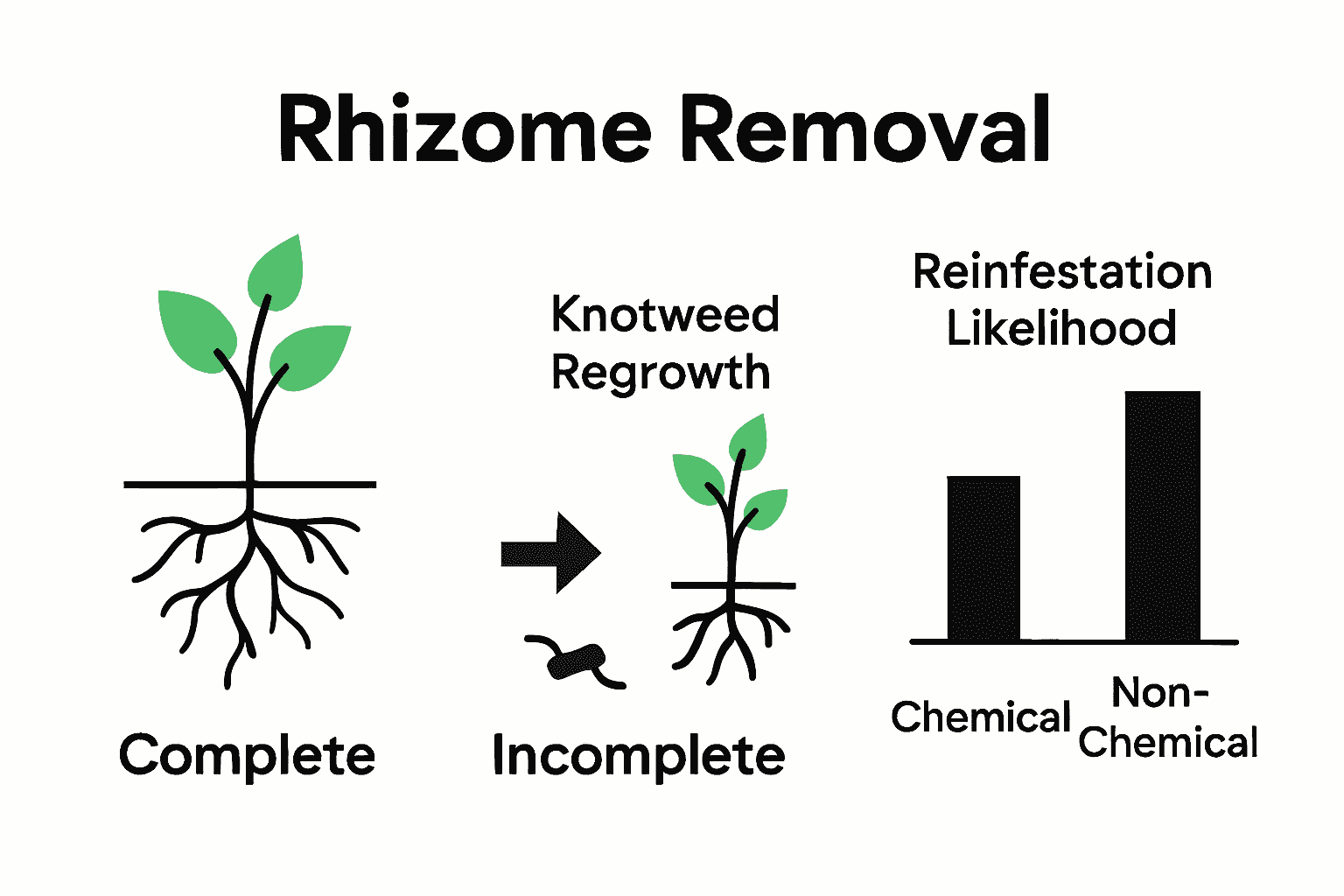
Herbicide application represents the primary recommended control method, but homeowners frequently underestimate the complexity of successful eradication. gov.uk highlights that larger knotweed patches demand multiple herbicide treatments to completely kill the plants and prevent potential regrowth. Incomplete or inconsistent treatment protocols dramatically increase the likelihood of reinfestation.
The most critical treatment failures stem from inadequate understanding of knotweed’s biological persistence. Studying Japanese knotweed’s origins reveals that even microscopic root fragments can regenerate, rendering superficial removal techniques essentially useless.
Primary Treatment Failure Factors:
- Incomplete rhizome removal
- Insufficient herbicide coverage
- Inconsistent treatment protocols
- Underestimating root fragment regeneration potential
- Lack of long-term monitoring
Successful knotweed eradication demands a comprehensive, scientific approach that addresses the plant’s complex regenerative capabilities.
Legal and Environmental Factors in the UK
Navigating the legal landscape of Japanese knotweed management is complex and critical for UK property owners. According to gov.uk, landowners have a strict legal obligation to prevent knotweed from spreading beyond their property boundaries. This means proactively managing the invasive plant to stop its potential ecological damage.
Disposal of Japanese knotweed presents significant legal challenges. forestresearch.gov.uk classifies knotweed as ‘controlled waste’ under the Environmental Protection Act 1990, mandating specialized disposal procedures. This classification requires that contaminated soil and plant material must be buried at a minimum depth of five meters in licensed landfills to prevent potential regrowth.
Exploring the legal obligations surrounding Japanese knotweed reveals the potential consequences of non-compliance. Property owners can face significant legal and financial repercussions if they fail to manage knotweed effectively.
Key Legal Considerations:
- Preventing knotweed spread beyond property boundaries
- Specialized disposal requirements
- Potential legal liability for ecological damage
- Mandatory reporting and management protocols
- Significant financial penalties for non-compliance
Understanding these legal frameworks is essential for responsible knotweed management and environmental stewardship.
Effective Chemical-Free Eradication Methods
Chemical-free Japanese knotweed eradication demands strategic and persistent approaches that target the plant’s complex regenerative system. Research from eprints.whiterose.ac.uk suggests desiccation as a promising non-chemical control strategy, with plant material demonstrating no regrowth after 38 days of systematic dehydration.
Manual intervention techniques offer alternative solutions for smaller infestations. According to dudley.gov.uk, repeated stem pulling can help control small knotweed stands, though effectiveness diminishes significantly with larger, more established populations. These mechanical methods require consistent and precise execution to prevent potential regeneration.
Exploring chemical-free treatment approaches reveals the complexity of managing this resilient invasive species. Physical removal methods must be comprehensive, targeting not just visible growth but the extensive underground rhizome network that enables rapid regeneration.
Key Chemical-Free Eradication Strategies:
- Extended desiccation techniques
- Repeated manual stem removal
- Comprehensive root system extraction
- Persistent monitoring and intervention
- Preventing fragment reestablishment
Successful knotweed management requires a holistic, patient approach that disrupts the plant’s fundamental regenerative capabilities.
Stop Japanese Knotweed from Coming Back in Your UK Home
Japanese knotweed’s relentless regrowth and underground rhizome survival make it one of the toughest invasive plants to control. The article highlights how tiny fragments and extensive root networks lead to treatment failure and ongoing spread. If you are tired of watching knotweed return despite cutting or digging, you are not alone. Effective management means attacking the plant’s biology with a method that truly penetrates and disables its root system.
At Japanese Knotweed Agency, we pioneered a chemical-free treatment delivering up to 5000 volts of energy directly to the plant’s rhizomes. This innovative approach causes internal cell damage and drains the energy supply knotweed depends on for regrowth. Alongside our proven treatments, we offer root barrier installations and excavation to stop knotweed spreading beyond your property. With our expert property surveys across England, Wales, and Ireland, we help you understand the extent of infestation before the plant comes back stronger.

Don’t let Japanese knotweed take over your home again. Discover how our cutting-edge, chemical-free treatments tackle the underground battle to stop knotweed permanently. Visit Japanese Knotweed Agency now to schedule your survey and take control. Act today to protect your property and peace of mind.
Frequently Asked Questions
What causes Japanese knotweed to return after treatment?
Japanese knotweed often returns due to incomplete removal of the rhizome system or insufficient herbicide coverage. Even small root fragments can regenerate, making complete eradication challenging.
What are the most effective methods for controlling Japanese knotweed?
The most effective methods include comprehensive herbicide applications and physical removal techniques, such as extracting the root system. Consistent monitoring and treating all fragments is crucial to prevent regrowth.
Why is manual removal of Japanese knotweed not always successful?
Manual removal can be ineffective, particularly for established populations, because it may not remove all rhizome fragments. Even small pieces can lead to new growth, necessitating thorough removal strategies.
What legal responsibilities do property owners have regarding Japanese knotweed?
Property owners are legally obligated to manage Japanese knotweed to prevent its spread. This includes taking proactive measures and adhering to specialized disposal requirements for contaminated soil and plant materials.