
Over 850,000 properties in the UK are believed to be at risk from Japanese knotweed, making it one of the most feared plants among homeowners and buyers. What often starts as a small cluster of shoots can quickly threaten property values, legal standing, and peace of mind. Understanding how this fast-spreading plant operates and why it poses such a challenge can help you protect your investment, avoid legal trouble, and make smarter property decisions.
Table of Contents
- Understanding Japanese Knotweed And Its Threat
- Legal Obligations And Reporting Requirements
- Impact On Property Values And Mortgages
- Risks Of Unreported Knotweed Infestations
- Treatment Options And Chemical-Free Solutions
Key Takeaways
| Point | Details |
|---|---|
| Japanese Knotweed Threat | This invasive plant can cause property devaluation and legal repercussions for homeowners if not managed properly. |
| Legal Responsibilities | Property owners may face fines or civil liability for failing to control knotweed spread, despite no mandatory national reporting requirements. |
| Impact on Property Values | The presence of Japanese knotweed can reduce property values by 10-20% and complicate mortgage approvals. |
| Treatment Approaches | Sustainable and biological control methods are encouraged, alongside professional management to effectively mitigate knotweed issues. |
Understanding Japanese Knotweed And Its Threat
Japanese knotweed is an aggressive and highly invasive plant species that can cause significant problems for property owners across the United Kingdom. Despite its unassuming appearance, this plant has the potential to wreak havoc on buildings, landscapes, and property values. Understanding its characteristics and threat level is crucial for homeowners and potential property buyers.
Contrary to popular belief, recent research from the University of Leeds suggests that Japanese knotweed might not cause as much structural damage as previously thought. The study indicates that while invasive, the plant’s impact on buildings may be less severe compared to other plant species. However, this does not diminish the need for careful management and proactive treatment.
The impact of Japanese knotweed extends far beyond physical damage. As highlighted by the UK Parliament’s Science and Technology Committee, the current approach to this plant is overly cautious and can significantly affect property sales and valuations. Key concerns include:
- Rapid and aggressive growth through underground rhizome networks
- Ability to penetrate concrete and foundation structures
- Potential to devalue property by up to 10-15%
- Legal obligations for property owners to manage and control the spread
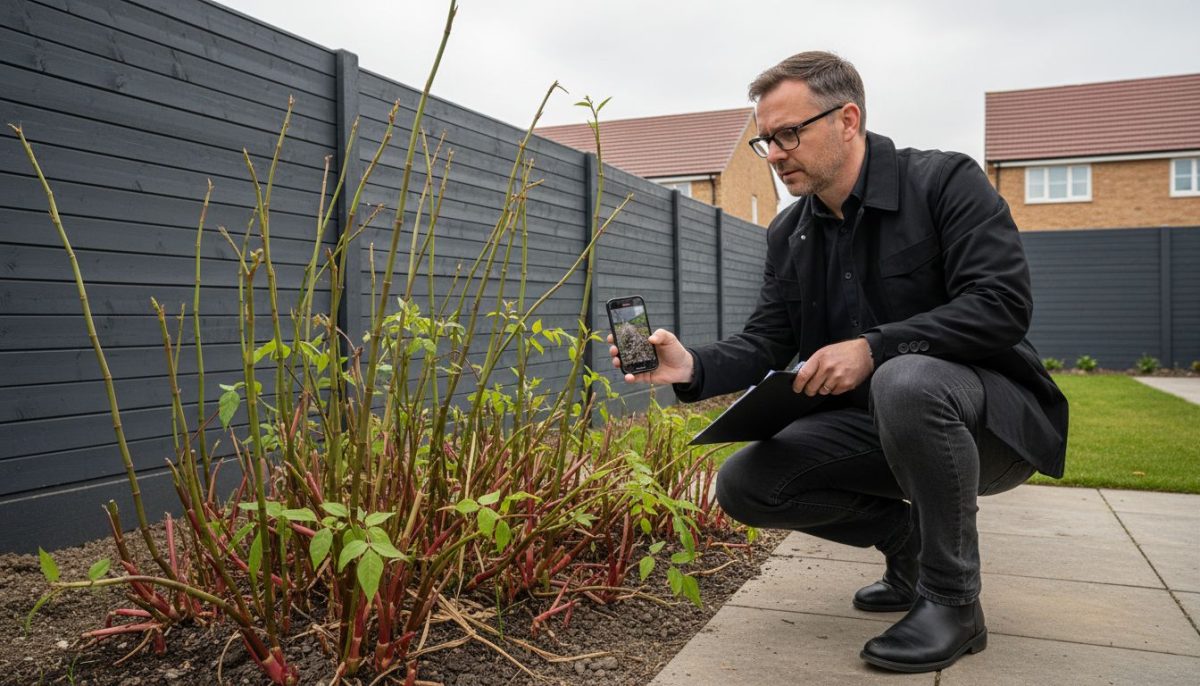
Recognizing Japanese knotweed early is essential. The plant typically appears in late spring, with red or purple shoots emerging from the ground, quickly developing into bamboo-like stems with distinctive green leaves. Its underground root system can extend several meters from the visible plant, making complete eradication challenging without professional intervention.
Legal Obligations And Reporting Requirements
Navigating the legal landscape surrounding Japanese knotweed is complex and critically important for property owners. While there is no mandatory national reporting requirement, property owners face significant potential legal consequences if they fail to manage this invasive plant responsibly.
According to UK Parliament Publications, although there is no explicit legal requirement to report Japanese knotweed, property owners can face serious legal repercussions if they allow the plant to spread. Potential consequences include substantial fines and even imprisonment, particularly if the plant spreads onto neighboring properties.
The legal implications of Japanese knotweed are multifaceted and can impact property transactions, insurance, and potential litigation. Key legal considerations include:
- Potential civil liability for damages to neighboring properties
- Mandatory disclosure during property sales
- Risk of prosecution for allowing uncontrolled spread
- Potential reduction in property value
The UK Government is actively developing strategies to address invasive species, including research into biocontrol methods and supporting local action groups. This suggests an evolving approach to managing plants like Japanese knotweed, with increasing emphasis on proactive management and community involvement.
For property owners, the most prudent approach is to treat Japanese knotweed as a serious legal and environmental responsibility. This means prompt identification, professional assessment, and comprehensive management to prevent spread and potential legal complications. Consulting with legal professionals and invasive plant specialists can provide tailored guidance for your specific situation.
Impact On Property Values And Mortgages
Japanese knotweed represents one of the most significant threats to property value and mortgage accessibility in the UK property market. Its presence can create substantial challenges for homeowners looking to sell or refinance their properties, often triggering complex financial and legal implications.
Research from the University of Leeds highlights the chilling effect on property sales, revealing that the mere presence of Japanese knotweed can dramatically impact a property’s marketability. Even though scientific evidence suggests the plant’s physical damage might be comparable to other invasive species, its reputation continues to create significant barriers in real estate transactions.
The financial implications for property owners are substantial and multifaceted:
- Potential property value reduction of 10-20%
- Increased difficulty obtaining mortgage approvals
- Higher insurance and remediation costs
- Mandatory professional treatment requirements
The UK Parliament’s Science and Technology Committee has acknowledged that current approaches to Japanese knotweed may be disproportionate, yet most mortgage lenders remain cautious. Many financial institutions require a professional survey and comprehensive treatment plan before approving a mortgage, effectively creating significant obstacles for property owners.
Navigating these challenges requires a proactive approach. Property owners discovering Japanese knotweed should immediately consult specialist surveyors, obtain professional treatment plans, and maintain comprehensive documentation to mitigate potential financial impacts. By taking swift, documented action, homeowners can potentially minimize the negative consequences and demonstrate responsible management to potential buyers and mortgage providers.
Risks Of Unreported Knotweed Infestations
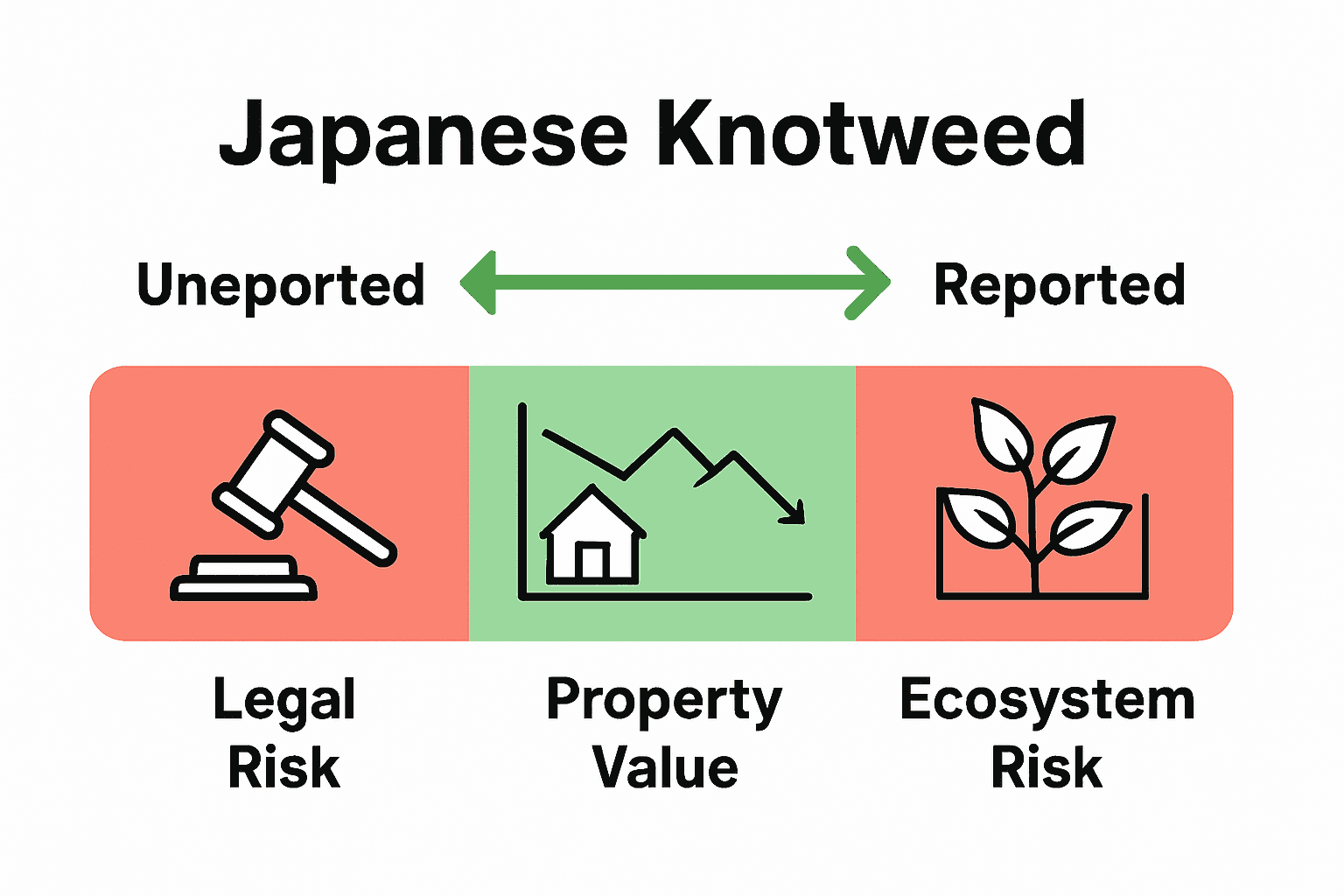
Ignoring or failing to address a Japanese knotweed infestation can lead to catastrophic consequences for property owners, extending far beyond simple plant management. The risks associated with unreported knotweed are multifaceted and can create significant legal, financial, and environmental challenges.
According to UK Parliamentary Publications, unreported knotweed infestations can result in serious legal repercussions, including potential fines and even imprisonment. Property owners who neglect to manage or disclose knotweed may find themselves facing civil claims from neighbors whose properties could be impacted by the plant’s aggressive spreading mechanisms.
The potential risks of unreported knotweed include:
- Exponential spread of invasive plant species
- Structural damage to foundations and underground infrastructure
- Significant reduction in property market value
- Potential legal disputes with neighboring properties
- Costly professional eradication requirements
The UK Government emphasizes the critical importance of managing invasive species like Japanese knotweed to prevent broader environmental and economic damage. By supporting local action groups and promoting proactive management, they underscore the collective responsibility in controlling these destructive plants.
For property owners, the most prudent approach is immediate identification, professional assessment, and comprehensive documentation. The consequences of letting Japanese Knotweed spread can be far-reaching, potentially transforming a minor botanical issue into a significant legal and financial nightmare. Swift, transparent action is the most effective strategy in mitigating the risks associated with unreported knotweed infestations.

Treatment Options And Chemical-Free Solutions
Addressing Japanese knotweed requires a comprehensive and strategic approach that balances effectiveness with environmental responsibility. Modern treatment methods have evolved significantly, moving beyond traditional chemical interventions toward more sustainable and targeted solutions.
Research funded by Defra highlights innovative biological control methods as a promising alternative to conventional treatments. UK Government Assets specifically identifies the psyllid Aphalara itadori as a cost-effective and environmentally friendly approach to managing Japanese knotweed populations.
Key treatment strategies include:
- Targeted biological control agents
- Reduced herbicide application techniques
- Physical root barrier installations
- Energy-based eradication methods
- Comprehensive monitoring and ongoing management
According to additional UK Government research, integrating biological control agents with minimal chemical interventions can significantly reduce environmental impact while maintaining effective knotweed management.
 This integrated approach represents a more nuanced and responsible strategy for property owners and environmental managers.
For those seeking comprehensive information on invasive plant management, the Blog Masonry resource offers additional insights into emerging treatment techniques. Property owners should prioritize professional assessment and tailored treatment plans that minimize environmental disruption while effectively controlling knotweed spread.
Take Control of Japanese Knotweed Before It Takes Control of Your Property
Dealing with Japanese knotweed can feel overwhelming, especially when legal responsibilities and property values hang in the balance. The risks of letting knotweed spread unchecked include costly legal consequences, diminished property prices, and lengthy delays in mortgage approvals. You need a solution that is both effective and environmentally responsible. That is where Japanese Knotweed Agency steps in.

Our pioneering chemical-free treatment delivers direct energy up to 5000 volts right on site to damage knotweed’s root network deep underground. Combined with expert root barrier installation and excavation, this approach minimizes environmental impact while maximizing eradication success. If you want reliable property surveys and comprehensive invasive weed management across England, Wales, and Ireland, don’t wait for the problem to escalate. Visit Japanese Knotweed Agency today and take the first step toward protecting your home and investment. Learn more about our chemical-free knotweed treatment and see why responsible knotweed management is urgent now.
Frequently Asked Questions
What is Japanese knotweed and why is it a problem for homeowners?
Japanese knotweed is an invasive plant species that can grow rapidly and damage buildings, landscapes, and property values. It poses a significant threat as it can penetrate concrete and foundations, leading to potential financial and legal issues for homeowners.
What are the legal obligations regarding Japanese knotweed for property owners?
While there’s no mandatory national reporting requirement, property owners can face legal consequences if they fail to manage Japanese knotweed. This includes potential fines and civil liability for allowing the plant to spread onto neighboring properties.
How can Japanese knotweed affect property value and mortgages?
The presence of Japanese knotweed can lead to a property value reduction of 10-20% and complicate mortgage approvals. Many lenders require professional surveys and treatment plans before offering mortgages, making it essential for property owners to address the infestation promptly.
What are the treatment options for Japanese knotweed?
Treatment options include targeted biological control methods, reduced herbicide application techniques, physical root barriers, and energy-based eradication methods. Homeowners should seek professional assessment to develop a tailored treatment plan that minimizes environmental impact while effectively managing the knotweed.