


Nearly one in ten British homeowners have confused Japanese knotweed with completely harmless plants, leading to costly mistakes and unnecessary stress. Understanding the difference goes far beyond simple gardening knowledge. The persistent spread of this invasive species not only threatens local ecosystems but also creates serious property and legal difficulties. Uncovering the real facts and dispelling common myths about Japanese knotweed can help every British property owner protect their investment and avoid unexpected penalties.
Table of Contents
- Japanese Knotweed: Definition And Misconceptions
- UK Legal Status And Relevant Legislation
- Responsibilities For Homebuyers And Sellers
- Chemical-Free Eradication And Environmental Laws
- Risks Of Non-Compliance And Legal Penalties
Key Takeaways
| Point | Details |
|---|---|
| Identification is Crucial | Misidentification of Japanese knotweed can lead to unnecessary panic and complications in property transactions; professional verification is recommended. |
| Legal Responsibilities | Homeowners and sellers must disclose known knotweed infestations to avoid legal repercussions, including fines and mortgage complications. |
| Effective Management | Chemical-free eradication methods and proper waste disposal are crucial to comply with legal requirements and prevent the spread of knotweed. |
| Documentation is Key | Maintaining thorough records of management efforts and disposal can protect property owners from legal risks and complications in transactions. |
Japanese Knotweed: Definition And Misconceptions
Japanese knotweed (Fallopia japonica) is an aggressive non-native invasive plant species originally introduced to the United Kingdom in the 19th century. Classified by the Royal Horticultural Society as a significant ecological threat, this perennial plant is renowned for its extraordinary capacity to grow rapidly and outcompete native vegetation.
Contrary to widespread misconceptions, Japanese knotweed is not simply another garden weed but a complex ecological challenge. Many homeowners mistakenly identify harmless plants like bindweed or dogwood as Japanese knotweed, creating unnecessary panic. Property professionals consistently report widespread misidentification issues, which can significantly complicate property transactions and valuations.
The plant’s distinctive characteristics include bamboo-like hollow stems, distinctive zigzag growth patterns, and heart-shaped leaves. Its underground rhizome network can extend several metres, enabling remarkable regenerative capabilities. A single fragment as small as 0.7 grams can potentially regenerate into an entirely new plant, making mechanical removal exceptionally challenging without professional intervention.
To clarify identification, here is a comparison of Japanese knotweed and commonly confused plants:
| Feature | Japanese Knotweed | Bindweed | Dogwood |
|---|---|---|---|
| Stem Structure | Hollow, bamboo-like | Thin, climbing vine | Solid, woody stems |
| Leaf Shape | Heart-shaped, flat base | Arrow-shaped, pointed tip | Rounded or oval |
| Growth Pattern | Zigzag pattern, upright | Twining, sprawling | Upright, bushy |
| Rhizomes | Extensive network underground | Few, shallow roots | Woody roots, not rhizomatous |
Pro Tip: Verification is Key: Always consult a professional invasive plant specialist for definitive identification before making assumptions about potential Japanese knotweed infestations.
UK Legal Status And Relevant Legislation
The legal framework surrounding Japanese knotweed in the United Kingdom is comprehensive and stringent. Under the Wildlife and Countryside Act 1981, deliberately planting or causing Japanese knotweed to grow in the wild constitutes a criminal offence, reflecting the serious environmental implications of this invasive species. The Environmental Protection Act 1990 further classifies Japanese knotweed as ‘controlled waste’, mandating specialised disposal protocols that prevent potential ecological contamination.
Local authorities have been empowered with significant legal mechanisms to address knotweed infestations. The Anti-social Behaviour, Crime and Policing Act 2014 enables councils to issue Community Protection Notices against property owners who fail to manage invasive plant species. These notices can compel individuals or organisations to control Japanese knotweed when its presence negatively impacts neighbouring properties or public spaces, with potential legal consequences for non-compliance.
Property transactions are particularly sensitive to Japanese knotweed’s legal status. Sellers are legally obligated to disclose the presence of knotweed during property searches, and mortgage lenders frequently require detailed management plans before approving loans. Failure to declare known knotweed infestations can result in potential legal proceedings, significant financial penalties, and potential property devaluation.
Pro Tip: Legal Documentation: Maintain comprehensive records of any knotweed treatment, removal, or management plans, as these documents can be crucial evidence in potential legal disputes or property transactions.
Below is a summary of how major UK legislation affects property owners dealing with Japanese knotweed:
| Legislation | Main Focus | Property Owner Obligation | Consequences of Breach |
|---|---|---|---|
| Wildlife and Countryside Act 1981 | Prohibits spread in the wild | Prevent knotweed escaping property | Up to £3,000 fine or two years’ imprisonment |
| Environmental Protection Act 1990 | Waste classification | Dispose of material via licensed facility | Fines and criminal prosecution |
| Anti-social Behaviour, Crime and Policing Act 2014 | Local authority intervention | Control infestations upon notice | Legal notices, court action, remediation costs |

Responsibilities For Homebuyers And Sellers
Property transactions involving land potentially impacted by Japanese knotweed require meticulous due diligence. Homeowners are not legally mandated to remove Japanese knotweed, but allowing its spread can trigger significant legal consequences, including potential private nuisance actions or Community Protection Notices under the Anti-social Behaviour, Crime and Policing Act 2014.
Mortgage lenders frequently demand specialist assessments when Japanese knotweed is suspected, which can substantially complicate property sales. Sellers are legally obligated to disclose known knotweed infestations during property searches, with potential financial and legal repercussions for non-disclosure. This requirement extends beyond mere presence, encompassing historical evidence of knotweed within the property’s boundaries.
Buyers must conduct comprehensive environmental searches and potentially commission specialist surveys to identify potential knotweed risks. Professional investigations can reveal historical infestations, underground rhizome networks, and potential future growth patterns that might not be immediately visible. These assessments are critical, as undetected knotweed can lead to substantial remediation costs, property devaluation, and potential legal disputes.
Pro Tip: Pre-Purchase Precautions: Always commission a professional invasive plant survey before finalising any property purchase, ensuring comprehensive understanding of potential Japanese knotweed risks and associated mitigation strategies.
Chemical-Free Eradication And Environmental Laws
Chemical-free eradication of Japanese knotweed represents a complex environmental challenge that intersects with stringent legal frameworks. Traditional methods like cutting and digging are explicitly discouraged, as they can potentially increase the plant’s spread and constitute a legal offence under the Wildlife and Countryside Act 1981. Property owners must exercise extreme caution to prevent inadvertent proliferation of this invasive species.
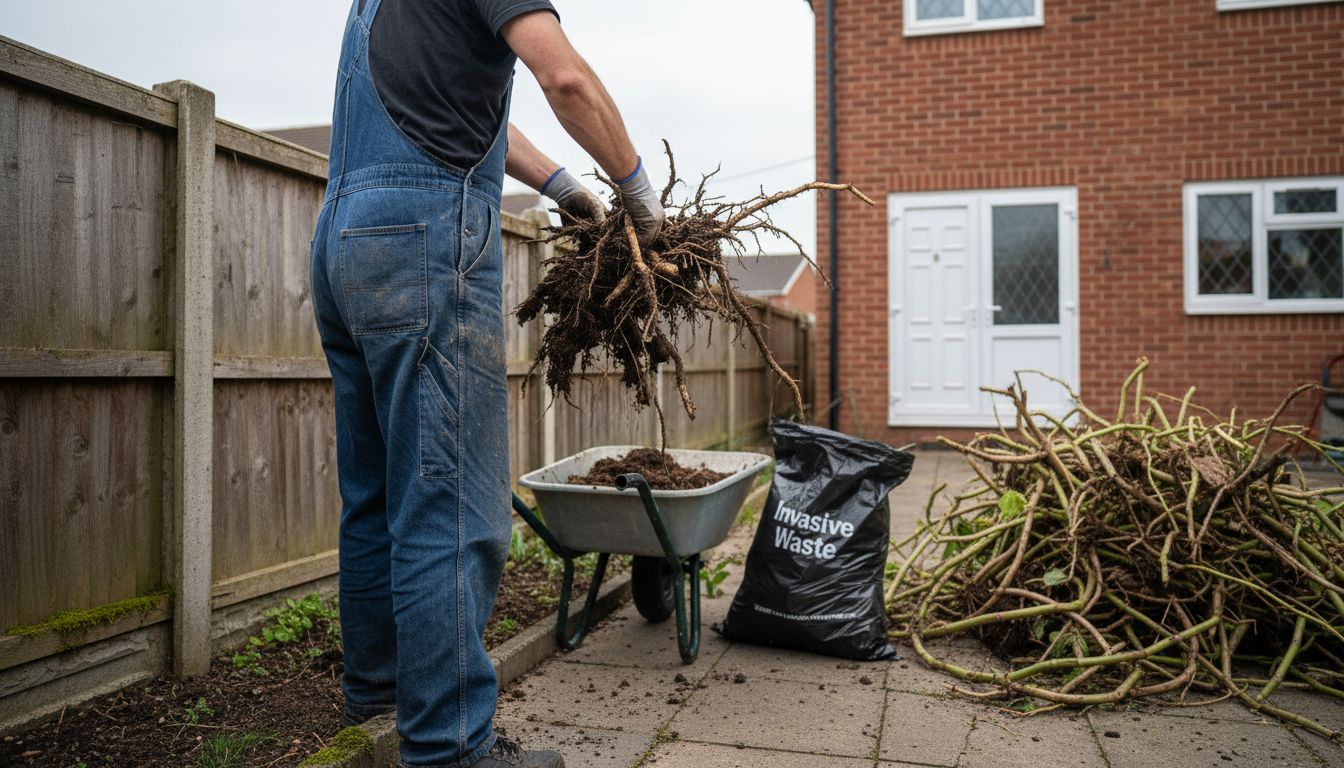
Disposal of Japanese knotweed material is strictly regulated under the Environmental Protection Act 1990, which classifies contaminated soil and plant material as controlled waste. This legislative requirement mandates that all knotweed-related waste must be transported and disposed of exclusively at licensed waste management facilities. Failure to comply can result in substantial financial penalties and potential legal prosecution.
Emergent chemical-free eradication technologies offer promising alternatives to traditional chemical treatments. Innovative approaches such as thermal treatment, targeted electrical intervention, and biological control methods are gaining recognition as environmentally responsible solutions. These techniques aim to systematically deplete the plant’s underground rhizome network without introducing harmful chemical agents, addressing both ecological concerns and legal compliance requirements.
Pro Tip: Waste Management Strategy: Always document and retain receipts from licensed waste disposal facilities when removing Japanese knotweed, as these records can serve as crucial evidence of legal compliance during property transactions.
Risks Of Non-Compliance And Legal Penalties
Property owners face significant legal consequences for mismanaging Japanese knotweed. Failing to prevent the plant’s spread can result in prosecution, with potential fines reaching up to £3,000 or imprisonment for two years under the Wildlife and Countryside Act 1981. These stringent penalties underscore the serious environmental and legal implications of Japanese knotweed proliferation.
Improper disposal of Japanese knotweed waste carries substantial legal risks, as the material is classified as controlled waste under the Environmental Protection Act 1990. Individuals found illegally disposing of knotweed materials can face significant financial penalties, potential criminal prosecution, and extensive legal proceedings that may impact property values and future transactions.
Beyond direct legal penalties, property owners may encounter additional financial repercussions. Mortgage lenders frequently refuse lending on properties with unmanaged knotweed infestations, effectively rendering properties unmortgageable. Neighbours can also initiate civil nuisance claims, potentially resulting in court-mandated remediation and substantial compensation payments for damages caused by uncontrolled knotweed spread.
Pro Tip: Legal Protection Strategy: Maintain comprehensive documentation of all knotweed management efforts, including professional survey reports, treatment plans, and disposal receipts to demonstrate proactive compliance and mitigate potential legal risks.
Take Control of Japanese Knotweed and Protect Your Property
The challenge of navigating knotweed legislation can be daunting for any property owner faced with this invasive species. The article highlights serious legal obligations and the risks of non-compliance that can lead to costly penalties or mortgage complications. If you are worried about managing knotweed responsibly and ensuring full compliance with UK laws such as the Wildlife and Countryside Act 1981 and the Environmental Protection Act 1990 then expert support is essential.
At Japanese Knotweed Agency we specialise in chemical-free treatment designed to penetrate the extensive rhizome network using advanced direct energy technology. We also provide thorough property surveys and environmentally sound options like root barrier installations and excavation works to prevent further spread and legally protect your asset.

Do not let Japanese knotweed put your property or peace of mind at risk. Act now to secure a professional assessment and tailored eradication plan to comply fully with legislation and avoid penalties. Discover more about our proven services and how we can help you stay ahead of invasive plant legislation by visiting Japanese Knotweed Agency. For peace of mind on property transfers and to safeguard your investment explore our property surveys today.
Frequently Asked Questions
What legal obligations do property owners have regarding Japanese knotweed?
Property owners are obligated to prevent Japanese knotweed from spreading beyond their property boundaries to avoid potential legal penalties under the Wildlife and Countryside Act 1981.
What are the consequences of failing to disclose a Japanese knotweed infestation during a property sale?
Failing to disclose a known Japanese knotweed infestation can lead to legal repercussions, financial penalties, and potential property devaluation, as mortgage lenders may refuse loans on affected properties.
How does Japanese knotweed legislation impact property transactions?
Japanese knotweed legislation requires sellers to disclose its presence, which can complicate property sales and lead buyers to conduct specialist surveys, causing additional costs and delays in the transaction process.
What actions can local authorities take against property owners who fail to manage Japanese knotweed?
Local authorities can issue Community Protection Notices that compel property owners to manage Japanese knotweed infestations when they negatively affect neighbours or public spaces, potentially leading to legal action if compliance is not met.