

Most american homeowners are surprised to learn that Japanese knotweed can grow up to 10 centimeters every single day, making it one of the fastest spreading invasive plants. This reputation has created anxiety and myths about its potential for property destruction and mortgage rejection. Accurate information is crucial because confusion over Japanese knotweed often leads to costly mistakes. Get the facts you need to separate science from rumor and make informed choices about this misunderstood plant.
Table of Contents
- Japanese Knotweed: Definition And Myths
- How Knotweed Spreads And Damages Property
- Property Value And Mortgage Impacts
- Legal Duties For Uk Homeowners
- Chemical-Free Knotweed Removal Solutions
Key Takeaways
| Point | Details |
|---|---|
| Understanding Japanese Knotweed | Japanese knotweed is an invasive species that can grow rapidly and regenerate from small fragments, requiring targeted management. |
| Impacts on Property Value | The presence of Japanese knotweed can reduce property values by 5-20% and complicate mortgage approvals, despite exaggerated damage claims. |
| Legal Responsibilities | Homeowners must prevent Japanese knotweed from spreading, manage contaminated soil responsibly, and can face fines for non-compliance. |
| Innovative Removal Methods | Chemical-free removal strategies, such as electrical treatment, can effectively eradicate Japanese knotweed while minimizing environmental impact. |
Japanese Knotweed: Definition And Myths
Japanese knotweed (Fallopia japonica) is an aggressive, fast-spreading invasive plant species that has become a significant concern for property owners and land managers across multiple regions. Gov UK describes it as a non-native invasive plant known for its remarkable ability to thrive in diverse environments including roadsides, waste grounds, and riverbanks.
Contrary to widespread panic, recent scientific research suggests that the plant’s destructive potential might be somewhat exaggerated. Leeds University conducted a study challenging the common perception of extensive structural damage, indicating that its impact on buildings could be comparable to other plant species.
Key characteristics of Japanese knotweed that make it particularly challenging include:
- Rapid growth rates of up to 10 centimeters per day
- Ability to regenerate from root fragments as small as 1 centimeter
- Extremely resilient root system called rhizomes that spread underground
- Can penetrate concrete and foundation weaknesses
The most persistent myths surrounding Japanese knotweed include the belief that it can immediately destroy entire structures and that any small fragment guarantees complete property devastation. While the plant is undoubtedly aggressive, professional assessment and targeted treatment can effectively manage its spread and minimize potential property damage. Understanding its biology and implementing strategic removal techniques are crucial for property owners confronting this invasive species.
How Knotweed Spreads And Damages Property
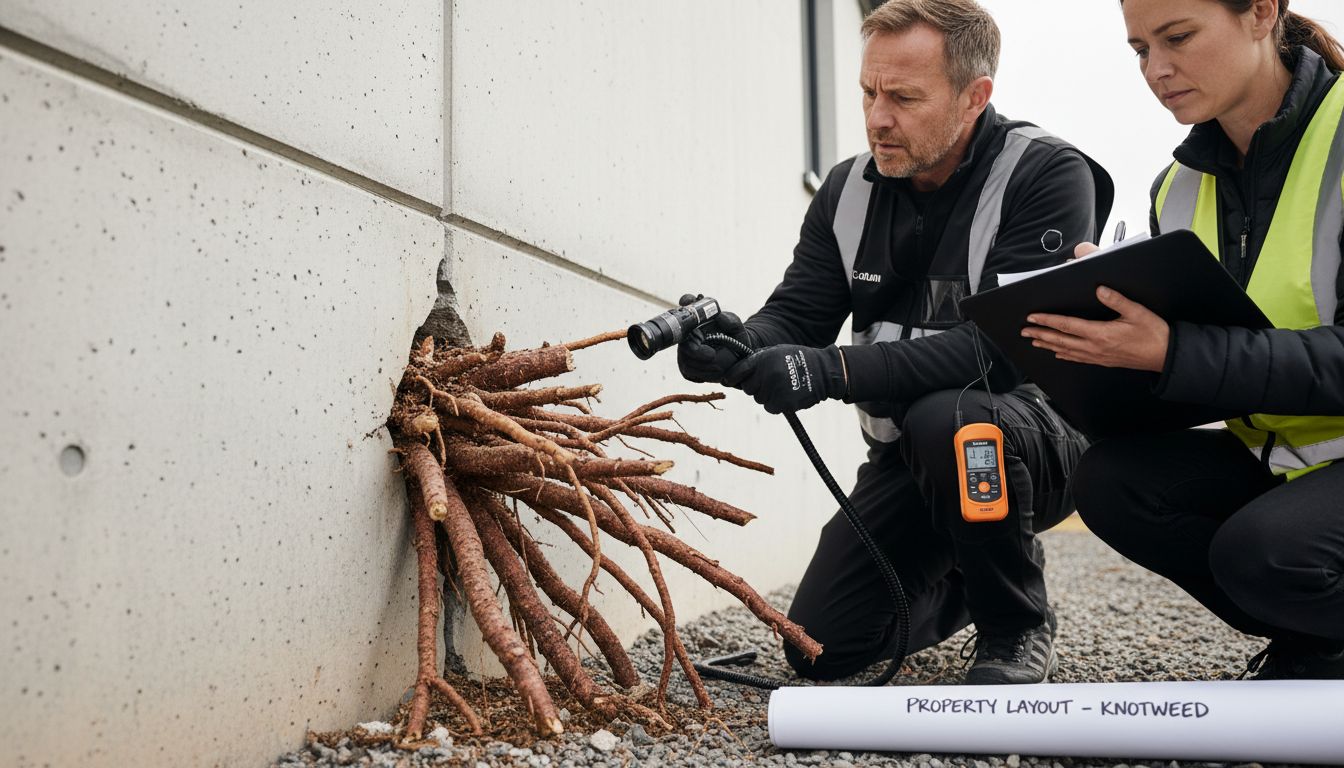
Japanese knotweed represents a unique botanical challenge due to its extraordinary ability to spread and propagate through incredibly resilient underground root systems. Gov UK confirms that this invasive species can regenerate from incredibly small fragments, with rhizomes capable of spreading across most soil conditions and thriving in diverse environments like roadsides, waste grounds, and riverbanks.
Contrary to widespread fears, recent scientific research suggests that the plant’s destructive potential might be less severe than traditionally believed. Leeds University research indicates that Japanese knotweed’s rhizomes rarely extend more than 4 meters from above-ground plants, and its structural damage potential is comparable to other plant species.
Key mechanisms of knotweed spread include:
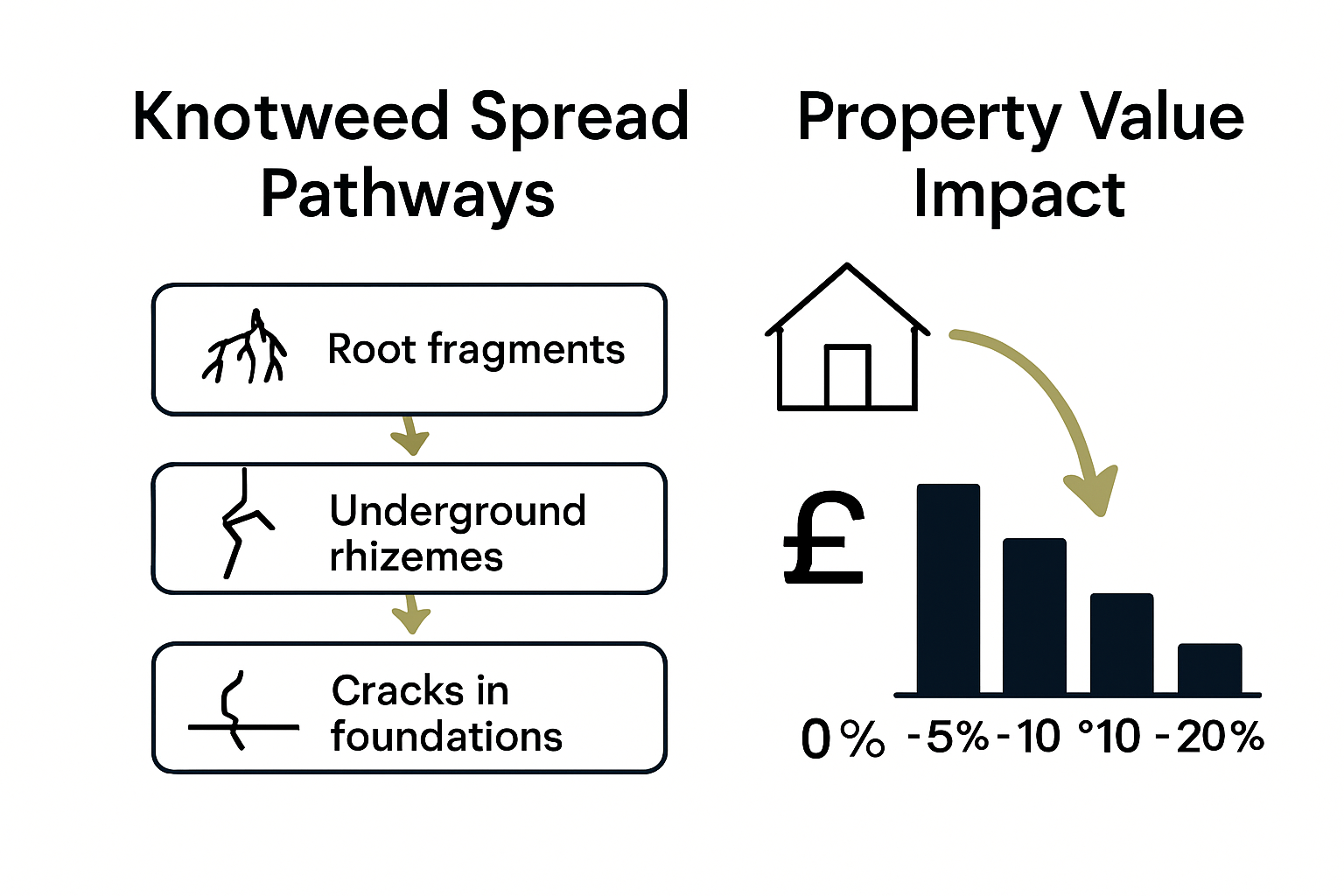
- Regeneration from root fragments as small as 1 centimeter
- Underground rhizome network expansion
- Ability to grow through small cracks in concrete and foundations
- Rapid growth rates up to 10 centimeters daily
Property owners should remain vigilant, understanding that while Japanese knotweed poses significant challenges, professional assessment and targeted removal strategies can effectively manage its spread. The consequences of letting Japanese Knotweed spread can be substantial, making early detection and professional intervention critical for preventing extensive property damage.
Property Value And Mortgage Impacts
The presence of Japanese knotweed can dramatically transform a property’s marketability and financial landscape. Centre for Ecology and Hydrology research reveals that mortgage lenders may outright refuse applications when Japanese knotweed is identified at a property site, creating significant challenges for potential buyers and current homeowners.
However, recent scientific research suggests that the mortgage industry’s response might be disproportionate to the actual risk. Leeds University found no substantive evidence that Japanese knotweed causes significant structural damage, challenging the automatic mortgage rejection practices that have become commonplace.
Potential property value impacts include:
- Potential reduction in market value of 5-20%
- Increased difficulty selling the property
- Higher costs for professional treatment and removal
- Potential legal complications with property transactions
Property owners facing Japanese knotweed should consider Japanese Knotweed and its impact on property values for comprehensive guidance. Proactive management, professional assessment, and documented treatment plans can significantly mitigate financial risks and improve mortgage approval chances. Understanding the nuanced reality of Japanese knotweed’s impact is crucial for making informed real estate decisions.
Legal Duties For UK Homeowners
Japanese knotweed management carries significant legal responsibilities for property owners, with potential serious consequences for non-compliance. Gov UK mandates that homeowners must prevent Japanese knotweed on their land from spreading to neighboring properties, classifying contaminated soil or plant material as controlled waste that requires careful handling and disposal.
UK Parliament Publications outline severe penalties for negligent management, including potential fines up to £5,000 and imprisonment for up to two years. Landowners can also face civil legal action from adjacent property owners if Japanese knotweed is allowed to spread and cause damage, creating a complex legal landscape for property management.
Key legal obligations for homeowners include:
- Preventing knotweed from spreading to neighboring properties
- Properly containing and disposing of contaminated soil
- Documenting treatment and removal efforts
- Disclosing knotweed presence during property sales
- Implementing professional management strategies
Property owners confronting Japanese knotweed should approach the situation strategically, understanding that proactive management is not just an environmental responsibility but a critical legal requirement. Does Japanese knotweed cause property damage? provides additional insights into the legal and practical implications of managing this invasive species effectively.
Chemical-Free Knotweed Removal Solutions
Electrical treatment represents an innovative approach to Japanese knotweed eradication that eliminates the need for traditional chemical interventions. Gov UK emphasizes the critical importance of preventing knotweed spread, highlighting the need for comprehensive and effective removal strategies that go beyond conventional methods.
Leeds University research suggests that traditional perceptions of knotweed’s destructiveness may be overstated, reinforcing the importance of targeted, precise removal techniques that minimize environmental impact and property disruption.
Key chemical-free removal strategies include:
- High-voltage electrical treatment targeting root systems
- Precision excavation and root barrier installation
- Targeted thermal treatment methods
- Biological control through specialized management techniques
- Comprehensive root zone monitoring and management
Property owners seeking alternative approaches should consider Glyphosate Ban in Brighton and Hove as an example of the growing shift towards environmentally conscious invasive plant management. The key is understanding that effective knotweed removal requires a sophisticated, multi-dimensional approach that goes beyond traditional chemical treatments.
Take Control of Japanese Knotweed Before It Threatens Your Property Value
Japanese knotweed can severely impact your property’s market value and mortgage options. The article explains how this invasive species spreads aggressively through its resilient rhizomes and can cause costly structural challenges. If you want to stop the problem early and avoid legal headaches related to property damage or disclosure, understanding and acting on effective removal solutions is critical. Japanese Knotweed Agency offers a proven chemical-free approach that delivers high-voltage energy directly to the root system, ensuring precise eradication without harmful chemicals.

Don’t wait until Japanese knotweed devalues your home or complicates your sale. Explore our chemical-free treatments, root barrier installation, and expert excavation services designed to securely remove knotweed and protect your property. Schedule a professional survey today across England, Wales, and Ireland by visiting Japanese Knotweed Agency. Learn more about our advanced methods and legal compliance support by visiting Japanese Knotweed and its impact on property values and discover how to protect your investment at Does Japanese knotweed cause property damage?. Act now to safeguard your property and peace of mind.
Frequently Asked Questions
What is Japanese knotweed and why is it a concern for property owners?
Japanese knotweed is an aggressive, invasive plant known for its rapid growth and ability to damage property. It can regenerate from small root fragments and its resilient root system can penetrate concrete and foundations, making it a significant concern for property owners.
How does Japanese knotweed spread and what are its impacts on properties?
Japanese knotweed spreads through an extensive underground rhizome network and can regenerate from small fragments. While it is capable of damaging structures, recent studies suggest its destructive potential may not be as severe as previously thought, comparing it to other plant species.
What legal responsibilities do homeowners have regarding Japanese knotweed?
Homeowners must prevent Japanese knotweed from spreading to neighboring properties, properly dispose of contaminated soil, document treatment efforts, and disclose its presence when selling their property. Non-compliance can lead to fines and civil legal action.
Are there chemical-free methods for removing Japanese knotweed?
Yes, chemical-free methods include electrical treatment targeting root systems, precision excavation, thermal treatment methods, and biological control techniques. These alternatives reduce environmental impact while effectively managing knotweed outbreaks.