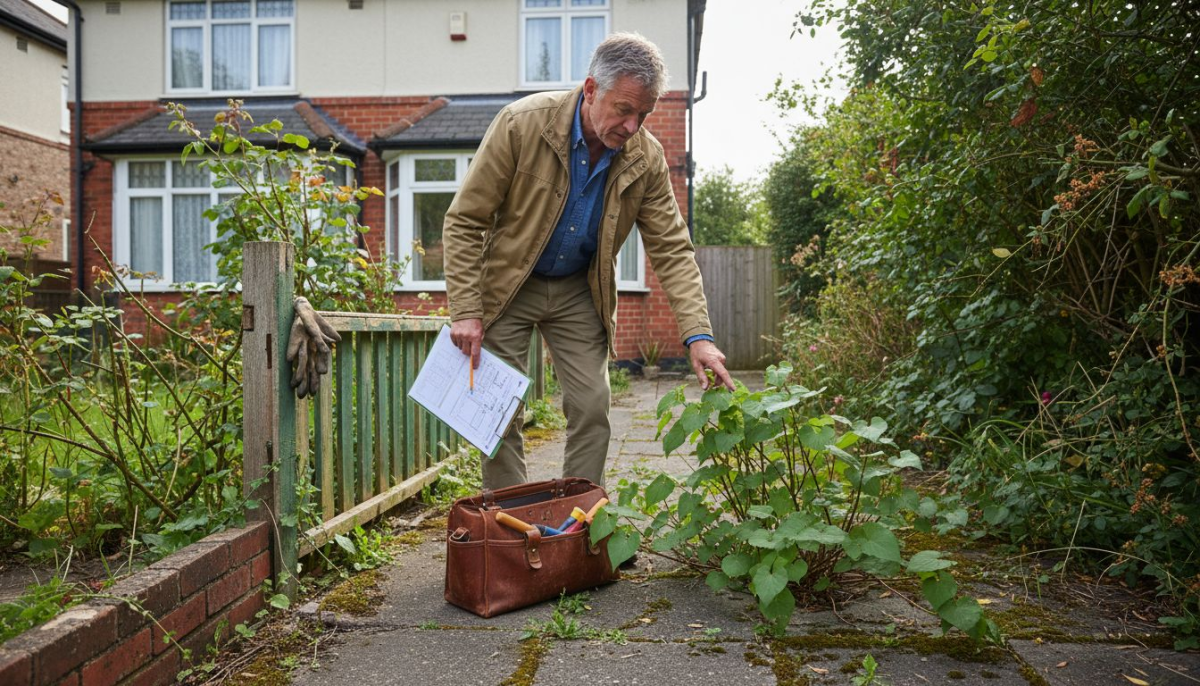
Every year, countless British homeowners encounter the daunting sight of Japanese knotweed in their gardens. This invasive plant is more than a nuisance, threatening property values and peace of mind. With nearly 5 percent of residential properties in the United Kingdom potentially affected, confusion and outdated myths run rampant. Clearing up the facts about Japanese knotweed helps protect not just homes but also legal and financial interests for those living in British communities.
Table of Contents
- Japanese Knotweed: Definition and Common Myths
- Identifying Knotweed on Residential Property
- Legal Obligations for Homeowners and Buyers
- Impact of Knotweed on House Value and Sales
- Effective Knotweed Treatment and Eradication Options
Key Takeaways
| Point | Details |
|---|---|
| Identification of Japanese Knotweed | Homeowners should recognise distinctive features such as zigzag stems, shield-shaped leaves, and creamy-white flowers to identify Japanese knotweed effectively. |
| Legal Responsibilities | Property owners must prevent knotweed from spreading, disclose its presence during sales, and manage it according to legal obligations to avoid penalties. |
| Impact on Property Value | The presence of Japanese knotweed can significantly reduce property value by up to 15-20%, complicating sales and mortgage approvals. |
| Effective Treatment Options | Professional treatment methods are essential as DIY approaches often fail; strategies may include chemical herbicides, excavation, and root barriers, with long-term monitoring required. |
Japanese Knotweed: Definition and Common Myths
Japanese knotweed represents a significant environmental challenge for property owners across the United Kingdom. Introduced originally as an ornamental garden plant, this persistent herbaceous perennial has since become one of the most invasive plant species in the region, causing substantial concern for homeowners and property professionals.
At its core, Japanese knotweed is a highly aggressive plant species characterised by rapid growth and extraordinary resilience. Its distinctive bamboo-like stems can grow up to 3 metres in height during a single growing season, with underground rhizome networks spreading extensively beneath the surface. These underground root systems can penetrate concrete foundations, damage infrastructure, and compromise structural integrity, making it a potential nightmare for property owners.
Common misconceptions about Japanese knotweed often lead to unnecessary panic. Many individuals mistakenly identify harmless plants like bindweed or dogwood as Japanese knotweed, creating unwarranted anxiety during property transactions. Accurate identification requires understanding its unique characteristics:
- Zigzag stem pattern
- Distinctive shield-shaped leaves
- Creamy-white flower clusters in late summer
- Rapid, aggressive growth pattern
Pro Tip – Plant Identification: If you suspect Japanese knotweed on your property, consult a professional invasive species specialist who can provide definitive identification and recommended treatment strategies before the problem escalates.
Identifying Knotweed on Residential Property
Japanese knotweed presents a unique challenge for homeowners seeking to identify this invasive plant species. Its distinctive physical characteristics make it relatively easy to recognise once you understand its key features. Unlike typical garden plants, Japanese knotweed stands out with its remarkable growth patterns and structural appearance.
The plant’s most prominent identifying features include distinctive bamboo-like hollow stems with a striking reddish-brown colour, which emerge in early spring and quickly develop into a dense cluster. These stems can grow at an astonishing rate of up to 10 centimetres per day, creating substantial vegetation in a remarkably short time. Homeowners should pay close attention to several key visual indicators:
- Triangular, shield-shaped leaves arranged alternately along the stem
- Hollow stems with distinct nodes, resembling bamboo
- Reddish-brown colour with distinctive zigzag growth pattern
- Small, creamy-white flower clusters appearing in late summer
- Rapid, aggressive growth that can penetrate through concrete and tarmac
Warning Signs for property owners include:
- Unexplained cracks in foundations or driveways
- Sudden emergence of tall, bamboo-like vegetation
- Patches of dense, fast-growing plants near building structures
- Persistent plant growth despite repeated removal attempts
Pro Tip – Early Detection: Conduct a thorough property perimeter inspection during spring and early summer when Japanese knotweed’s distinctive red shoots first emerge, allowing for immediate professional intervention if suspected.
Legal Obligations for Homeowners and Buyers
Property owners face significant legal responsibilities when Japanese knotweed is discovered on their land. Landowners have a crucial legal duty to prevent the plant from spreading beyond their property boundaries, which can result in serious legal consequences if not managed appropriately.
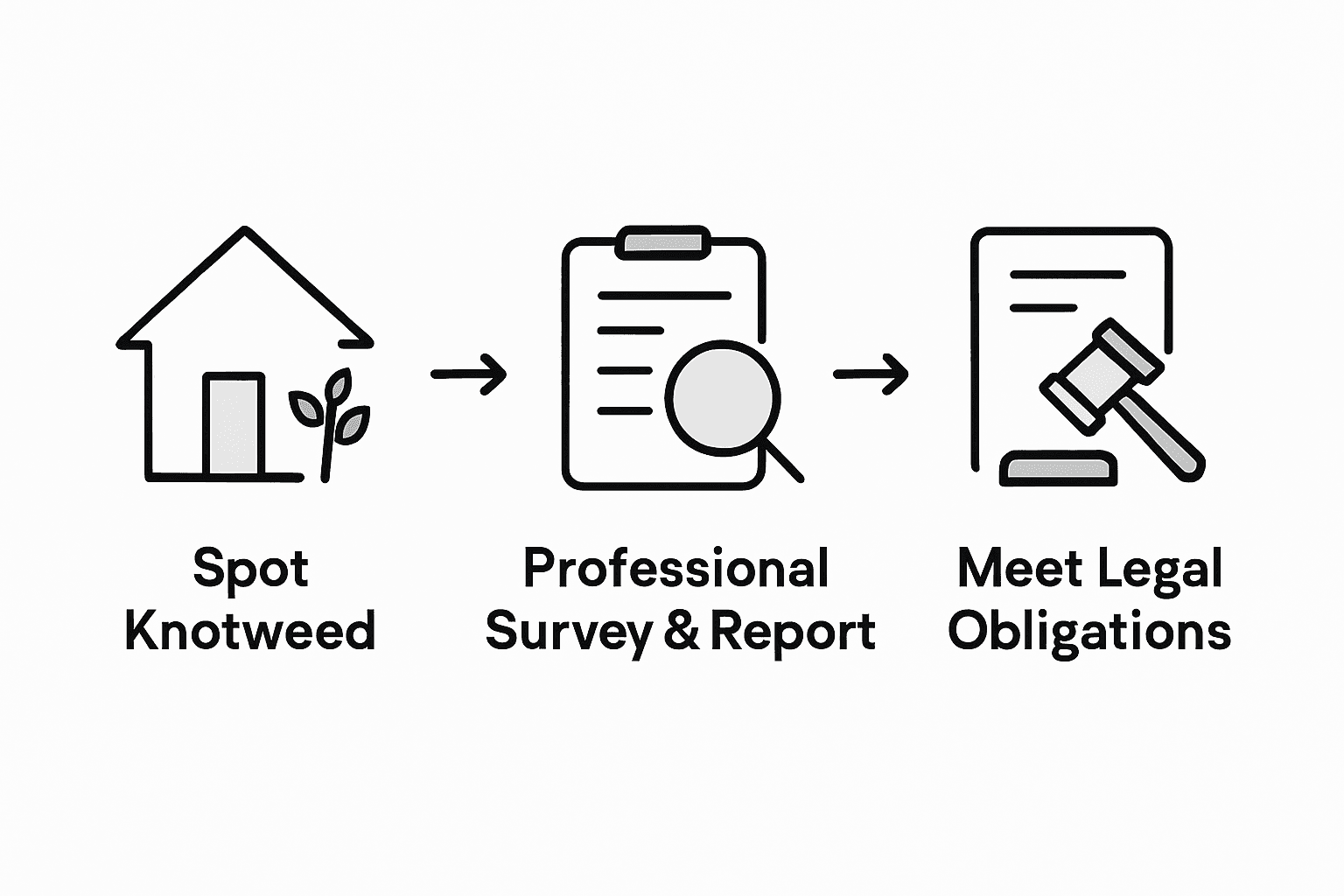
Under the Wildlife and Countryside Act 1981, property owners can be prosecuted for intentionally or carelessly allowing Japanese knotweed to spread into wild areas. This legislation places substantial responsibility on homeowners, potentially leading to criminal charges and significant financial penalties. The legal implications extend beyond simple property maintenance and into environmental protection.
Key legal obligations for homeowners include:
- Preventing knotweed from spreading to neighbouring properties
- Ensuring proper containment and management of the plant
- Disclosing knotweed presence during property sales
- Using licensed professionals for removal and disposal
- Maintaining comprehensive documentation of treatment efforts
Buyers must exercise due diligence during property transactions by:
- Requesting comprehensive property surveys
- Checking historical records for previous knotweed infestations
- Understanding potential remediation costs
- Negotiating property prices to account for potential knotweed risks
- Obtaining specialist insurance or guarantees for treatment
Pro Tip – Legal Protection: Always obtain a professional knotweed survey and treatment plan before purchasing a property, and ensure all documentation is formally recorded to protect your legal interests.
Impact of Knotweed on House Value and Sales
Japanese knotweed can dramatically impact property values, creating significant challenges for homeowners looking to sell their property. Recent research suggests that the historical blanket rejection of properties with knotweed may be disproportionate to the actual risk, indicating a more nuanced approach is necessary when assessing property value.
Typically, the presence of Japanese knotweed can reduce a property’s market value by up to 10-15%, with some extreme cases seeing reductions of 20-25%. This substantial devaluation stems from several critical factors:
The following table summarises the key risks knotweed poses to property value:
| Risk Factor | Impact on Value | Buyer/Seller Challenge |
|---|---|---|
| Structural Damage Threat | Reduces buyer trust | May require costly surveys |
| Mortgage Difficulties | Lower saleability | Can delay transactions |
| Removal Costs | Value reductions | Affects price negotiation |
| Disclosure Obligations | Legal compliance | Complicates sales process |
- Potential structural damage to foundations
- Expensive professional removal costs
- Difficulty obtaining mortgage approvals
- Lengthy treatment and eradication processes
- Ongoing maintenance requirements
Mortgage Implications for properties with knotweed include:
- Potential outright rejection of mortgage applications
- Required professional treatment plans before loan approval
- Additional surveying and assessment costs
- Potential need for specialist insurance
- Extended property transaction timelines
Sellers must be proactive in addressing knotweed presence, which involves:
- Obtaining professional treatment certification
- Providing comprehensive documentation of eradication efforts
- Securing guarantees from certified removal specialists
- Being transparent during property sales negotiations
- Demonstrating active management of the infestation
Pro Tip – Property Protection: Always commission a professional knotweed survey before listing your property and secure a comprehensive treatment guarantee to mitigate potential value reductions and improve buyer confidence.
Effective Knotweed Treatment and Eradication Options
Professional intervention remains the most reliable approach for comprehensive Japanese knotweed treatment, as successful eradication requires sophisticated, multi-year strategies that address both surface vegetation and extensive underground rhizome networks. Homeowners should understand that quick fix solutions or DIY approaches often prove ineffective against this resilient invasive species.
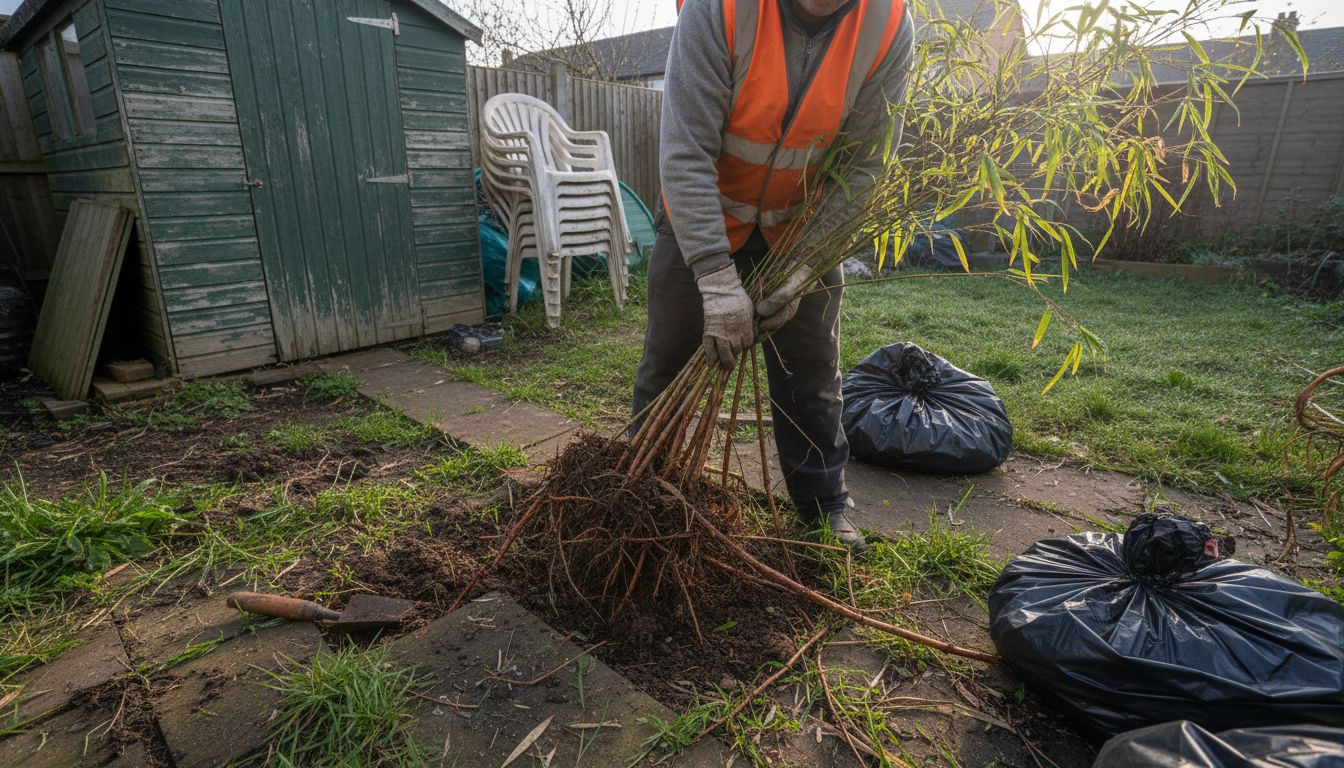
The treatment landscape offers several strategic approaches, each with unique advantages:
Here is a comparison of main Japanese knotweed treatment methods:
| Treatment Method | Effectiveness | Duration | Typical Cost Range |
|---|---|---|---|
| Chemical Herbicide | Highly effective after several cycles | 2-3 years | £1,000–£2,500 |
| Excavation & Removal | Immediate eradication | Immediate | £5,000–£15,000 |
| Root Barrier Installation | Prevents future spread | 1-3 days | £2,000–£5,000 |
| Thermal Treatment | Effective for small areas | Seasonal cycles | £1,500–£3,500 |
- Thermal Treatment: Delivering targeted energy directly into plant tissues
- Chemical-Free Interventions: Preventing regrowth through precision techniques
- Root Barrier Installations: Containing potential spread
- Excavation and Removal: Complete site clearance methods
Waste Management Considerations:
- All contaminated soil and plant material must be disposed of at licensed landfill sites
- Strict regulatory protocols govern knotweed waste removal
- Inappropriate disposal can lead to significant legal penalties
- Professional documentation of disposal is essential
Key Factors in Successful Knotweed Eradication:
- Comprehensive site assessment
- Detailed treatment documentation
- Multiple treatment cycles
- Long-term monitoring
- Professional certification of completed works
Buyers and property owners should prioritise:
- Obtaining verified treatment guarantees
- Selecting specialist invasive plant management firms
- Understanding complete eradication timelines
- Maintaining comprehensive treatment records
- Ensuring ongoing site monitoring
Pro Tip – Treatment Strategy: Always select treatment providers offering insurance-backed guarantees and comprehensive multi-year management plans to ensure complete knotweed elimination and protect your property investment.
Protect Your Property Value with Expert Japanese Knotweed Solutions
Japanese Knotweed poses a serious threat to property values due to its aggressive growth and the costly treatment it demands. If you face challenges like diminished buyer confidence, potential mortgage difficulties, or expensive eradication processes, you are not alone. Understanding the importance of early detection and professional management is crucial to safeguarding your investment and avoiding prolonged legal and financial headaches.
At Japanese Knotweed Agency, we specialise in innovative, chemical-free treatment that targets the extensive rhizome network damaging your foundations and property integrity. Our advanced energy delivery system weakens the plant from within, offering a highly effective multi-year eradication strategy. We also provide property surveys for invasive weeds across England, Wales, and Ireland to give you the clarity and confidence required when buying or selling.

Do not let Japanese Knotweed reduce your property value or complicate your sale. Take control now with proven, insured treatment plans and expert advice that help you regain market trust and legal compliance. Visit Japanese Knotweed Agency for a professional survey or customised treatment solution and secure your home’s future today.
Frequently Asked Questions
How does Japanese knotweed affect property value?
Japanese knotweed can reduce a property’s market value by up to 10-15%. In some cases, it may lead to devaluations of 20-25%, primarily due to risks of structural damage, mortgage difficulties, and high removal costs.
What legal responsibilities do homeowners have regarding Japanese knotweed?
Homeowners are legally required to prevent Japanese knotweed from spreading beyond their property. This includes proper management, containment, and disclosure of its presence during property sales.
What should I do if I discover Japanese knotweed on my property?
If you suspect Japanese knotweed, it is essential to consult a professional invasive species specialist for definitive identification and management strategies. Early detection can help prevent severe complications.
How can I increase my property’s value if it has been affected by knotweed?
To improve your property’s value after a knotweed presence, obtain professional treatment certification, maintain comprehensive documentation of eradication efforts, and secure guarantees from certified removal specialists.