

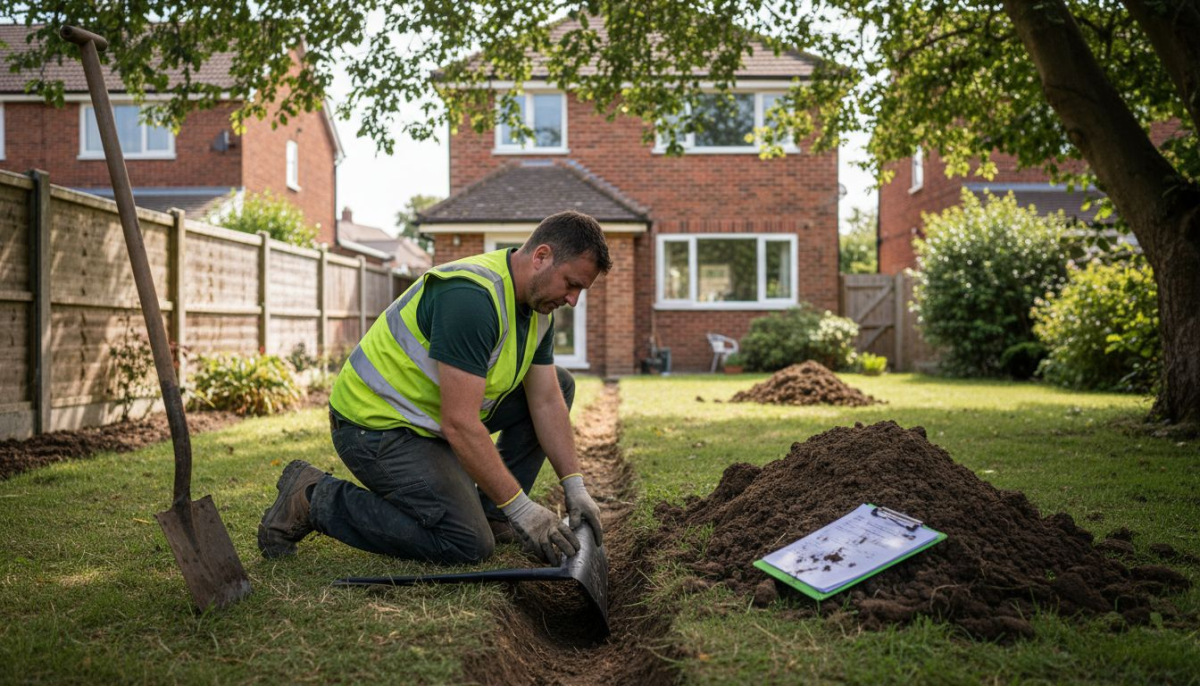
Selling or refinancing property in England and Wales can become stressful when Japanese Knotweed is involved. This invasive plant’s underground rhizome network threatens foundations, utilities, and even neighbour relations. With legal duties enforced by the Wildlife and Countryside Act 1981, homeowners must act to prevent the spread and property damage. Discover how chemical-free solutions and root barriers create lasting protection, safeguarding your land while meeting compliance and preserving value.
Table of Contents
- What Are Root Barriers and How They Work
- Types of Root Barriers for Invasive Weeds
- Legal Duties for Homeowners in England and Wales
- Advantages of Chemical-Free Solutions for Knotweed
- Costs, Risks, and Common Mistakes to Avoid
Key Takeaways
| Point | Details |
|---|---|
| Root Barriers Prevent Damage | Properly installed root barriers protect structures from invasive roots, thus maintaining property integrity. |
| Material Selection is Crucial | Modern plastic polymer barriers are preferred for their durability and resilience against root penetration compared to traditional concrete. |
| Professional Assessment is Essential | Conducting a professional soil survey before installation ensures the barrier is optimally placed for effectiveness and prevents costly failures. |
| Legal Compliance is Key | Homeowners in England and Wales must manage invasive species to avoid legal liabilities and potential penalties from local authorities. |
What Are Root Barriers and How They Work
A root barrier is an underground wall designed to block plant roots from spreading where they shouldn’t. Commonly installed around buildings, utilities, and protected landscapes, these barriers prevent structural damage and unwanted root intrusion. They work by creating a physical obstacle that roots cannot penetrate.
Historically, root barriers were made from concrete, but modern installations typically use plastic materials that offer superior durability and resistance to root penetration. The plastic formulation resists decay and maintains its integrity for decades, making it the preferred choice for long-term protection.
How Root Barriers Function
Root barriers operate on a simple principle: create an impenetrable wall that roots cannot grow through or under. When properly installed, barriers run parallel to structures and extend down to soil depths where roots naturally stop growing. This prevents roots from bypassing the barrier by growing around it.
Understanding plant root behaviour is essential. Most urban tree root systems develop as a shallow, spreading plate with vertical roots near the trunk. Once roots encounter a physical barrier they cannot penetrate, they naturally redirect their growth pattern.
Barrier placement matters significantly:
- Install at an angle (typically 30-45 degrees) to prevent roots from growing underneath
- Extend below the depth where damaging roots normally develop (usually 60-90 centimetres)
- Position as close to the structure as practical whilst maintaining accessibility
- Ensure no gaps where roots could find passage
Why Barriers Matter for Your Property
With invasive species like Japanese Knotweed, root barriers become critical protection. Japanese Knotweed develops an extensive underground rhizome network that can spread rapidly and cause serious damage. A properly installed barrier containing this growth protects your foundations, utilities, and neighbouring properties.
Root barriers provide long-term, passive protection without ongoing chemical treatments, making them ideal for homeowners seeking sustainable solutions.
Barriers work particularly well when combined with other management strategies. Many property owners integrate barriers with specialised treatment to prevent regrowth. The barrier stops horizontal spread whilst treatment addresses existing growth.
For properties undergoing surveys or facing mortgage requirements due to invasive species, barriers demonstrate active management and compliance. Lenders appreciate the tangible, lasting protection a properly installed barrier provides.
Installation Considerations
Effective root barrier installation requires:
- Professional assessment of soil conditions and root depth requirements
- Proper excavation without damaging existing utilities
- Correct angle installation to prevent root bypassing
- Secure sealing at all edges and joints
- Backfilling with appropriate material
Barrier depth depends on your specific situation. Shallow installations fail when roots grow beneath them. Deep installations provide permanent protection but cost more initially.
The role of root barriers in Japanese Knotweed control extends beyond simple containment—they form part of a comprehensive management strategy that protects property value and prevents legal liability.
Pro tip: Request a professional soil survey before installation to determine the optimal barrier depth for your location. This prevents expensive remedial work if roots eventually bypass a shallow barrier.
Types of Root Barriers for Invasive Weeds
Root barriers come in several varieties, each designed for specific situations and invasive plant challenges. The most common types differ in material composition, installation depth, and effectiveness against particular species like Japanese Knotweed. Selecting the right barrier type depends on your property layout, soil conditions, and budget.
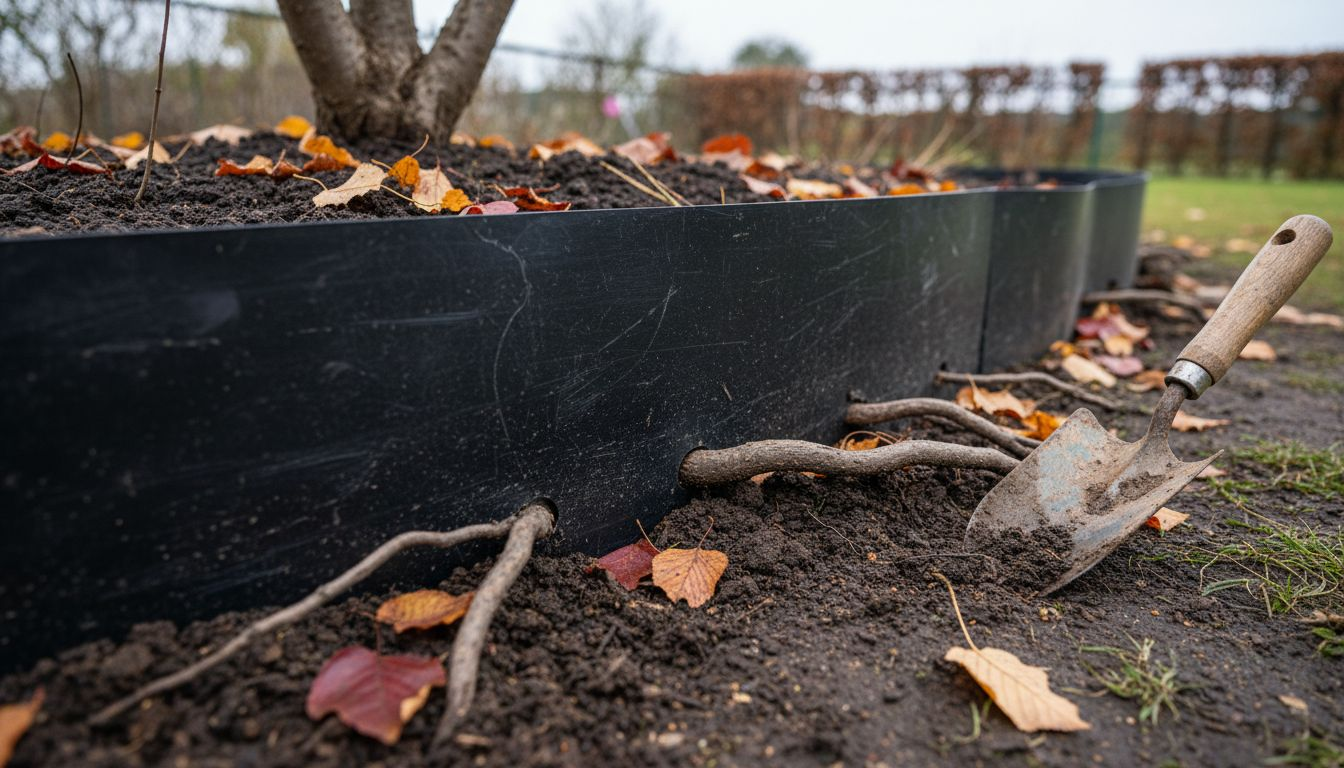
Plastic polymer barriers represent the modern standard for invasive weed control. These barriers consist of high-density polyethylene or polypropylene sheets that resist root penetration and decay. Unlike older concrete installations, plastic barriers maintain flexibility whilst remaining impenetrable to even aggressive root systems like those found in Japanese Knotweed.
Barrier Types and Their Applications
Different barrier materials serve different purposes:
- Rigid plastic sheets – Installed vertically or at angles; ideal for containing established invasive growth
- Flexible polymer membranes – Adapt to soil settlement; work well in unstable ground
- Composite barriers – Combine multiple materials for enhanced durability and root resistance
- Geotextile-reinforced barriers – Added strength for high-pressure root systems
For invasive species management, plastic polymer root barriers are favoured due to their durability and consistent effectiveness in stopping root penetration beneath structures or into sensitive environments.
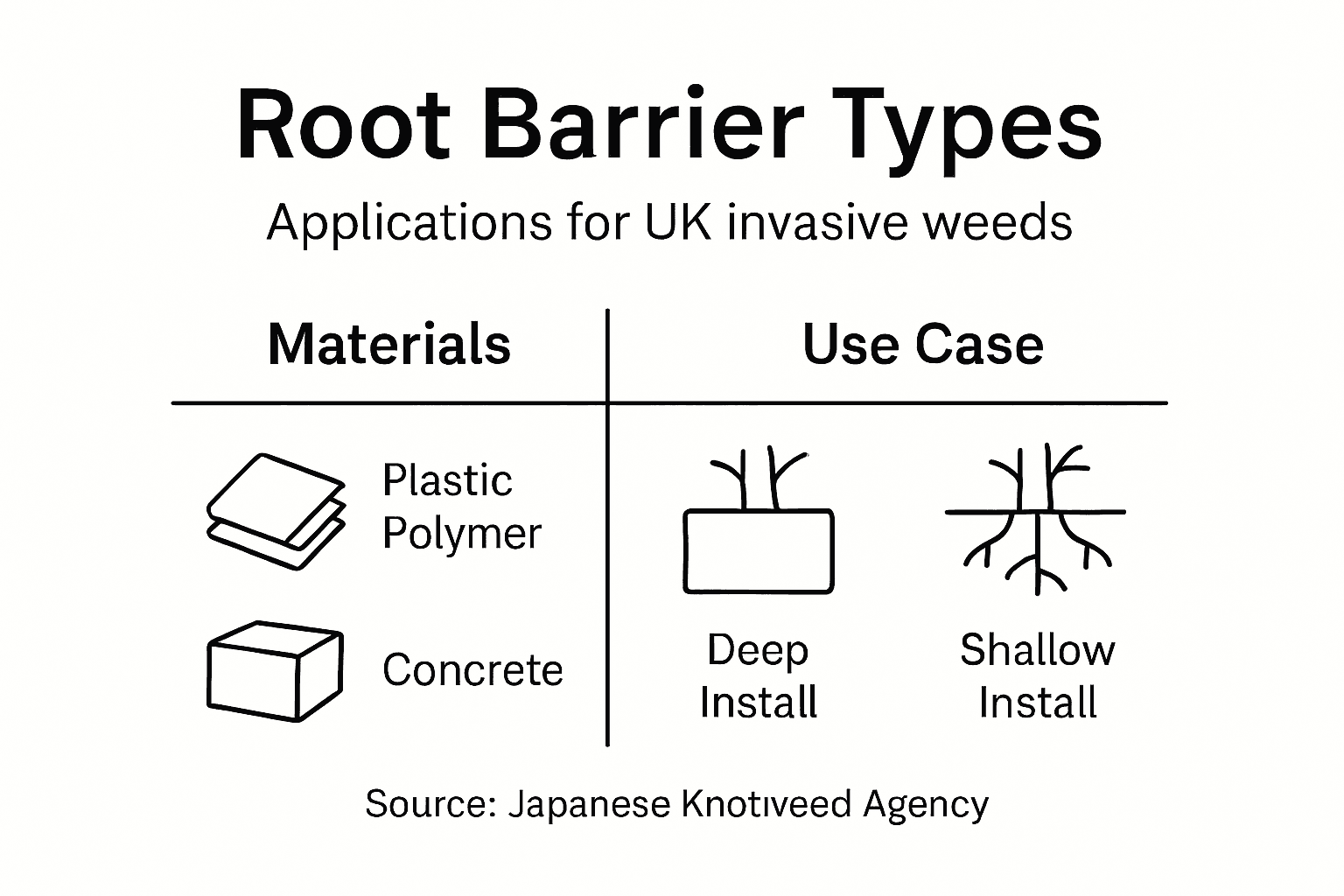
To help you understand which root barrier material fits your needs, here’s a concise comparison:
| Barrier Material | Durability | Installation Complexity | Recommended Use |
|---|---|---|---|
| Rigid Plastic Sheets | Lasts over 30 years | Moderate; best for stable sites | Established invasive growth |
| Flexible Polymer Membranes | High; adapts to movement | More involved; suited to shifting soils | Unstable ground conditions |
| Composite Barriers | Highest; multi-layer strength | Professional only; complex | Aggressive species containment |
| Geotextile-Reinforced | Very high; resists pressure | Advanced; often for critical areas | High-pressure root systems |
Integrated Management Approaches
Barriers rarely work in isolation. Many property owners combine physical barriers with treatment strategies for comprehensive control. This integrated approach addresses both current growth and future spread, providing peace of mind during property transactions and mortgage assessments.
Combining root barriers with active treatment creates a multi-layered defence that addresses existing infestations whilst preventing future expansion.
The why install root barriers for Japanese Knotweed discussion often centres on this synergy—barriers contain whilst treatments eliminate. Professional installations typically assess your specific infestation and recommend the optimal combination.
Choosing the Right Barrier Type
Your selection depends on several factors:
- Depth of invasive root system – Deeper roots require taller barriers
- Soil type and stability – Clay, sandy, or mixed soils behave differently
- Proximity to structures – Distance affects angle and placement strategy
- Species type – Japanese Knotweed requires more aggressive barriers than some other invasive plants
- Long-term management goals – Permanent containment versus eventual eradication
The Great Britain strategy for invasive non-native species prevention emphasises that root barriers are physical control measures preventing invasive plant roots from spreading into protected areas, working best when integrated with other sustainable management approaches.
Barrier installation quality matters as much as barrier type. A premium barrier installed incorrectly will fail. Professional assessment ensures proper depth, angle, and positioning for maximum effectiveness against your specific invasive weed challenge.
Pro tip: Request a site survey before installation to identify the invasive root depth and determine whether a single barrier or staged installation approach will be most cost-effective for your property.
Legal Duties for Homeowners in England and Wales
Owning property in England and Wales means understanding your legal responsibilities regarding invasive plants. Legislation places clear obligations on homeowners to prevent spread of invasive species to neighbouring properties. Failing to meet these duties can result in penalties, enforcement action, and liability claims.
Under the Wildlife and Countryside Act 1981, homeowners face specific restrictions. You cannot plant, grow, keep, breed, transport, or sell certain invasive alien plants, including their viable parts and rhizomes. This applies whether you intentionally introduced them or they arrived naturally on your land.
Your Core Legal Obligations
Homeowners must understand what the law actually requires:
- Prevent spread – Stop invasive plants from spreading to adjoining properties
- Manage existing growth – Control plants already present on your land
- Report if required – Comply with local authority requests for information
- Comply with orders – Follow any enforcement notices issued by authorities
- Obtain permits – Secure necessary licences if treating invasive species
The legal obligation not to plant invasive species applies strictly; homeowners cannot grow or keep certain invasive alien plants, including viable parts and reproductive material like rhizomes.
Liability and Your Neighbours
Your responsibility extends beyond your boundary. If invasive plants spread from your property to adjoining land and cause damage, you could face civil liability claims. Neighbours can legally pursue compensation for treatment costs and property damage caused by your invasive infestation.
Your legal duty covers prevention of spread—failure to act creates financial and legal exposure that could prove costly during property transactions.
Mortgage lenders take this seriously. When Japanese Knotweed or other invasive species are present, lenders require evidence of active management. This is why knotweed legislation and homeowner impact matters during property sales—lenders will demand surveys and treatment plans before releasing mortgage funds.
Enforcement and Penalties
Local authorities can take action if you fail to manage invasive plants. They may issue enforcement orders requiring specific control measures within set timeframes. Non-compliance escalates to criminal proceedings with potential fines.
The law commission report on wildlife emphasises that homeowners must comply with enforcement orders to manage invasive plants responsibly, with non-compliance resulting in penalties.
When selling property with invasive species, disclosure becomes critical. Withholding information about Japanese Knotweed or other invasive plants exposes you to misrepresentation claims. Professional surveys document the extent and allow transparent dealings with buyers and lenders.
Your legal position improves dramatically with documented management. Professional surveys, treatment plans, and barrier installations demonstrate due diligence and compliance. This protects you legally whilst reassuring future owners and lenders.
Pro tip: Obtain a professional invasive species survey immediately if you suspect Japanese Knotweed or other invasive plants on your property—early documentation protects you legally and avoids costly disputes during future property sales.
Advantages of Chemical-Free Solutions for Knotweed
Chemical herbicides pose real risks to your family, pets, and local ecosystems. Chemical-free treatment eliminates these concerns whilst delivering effective Japanese Knotweed eradication. This approach aligns with growing environmental awareness and meets the expectations of modern homeowners seeking sustainable solutions.
Traditional herbicide treatments kill the visible plant but often fail to eliminate extensive rhizome networks. Chemical-free methods address the complete root system, preventing regrowth. They work by targeting plant physiology directly rather than relying on chemical toxicity.
Environmental and Health Benefits
Chemical-free solutions protect what matters most:
- No chemical residue – Your soil remains uncontaminated and suitable for future planting
- Safe for family and pets – No toxic compounds leaching into groundwater or accumulating in soil
- Supports biodiversity – Native plants and beneficial insects thrive without herbicide exposure
- Reduced ecosystem harm – Neighbouring properties and waterways stay protected from chemical drift
- Better long-term soil health – Avoids the cumulative damage from repeated herbicide applications
Integrated approaches using mechanical and manual methods reduce environmental and health risks associated with herbicides whilst maintaining effective control when applied with understanding of invasive plant biology.
Effectiveness and Long-Term Results
Chemical-free treatment delivers superior long-term outcomes. Because these methods target root energy depletion rather than toxicity, they prevent the chemical-resistant populations that develop with repeated herbicide use. Your treatment remains effective year after year without diminishing returns.
Chemical-free solutions avoid the cycle of herbicide resistance that makes repeated chemical applications increasingly ineffective over time.
Many property owners discover that chemical-free invasive plant solutions outperform chemical alternatives in preventing regrowth. The method works with plant biology rather than against it, creating permanent results.
Cost Advantages Over Time
Whilst initial chemical-free treatment may cost more, total lifetime costs favour non-chemical approaches. Chemical treatments typically require repeated applications as rhizomes survive and regenerate. This means annual expenses for years.
Chemical-free solutions require fewer repeat treatments. Once the rhizome network depletes, the problem resolves permanently. You avoid the accumulating costs of successive chemical applications.
Mortgage and Property Sale Benefits
Lenders increasingly scrutinise chemical treatments on properties. They worry about soil contamination and long-term liability. Chemical-free documentation strengthens your position during property transactions. Buyers appreciate knowing their new home received sustainable treatment with no lingering chemical concerns.
Surveys and treatment records using chemical-free knotweed treatment processes demonstrate environmental responsibility and thorough management. This confidence translates to smoother sales and better property valuations.
Supporting Biodiversity
Chemical-free weed control methods use mechanical, manual, and cultural approaches to manage weeds sustainably whilst supporting soil health and biodiversity. This approach works especially well for environmentally sensitive sites where protecting native ecosystems matters.
Pro tip: Choose chemical-free treatment when selling or refinancing—document the process thoroughly to demonstrate environmental stewardship and reduce buyer concerns about soil contamination.
Costs, Risks, and Common Mistakes to Avoid
Root barrier installation involves real costs and genuine risks. Poor planning, cheap materials, or incorrect installation create expensive problems that compound over time. Understanding these pitfalls protects your investment and prevents costly failures down the line.
Barrier costs vary significantly depending on materials, site conditions, and complexity. A professional survey determines your exact costs before work begins. Budget flexibility matters because unexpected soil conditions or deeper root systems may increase expenses.
Common Installation Mistakes
These errors occur frequently and create lasting damage:
- Insufficient depth – Roots grow under shallow barriers, defeating the purpose entirely
- Incomplete coverage – Gaps or breaks allow roots to bypass the barrier at weak points
- Wrong angle installation – Vertical barriers fail as roots grow underneath
- Poor material selection – Cheap plastics degrade, crack, or deteriorate prematurely
- Inadequate site assessment – Failing to identify soil type, water flow, or root depth patterns
Proper installation requires understanding root biology and potential installation risks. Mistakes including incorrect depth, incomplete coverage, and poor material choice lead to root breaches and structural damage that cost far more to remedy.
Financial Risks and Long-Term Costs
Cheap installations create expensive problems. A barrier installed at 60 centimetres depth fails when Japanese Knotweed roots penetrate to 90 centimetres. You then face costly excavation and reinstallation to correct the original mistake.
Underestimating root depth is the costliest mistake—fixing a failed barrier costs 3-4 times more than installing it correctly initially.
Water flow disruption presents another cost concern. Poorly positioned barriers can redirect groundwater, causing flooding, subsidence, or neighbouring property damage. This creates liability claims exceeding the original barrier cost.
Here is a summary of key risks and mitigation strategies to ensure effective root barrier installation:
| Risk Area | Common Mistake | Mitigation Strategy |
|---|---|---|
| Depth Assessment | Installing too shallow | Conduct professional soil survey |
| Coverage | Leaving gaps or breaks | Overlap joints; inspect coverage thoroughly |
| Material Selection | Using poor-quality plastics | Invest in premium, decay-resistant materials |
| Water Management | Ignoring groundwater flow | Map water movement before installation |
Risk Management Through Professional Assessment
Professional surveys identify site-specific risks before installation. Soil stability analysis, groundwater mapping, and root depth assessment prevent costly surprises. This upfront investment saves thousands in remedial work.
Managing urban root systems requires balancing root growth with infrastructure protection, with mistakes including inadequate barriers and failure to anticipate root growth patterns causing damage and increased maintenance costs.
Regulatory compliance adds costs but prevents penalties. Permits, environmental assessments, and compliance documentation ensure your installation meets local authority requirements. Skipping these invites enforcement action and fines.
Japanese Knotweed-Specific Risks
Japanese Knotweed presents unique challenges. Barriers must extend deeper than standard installations—typically 1.2 metres minimum. The rhizome network’s aggression means standard-depth barriers fail regularly.
Combining barriers with active treatment increases costs but prevents failure. Barriers alone cannot eradicate established infestations. Treatment depletes the rhizome energy reserves whilst barriers prevent spread, creating comprehensive protection.
Property transaction risks multiply if barriers fail. Buyers discovering root breakthrough after purchase pursue legal action and compensation. Professional documentation of proper installation protects you from future liability.
Pro tip: Invest in professional site assessment before installation—soil surveys cost £300-600 but prevent £5,000+ remedial expenses when barriers fail due to incorrect depth or placement.
Protect Your Property with Expert Root Barrier Solutions
If you are facing challenges with invasive plants like Japanese Knotweed and want reliable, chemical-free protection, understanding root barriers is essential. The root barriers discussed in the article help prevent costly structural damage by creating a durable underground shield against aggressive root systems. However, success depends on correct installation depth, material choice and integration with effective treatment.
Japanese Knotweed Agency specialises in pioneering chemical-free eradication combined with professional root barrier installs and excavation works designed specifically for UK properties. We deliver targeted energy treatments that deplete invasive rhizome networks while installing high-quality barriers to stop root spread safely and permanently.
Explore our property survey services to assess your land’s invasive weed risks and receive a tailored management plan.
Take the first step towards protecting your home naturally and sustainably. Contact us today at Japanese Knotweed Agency for a comprehensive survey, expert root barrier installation and effective chemical-free treatment. Act now to safeguard your property value and enjoy peace of mind with our proven, eco-friendly solutions.
Frequently Asked Questions
What is a root barrier and how does it work?
A root barrier is an underground wall designed to block plant roots from spreading where they shouldn’t, protecting structures from damage. It works by creating a physical obstacle that roots cannot penetrate.
Why are root barriers important for protecting homes?
Root barriers prevent invasive species like Japanese Knotweed from causing structural damage and utility disruption. They provide an effective, long-term solution for maintaining property integrity without ongoing chemical treatments.
How deep should a root barrier be installed?
Root barriers should generally extend 60 to 90 centimetres deep to effectively contain roots, but deeper installations may be necessary for aggressive species like Japanese Knotweed, often requiring depths of up to 1.2 metres for optimal protection.
What materials are used for root barriers?
Modern root barriers are typically made from durable plastic materials like high-density polyethylene or polypropylene, which resist decay and root penetration. These plastic polymer barriers offer flexibility and longevity compared to older concrete options.