TL;DR:
- Invasive weed taxonomy determines legal obligations, treatment options, and property sale disclosures.
- Japanese Knotweed is a highly regulated invasive species with specific identification and legal treatment requirements.
- Accurate identification and certified management plans are essential to prevent legal issues and protect property value.
Not every problem weed in your garden carries the same legal weight, and that distinction could cost you thousands if you get it wrong. Invasive weed taxonomy determines both your legal obligations and the management strategies available to you as a homeowner. Many property owners assume that any vigorous or unwanted plant is treated identically under the law. In reality, classification governs what you must disclose during a property sale, what treatment you are legally permitted to use, and whether a mortgage lender will even consider your home. This guide explains how taxonomy works in practice, which species carry genuine legal risk, and what steps protect your property across England, Wales, and Ireland.
Table of Contents
- What is invasive weed taxonomy?
- Key invasive weeds: Japanese Knotweed taxonomy explained
- Legal definitions and regulations in England, Wales, and Ireland
- Why correct taxonomy matters: property surveys, treatment, and long-term control
- What most guides miss about invasive weed taxonomy
- Expert solutions: from identification to eradication
- Frequently asked questions
Key Takeaways
| Point | Details |
|---|---|
| Taxonomy drives legal actions | Knowing how weeds are classified determines your legal and management obligations as a homeowner. |
| Japanese Knotweed is unique | This weed’s scientific identity and rhizome spread make it especially regulated in UK and Ireland. |
| Legal duties differ by country | England, Wales, and Ireland enforce specific laws and heavy penalties regarding invasive species. |
| Correct ID means effective control | Accurate taxonomy enables successful surveys, treatment, and upholds property value. |
| Expert help prevents costly errors | Certified surveys and tailored plans offer peace of mind and full compliance for homeowners. |
What is invasive weed taxonomy?
Taxonomy is the scientific system used to name, describe, and classify all living organisms. For plants, this means organising species from the broadest category, the kingdom, down to genus and species level. When applied to weeds, invasive species classification refers to both scientific categorisation and the ecological or legal status assigned to non-native plants that cause harm.
Not all weeds are equal under this system. Here is how the key ecological terms differ:
- Native: A plant that evolved naturally in a region over thousands of years.
- Non-native (introduced): A plant brought to a region by human activity, intentionally or otherwise.
- Established: A non-native plant that reproduces successfully in the wild without human assistance.
- Invasive: A non-native plant that spreads aggressively and causes measurable ecological, economic, or social harm.
This distinction is critical. A plant can be non-native without being invasive, and some problematic species are actually native. Nettles, for example, are native to the UK and cause nuisance, but they carry no legal designation as invasive.
| Category | Native to UK/Ireland | Legal obligations apply? |
|---|---|---|
| Native weed | Yes | Generally no |
| Non-native, non-invasive | No | No |
| Non-native, invasive | No | Yes |
| Legally listed invasive | No | Yes, strict duties |
“Correct identification is the foundation of any legally compliant management plan. Without it, homeowners risk both financial penalties and failed treatment programmes.”
Japanese Knotweed is the clearest example of why this matters. Its impact on property extends far beyond garden nuisance, affecting mortgage eligibility, sale disclosure, and structural risk. Understanding the glossary of invasion biology helps homeowners engage confidently with surveyors, solicitors, and treatment specialists rather than relying on guesswork.
The practical takeaway is straightforward: taxonomy is not abstract science. It is the framework that determines your legal duties and your treatment options from the moment a suspicious plant appears on your land.
Key invasive weeds: Japanese Knotweed taxonomy explained
With the basics of taxonomy clear, see how it helps distinguish truly invasive threats, starting with Japanese Knotweed.
Japanese Knotweed is classified as Reynoutria japonica, belonging to the family Polygonaceae. Its taxonomy and rhizome system make it one of the most legally significant plants a homeowner can encounter in the UK or Ireland. The rhizome network, which is the underground root system, can extend up to 7 metres horizontally and 3 metres deep. It can push through tarmac, concrete, and drainage systems, making early identification essential.

Comparing Japanese Knotweed with other major invasive species helps clarify why misidentification carries such serious risk:
| Species | Scientific name | Family | Primary risk |
|---|---|---|---|
| Japanese Knotweed | Reynoutria japonica | Polygonaceae | Property value, legal compliance |
| Himalayan Balsam | Impatiens glandulifera | Balsaminaceae | Riverbank erosion, biodiversity loss |
| Giant Hogweed | Heracleum mantegazzianum | Apiaceae | Severe skin burns, public safety |
| Rhododendron | Rhododendron ponticum | Ericaceae | Woodland habitat destruction |
Of the UK’s approximately 2,000 non-native plant species, only 10 to 15% are considered truly invasive or high-impact. This figure is important because it means the vast majority of unfamiliar plants in your garden pose no legal risk whatsoever. The problem arises when homeowners either panic about a harmless non-native or, more dangerously, mistake Japanese Knotweed for a less significant species such as bindweed or broad-leaved dock.
Key identifying features of Japanese Knotweed include:
- Leaves: Heart-shaped or shovel-shaped, arranged in a distinctive zigzag pattern along the stem.
- Stems: Hollow, bamboo-like canes with purple-speckled markings, dying back each winter.
- Growth rate: Can grow up to 10 centimetres per day during peak season.
- Rhizomes: Orange-coloured inside when cut, spreading aggressively underground.
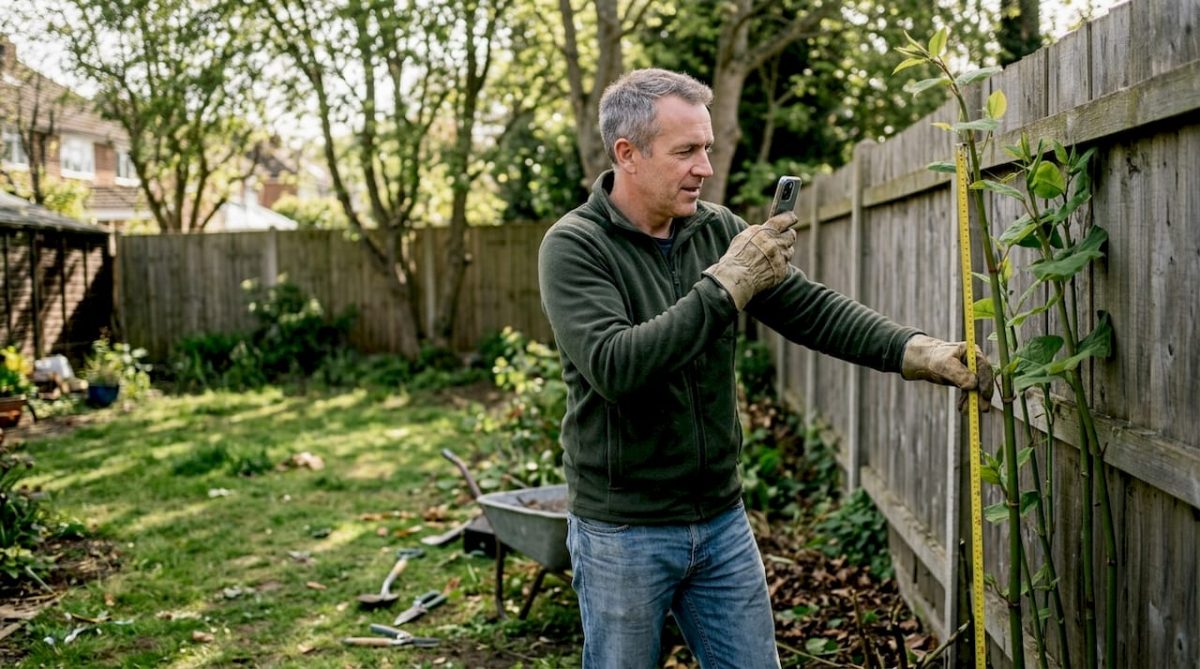
Pro Tip: If you are unsure whether a plant is Japanese Knotweed, photograph it alongside a ruler in late spring when stems are actively growing. This gives a specialist the clearest visual evidence for accurate identification and helps protect your property’s value from the outset.
Legal definitions and regulations in England, Wales, and Ireland
Understanding scientific classification is only half the story. The law enforces prevention and control based on taxonomy too.
Schedule 9 of the Wildlife and Countryside Act 1981 makes it a criminal offence to plant or cause Japanese Knotweed to grow in the wild in England and Wales. The Environmental Protection Act 1990 classifies knotweed waste as controlled waste, meaning it cannot be disposed of in standard household bins or taken to general landfill sites.
In Ireland, the position is equally strict. Over 30 species are listed under S.I. No. 477/2011 and the updated S.I. No. 374/2024, with Japanese Knotweed among the most regulated. Landowners have a duty to prevent spread, and failure to act can result in enforcement notices and significant financial penalties.
Key homeowner obligations across both jurisdictions include:
- Prevent spread: Do not cut, strim, or disturb knotweed without a management plan, as fragments as small as 0.7 grams can regenerate a new plant.
- Dispose lawfully: All knotweed material must be treated as controlled waste and removed by a licensed contractor.
- Disclose at sale: In England and Wales, the TA6 property information form requires sellers to declare known knotweed infestations. Failure to disclose can result in legal action after completion.
- Comply with mortgage conditions: Most lenders apply a 7-metre rule, refusing or restricting mortgages where knotweed is identified within 7 metres of a habitable structure.
“Non-disclosure of Japanese Knotweed during a property sale has led to successful legal claims against sellers, with courts awarding damages for misrepresentation.”
For a full breakdown of your obligations, the UK knotweed legal framework and rules around knotweed encroachment from neighbouring land are both areas where specialist guidance is strongly advisable.
Why correct taxonomy matters: property surveys, treatment, and long-term control
But how does classification shape your day-to-day responsibilities, treatment decisions, and property value?
Misidentification is one of the most common and costly errors homeowners make. Treating the wrong species wastes money and time, while failing to treat the right one creates legal exposure. Surveys carried out to RICS (Royal Institution of Chartered Surveyors) and PCA (Property Care Association) standards provide the authoritative identification that mortgage lenders and solicitors require. Without a certified survey, buyers and sellers alike face uncertainty during conveyancing.
Treatment options vary significantly depending on the species confirmed and the site conditions:
- Herbicide programmes: Traditional chemical treatment typically runs over 3 to 5 years, with costs ranging from £2,000 to £15,000 depending on infestation size. These programmes require careful management to avoid contaminating watercourses.
- Chemical-free electro-thermal treatment: A certified non-chemical approach that delivers direct electrical energy up to 5,000 volts into the plant’s rhizome network, causing internal cell damage and depleting energy reserves without herbicide use.
- Excavation: Physical removal of rhizome-bearing soil, suitable where development timescales are urgent. This is the most immediate solution but also the most disruptive.
- Root barrier installation: A physical membrane installed to prevent rhizome migration, often used in combination with other methods.
Following knotweed removal best practices is essential to avoid inadvertently spreading the plant. The chemical-free treatment process is particularly relevant for properties near watercourses, organic gardens, or where residents prefer to avoid herbicide use.
Pro Tip: Always request a management plan with a written guarantee from your treatment contractor. Mortgage lenders increasingly require evidence of a guarantee-backed programme, and this documentation also protects your property’s long-term value during any future sale.
A thorough management guide confirms that early intervention consistently produces better outcomes than delayed action, both in terms of cost and treatment duration.
What most guides miss about invasive weed taxonomy
Most articles on this subject treat taxonomy as a preamble before getting to the “real” advice. We think that misses the point entirely.
For homeowners, understanding classification is not an academic exercise. It is a practical tool that prevents costly mistakes. When you know that most non-native plants in your garden carry no legal designation, you avoid unnecessary alarm and unnecessary expense. When you know that Japanese Knotweed is specifically listed under Schedule 9, you understand why professional intervention is not optional but legally necessary.
There is also a persistent myth worth addressing directly: Japanese Knotweed rarely causes structural damage in the way that popular coverage suggests. The primary risks are spread, legal compliance, and the impact on property values and mortgage eligibility, not the plant physically demolishing your foundations. Accurate taxonomy cuts through folklore and focuses your response on what actually matters.
Systematic surveys carried out by certified specialists are as important as knowing a plant’s Latin name. Science-led identification combined with expert partnership is what delivers reliable, long-term control.
Expert solutions: from identification to eradication
Accurate identification is only the beginning. What protects your property is a certified, science-led plan that meets legal standards and delivers measurable results.

At Japanese Knotweed Agency, we carry out professional property surveys for invasive weeds across England, Wales, and Ireland, providing the documented identification that mortgage lenders, solicitors, and local authorities require. Our chemical-free knotweed treatment delivers up to 5,000 volts directly into the rhizome network, causing internal cell damage without herbicide use. We also offer excavation works and root barrier installation for sites where speed or chemical-free credentials are a priority. If you are unsure what you are dealing with, our invasive plant survey guide is a practical starting point.
Frequently asked questions
What makes a plant ‘invasive’ in the UK and Ireland?
A plant is considered invasive if it is non-native, spreads aggressively, and causes ecological or economic harm, as defined by regional legislation. Not all non-natives are invasive, and both the UK and Ireland maintain specific legislative lists of species that carry legal duties.
How do I identify Japanese Knotweed using taxonomy?
Japanese Knotweed is scientifically classified as Reynoutria japonica, with distinctive heart-shaped leaves, hollow bamboo-like stems, and an extensive orange-coloured rhizome system underground. Its rhizome characteristics distinguish it reliably from common look-alikes such as bindweed or broad-leaved dock.
What legal duties do homeowners have if invasive weeds are found?
Homeowners must prevent spread, dispose of plant material as controlled waste, and disclose infestations during property sales. Legal requirements vary by region, with Schedule 9 applying in the UK and S.I. No. 477/2011 governing obligations in Ireland.
Is expert intervention necessary for controlling Japanese Knotweed?
Yes. PCA-certified contractors and RICS-standard surveys are required for mortgage compliance and legal protection, with treatment options ranging from multi-year herbicide programmes to certified chemical-free electro-thermal solutions.
Are all non-native plants harmful?
No. Only 10 to 15% of the UK’s approximately 2,000 non-native plant species are considered truly invasive or legally significant, meaning the majority of unfamiliar garden plants carry no legal obligation for homeowners.