


Over one million British homes are estimated to be affected by Japanese knotweed, a plant notorious for outgrowing almost any landscape. This invasive species can weaken building foundations, disrupt public parks, and cost local communities millions in repairs. Understanding the assessment and safe removal of Japanese knotweed is vital for anyone managing public spaces in the United Kingdom. This guide reveals practical steps and expert-backed methods to tackle the problem with confidence and minimize long-term damage.
Table of Contents
- Stage 1: Assess The Infested Public Area
- Stage 2: Identify And Record Knotweed Locations
- Stage 3: Select Safe, Chemical-Free Treatment Methods
- Stage 4: Implement Targeted Eradication Procedures
- Stage 5: Monitor Results And Prevent Regrowth
Quick Summary
| Key Point | Explanation |
|---|---|
| 1. Conduct Detailed Site Assessments | Thoroughly survey public areas for Japanese knotweed, documenting its extent and potential impact. |
| 2. Utilize Digital Mapping Tools | Implement digital tools to accurately record knotweed locations and growth, enhancing documentation efficiency. |
| 3. Adopt Non-Chemical Treatment Methods | Employ physical removal techniques like cutting and excavation to control Japanese knotweed sustainably. |
| 4. Implement Strategic Eradication Plans | Develop a comprehensive plan that includes phased removal strategies and continuous monitoring. |
| 5. Maintain Vigilant Monitoring | Regularly inspect treated areas for regrowth using visual checks and advanced technologies to ensure long-term control. |
Stage 1: Assess the Infested Public Area
Successfully managing Japanese knotweed in public spaces begins with a comprehensive and strategic assessment of the affected zone. Your goal is to understand the precise extent and potential impact of the knotweed infestation.
Start by conducting a detailed site survey, carefully examining the entire area for signs of Japanese knotweed growth. The UK government provides specific guidelines for identifying and preventing knotweed spread, which are crucial for effective management. Look for telltale signs like bamboo-like stems, distinctive zigzag growth patterns, and characteristic heart-shaped leaves. Pay special attention to ground conditions, noting any cracks in pavements, walls, or foundations where the plant might be emerging.
Documenting the infestation is key. Use a mapping system to mark precise locations of knotweed clusters, measuring their spread and recording growth density. Professional standards from the Royal Institution of Chartered Surveyors recommend thorough site inspection protocols that help create a comprehensive management strategy. Take multiple photographs from different angles, include scale references, and note the proximity to buildings, infrastructure, and other sensitive areas.
Specialist insight: Aerial photography or drone surveys can provide an excellent overhead view of knotweed distribution, helping you understand the full extent of the infestation more accurately than ground-level observations alone.
Advisory tip: Always wear protective clothing and maintain a safe distance when first surveying knotweed areas to prevent potential skin contact or accidental spread of plant fragments.
Stage 2: Identify and Record Knotweed Locations
Precisely identifying and documenting Japanese knotweed locations is crucial for effective management in public spaces. Your mission is to create a comprehensive record that captures the plant’s exact distribution and characteristics.
Begin by familiarising yourself with the plant’s distinctive features. Japanese knotweed has unique characteristics including bamboo-like hollow stems, zigzag growth patterns, and large heart-shaped leaves. Environmental reporting centres provide detailed guidance for accurately documenting knotweed sightings, which involves capturing critical details like plant measurements, growth density, and precise geographical location using grid references.
Utilise digital tools to enhance your documentation process. Interactive mapping technologies enable comprehensive tracking of knotweed infestations across different regions, allowing you to cross reference your local findings with broader environmental data. Take high resolution photographs from multiple angles, ensuring you include scale references like a ruler or standard object to demonstrate the plant’s size and spread. Record GPS coordinates, note the surrounding terrain, and document any visible damage to infrastructure or surrounding vegetation.
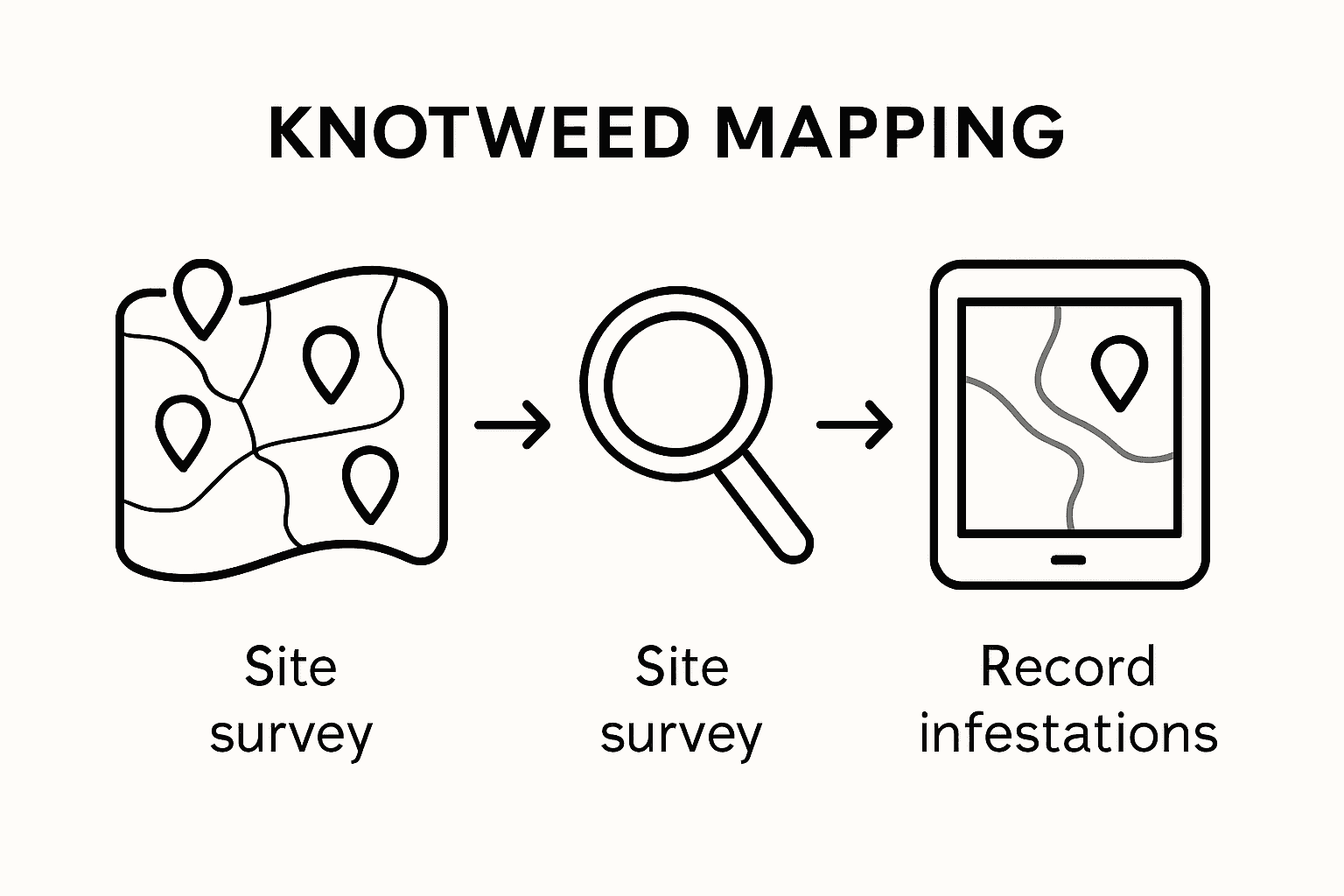
Specialist insight: Digital mapping applications can help create a more accurate and shareable record of knotweed locations, making it easier to track the plant’s progression and inform future management strategies.
Advisory tip: Always maintain a safe distance when documenting knotweed and wash your hands thoroughly afterwards to prevent accidental seed or fragment dispersal.
Stage 3: Select Safe, Chemical-Free Treatment Methods
Developing an effective strategy for managing Japanese knotweed without harmful chemicals requires careful consideration and a nuanced approach. Your objective is to select treatment methods that effectively control the plant while minimising environmental impact.

UK government guidance highlights several non-chemical control strategies for preventing Japanese knotweed spread, emphasising physical removal techniques that can be both sustainable and effective. Consider methods such as repeated cutting, root barriers, and targeted excavation. These approaches work by systematically weakening the plant’s energy reserves and preventing further propagation. Some innovative techniques include using thermal treatments that apply controlled heat to destroy the root system without introducing toxic substances into the environment.
Research from the University of Leeds suggests that alternative management strategies can be particularly effective in managing knotweed infestations, indicating that physical interventions can substantially control plant spread. Focus on creating a comprehensive management plan that combines multiple approaches such as mechanical removal, root zone monitoring, and continuous disruption of the plant’s growth cycle. Consider professional intervention for large scale or complex infestations, as specialised equipment and expertise can significantly improve treatment outcomes.
Specialist insight: Integrating multiple non chemical treatment methods can create a more robust and sustainable approach to knotweed management, reducing the risk of regrowth and minimising environmental disruption.
Here is a summary of common non-chemical treatment methods for Japanese knotweed and their main advantages:
| Treatment Method | Key Advantage | Typical Use Case |
|---|---|---|
| Repeated Cutting | Reduces vigour over time | Public parks and open spaces |
| Root Barriers | Blocks underground spread | Near buildings and infrastructure |
| Targeted Excavation | Removes root systems | Dense or longstanding patches |
| Thermal Treatments | Destroys roots without chemicals | Environmentally sensitive zones |
Advisory tip: Always consult local environmental regulations and seek professional advice before implementing large-scale knotweed removal to ensure compliance and effectiveness.
Stage 4: Implement Targeted Eradication Procedures
Successfully eliminating Japanese knotweed requires a strategic and methodical approach that minimises environmental disruption while effectively controlling the invasive plant. Your goal is to develop a comprehensive eradication plan tailored to the specific characteristics of the infestation.
UK government guidance provides detailed procedures for controlling Japanese knotweed spread, emphasising precise techniques that prevent further proliferation. Begin by creating a detailed site map identifying all knotweed clusters, then design a phased removal strategy. This might involve techniques such as repeated cutting to exhaust the plant’s energy reserves, installing root barriers to prevent underground spread, and implementing targeted excavation of contaminated soil zones. The key is consistent and persistent intervention that disrupts the plant’s regenerative capabilities.
The Environment Agency’s comprehensive code of practice offers expert protocols for managing invasive plant species, which recommend comprehensive monitoring and waste management strategies. Focus on creating a long term management plan that includes regular site inspections, precise documentation of treatment progress, and strategies for preventing recolonisation. Consider professional thermal treatment methods that can destroy root systems without introducing chemical interventions, ensuring a more environmentally friendly approach to eradication.
Specialist insight: Successful knotweed eradication requires patience and a multifaceted approach that combines mechanical disruption with strategic long term management.
Advisory tip: Always maintain detailed records of your eradication efforts and consult local environmental regulations to ensure your treatment methods comply with regional guidelines.
Stage 5: Monitor Results and Prevent Regrowth
After implementing your initial eradication strategy, vigilant monitoring becomes crucial to ensuring long term success in managing Japanese knotweed. Your primary objective is to detect and prevent any potential regrowth that could undermine your previous treatment efforts.
UK government guidance emphasises the critical importance of consistent post treatment surveillance, recommending systematic site inspections to catch early signs of potential regeneration. Establish a structured monitoring schedule that includes quarterly visual assessments of the treated area, carefully examining ground surfaces for any emerging shoots or root system indicators. Document each inspection meticulously recording date, location, and observations using standardised recording methods. Pay particular attention to areas previously identified as dense knotweed clusters and zones with historical infestation.
The Environment Agency’s comprehensive monitoring protocols provide expert recommendations for tracking invasive plant recovery, suggesting comprehensive strategies beyond simple visual checks. Implement technological monitoring approaches such as ground penetrating radar or thermal imaging to detect underground root activity that might not be immediately visible. Create a digital tracking system that allows you to map and analyse potential regrowth patterns, enabling rapid response to any emerging threats. Consider maintaining soil samples and conducting periodic laboratory tests to confirm the complete eradication of knotweed rhizomes.
Specialist insight: Successful long term knotweed management requires a proactive approach that combines persistent monitoring with swift intervention strategies.
The following table compares monitoring technologies used to detect knotweed regrowth post-eradication:
| Monitoring Method | Detection Capability | Resource Requirement |
|---|---|---|
| Visual Site Inspections | Early indication above ground | Low (manual checks) |
| Ground Penetrating Radar | Detects concealed root material | High (specialist equipment) |
| Thermal Imaging | Identifies underground growth | Medium (technology access) |
| Soil Sample Analysis | Confirms rhizome presence | Medium (laboratory testing) |
Advisory tip: Develop a comprehensive digital log of all monitoring activities and treatment interventions to create a detailed historical record that can inform future management decisions.
Manage Japanese Knotweed Naturally with Expert Support
Tackling Japanese Knotweed in public spaces calls for reliable, chemical-free solutions that stop spread while safeguarding the environment. This article highlights key challenges such as safe assessment, precise location recording, and effective non-chemical eradication methods like root barriers and thermal treatments. If you need a proven strategy that truly disrupts the invasive rhizomes without harmful chemicals consider professional help.
At Japanese Knotweed Agency, we specialise in delivering innovative chemical-free treatments onsite by applying direct energy up to 5000 volts. This approach targets the plant’s internal cellular structure weakening the extensive root network with each session. We also provide expert root barrier installation and excavation services tailored for sensitive public spaces and infrastructure. With wide experience conducting property and environmental surveys across England, Wales and Ireland, our team ensures precise identification and long-term control that matches the comprehensive approach outlined in this guide.
Discover our chemical-free treatment solutions and learn how we can help you confidently manage knotweed infestations with minimal environmental impact.
Take control of your knotweed problem today by consulting the specialists who understand the complexity of natural management methods and offer cutting-edge alternatives. Visit Japanese Knotweed Agency now to explore your options and schedule a survey that sets your eradication efforts on the right path.
Frequently Asked Questions
How can I assess the extent of a Japanese knotweed infestation in a public space?
To assess the extent of a Japanese knotweed infestation, conduct a thorough site survey to look for signs of growth, such as bamboo-like stems and zigzag patterns. Document your findings with a mapping system to track locations and clusters, measuring their spread approximately every 30 days to gauge progress.
What non-chemical methods can I use to manage Japanese knotweed in public spaces?
Non-chemical methods for managing Japanese knotweed include repeated cutting, root barriers, and targeted excavation. Implement a combination of these techniques consistently to reduce the plant’s vigour over time and disrupt its growth cycle effectively, aiming for visible results within several months.
How do I create a monitoring plan for Japanese knotweed after treatment?
To create a monitoring plan, establish a schedule for regular site inspections, ideally on a quarterly basis, to check for any signs of regrowth. Document each visit meticulously, recording dates and observations, and consider integrating additional monitoring technologies for more comprehensive oversight.
How can I document the locations of Japanese knotweed effectively?
Effectively document Japanese knotweed locations by using digital tools or interactive mapping technologies. Capture high-resolution photos from multiple angles, note GPS coordinates, and record precise measurements to keep an accurate record of the infestation’s characteristics and spread.
What should I do if Japanese knotweed starts to regrow after treatment?
If Japanese knotweed starts to regrow after treatment, promptly revisit your eradication strategy. Conduct a thorough inspection of the area and implement additional physical interventions, such as repeated cutting or targeted excavation, to prevent further spread and control regrowth within a few weeks.