

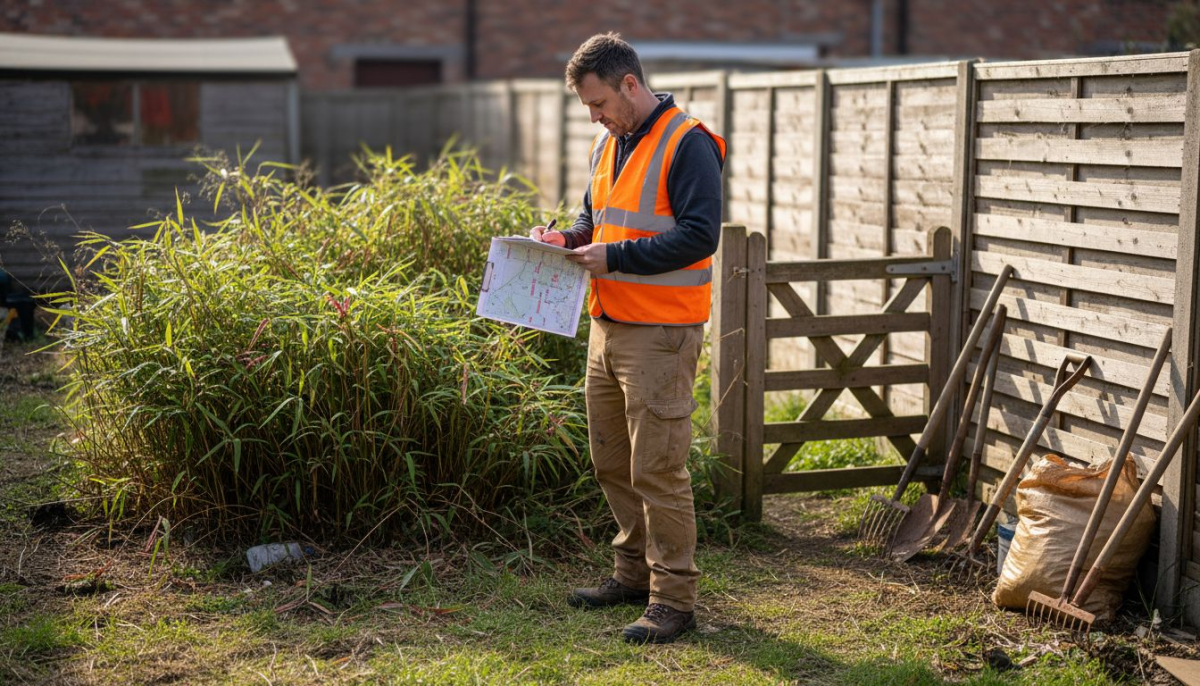
Japanese Knotweed causes property headaches for thousands of British homeowners every year. This aggressive plant can lower home values and delay sales if not treated correctly. For those who want to avoid chemicals and meet strict UK legal standards, a methodical approach is essential. You will find step by step guidance for surveying infestations, selecting expert help, safeguarding your land, and preparing formal treatment plans that keep your property sale or mortgage on track.
Table of Contents
- Step 1: Assess Infestation And Survey Property
- Step 2: Consult Specialists And Review Compliance
- Step 3: Clear Designated Excavation Area Safely
- Step 4: Install Root Barriers And Protective Measures
- Step 5: Verify Readiness For Professional Treatment
Quick Summary
| Key Point | Explanation |
|---|---|
| 1. Conduct a thorough property survey | Inspect your property for Japanese Knotweed and document affected areas to assess infestation severity and plan treatment. |
| 2. Engage qualified specialists for compliance | Consult accredited professionals to ensure legal adherence and develop a comprehensive management plan for invasive species. |
| 3. Prepare site with safety measures | Establish clear excavation boundaries and safety protocols to prevent spread and ensure effective removal of the Knotweed. |
| 4. Install root barriers effectively | Use high-quality, deep root barriers to prevent the migration of Knotweed rhizomes and safeguard surrounding areas from re-infestation. |
| 5. Verify site readiness before treatment | Gather necessary documentation and confirm compliance with regulations to ensure a smooth and effective professional treatment process. |
Step 1: Assess infestation and survey property
Identifying Japanese Knotweed accurately on your property requires a systematic and thorough approach. Your initial survey will determine the extent of the infestation and help plan the subsequent excavation strategy, which is crucial for effective management.
Begin by conducting a comprehensive visual inspection of your entire property, paying close attention to areas where Japanese Knotweed commonly establishes itself such as garden borders, drainage lines, and structural foundations. Professional property surveyors recommend detailed mapping and documentation of affected zones, which helps create an accurate risk assessment and treatment plan. Look for distinctive characteristics including bamboo-like stems, distinctive zigzag growth patterns, and heart-shaped leaves that change colour throughout seasonal cycles.
Here is a summary of key Japanese Knotweed identification features for your property survey:
| Identification Feature | Description | Seasonal Appearance |
|---|---|---|
| Stem Shape | Bamboo-like, hollow segments | Most visible spring to autumn |
| Leaf Style | Heart-shaped, pointed tip | Bright green in summer |
| Growth Pattern | Distinctive zigzag stem formation | Noticeable during rapid growth |
| Colour Changes | Green to yellow/red in autumn | Autumn colour shift |
| Typical Location | Garden borders, foundations, drains | All year, especially spring |
To ensure a precise assessment, consider engaging a professional surveyor specialising in invasive plant species who can provide an authoritative evaluation. These experts utilise standardised assessment protocols that document precise measurements, map rhizome spread, and categorise infestation severity levels. Photographic evidence and detailed site sketches will become critical documentation for potential property transactions or legal requirements.
Expert Recommendation: Take multiple high-resolution photographs from different angles to create a comprehensive visual record of the knotweed infestation, which will prove invaluable during excavation planning and potential future property assessments.
Step 2: Consult specialists and review compliance
Navigating the legal and regulatory landscape surrounding Japanese Knotweed management requires expert guidance and a comprehensive understanding of your obligations as a property owner. Your primary goal in this step is to engage qualified professionals who can provide authoritative advice and ensure you meet all necessary legal requirements.
UK regulatory guidelines mandate a structured approach to invasive plant management, which means consulting accredited specialists is not just recommended but essential. These professionals will help you develop a detailed management plan that addresses specific legal frameworks, including obligations under the Wildlife and Countryside Act and Environmental Protection Act. They can provide comprehensive risk assessments, document the extent of infestation, and recommend compliant treatment strategies that protect both your property and the surrounding environment.
When selecting a specialist, prioritise professionals with specific credentials in Japanese Knotweed management. Look for certifications from recognised bodies such as the Property Care Association, and request detailed documentation of their proposed management approach. Ensure they can provide a written management plan that outlines excavation methods, disposal protocols, and long term monitoring strategies that align with current UK environmental regulations.
The following table contrasts professional Japanese Knotweed specialists with non-specialists:
| Aspect | Accredited Specialist | General Contractor |
|---|---|---|
| Credentials | Certified in invasive plants | No specific certification |
| Documentation | Provides full management plan | Limited documentation |
| Legal Compliance | Meets all UK regulations | May overlook compliance |
| Long-term Monitoring | Offers follow-up assessments | Usually no monitoring |
Expert Recommendation: Request comprehensive documentation from your chosen specialist, including their professional credentials, proposed treatment methodology, and a detailed compliance statement addressing all relevant UK environmental regulations.
Step 3: Clear designated excavation area safely
Preparing the site for Japanese Knotweed excavation requires meticulous planning and strict adherence to safety protocols to prevent potential spread and environmental contamination. Your primary objective is to create a controlled environment that minimises the risk of knotweed dispersal during the clearance process.
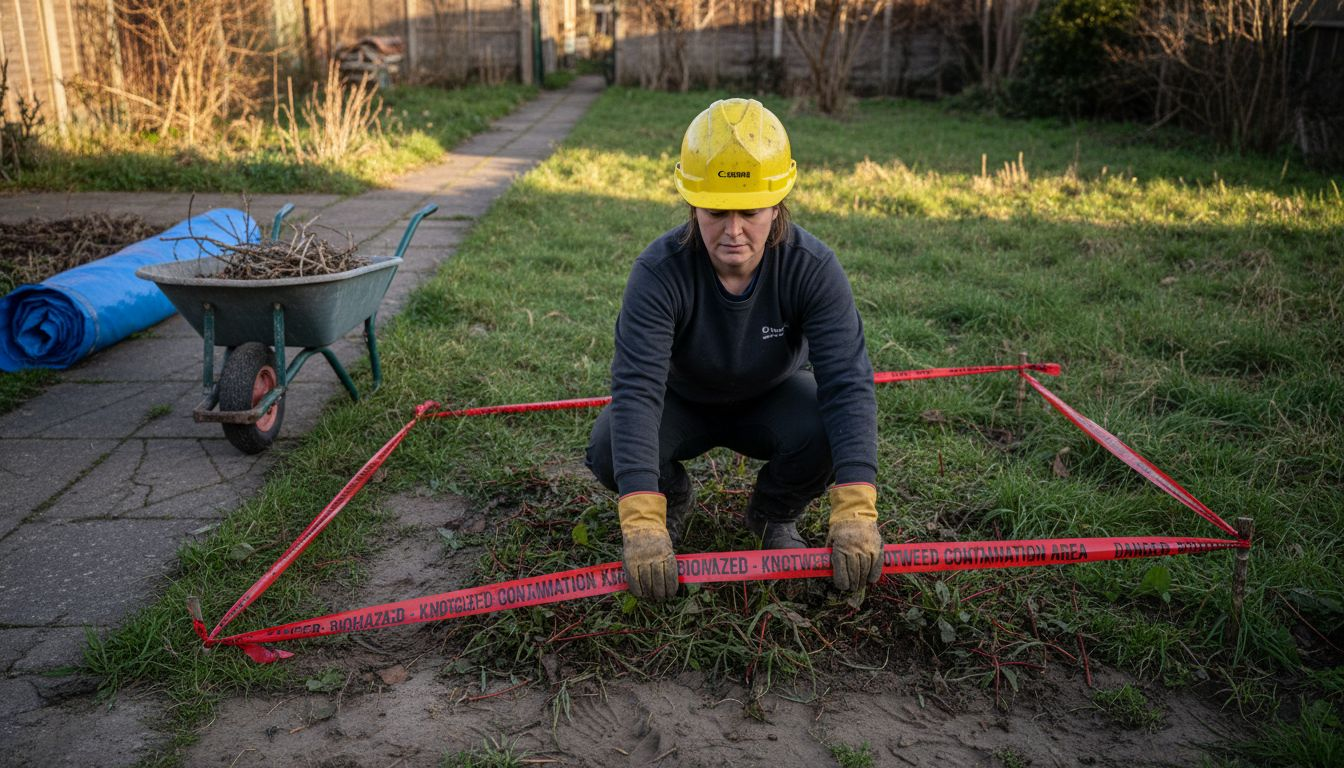
Professional safety protocols emphasise establishing clear containment boundaries and implementing robust site management strategies before commencing any excavation work. Begin by marking out the entire affected area with high visibility barriers, ensuring a substantial buffer zone around the identified knotweed infestation. Remove all non essential vegetation and surface materials, taking extreme care to prevent fragmentation of roots or rhizomes that could potentially regenerate. Wear appropriate personal protective equipment including disposable overalls, protective footwear, and gloves to prevent accidental contamination.
Carefully document the entire clearance process, recording the precise location and extent of the excavation zone. Prepare sealed containers or designated areas for collecting contaminated soil, and ensure all equipment is thoroughly cleaned before and after use to prevent unintentional spread. Consider implementing a temporary impermeable membrane to isolate the excavation area and prevent potential rhizome migration into surrounding ground.
Expert Recommendation: Create a detailed photographic and written record of the site before, during, and after clearance to provide comprehensive documentation for potential future regulatory requirements.
Step 4: Install root barriers and protective measures
Installing effective root barriers is a critical defence against Japanese Knotweed migration and potential recolonisation of your property. Your goal is to create a robust underground containment system that prevents rhizome spread and protects surrounding structures from potential invasion.
Root barrier installation requires precision and strategic planning to ensure comprehensive protection around the excavation zone. Begin by selecting a high quality root barrier membrane specifically designed for invasive plant containment. These specialised barriers should extend at least two metres deep and be constructed from puncture resistant materials that can withstand underground environmental pressures. Ensure the barrier forms a continuous sealed perimeter around the entire excavation area, with overlapping sections meticulously sealed to prevent any potential rhizome penetration.
Carefully position the root barrier membrane, ensuring it creates a complete underground seal that blocks knotweed rhizome movement. Pay particular attention to potential weak points such as drainage lines, building foundations, and underground utility pathways. Use specialised root barrier fixing techniques including welded seams and mechanical fastening to guarantee maximum integrity. Consider installing additional monitoring points that allow future inspection of the barrier’s condition without compromising its protective capabilities.
Expert Recommendation: Engage a professional installation team with specific expertise in invasive plant root barrier systems to ensure maximum protection and long term effectiveness of your containment strategy.
Step 5: Verify readiness for professional treatment
Preparing for professional Japanese Knotweed treatment requires a systematic approach to ensure your site meets all necessary compliance and safety standards. This crucial stage involves comprehensive documentation and verification to guarantee a smooth and effective treatment process.

Professional standards outline specific readiness checkpoints for knotweed treatment preparation, which serve as your roadmap for site verification. Begin by assembling a comprehensive documentation package including detailed site surveys, precise infestation mapping, and a full photographic record of the affected areas. Review all previous assessments and ensure you have a clear understanding of the exact extent and characteristics of the knotweed spread. Confirm that all preparatory steps such as root barrier installation and site clearance have been completed to professional specifications.
Carefully review and cross check all documentation with your chosen treatment specialist. Verify that your site meets all regulatory requirements, including environmental protection standards and local authority guidelines. Prepare a list of specific site access points, potential obstacles, and any unique challenges that the treatment team should be aware of. Ensure all necessary permissions have been obtained and that adjacent property owners or managers have been appropriately notified about the upcoming treatment process.
Expert Recommendation: Create a comprehensive site readiness checklist that includes photographic evidence, survey documentation, and a detailed site access plan to streamline the professional treatment process.
Take Control of Your Japanese Knotweed Excavation with Expert Support
Preparing for Japanese Knotweed excavation involves careful assessment, strict compliance, and precise barrier installation to stop regrowth. The challenge lies in managing the extensive rhizome network safely while following legal guidelines and ensuring long-term containment. If you are feeling overwhelmed by the complexity of root barrier requirements or unsure about professional treatment readiness, you are not alone.
At Japanese Knotweed Agency, we specialise in chemical free eradication that delivers up to 5000 volts directly to the knotweed’s internal structure, causing irreversible cellular damage. We also provide expert root barrier installations and thorough property surveys across England, Wales and Ireland to help you verify the infestation and prepare your site properly. Our proven techniques align with the standards outlined in your preparation steps, offering peace of mind and effective control.
Ready to take the next step in your knotweed excavation journey? Discover how our comprehensive services can make your preparation easier and more effective by visiting Japanese Knotweed Agency. Explore our chemical free treatment solutions and get expert advice on root barrier installations to protect your property now.
Frequently Asked Questions
How do I assess the extent of a Japanese Knotweed infestation on my property?
Begin by conducting a comprehensive visual inspection of your entire property, focusing on areas where Japanese Knotweed typically establishes itself. Document any affected zones, noting key identification features, to inform your next steps.
What should I consider when consulting specialists for knotweed management?
When consulting specialists, ensure they hold relevant certifications in invasive plant management and can provide a detailed management plan compliant with local regulations. Request documented evidence of their proposed methods and long-term approach to monitor and manage the infestation.
How can I prepare a site for Japanese Knotweed excavation safely?
To prepare the site, mark clear containment boundaries and ensure a buffer zone around the infestation. Additionally, remove non-essential vegetation while wearing appropriate protective equipment to minimize the risk of knotweed dispersal during clearance.
What are the key steps to installing root barriers effectively?
Install a high-quality root barrier membrane that extends at least two metres deep and seals all sides of the excavation area. Overlap sections and seal them thoroughly to ensure no rhizomes can penetrate, therefore preventing future regrowth in surrounding areas.
How do I verify my site is ready for professional knotweed treatment?
Assemble a comprehensive documentation package that includes site surveys and photographic records of the affected areas. Cross-check this information with your treatment specialist to confirm that all preparations, such as root barrier installation and site clearance, have been executed according to professional standards.