

Faced with the pressure of securing your first home, discovering even a hint of Japanese Knotweed can send stress levels soaring. This invasive plant is more than an inconvenience across England and Wales, as it has the potential to affect property value and complicate legal responsibilities for buyers and sellers alike. With Bristol, Newport, and major Scottish cities highlighted as hotspot areas in the latest heatmap data, understanding how to identify and manage knotweed risks helps buyers confidently move forward without costly surprises.
Table of Contents
- Step 1: Research Common Knotweed Risks In Your Region
- Step 2: Inspect The Property For Knotweed Signs And Evidence
- Step 3: Arrange A Professional Knotweed Survey And Report
- Step 4: Review Legal Responsibilities And Property Disclosures
- Step 5: Verify Eradication Options And Guarantees Available
- Step 6: Confirm Knotweed Status Before Finalising Purchase
Quick Summary
| Key Point | Explanation |
|---|---|
| 1. Understand Regional Knotweed Risks | Research areas with high Japanese Knotweed infestations to make informed property decisions, as certain regions have higher risks. |
| 2. Conduct Thorough Property Inspections | Look for specific signs of Japanese Knotweed, such as bamboo-like stems and distinctive growth patterns, before purchasing. |
| 3. Obtain a Certified Knotweed Survey | Hire a professional to assess knotweed risks, ensuring detailed reporting and mapping for accurate property evaluation. |
| 4. Know Your Legal Obligations | Familiarise yourself with knotweed disclosure laws to prevent legal issues, including seller obligations to disclose known infestations. |
| 5. Select Effective Eradication Methods | Evaluate various treatment options and choose those with reliable guarantees and minimal environmental impacts for long-term management. |
Step 1: Research common knotweed risks in your region
Successfully navigating potential Japanese Knotweed risks requires strategic regional research. Understanding where these invasive plants concentrate helps homebuyers make informed property investment decisions.
Start your investigation by examining regional knotweed risk heatmaps. The latest data reveals significant hotspots across the United Kingdom, with cities like Bristol, Newport, and urban areas in Scotland presenting higher infestation probabilities. These concentration zones indicate where Japanese Knotweed proliferates most aggressively, potentially impacting property values and requiring extensive management strategies.
Local authority planning departments, environmental records, and specialised property surveys provide additional insights into regional knotweed prevalence. Request historical land use documents, speak with local environmental officers, and consider professional surveying services to comprehensively assess your specific area’s risk profile. Connecting with neighbours and local community groups can also yield valuable ground level intelligence about potential knotweed presence in your neighbourhood.
Expert recommendation: Always commission a professional invasive plant survey before finalising any property purchase to mitigate potential long term risks and unexpected remediation expenses.
Step 2: Inspect the property for knotweed signs and evidence
Spotting Japanese Knotweed requires keen observation and understanding of its distinctive characteristics. Your property inspection demands a systematic approach to identifying potential infestation risks before making a significant investment.
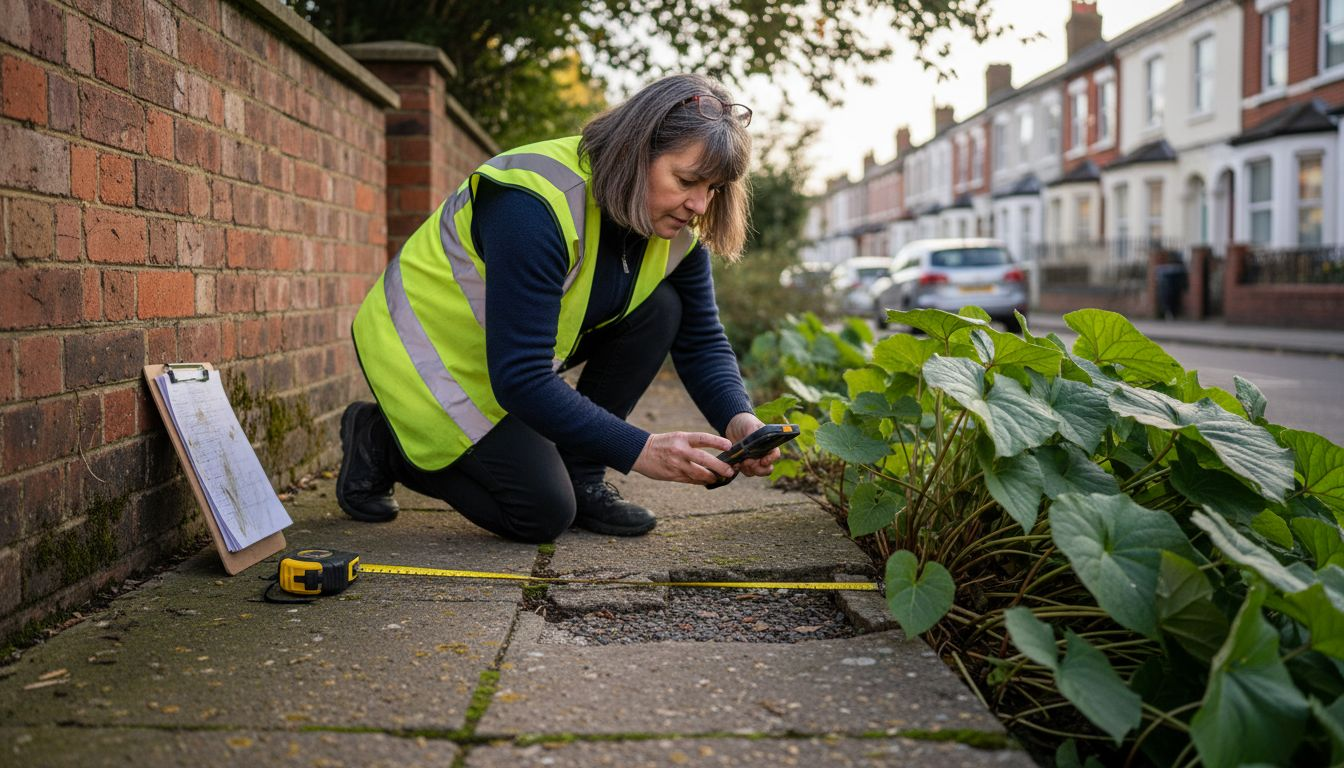
Begin by thoroughly examining the property’s exterior and interior spaces for telltale signs of Japanese Knotweed. Look for bamboo-like stems with distinctive nodes, reddish-brown speckled shoots emerging in spring, and characteristic zigzag growth patterns. Pay special attention to areas near foundations, garden boundaries, and landscaped regions where knotweed tends to proliferate. During your visual inspection, check for distinctive symptoms such as dense clusters of stems, heart-shaped leaves, and underground rhizome networks that can extend several metres from the visible plant growth.
Documenting your findings is crucial. Take clear photographs of any suspicious vegetation, measure the extent of potential growth, and note specific locations where unusual plant patterns emerge. Professional surveyors recommend creating a comprehensive visual record that can be assessed by invasive plant experts. If you identify any potential knotweed indicators, immediately contact a specialist for a professional assessment to prevent potential property damage and costly remediation.
Expert recommendation: Conduct your property inspection during early spring when Japanese Knotweed is most visually distinctive, allowing for easier identification of emerging shoots and growth patterns.
Step 3: Arrange a professional knotweed survey and report
Navigating the complexities of a professional Japanese Knotweed survey requires strategic planning and understanding of the comprehensive assessment process. Your primary goal is securing a detailed professional report that provides complete insight into potential knotweed risks associated with your property.
Professional surveys have become increasingly sophisticated with new surveying tools for knotweed risk that deliver precise site inspections and comprehensive analysis. When booking a survey, ensure the professional is certified and experienced in invasive plant identification. Request a thorough report that includes detailed mapping of potential knotweed locations, assessment of rhizome spread, photographic evidence, and recommendations for treatment or management. The survey should comprehensively document the extent of any infestation, potential property damage risks, and provide a clear strategy for remediation.
Contact multiple certified surveyors to compare their approach, pricing, and reporting standards. Verify their credentials, request sample reports, and understand the full scope of their assessment. A comprehensive survey typically involves site inspection, ground penetrating radar analysis, and detailed documentation that can be critical for mortgage applications, property negotiations, and future management strategies.
Expert recommendation: Request a written survey report that includes precise GPS mapping and photographic documentation to support any future property transactions or legal proceedings.
Step 4: Review legal responsibilities and property disclosures
Understanding your legal obligations regarding Japanese Knotweed is crucial when buying or selling property. Navigating the complex landscape of property disclosures requires careful attention to statutory requirements and potential environmental regulations.
UK property law mandates specific legal responsibilities for knotweed disclosure that protect both buyers and sellers. Sellers are legally obligated to declare any known knotweed presence on the property, including historical infestations or ongoing management efforts. This disclosure requirement extends beyond simple notification and encompasses a comprehensive explanation of any previous treatments, current status, and potential future management strategies. Local authorities can issue Remediation Orders for non compliance, which may result in significant financial penalties and legal complications if not addressed properly.
Consult with a legal professional specialising in property transactions to ensure full understanding of your specific obligations. Request a comprehensive review of all property documents, environmental surveys, and historical land use records. Pay particular attention to any existing knotweed management plans, treatment certificates, and potential ongoing treatment requirements that might impact the property’s value or future development potential.
Expert recommendation: Obtain written documentation of all knotweed related disclosures and ensure they are explicitly detailed in your property transaction contracts.
Step 5: Verify eradication options and guarantees available
Choosing the right knotweed eradication strategy requires careful consideration of effectiveness, environmental impact, and long-term property protection. Your goal is to select a treatment method that provides comprehensive removal with reliable guarantees.
Recent innovations have transformed knotweed management, with chemical-free eradication methods offering promising alternatives to traditional herbicide treatments. These advanced techniques provide quicker site regeneration and more environmentally sustainable solutions. When evaluating eradication options, request detailed documentation about the treatment process, including the specific methodology, expected timeframe for complete removal, and comprehensive guarantees covering potential regrowth. Professional eradication services should offer written warranties that typically cover a minimum of five to ten years, ensuring complete removal and preventing potential future infestations.
Carefully compare multiple treatment proposals, examining their approach to root system elimination, site restoration, and post-treatment monitoring. Request certificates of completion, independent verification of treatment effectiveness, and detailed documentation that can be used for future property transactions. Ensure that the chosen method addresses the entire rhizome network, not just surface vegetation, to prevent potential recurring knotweed growth.
Expert recommendation: Obtain written guarantees that include comprehensive coverage for complete knotweed eradication and potential future regrowth.
Here is a comparison of common knotweed eradication methods and their key characteristics:
| Method | Environmental Impact | Typical Guarantee Length | Site Recovery Speed |
|---|---|---|---|
| Herbicide Treatment | Moderate – chemical use | Five to ten years | Gradual, may take months |
| Chemical-Free Methods | Low – eco-friendly | Five years or more | Fast, improved recovery |
| Excavation & Removal | High – heavy machinery | Ten years guaranteed | Immediate but disruptive |
| Integrated Approach | Balanced – combined tools | Customised, often long | Tailored to situation |
Step 6: Confirm knotweed status before finalising purchase
The final stage of your property purchase demands meticulous verification of knotweed status to protect your investment and prevent potential future complications. Understanding the precise condition of the property regarding Japanese Knotweed is critical before completing your transaction.
Utilise knotweed risk assessment steps to comprehensively evaluate the property. Request an updated professional survey that includes detailed documentation of any historical or current knotweed presence. This assessment should cover not only visible plant growth but also underground rhizome networks, potential dormant zones, and historical treatment records. Carefully review all documentation provided by the seller, including previous survey reports, treatment certificates, and any ongoing management plans.
Engage a specialist solicitor experienced in property transactions involving invasive plant species to review all documentation and potential legal implications. Ensure that any existing knotweed management plans are transferable to you as the new property owner and that they provide comprehensive coverage for potential future regrowth. Consider requesting a specific indemnity against future knotweed related issues as an additional layer of protection in your property purchase agreement.
Expert recommendation: Insist on a comprehensive written report detailing the exact knotweed status and obtain explicit guarantees covering potential future plant emergence.
The following table summarises essential documents to secure when purchasing property at risk from knotweed:
| Document Type | Purpose | Importance for Buyer |
|---|---|---|
| Professional Survey Report | Confirms presence/status of knotweed | Assures secure investment |
| Treatment Certificate | Validates completed eradication works | Mitigates future liability |
| Legal Disclosure Form | Outlines all known issues and treatments | Prevents legal disputes |
| Management Plan | Details ongoing monitoring/remediation | Ensures long-term control |
Secure Your Property with Expert Japanese Knotweed Management
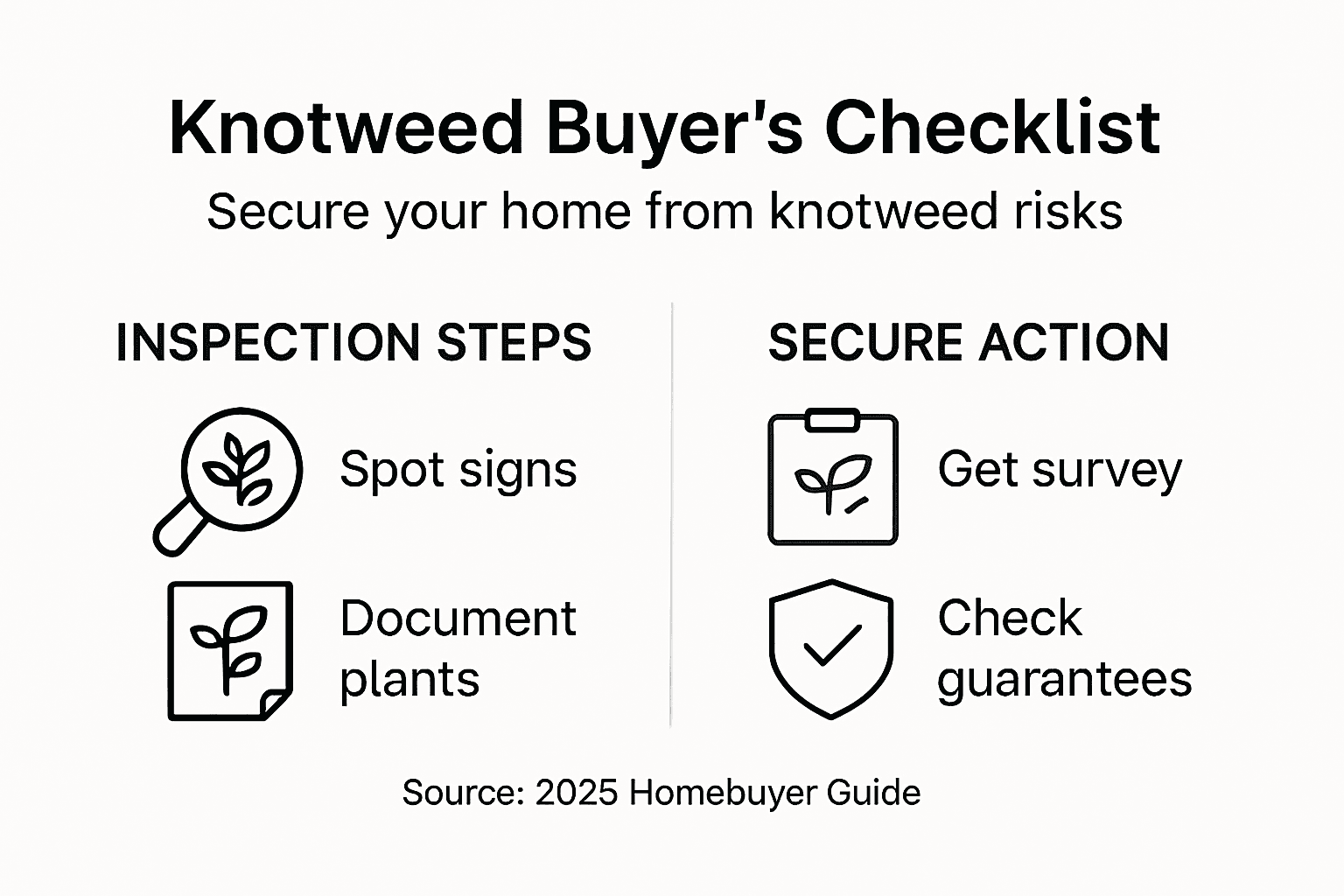
Navigating the challenges of Japanese Knotweed can feel overwhelming when buying a new home. The risks of hidden rhizomes and future infestations can threaten your investment and peace of mind. If you are following the “Knotweed Homebuyer Checklist 2025” to identify and manage knotweed risks, trusting a proven specialist can make all the difference. From thorough invasive weed surveys to guaranteed chemical free eradication, professional support is essential for long term protection.
Take control today by partnering with Japanese Knotweed Agency, pioneers in eco-friendly treatments across England, Wales, and Ireland. With groundbreaking direct energy technology, they effectively disrupt the complete rhizome network while offering root barrier installation and excavation services. Whether you need a detailed property survey before purchase or a reliable eradication plan with guarantees, their expert team is ready to safeguard your property’s value and future. Start your journey by exploring their professional survey services and learn more about their innovative chemical free eradication methods. Don’t risk costly surprises later—act now to secure your property with confidence.
Frequently Asked Questions
What are the common signs of Japanese Knotweed to look for when inspecting a property?
Japanese Knotweed exhibits distinctive characteristics such as bamboo-like stems, dense clusters of heart-shaped leaves, and zigzag growth patterns. Inspect the exterior and interior, particularly around foundations and garden boundaries. Document any suspicious plants by taking photographs and measuring their extent.
How can I assess the knotweed risk in my area before buying a property?
You can assess knotweed risk by researching local heatmaps that indicate known infestation zones and examining historical land use records. Connect with local community groups to gather insights about potential knotweed presence. This will help you understand the risk level specific to your desired location.
When should I arrange a professional knotweed survey during the home buying process?
It is best to arrange a professional knotweed survey before finalising the property purchase to identify any potential issues. Book the survey during early spring when knotweed is most visible, making it easier for experts to assess. This proactive step can help prevent future complications and expenses.
What legal obligations do sellers have regarding Japanese Knotweed disclosure?
Sellers must declare any known Japanese Knotweed presence, including previous infestations and management efforts, before selling a property. This legal requirement protects buyers from undisclosed issues and ensures transparency. Always review the seller’s disclosure documentation carefully to understand the property’s knotweed history.
What eradication methods are available for Japanese Knotweed and how do I choose the right one?
Common eradication methods include herbicide treatment, chemical-free options, excavation, and integrated approaches. Assess the environmental impact, recovery speed, and guarantee length of each method. Request detailed information from each provider to ensure the selected option meets your needs for effective knotweed management.
How do I confirm the status of Japanese Knotweed before completing my property purchase?
Before completing your purchase, request an updated professional survey that documents the current knotweed status, including any historical treatments. Ensure that all documentation, such as treatment certificates or management plans, is transferred to you as the new owner for future reference. This verification step is crucial to protect your investment.
Recommended
- 7 Key Invasive Weed Property Risks Homebuyers Must Know
- Knotweed Property Survey Workflow for UK Homebuyers
- 7 Key Steps for Knotweed Risk Assessment Before Purchase
- Knotweed Assessment Workflow for Homeowners: Complete Guide
- 7 Smart Steps for a Home Safety Checklist Every Buyer Needs | ReVroom
- Your Essential Move-Out Cleaning Checklist for McKinney Homes 2025
- Waterproofing Checklist for Homeowners: Complete Guide