

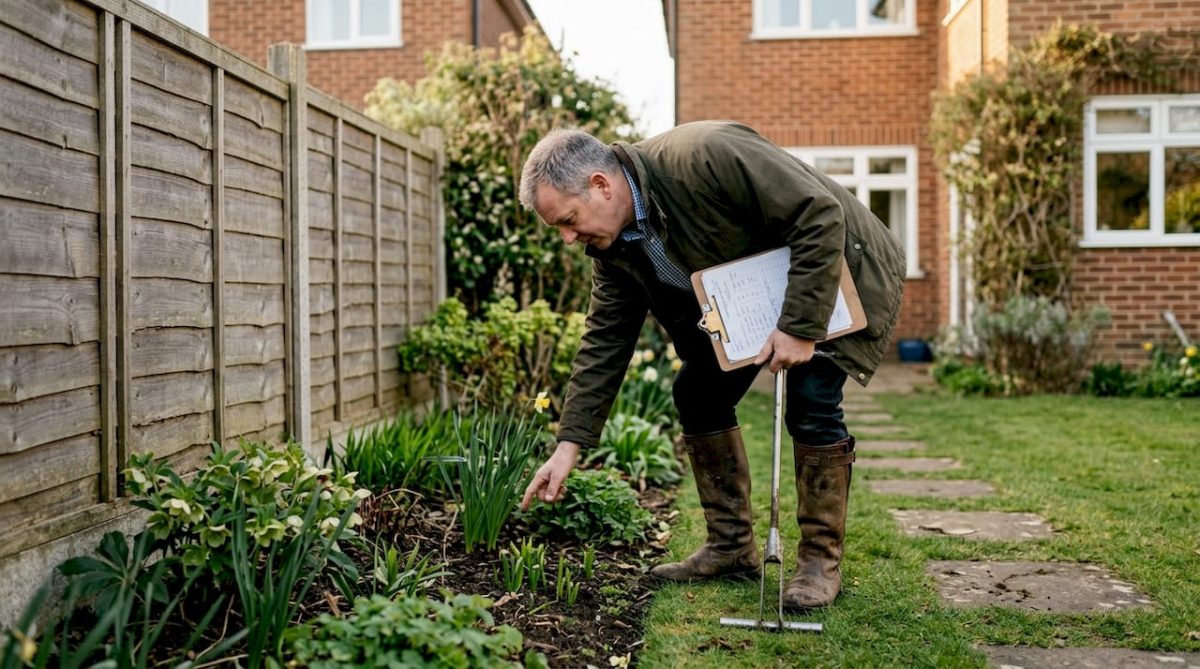
Japanese knotweed does not simply disappear after treatment. The plant’s underground rhizome network can remain dormant for years, and regrowth risk from dormant rhizomes is a well-documented reality that catches homeowners and buyers off guard. Without a structured monitoring programme in place, you risk legal penalties, failed property transactions, and costly remediation work. This article explains exactly what effective monitoring involves, why lenders and solicitors demand documented evidence, and how you can protect your property’s value with confidence.
Table of Contents
- Understanding knotweed regrowth: the hidden hazard
- Why monitoring matters: legal, financial, and property consequences
- How frequent monitoring stops knotweed in its tracks
- Benchmarks: how to know your knotweed control is working
- Advanced tips: keeping regrowth at bay in tricky scenarios
- Expert help and next steps for knotweed monitoring
- Frequently asked questions
Key Takeaways
| Point | Details |
|---|---|
| Dormancy risk | Knotweed rhizomes can stay dormant underground for years, making long-term monitoring crucial. |
| Quarterly inspections | Inspect your property every three months during the growing season to spot regrowth early and act fast. |
| Legal and financial impact | Failing to monitor can cause legal issues, fines, and property transaction delays or failures. |
| Effective monitoring steps | Use shoot counts, photos, and GPS records to document progress and meet lender or buyer expectations. |
| Professional documentation | Professional monitoring reports and guarantees are often required for sales or mortgage approval where knotweed is present. |
Understanding knotweed regrowth: the hidden hazard
Japanese knotweed spreads primarily through its rhizome system, a dense network of underground stems that can extend up to three metres deep and seven metres laterally from the visible plant. The danger is that this network does not need to be intact to cause problems. Rhizome fragments as small as 1cm weighing just 0.7 grams can regenerate entirely new plants, and dormancy can persist for years before soil disturbance triggers fresh growth.
Many homeowners assume that once the visible canes and leaves are gone, the problem is resolved. This is one of the most costly misunderstandings in property management. Even after professional excavation or treatment, fragments can remain in the soil, waiting for the right conditions to re-emerge. Understanding dormant knotweed risks is therefore essential before any property changes hands.
Common triggers for regrowth include:
- Soil disturbance during construction, landscaping, or drainage works
- Seasonal temperature changes that break dormancy in spring
- Incomplete excavation leaving viable rhizome material below the treated zone
- Neighbouring encroachment where rhizomes cross boundary lines undetected
Knotweed can push through tarmac and concrete, and its rhizomes have been found growing beneath building foundations. Visible absence is not evidence of eradication.
Why monitoring matters: legal, financial, and property consequences
Monitoring is not a precautionary extra. In England and Wales, the Wildlife and Countryside Act 1981 places a legal duty on landowners to prevent the spread of knotweed, and in Ireland, Regulation 49 of SI 477 carries equivalent obligations. Knotweed is classified as controlled waste, meaning improper disposal or failure to contain spread can result in prosecution and significant financial penalties.
For property transactions, the stakes are equally high. RICS guidance requires documented evidence of monitoring and effective treatment before mortgage lenders will approve finance on affected properties. Without this paperwork, sales stall or collapse entirely.
Key legal and financial consequences of failing to monitor include:
- Mortgage refusal from lenders who require a compliant management plan
- Reduced property valuations where knotweed history is undocumented
- Legal liability if knotweed spreads to a neighbouring property
- Failed conveyancing where solicitors flag the absence of monitoring records
- Insurance complications where policies exclude untreated invasive species
Understanding your knotweed legal requirements is the first step. Ensuring you have monitoring evidence for surveys is the second. Both are non-negotiable if you intend to sell, remortgage, or develop your property.
Pro Tip: Missing monitoring records is one of the most common reasons property sales fall through or attract significantly reduced offers. Start your documentation early, even if treatment is ongoing.
How frequent monitoring stops knotweed in its tracks
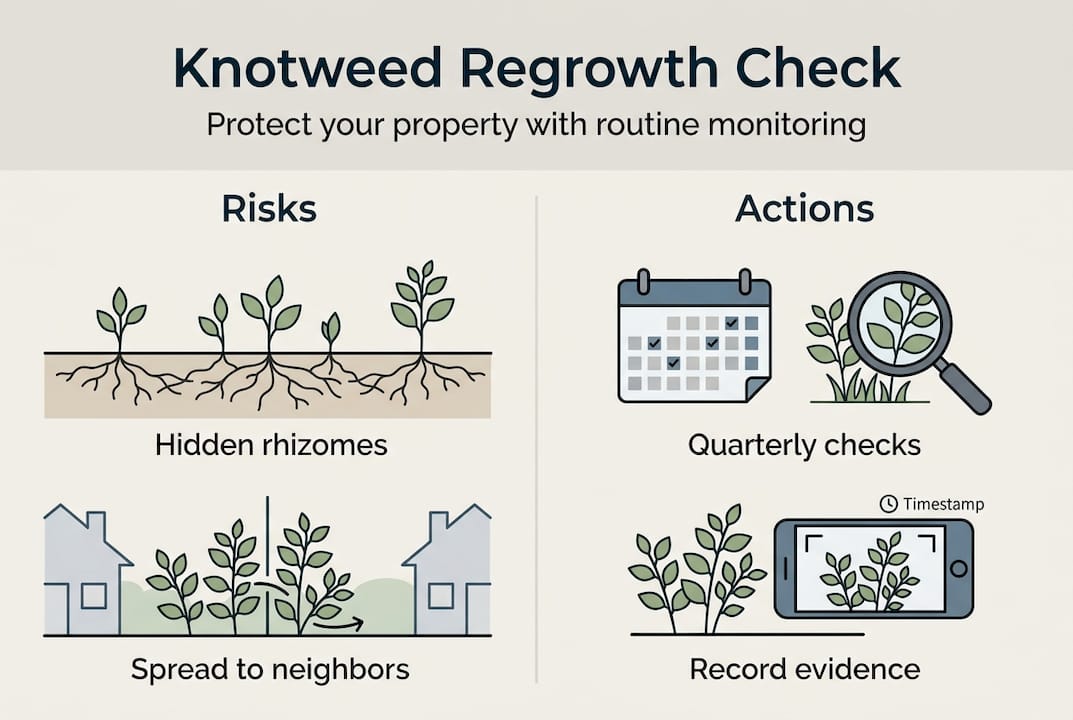
Effective monitoring follows a structured, seasonal schedule. Quarterly inspections every three months during the growing season are the recognised standard, with April, July, and October being the most critical inspection windows. April catches early spring emergence, July assesses peak growth, and October records die-back before winter dormancy.
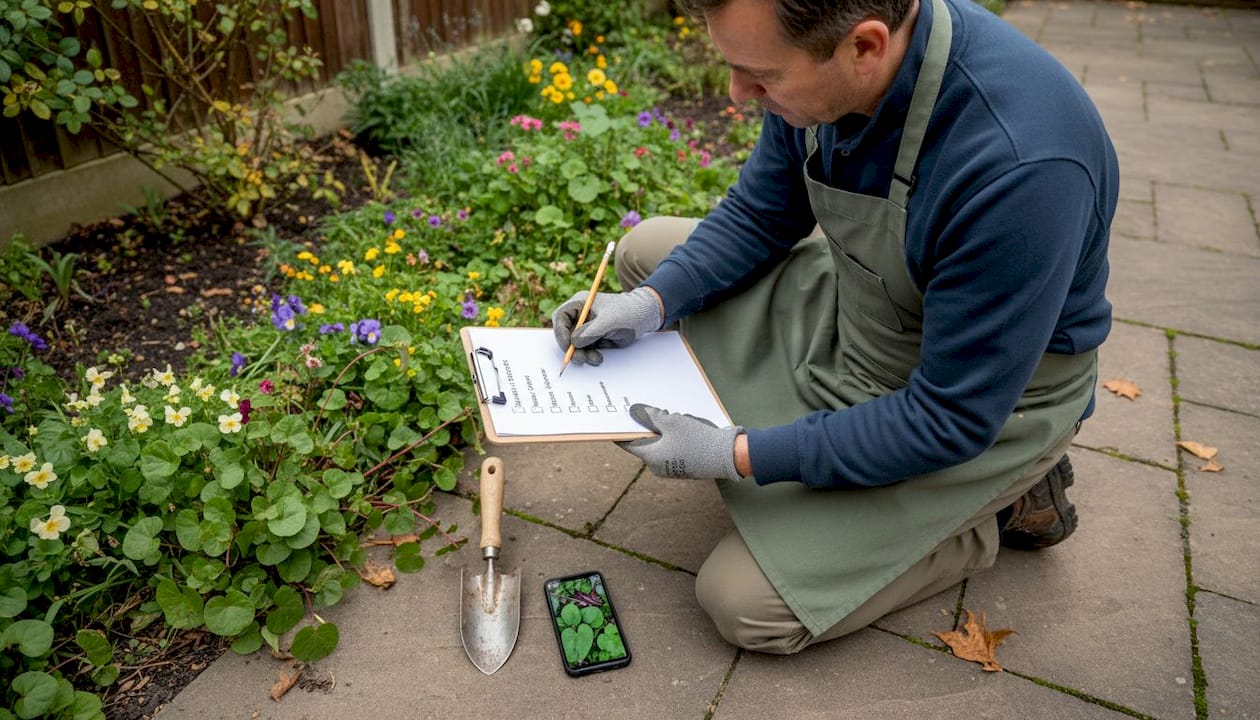
Each inspection should follow a consistent protocol to produce records that satisfy lenders and solicitors:
- Photograph all previously affected areas with date-stamped images from fixed reference points
- Count and record any new shoots, noting height, density, and location
- Log GPS coordinates for any regrowth or suspected activity
- Inspect boundary lines and areas adjacent to any recent soil disturbance
- Document ground conditions, including any signs of disturbance since the last visit
- Update your treatment log to reflect any interventions carried out
Statistic callout: Consistent monitoring paired with treatment delivers 60 to 95% biomass reduction over two years, with near-total control achievable by year three when protocols are followed rigorously.
Pro Tip: Always inspect boundary edges and any areas where soil has been moved or disturbed. These are the most common regrowth hotspots and are frequently overlooked during informal checks. Detailed knotweed inspection protocols make this process straightforward.
Using a consistent monitoring ground disturbance checklist ensures nothing is missed between professional visits, and your records remain credible for any future transaction.
Benchmarks: how to know your knotweed control is working
Progress should be measurable. Without clear benchmarks, it is difficult to know whether your treatment programme is performing as expected or whether regrowth is quietly gaining ground. Monitoring verifies treatment efficacy at each stage, with well-documented outcomes showing 60 to 70% biomass loss in year one, 85 to 95% in year two, and near-total control by year three when protocols are followed consistently.
| Year | Expected biomass reduction | Key indicator |
|---|---|---|
| Year 1 | 60 to 70% | Significant reduction in shoot density and height |
| Year 2 | 85 to 95% | Minimal regrowth, isolated shoots only |
| Year 3 | Near-total control | No visible regrowth; rhizome activity negligible |
If your results are not tracking against these benchmarks, it is a signal to review your treatment approach rather than wait. Use your knotweed monitoring checklist to compare each inspection against the previous one.
Warning signs that regrowth may be returning or accelerating:
- New shoots appearing in areas previously clear for more than one season
- Increased shoot density compared to the prior inspection record
- Regrowth near boundaries suggesting encroachment from a neighbouring site
- Hollow cane remnants re-emerging after apparent die-back
- Soil cracking or lifting near previously treated zones
If any of these signs appear, prompt reporting and documentation is essential. Early intervention at this stage is far less costly than allowing a second cycle of establishment.
Advanced tips: keeping regrowth at bay in tricky scenarios
Some situations carry a higher regrowth risk than others, and standard monitoring may need to be supplemented with additional measures. Boundary risks, post-excavation fragments, and disturbance-triggered regrowth represent the most challenging scenarios for homeowners, particularly where neighbouring land is unmanaged or where construction has recently taken place.
For high-value property sales or complex sites, professional monitoring with PCA/INNSA documentation and insurance-backed guarantees are not optional extras. They are the standard that lenders and solicitors expect.
Checklist for tricky scenarios:
- Confirm your neighbour’s knotweed status before listing a property, as encroachment liability can affect your sale
- Request a post-excavation survey if any groundworks have taken place within or adjacent to a previously treated zone
- Insist on a written management plan from any contractor, detailing treatment method, frequency, and expected outcomes
- Verify that your treatment provider holds PCA or INNSA membership, as this is the benchmark lenders recognise
- Obtain an insurance-backed guarantee where possible, as this provides transferable protection for future buyers
- Review your eradication plan advice annually to ensure it reflects current site conditions
Pro Tip: Always request PCA or INNSA-compliant paperwork from your treatment provider. This documentation is the single most effective tool for reassuring lenders and buyers during a property transaction, and it demonstrates that your step-by-step monitoring meets the recognised professional standard.
For sites where knotweed has been dormant for several years without formal monitoring, a fresh professional survey is strongly advisable before any sale or development proceeds. Assumptions about dormancy are not a substitute for verified, documented evidence.
Expert help and next steps for knotweed monitoring
Protecting your property from knotweed regrowth requires more than a one-off treatment. It demands a structured, documented monitoring programme that satisfies lenders, solicitors, and buyers throughout England, Wales, and Ireland.

At Japanese Knotweed Agency, we deliver chemical-free thermo-electric treatment using up to 5,000 volts directly into the rhizome network, causing internal cell damage and depleting energy reserves with each application. Combined with root barrier installation, excavation works, and professional property surveys, our approach is designed to produce the documented outcomes that property transactions demand. If you have questions about your specific situation, our knotweed FAQ covers the most common homeowner concerns in detail. For guidance on managing a site where knotweed may be dormant, our dormant knotweed guidance is an essential starting point. To understand exactly how our treatment works, visit our chemical-free treatment process page and see why homeowners across England, Wales, and Ireland trust us to protect their most valuable asset.
Frequently asked questions
Can Japanese knotweed regrow even after years of no visible signs?
Yes. Rhizome fragments remain viable for years underground and can produce new growth if the soil is disturbed, even on sites that have appeared clear for several seasons.
How often should I monitor for knotweed regrowth on my property?
Quarterly monitoring every three months during the growing season is the recommended standard, allowing early detection before any regrowth becomes established.
Are there legal consequences if I do not monitor and control knotweed regrowth?
Yes. Laws mandate prevention of spread across England, Wales, and Ireland, with penalties for non-compliance including fines, prosecution, and serious complications during property sales.
What evidence do I need for property sales if I have knotweed history?
RICS requires monitoring and treatment records for mortgage approval on affected properties, along with guarantees from PCA or INNSA-registered professionals where available.
What are the warning signs of knotweed regrowth to look out for?
Fresh shoots and ground disturbance near boundaries or previously treated zones are the primary indicators, particularly following construction, landscaping, or any soil movement on or adjacent to your property.