
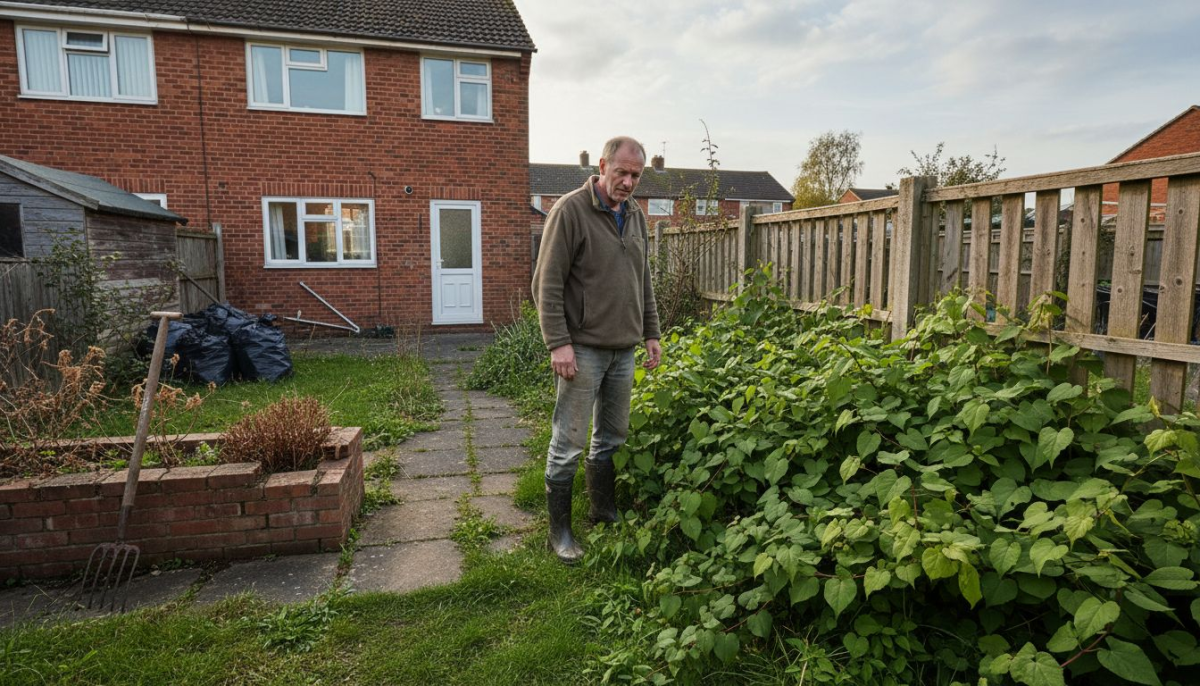
Most British homeowners are shocked to learn that Japanese Knotweed can cause property values to drop by up to 20 percent during sales and remortgaging. What starts as a small patch of greenery often brings enormous financial risk, with many still underestimating this plant’s damage and fast spread. If you want to protect your biggest investment, understanding the real impact of Japanese Knotweed—and the power of chemical-free control methods—can be your best defence.
Table of Contents
- Japanese Knotweed: Definition And Misconceptions
- How Knotweed Spreads And Causes Damage
- Legal Consequences Of Ignoring Knotweed
- Impact On Property Value And Sales
- Environmental And Neighbourhood Risks
- Non-Chemical Solutions For Effective Control
Key Takeaways
| Point | Details |
|---|---|
| Invasive Nature | Japanese knotweed is one of the most aggressive invasive species in the UK, known for its ability to cause significant structural and ecological damage. |
| Legal Responsibilities | Property owners face serious legal consequences, including civil and criminal penalties, if knotweed is not controlled or contained. |
| Market Impact | The presence of knotweed can drastically reduce property values and complicate real estate transactions, often leading to mortgage lending issues. |
| Control Strategies | Non-chemical strategies, such as physical removal and mechanical cutting, are available for management but require professional intervention and continuous monitoring. |
Japanese Knotweed: Definition And Misconceptions
Japanese knotweed represents one of the most aggressive and damaging invasive plant species across the United Kingdom. Originally introduced as an ornamental garden plant, this herbaceous perennial has transformed from a seemingly attractive botanical specimen into a significant environmental and property management challenge.
The plant exhibits distinctive characteristics that set it apart from native vegetation. Bamboo-like stems with distinctive reddish-purple speckles and spade-shaped leaves arranged in a unique zig-zag pattern make Japanese knotweed easily identifiable. What makes this plant particularly problematic is its extraordinary underground root system. These extensive rhizomes can spread vigorously through soil and water, enabling it to grow through seemingly impenetrable surfaces like concrete and tarmac.
Many property owners harbour significant misconceptions about Japanese knotweed, often underestimating its potential for destruction. Contrary to popular belief, the plant is not merely a garden nuisance but a serious threat that can compromise building foundations, drainage systems, and property infrastructure. Its ability to regenerate from tiny root fragments means that even minimal contact can trigger explosive growth, making professional intervention crucial.
Pro tip: If you suspect Japanese knotweed on your property, photograph the plant and contact a professional invasive species specialist immediately to prevent potential structural damage.
How Knotweed Spreads And Causes Damage
Japanese knotweed’s remarkable ability to spread makes it one of the most dangerous invasive plant species in the United Kingdom. This extraordinary plant can regenerate from fragments as tiny as a fingernail, creating unprecedented challenges for property owners and environmental managers. The plant’s propagation mechanism is uniquely adaptive, allowing it to reproduce through stem and rhizome fragments that can quickly develop into entirely new plants.
The underground root system of Japanese knotweed is particularly destructive. Its extensive rhizome network can extend up to a meter deep and several meters wide, enabling it to cause substantial structural damage. The plant can grow through seemingly impenetrable surfaces like concrete, tarmac, and building foundations, compromising infrastructure integrity. This extraordinary growth capacity means that even minimal root fragments can trigger explosive vegetation spread, undermining pavements, walls, and drainage systems.
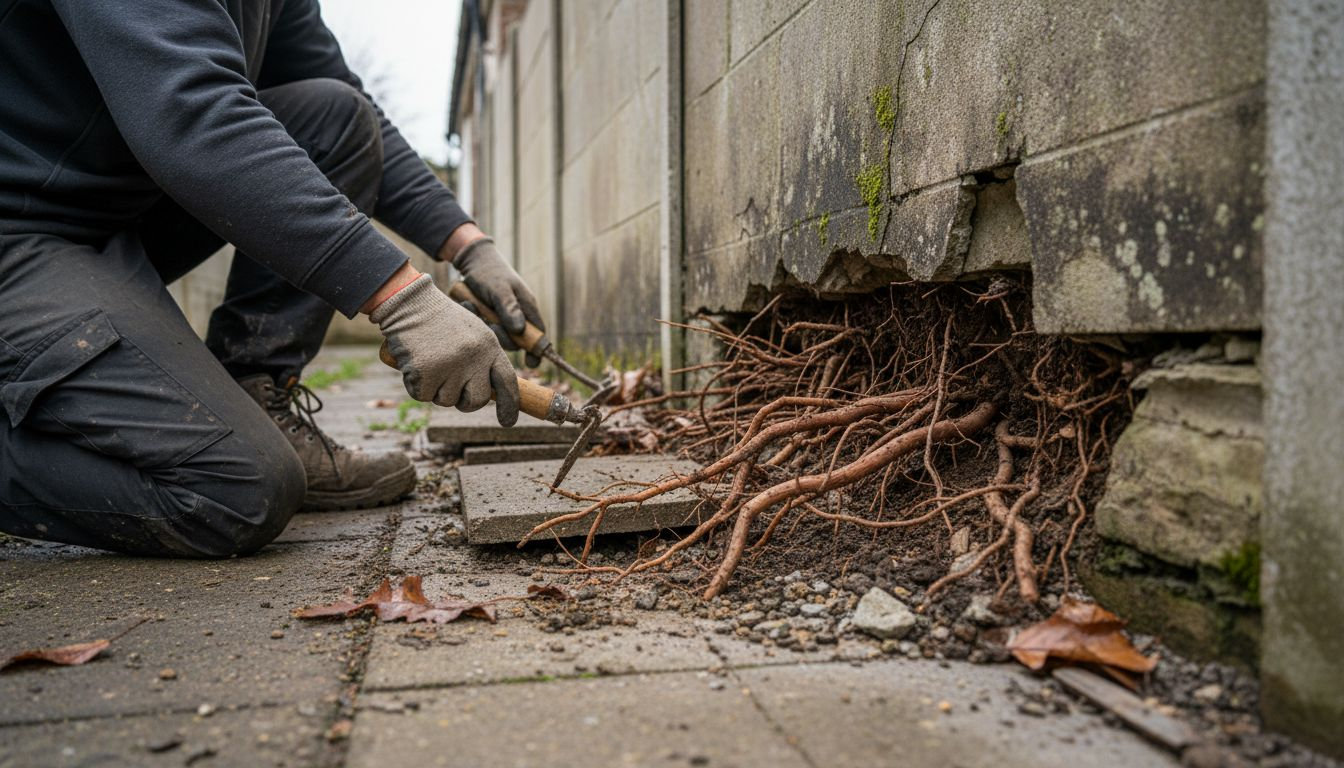
Beyond physical infrastructure damage, Japanese knotweed poses significant ecological threats. Its dense growth pattern effectively shades out native vegetation, dramatically reducing local biodiversity. The plant’s aggressive colonisation strategy allows it to outcompete indigenous plant species, fundamentally altering habitat structures and ecosystem dynamics. Water courses and human-mediated soil transportation further accelerate its spread, making containment exceptionally challenging.
Pro tip: Always consult professional invasive plant specialists when detecting Japanese knotweed, as attempting amateur removal can inadvertently cause more widespread propagation.
Legal Consequences Of Ignoring Knotweed
Landowners in the United Kingdom face significant legal risks when they choose to ignore Japanese knotweed on their property. The legal framework surrounding this invasive plant is stringent, with potential consequences that extend far beyond simple environmental management. Property owners can be held liable for both criminal and civil penalties if they fail to control the spread of this destructive vegetation.
The landmark case of Network Rail Infrastructure Ltd v Williams established a critical precedent in UK property law. Landowners can now be sued for private nuisance if Japanese knotweed spreads to neighbouring properties, even when no direct physical structural damage has occurred. This means potential liability for economic losses, property blight, and significant remediation costs. Legal requirements mandate strict control measures under the Wildlife and Countryside Act 1981, making it a criminal offence to allow the plant to grow in the wild or spread across property boundaries.
The financial implications of ignoring knotweed can be devastating. Property values can plummet, mortgage lenders may refuse lending, and potential legal action can result in substantial compensation claims. Courts have consistently ruled that property owners have a legal duty to prevent knotweed spread, interpreting this obligation as a fundamental responsibility of land management. Insurance policies typically do not cover knotweed-related damages, leaving property owners entirely financially exposed.
Pro tip: Obtain a professional Japanese knotweed survey immediately if you suspect the plant’s presence on your property, as early detection can significantly reduce potential legal and financial risks.
Here is a comparison of key legal, financial, and environmental risks associated with unmanaged Japanese knotweed:
| Risk Area | Description | Potential Consequence |
|---|---|---|
| Legal Liability | Failure to control or contain knotweed | Civil claims; criminal prosecution |
| Property Value | Presence of knotweed on property | Value drop up to 20%; buyer caution |
| Environmental Harm | Spread into local habitats and rivers | Biodiversity loss; soil instability |
Impact On Property Value And Sales
Japanese knotweed represents a profound threat to property market dynamics in the United Kingdom, dramatically affecting property values and sales processes. The mere presence of this invasive plant can trigger substantial financial complications for property owners, creating significant barriers in real estate transactions. Potential buyers become instantly cautious when Japanese knotweed is detected, recognising the potential for extensive structural damage and ongoing remediation challenges.
Mortgage lenders have become increasingly stringent about properties with knotweed infestations, often refusing to provide financing without comprehensive treatment plans. This creates a domino effect where property values can plummet by up to 15-20% simply due to knotweed presence. The economic impact extends beyond immediate repair costs, encompassing long-term marketability issues that can render a property substantially less attractive to potential purchasers.
The complexity of knotweed’s impact on property sales involves multiple stakeholders. Conveyancers now routinely include invasive plant searches in property surveys, and estate agents must disclose knotweed presence. Insurance-backed management plans have become essential, with many financial institutions requiring documented eradication strategies before considering mortgage applications. The stigma associated with knotweed can persist even after professional treatment, creating lasting challenges for property owners seeking to sell their homes.
Pro tip: Obtain a professional knotweed survey and treatment plan before listing your property, as proactive management can significantly mitigate potential value reduction and sales complications.
Environmental And Neighbourhood Risks
Japanese knotweed poses a profound threat to local ecosystems, creating widespread environmental disruption that extends far beyond individual property boundaries. This invasive species forms dense monocultures that systematically eliminate native plant populations, dramatically reducing local biodiversity and fundamentally altering habitat structures. The plant’s aggressive growth pattern means it can quickly dominate entire landscapes, outcompeting indigenous vegetation and creating significant ecological imbalances.
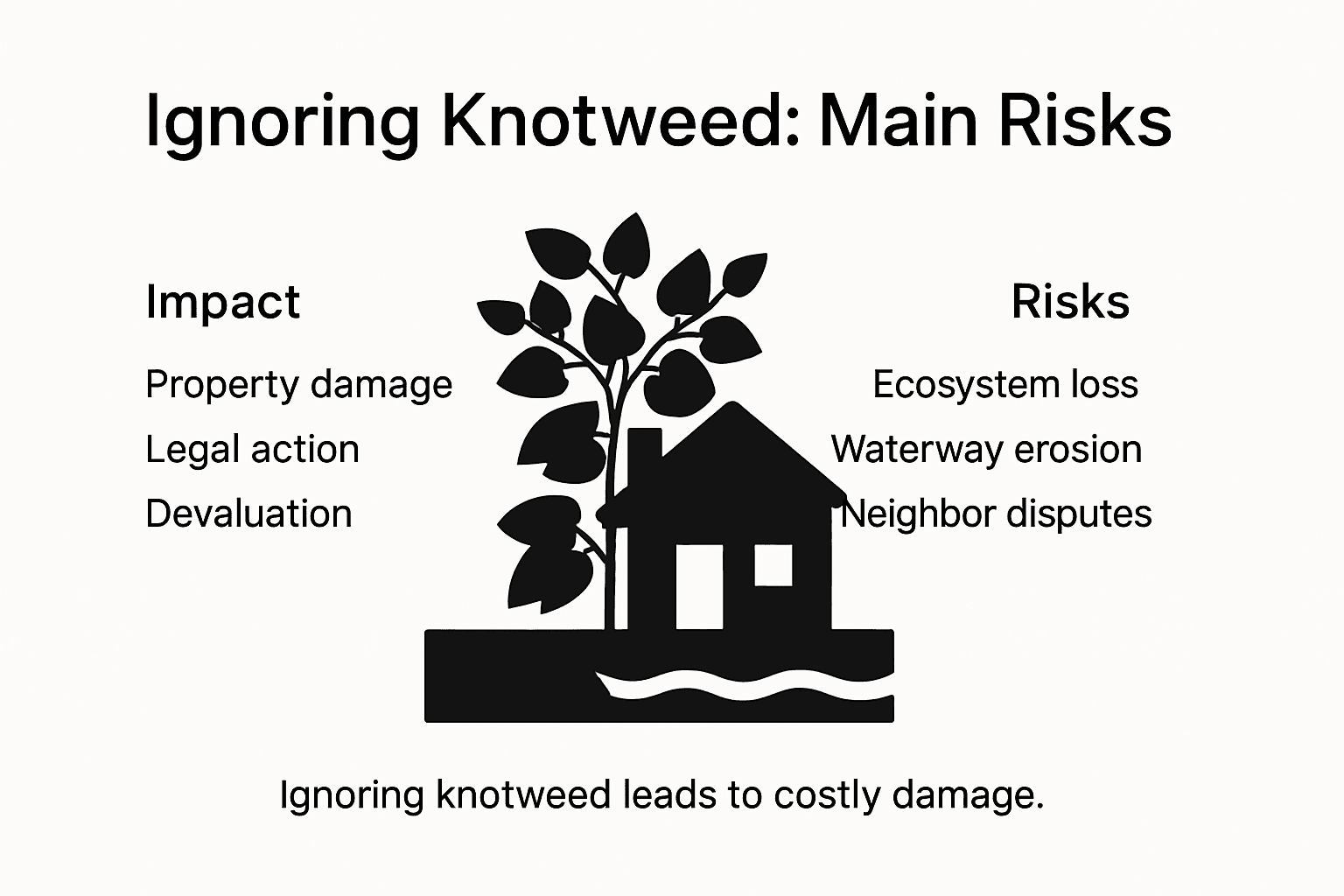
The environmental risks are particularly acute along waterways and riverbanks, where Japanese knotweed’s extensive root systems can accelerate soil erosion and destabilise natural landscapes. Its ability to grow through seemingly impenetrable surfaces means it can compromise riverbank integrity, increasing flood risks and potentially causing substantial landscape degradation. Neighbourhoods with significant knotweed presence may experience reduced green space quality, diminished wildlife habitats, and increased vulnerability to environmental changes.
Beyond direct ecological impact, Japanese knotweed creates complex challenges for community management. Neighbouring properties can become interconnected in their knotweed risk, as the plant’s underground rhizome network can spread across property lines without visible surface indication. This means a single untreated infestation can potentially impact entire neighbourhoods, requiring coordinated and collaborative management strategies that go beyond individual property boundaries.
Pro tip: Engage with local environmental authorities and neighbours to develop a collective management approach when Japanese knotweed is detected in your area.
Non-Chemical Solutions For Effective Control
Advanced scientific research from Swansea University has pioneered innovative approaches to managing Japanese knotweed without relying solely on chemical treatments. Non-chemical control methods offer environmentally conscious property owners alternative strategies for managing this invasive plant. These approaches focus on mechanical intervention, physical removal, and strategic disruption of the plant’s growth cycles, recognising the complex nature of knotweed eradication.
Physical removal techniques represent a critical component of non-chemical control strategies. These methods include targeted excavation, where contaminated soil is carefully removed and disposed of at licensed waste facilities. Soil solarization techniques, which involve covering infested areas with heat-trapping materials to effectively ‘cook’ the underground rhizome network, have shown promising results in small-scale interventions. However, these methods require precision, repeated treatments, and comprehensive understanding of the plant’s extensive underground root system.
Advanced non-chemical approaches also incorporate integrated management techniques that combine multiple strategies. These might include physical barriers to prevent rhizome spread, systematic root zone disruption, and long-term monitoring to prevent recolonisation. Mechanical methods such as repeated cutting, root barrier installations, and targeted landscape management can significantly reduce knotweed’s ability to regenerate and spread. The key to success lies in understanding the plant’s complex growth patterns and implementing a persistent, multi-faceted approach.
Pro tip: Consult professional invasive plant specialists who can develop a tailored, non-chemical management plan specific to your property’s unique knotweed challenges.
See a summary of non-chemical knotweed control strategies and their main challenges:
| Control Strategy | Primary Action | Main Challenge |
|---|---|---|
| Physical excavation | Removal of contaminated soil | Requires specialist disposal |
| Soil solarisation | Heat application to infested area | Not suitable for large infestations |
| Mechanical cutting | Repeated stem removal | Needs ongoing, intensive effort |
| Root barriers | Installation around rhizomes | Prevents but does not eradicate |
Protect Your Property From The Devastating Effects Of Japanese Knotweed
Ignoring Japanese knotweed can lead to serious legal, financial, and environmental consequences as discussed in the article. Its aggressive growth and ability to damage property foundations pose risks that no homeowner or landowner should face alone. The challenge of eradicating this invasive plant requires specialised, effective, and chemical free methods to prevent further spread and protect your investment.
At Japanese Knotweed Agency, we pioneer advanced chemical free treatments that target the extensive rhizome network using direct electric energy, delivering up to 5000 volts onsite to disrupt and exhaust the plant internally. Alongside expert root barrier installation and excavation services, we provide comprehensive property surveys for invasive weeds across England, Wales and Ireland.

Don’t risk property devaluation or costly legal action. Act now to safeguard your home and environment with professionally tailored solutions from Japanese Knotweed Agency. Discover more about our chemical free treatment options and secure your property’s future today.
Frequently Asked Questions
What are the legal consequences of ignoring knotweed on my property?
Ignoring knotweed can lead to significant legal repercussions, including civil claims for nuisance and criminal penalties under the Wildlife and Countryside Act 1981. Landowners are responsible for controlling its spread, and failure to do so can result in lawsuits and substantial remediation costs.
How does knotweed affect property values?
The presence of knotweed can dramatically reduce property values by up to 15-20%. Potential buyers may be cautious due to the risks of structural damage and ongoing treatment requirements, making it harder to sell or secure financing for the property.
What are the risks of ecological damage caused by knotweed?
Knotweed’s aggressive growth can outcompete native plant species, significantly reducing local biodiversity and destabilising ecosystems. Its deep root systems can also cause soil erosion, especially along waterways, further harming the environment.
What are the non-chemical control methods available for managing knotweed?
Non-chemical control methods include physical removal of contaminated soil, soil solarisation, and mechanical cutting. Combining these approaches with monitoring can help manage knotweed effectively without relying solely on chemical treatments.