

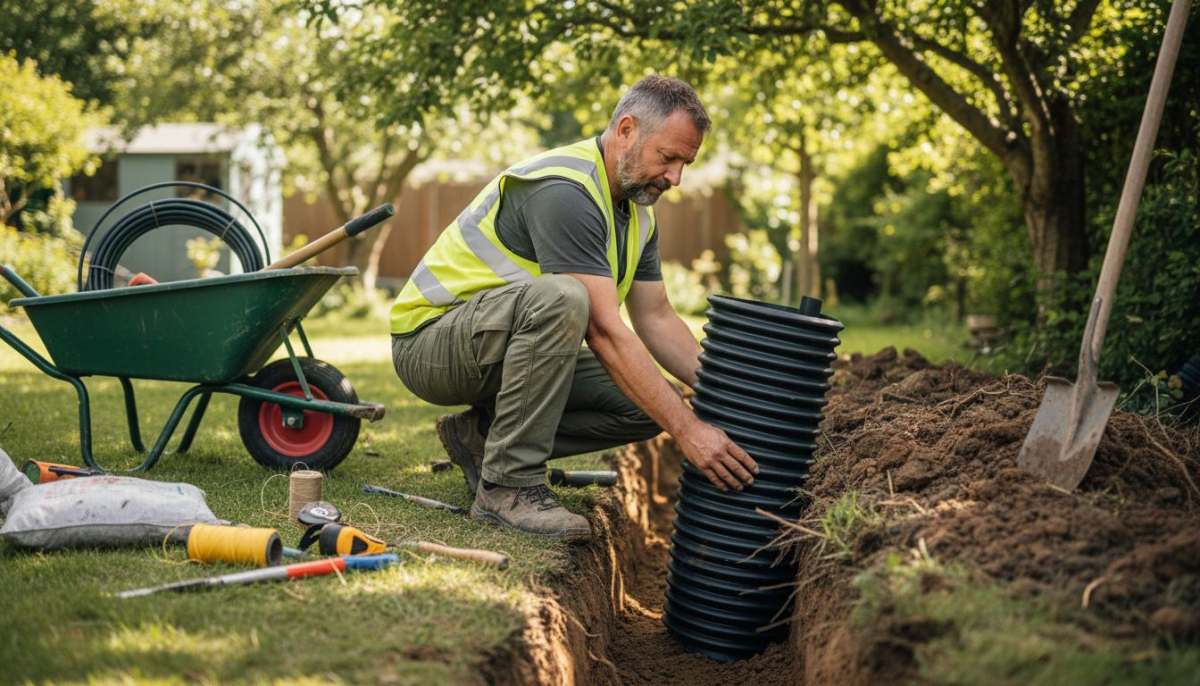
Facing the prospect of buying a property plagued by Japanese Knotweed can feel daunting for any UK homeowner. This persistent plant’s underground network often stretches metres beneath the surface, making quick fixes or half-measures unreliable and ineffective. With myths about control methods common and costly mistakes easy to make, understanding the power of root barriers and professional, chemical-free containment solutions will help you protect your investment and restore peace of mind.
Table of Contents
- Root Barriers Explained And Common Myths
- How Root Barriers Contain Japanese Knotweed
- Types Of Root Barriers And Their Effectiveness
- Legal Obligations For Property Owners In The Uk
- Risks Of Delayed Action And Alternative Solutions
Key Takeaways
| Point | Details |
|---|---|
| Root Barriers Are Essential | Effective root barriers prevent the lateral spread of Japanese Knotweed’s invasive rhizomes, requiring professional installation for optimal results. |
| Common Myths Mislead Owners | Misconceptions about Knotweed management often lead to inadequate solutions; understanding the real spread distance and the ineffectiveness of cutting is crucial. |
| Legal Obligations Exist | Property owners in the UK must comply with legal requirements regarding Knotweed management to avoid severe penalties and potential legal actions. |
| Timeliness Is Key | Prompt intervention dramatically reduces environmental impact and financial risk, while delaying management increases costs and property devaluation. |
Root Barriers Explained and Common Myths
Japanese Knotweed poses significant challenges for property owners due to its extraordinarily invasive underground root system. Root barriers are specialised physical containment solutions designed to prevent the lateral spread of knotweed rhizomes beneath the ground surface.
Understanding the mechanics of these barriers requires recognising how Japanese Knotweed propagates. Research from Swansea University highlights that the plant’s extensive belowground network can spread several metres in diameter and depth, making physical containment critical.
Key characteristics of effective root barriers include:
- Manufactured from high-density polyethylene materials
- Installed to a minimum depth of 2-3 metres
- Engineered to withstand significant root pressure
- Designed with smooth surfaces to prevent root penetration
Common myths about Japanese Knotweed root management often mislead property owners. Leeds University research debunks several widespread misconceptions, particularly around rhizome spread distances:
- Myth 1: Knotweed rhizomes extend 7 metres in all directions
- Reality: Rhizomes rarely spread more than 4 metres from visible growth
- Myth 2: Cutting or mowing eliminates the plant
- Reality: Mowing frequently stimulates more aggressive regrowth
Professional installation remains crucial, as improvised barriers can fail. Proper root barriers must create a continuous, unbroken underground membrane that completely blocks rhizome movement.
Pro tip: Always consult a professional knotweed specialist to assess your specific site conditions before installing root barriers, as each property presents unique challenges.
How Root Barriers Contain Japanese Knotweed
Root barriers serve as a critical defence mechanism against the invasive spread of Japanese Knotweed, providing a strategic solution for property owners facing this persistent botanical challenge. Precise containment techniques involve creating an impenetrable underground membrane that prevents rhizome migration across property boundaries.
The fundamental principle of root barrier installation involves strategic excavation and barrier placement. Professional installation requires careful consideration of several key factors:
- Excavation depth must exceed typical rhizome penetration (2-3 metres)
- Materials must be tough and impermeable
- Barrier must create a continuous, unbroken underground membrane
- Joints must be carefully sealed to prevent potential gaps
Containment mechanisms work through multiple protective strategies. Government guidance on Japanese Knotweed prevention emphasises that root barriers are particularly crucial in scenarios where complete rhizome removal proves impractical, especially near construction sites or sensitive structural environments.
Key installation considerations include:
- Assessing soil composition and drainage characteristics
- Determining precise barrier depth requirements
- Selecting appropriate barrier material
- Ensuring complete perimeter coverage
- Implementing professional monitoring protocols
Effective root barriers transform Japanese Knotweed from an uncontrollable threat into a manageable environmental challenge.
Professional installation is paramount, as improper implementation can inadvertently spread the plant or compromise structural integrity. Specialised contractors understand the nuanced techniques required to create an effective underground barrier system.
Pro tip: Always engage a certified Japanese Knotweed specialist who can conduct comprehensive site assessments and design a root barrier strategy tailored to your specific property conditions.
Types of Root Barriers and Their Effectiveness
Managing Japanese Knotweed requires sophisticated underground defence strategies, with root barriers emerging as a critical technological solution. Advanced barrier technologies demonstrate remarkable potential in preventing rhizome migration and protecting property infrastructure.
Multiple root barrier types offer distinct advantages for property owners:
- High-Density Polyethylene (HDPE) Sheets: Most commonly used
- Geomembranes: Flexible synthetic materials
- Metal Barriers: Durable but expensive option
- Composite Barriers: Combining multiple material technologies
The effectiveness of root barriers depends on several crucial installation parameters. Comparative barrier studies reveal that successful containment requires precise implementation across multiple dimensions:
- Minimum installation depth of 2-3 metres
- Complete perimeter coverage
- Zero structural gaps or penetration points
- Compatibility with specific soil conditions
- Resistance to environmental degradation
Root barriers transform an uncontrollable ecological threat into a manageable environmental challenge.
Barrier Material Considerations include assessing long-term durability, chemical resistance, and structural integrity. Professional evaluation determines the most appropriate barrier type for specific site conditions, considering factors like soil composition, moisture levels, and proximity to existing structures.
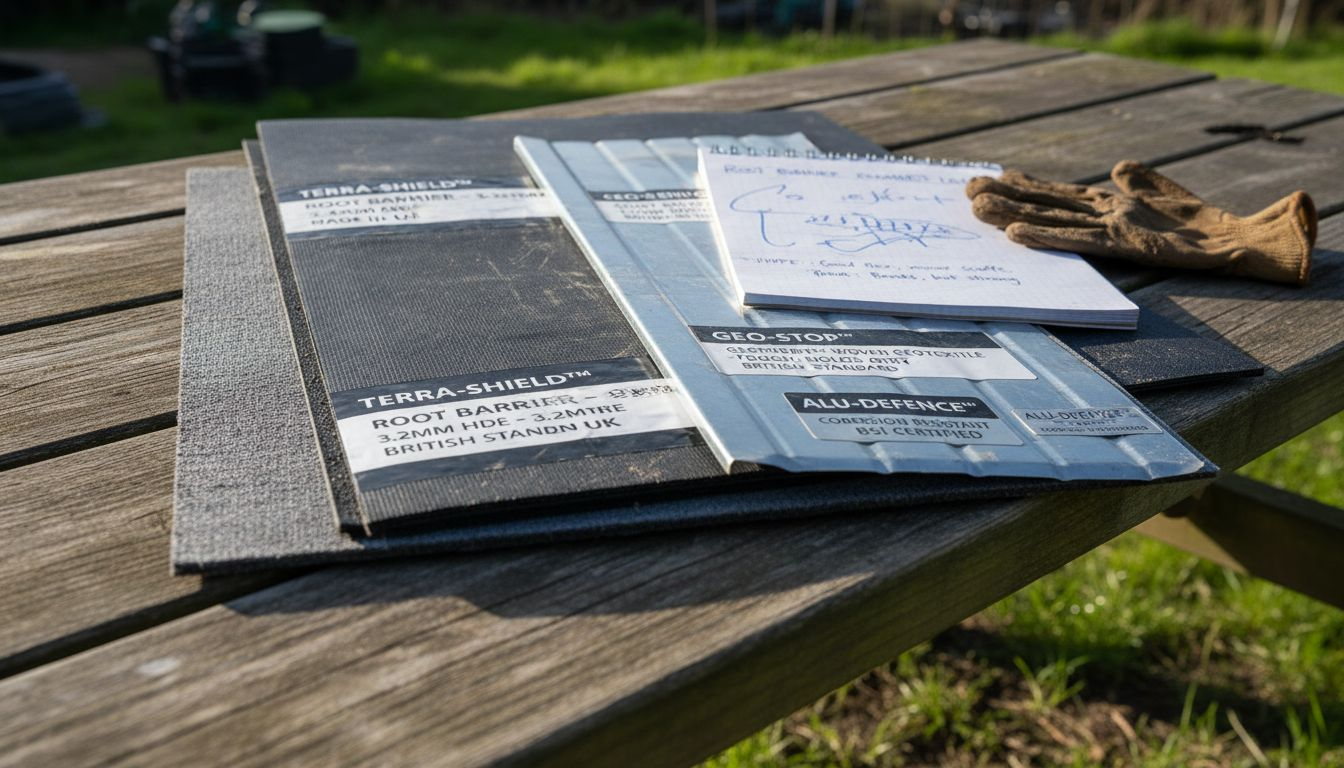
Pro tip: Always commission a professional site survey to determine the most suitable root barrier type for your specific property characteristics and Japanese Knotweed infestation.
Here is a comparison of primary root barrier types and their performance considerations:
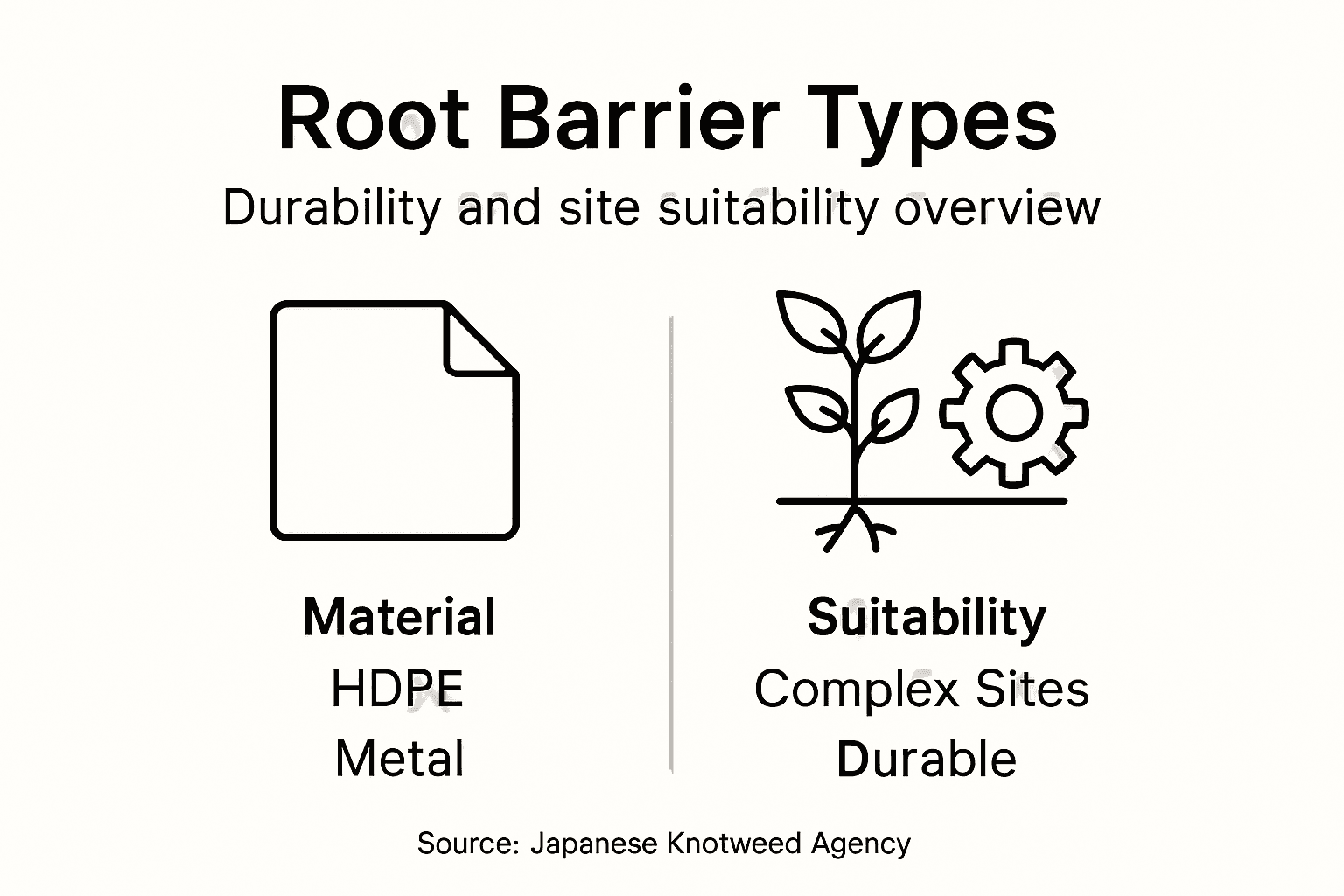
| Barrier Type | Durability | Relative Cost | Suitability for Complex Sites |
|---|---|---|---|
| HDPE Sheets | Excellent, decades-long | Moderate | Suitable for most residential areas |
| Geomembranes | Flexible, long-lasting | Moderate to high | Adapts to irregular excavation zones |
| Metal Barriers | Extremely robust | High | Ideal for structural protection sites |
| Composite Barriers | Highly engineered, varied | Moderate to high | Useful in mixed soil conditions |
Legal Obligations for Property Owners in the UK
Japanese Knotweed presents unique legal challenges for property owners across the United Kingdom. Legal frameworks governing invasive species establish clear responsibilities for managing this aggressive botanical threat, with significant potential consequences for non-compliance.
Key legal obligations for property owners include:
- Preventing knotweed from spreading to neighbouring properties
- Ensuring proper containment and management
- Disposing of contaminated soil as controlled waste
- Maintaining accurate documentation of management efforts
- Disclosing knotweed presence during property transactions
The Wildlife and Countryside Act 1981 forms the legislative cornerstone of Japanese Knotweed management. Statutory requirements for invasive species control make it an offence to cause the plant to spread, even unintentionally.
Potential legal consequences of non-compliance are severe:
- Prosecution under environmental protection legislation
- Substantial financial penalties
- Civil litigation from affected neighbouring properties
- Potential reduction in property value
- Mandatory remediation costs
Ignorance of the law is not a defence when it comes to Japanese Knotweed management.
Property owners must take proactive steps to understand and mitigate their legal risks. This includes conducting professional surveys, implementing appropriate control measures, and maintaining comprehensive records of all management activities.
Pro tip: Consult a legal professional specialising in environmental law to fully understand your specific obligations regarding Japanese Knotweed management on your property.
Risks of Delayed Action and Alternative Solutions
Delaying management of Japanese Knotweed can transform a manageable problem into a catastrophic environmental and financial challenge. Research from Swansea University highlights the exponential risks associated with procrastination in addressing this invasive species.
Potential consequences of delayed intervention include:
- Extensive underground rhizome network expansion
- Increased management and removal costs
- Greater structural damage potential
- Higher legal and insurance risks
- Reduced property market value
- Increased environmental degradation
Alternative management strategies offer property owners multiple approaches:
- Targeted herbicide treatments
- Integrated pest management techniques
- Physical removal strategies
- Ecological restoration methods
- Biological control agent investigations
Sustainability-focused research emphasises that no single solution provides instant eradication. Comprehensive, multi-year strategies combining different approaches remain the most effective management technique.
Proactive intervention is significantly more cost-effective than reactive management.
Effective Japanese Knotweed management requires a sophisticated, long-term approach that balances environmental considerations, legal obligations, and practical containment strategies.
Pro tip: Consult multiple specialist experts to develop a tailored, comprehensive management plan that addresses your specific Japanese Knotweed infestation characteristics.
This summary highlights potential outcomes of prompt versus delayed knotweed management:
| Action Timing | Environmental Impact | Financial Risk | Property Value Effect |
|---|---|---|---|
| Early Intervention | Limits spread, protects soil | Minimises total costs | Maintains or increases value |
| Delayed Response | Severe spread, ecosystem loss | High remediation costs | Substantial value reduction |
Secure Your Property with Expert Root Barrier Installation Today
Japanese Knotweed’s underground rhizomes can cause devastating damage if left unchecked. The article emphasises the critical importance of professionally installed root barriers made from high-density polyethylene to create an unbroken underground membrane. If your property faces challenges containing Japanese Knotweed’s spread, do not risk ineffective DIY attempts or costly delays.
At Japanese Knotweed Agency, we pioneer chemical-free eradication combined with precision root barrier installation and excavation works tailored to your property’s unique conditions. Our expertise ensures rhizomes are physically blocked with materials engineered to withstand extensive root pressure. Act now to protect your investment and comply with legal obligations associated with invasive species management. Contact us for a thorough property survey and bespoke treatment plan that puts you in control of this invasive threat.
Frequently Asked Questions
What are root barriers for Japanese Knotweed?
Root barriers are specialised physical containment solutions designed to prevent the lateral spread of Japanese Knotweed’s invasive underground rhizomes. They create an underground membrane that stops knotweed from migrating across property boundaries.
How deep should root barriers be installed to contain Japanese Knotweed?
Root barriers should be installed to a minimum depth of 2-3 metres to effectively contain the rhizomes and prevent them from penetrating the barrier.
What materials are commonly used for root barriers against Japanese Knotweed?
Common materials for root barriers include high-density polyethylene (HDPE) sheets, geomembranes, metal barriers, and composite barriers. Each has unique advantages depending on the specific site conditions and requirements.
Why is professional installation important for root barriers?
Professional installation is crucial because it ensures the correct implementation of the barriers, creating a continuous, unbroken membrane that effectively blocks rhizome movement. Improvised barriers can fail and inadvertently spread the plant or compromise structural integrity.
Recommended
- Root Barrier | Japanese Knotweed Agency, Manchester, England & Wales
- Role of Root Barriers in Japanese Knotweed Control
- Guide to Knotweed Root Barriers for Lasting Control
- Why Knotweed Persists – Unpacking Roots and Risks
- 7 Best Plants for London Gardens and How to Use Them