
Selling or buying a home in England or Wales can become stressful when Japanese Knotweed threatens a smooth property transaction. This invasive plant is notorious for causing severe structural damage and can reduce land value, making chemical-free solutions a priority for many homeowners. Understanding exactly what invasive species are and how they differ from harmless non-native plants is essential to avoid costly surprises. You will discover clear guidance on effective chemical-free strategies and formal eradication plans trusted by professionals.
Table of Contents
- Defining Invasive Species And Major Myths
- Key Invasive Plants Affecting UK Properties
- Property And Health Risks From Infestations
- Legal Responsibilities For Homeowners
- Chemical-Free Eradication And Management Options
Key Takeaways
| Point | Details |
|---|---|
| Understanding Invasive Species | Invasive species are non-native organisms that cause significant ecological and economic harm in their new environments. Prompt identification and management are crucial to mitigate their impact. |
| Legal Responsibilities | Homeowners have a legal obligation to prevent the spread of invasive species, including proper reporting, disposal, and compliance with wildlife laws. Failure to comply can result in financial penalties and legal issues. |
| Health and Property Risks | Invasive species infestations pose serious risks, including disease transmission and structural damage, which can significantly decrease property value. Regular inspections and professional assessments can help identify potential issues early. |
| Chemical-Free Management Strategies | Effective management of invasive species can be achieved through non-chemical methods such as physical removal, site restoration, and proper sanitisation of equipment. Implementing a comprehensive management plan is essential for long-term success. |
Defining invasive species and major myths
Invasive species represent non-native organisms that cause substantial ecological and economic disruption in their introduced environments. Unlike harmless non-native species, these organisms rapidly spread and fundamentally transform existing ecosystems. Non-native species information reveals that over 3,000 such species exist in Britain, presenting significant challenges for environmental management.
The primary characteristics of invasive species include:
- Rapid reproduction and spread
- Ability to outcompete native species
- Significant potential to alter habitat structures
- High resilience to environmental controls
- Capacity to cause economic damage
Biological invasion occurs through multiple pathways, often facilitated by human activities such as international trade, gardening, and accidental transportation. Invasive species research demonstrates that these organisms can introduce diseases, disrupt food chains, and dramatically reduce local biodiversity.
Common myths about invasive species often mislead property owners. Many believe these organisms are merely aggressive plants or animals, when in reality, they represent complex ecological challenges that require professional intervention. Some property owners underestimate the potential damage, assuming small populations pose minimal risk. However, invasive species can rapidly spread, causing structural damage and reducing property values.
Pro tip: Always consult ecological professionals when identifying potential invasive species on your property to prevent long-term environmental and financial consequences.
Key invasive plants affecting UK properties
Invasive plant species pose significant challenges for UK property owners, with certain botanical invaders causing extensive damage to landscapes and structures. Non-native species research highlights several key species that demand immediate attention and professional management.
The most problematic invasive plants in UK properties include:
- Japanese Knotweed: Notorious for causing structural damage
- Giant Hogweed: Produces harmful sap that can cause severe skin burns
- Himalayan Balsam: Rapidly spreads and overwhelms native vegetation
- Floating Pennywort: Clogs waterways and disrupts aquatic ecosystems
- Himalayan Knotweed: Aggressive growth pattern threatening property foundations
University research on garden plants reveals additional ornamental species with invasive potential, such as Mexican fleabane, cypress spurge, and purple top. These seemingly harmless plants can quickly transform from attractive garden additions to aggressive ecological threats.
Property owners must understand that invasive plants are not merely aesthetic concerns but significant ecological and structural risks. These organisms can penetrate building foundations, compromise drainage systems, and create expensive remediation challenges. Some species like Japanese knotweed can grow through concrete, causing devastating property damage that may substantially reduce land value.
To clarify how common UK invasive plant species compare regarding impact and management urgency, see the table below:
| Plant Species | Typical Impact on Property | Management Priority |
|---|---|---|
| Japanese Knotweed | Severe structural damage | Extremely urgent |
| Giant Hogweed | Health hazard and soil erosion | High |
| Himalayan Balsam | Loss of native plants | Moderate |
| Floating Pennywort | Waterway blockage | High |
| Himalayan Knotweed | Foundation risk | High |
Pro tip: Conduct regular garden inspections and consult ecological professionals to identify and manage potential invasive plant species before they establish extensive root systems.
Property and health risks from infestations
Invasive species research reveals significant health and property risks associated with invasive species infestations across UK properties. These biological invaders pose complex challenges that extend far beyond simple aesthetic concerns, potentially compromising both structural integrity and human health.
Key health and property risks include:
- Disease transmission: Rodent infestations spread dangerous pathogens
- Structural damage: Invasive organisms can compromise building foundations
- Property devaluation: Infestations can reduce land and home values
- Ecosystem disruption: Invasive species alter local environmental balances
- Economic burden: Remediation and management require substantial financial investment
Economic impact studies demonstrate that invasive species generate enormous economic challenges, with potential costs exceeding £5 billion over 40-50 years. Rat populations, for instance, not only carry serious diseases like leptospirosis and salmonellosis but can also cause extensive property damage through continuous gnawing and contamination.
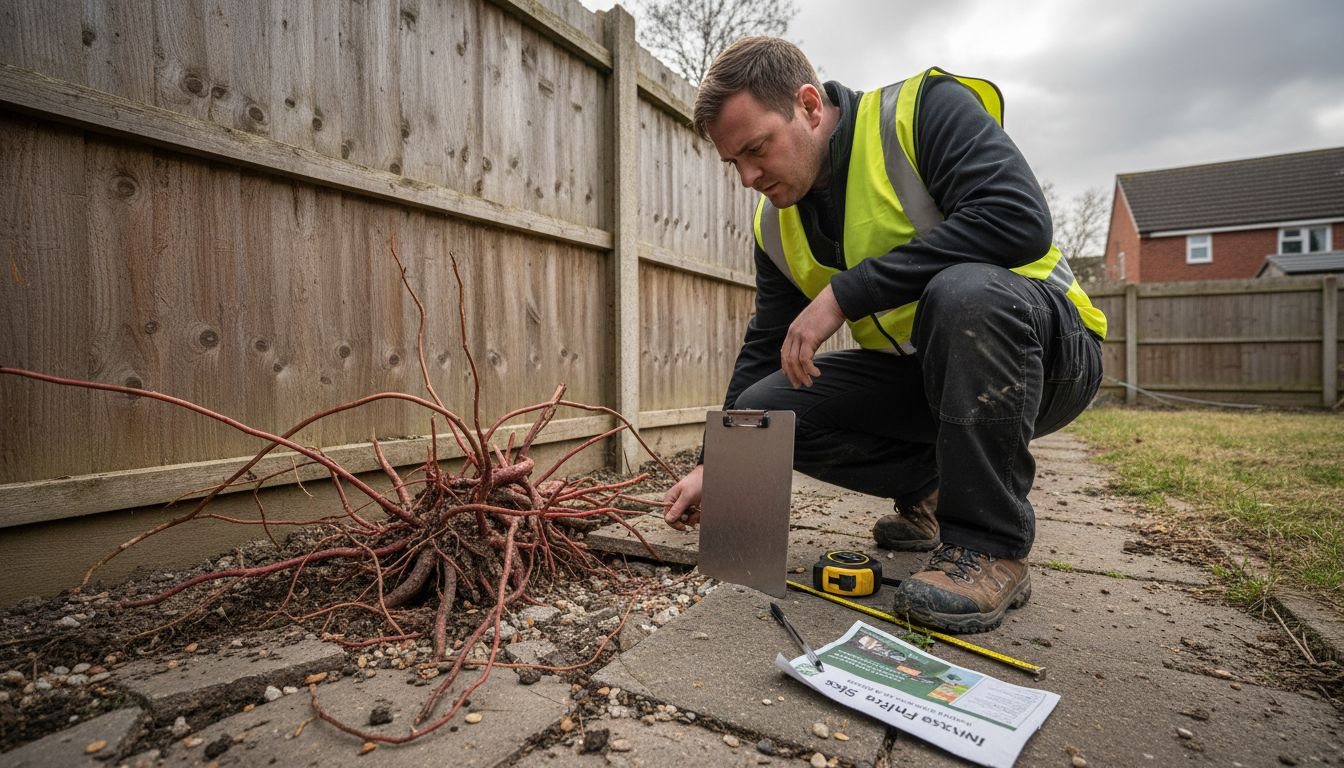
Beyond immediate health concerns, invasive species like Japanese knotweed can cause profound structural damage. These organisms can penetrate concrete, destabilise foundations, and create long-lasting environmental and financial challenges for property owners. The risks extend to potential legal complications, insurance challenges, and significant remediation expenses.
Pro tip: Invest in regular professional pest and invasive species inspections to detect and address potential infestations before they become catastrophic.
Legal responsibilities for homeowners
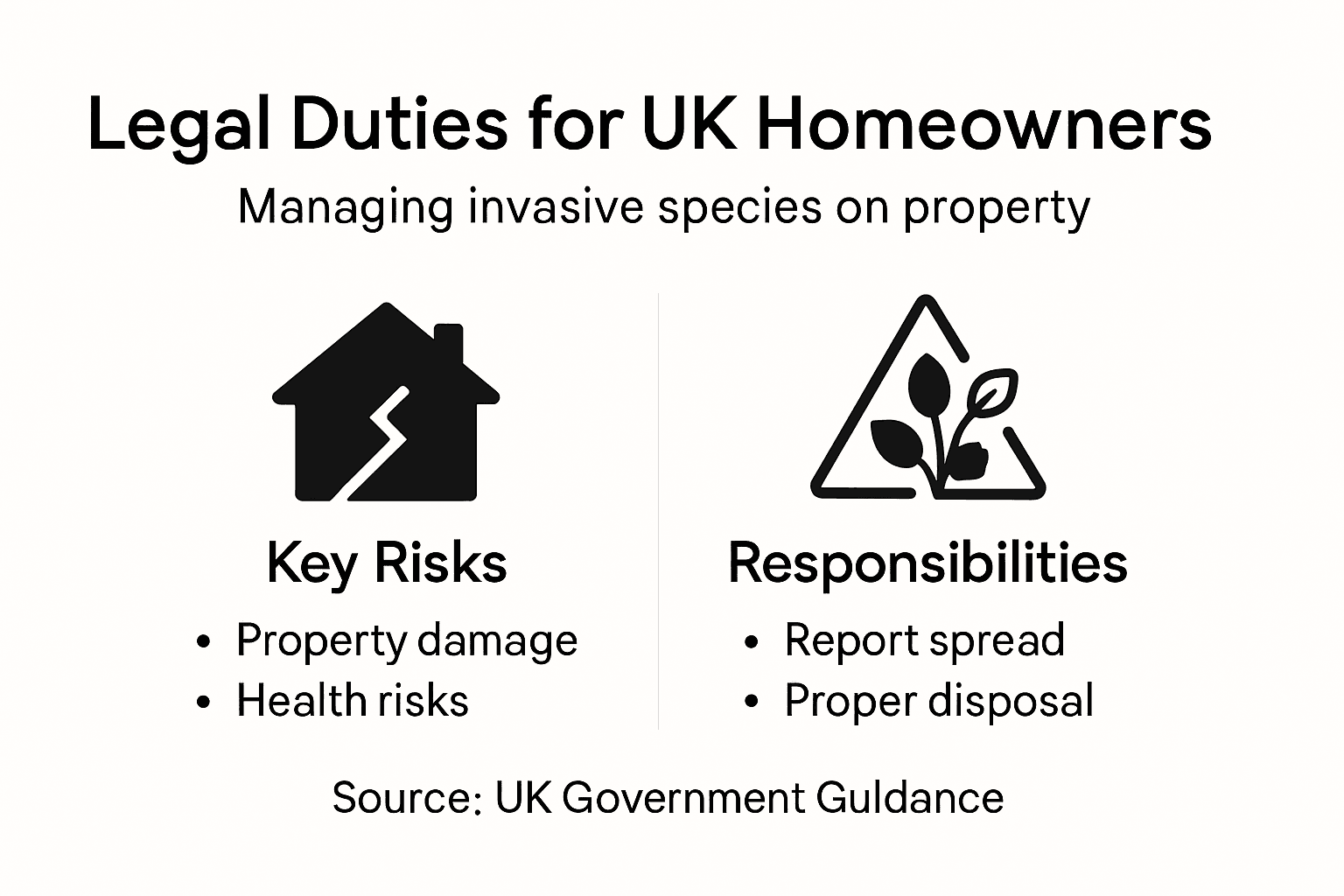
Invasive species regulations place significant legal obligations on UK property owners regarding management and control of non-native species. Homeowners must proactively prevent the spread of invasive organisms, with potential legal consequences for non-compliance.
Key legal responsibilities include:
- Preventing species spread: Legally mandated to stop invasive species from reproducing or escaping
- Proper disposal: Requirement to manage and eliminate invasive plant and animal materials
- Reporting obligations: Duty to inform relevant authorities about significant infestations
- Compliance with wildlife laws: Adherence to Wildlife and Countryside Act 1981
- Risk management: Proactive identification and mitigation of invasive species risks
Government guidance on invasive species emphasises strict regulations surrounding invasive plants. Property owners can face substantial fines and potential prosecution for allowing listed invasive species to spread or reproduce. The legal framework covers both intentional and unintentional spread, making comprehensive property management crucial.
The potential consequences of non-compliance extend beyond financial penalties. Homeowners might encounter challenges with property sales, insurance claims, and potential civil liability if invasive species cause damage to neighbouring properties. Professional surveys and documented management strategies can provide critical protection against these legal risks.
The following table summarises key differences between legal and practical homeowner obligations regarding invasive species:
| Obligation Type | Main Focus | Example Actions |
|---|---|---|
| Legal Requirement | Preventing legal breaches | Reporting infestations, proper disposal |
| Practical Action | Reducing risk and long-term cost | Regular surveys, expert intervention |
Pro tip: Maintain comprehensive documentation of invasive species management efforts and seek professional ecological assessments to demonstrate legal compliance.
Chemical-free eradication and management options
Biosecurity guidance offers comprehensive strategies for managing invasive species without relying on chemical treatments. Property owners can implement several effective non-chemical approaches to control and prevent the spread of invasive organisms while minimising environmental impact.
Key chemical-free management techniques include:
- Physical removal: Manual extraction of invasive plants and roots
- Cutting and containment: Regular cutting to prevent seed dispersal
- Targeted burning: Controlled incineration of plant materials
- Site restoration: Replanting with native species to prevent reinvasion
- Equipment sanitisation: Thorough cleaning of tools and clothing between sites
Government guidance emphasises the importance of comprehensive management strategies. Physical methods such as pulling, digging, cutting, and careful disposal can effectively control invasive species. Each approach requires meticulous implementation to prevent accidental spread and minimise potential ecological disruption.
Successful chemical-free management demands a holistic approach. Property owners must understand specific invasive species’ growth patterns, implement consistent control measures, and monitor treatment sites. Post-treatment restoration with native plant species plays a crucial role in preventing future invasions and supporting local ecosystem recovery.
Pro tip: Develop a comprehensive, long-term management plan that combines multiple non-chemical control techniques and consistently monitors treated areas.
Take Control of Invasive Species Threats to Your Property Today
Understanding the danger invasive species pose to UK properties is the first step in protecting your home and land from costly damage and complex legal challenges. From the relentless spread of Japanese Knotweed to harmful health risks posed by invasive plants and animals, these issues require expert, chemical-free solutions designed to halt the problem at its source.
Partner with the Japanese Knotweed Agency to benefit from pioneering chemical-free eradication methods that target invasive species at the root. Our innovative high voltage treatments effectively deplete the rhizome network’s energy, preventing regrowth and minimising ecosystem disruption. We also provide professional property surveys across England, Wales, and Ireland to identify risks early and install root barriers or conduct excavation works where necessary.
Don’t wait for invasive species to cause irreparable harm or legal consequences. Visit Japanese Knotweed Agency now and secure expert support to safeguard your property and health with proven, eco-friendly techniques.
Frequently Asked Questions
What are invasive species and why are they a concern for property owners?
Invasive species are non-native organisms that cause significant ecological and economic disruption. They can rapidly spread, outcompete native species, and cause structural damage to properties, leading to reduced property values and increased management costs.
How can I identify invasive plants on my property?
Common invasive plants include Japanese Knotweed, Giant Hogweed, and Himalayan Balsam. Look for aggressive growth patterns, potential structural threats, and harm to local ecosystems. If unsure, consult with ecological professionals for identification and management strategies.
What legal responsibilities do I have regarding invasive species?
Property owners are mandated to prevent the spread of invasive species, properly dispose of invasive materials, report significant infestations to relevant authorities, and comply with laws like the Wildlife and Countryside Act 1981. Non-compliance can result in fines and property devaluation.
What are effective non-chemical methods for managing invasive species?
Chemical-free management techniques include manual removal, regular cutting to prevent seed dispersal, targeted burning, site restoration with native plants, and equipment sanitisation. A comprehensive management plan that combines these methods is essential for long-term success.