Purchasing property without an invasive species survey can cost buyers tens of thousands in unexpected removal and repair expenses. Many homebuyers discover Japanese knotweed causes property damage only after exchange, facing legal disputes and plummeting property values. This guide explains why commissioning specialist surveys before purchase protects your investment, ensures legal compliance, and prevents costly surprises that standard property assessments often miss.
Table of Contents
- Understanding Invasive Species And Their Impact On Property Purchases
- Why A Property Survey Focused On Invasive Species Is Essential Before Purchase
- Comparing Invasive Species Surveys: Standard Vs Specialist Assessments
- How To Act On Your Invasive Species Survey Results Before Buying
- Protect Your Property Investment With Expert Invasive Species Surveys
- Frequently Asked Questions
Key takeaways
| Point | Details |
|---|---|
| Early detection saves money | Surveys identify hidden invasive species before purchase, preventing unexpected removal costs that can exceed £20,000. |
| Legal compliance protection | Specialist assessments ensure you meet invasive species legislation requirements, avoiding fines and sale complications. |
| Negotiation leverage | Survey evidence allows price reductions or seller-funded treatment plans before finalising the transaction. |
| Property value safeguard | Documented surveys protect long-term marketability and prevent value depreciation from unmanaged infestations. |
Understanding invasive species and their impact on property purchases
Invasive species are non-native plants that spread aggressively, causing significant damage to property structures, gardens, and land stability. In the UK and Ireland property markets, Japanese knotweed remains the most notorious culprit, but giant hogweed, Himalayan balsam, and rhododendron ponticum also pose serious threats. These plants establish extensive underground root systems that penetrate foundations, drainage systems, and tarmac surfaces.
Japanese knotweed is one of the most damaging invasive species affecting UK properties, with rhizomes spreading up to seven metres horizontally from visible growth. The damage manifests in multiple ways: cracked foundations from root pressure, blocked drainage causing damp issues, destabilised retaining walls, and compromised pathways. Removal costs typically range from £5,000 to £25,000 depending on infestation severity, with some cases requiring ongoing management for years.
Property owners face legal responsibilities under the Wildlife and Countryside Act 1981 and the Anti-social Behaviour, Crime and Policing Act 2014. Allowing invasive species to spread onto neighbouring land constitutes a criminal offence, with potential fines reaching £5,000 or unlimited penalties for severe cases. Sellers must disclose known infestations on the TA6 property information form, and failing to do so exposes them to legal action from buyers.
Typical damage types include:
- Structural compromise through foundation penetration and wall destabilisation
- Drainage blockages leading to water ingress and damp problems
- Garden destruction preventing landscaping and reducing usable outdoor space
- Reduced property marketability affecting mortgage availability and sale prospects
Pro Tip: Walk the property boundaries during different seasons, as some invasive species like Japanese knotweed die back in winter but leave distinctive bamboo-like canes that signal hidden root systems beneath the surface.
Why a property survey focused on invasive species is essential before purchase
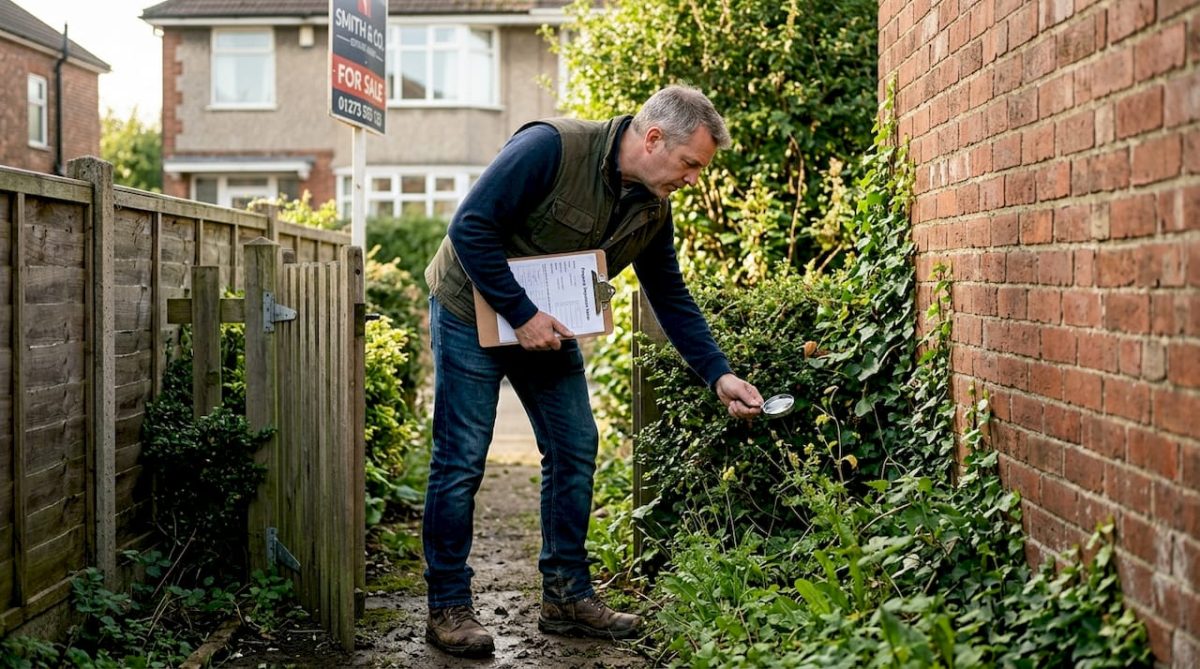
Commissioning a specialist invasive species survey provides protection that standard property assessments cannot match. Visual inspections by general surveyors often miss early-stage infestations or dormant plants, particularly during winter months when many invasive species retreat underground. Specialist surveys employ trained ecologists who recognise subtle indicators like soil disturbance patterns, residual plant material, and neighbouring property risks.
The financial protection alone justifies survey costs. Discovering a £15,000 Japanese knotweed problem after exchange leaves buyers with limited recourse, whereas pre-purchase detection enables negotiation or withdrawal. Comprehensive surveys identify invasive species presence and extent, preventing costly surprises that standard valuations overlook.

Regulatory compliance represents another critical benefit. Mortgage lenders increasingly refuse applications for properties with known or suspected invasive species until management plans are implemented. Survey documentation demonstrates due diligence, satisfying lender requirements and protecting against future legal claims from neighbours affected by spreading plants.
Key benefits include:
- Detection of hidden infestations through soil sampling and specialist equipment
- Prevention of unexpected expenses averaging £12,000 for moderate infestations
- Evidence-based negotiation leverage for price reductions or seller-funded treatment
- Peace of mind through documented property condition and compliance verification
The survey process follows five essential steps:
- Initial consultation to discuss property location, visible concerns, and neighbouring land risks
- Site inspection covering all boundaries, gardens, and adjacent areas within seven metres
- Soil sampling and laboratory analysis for dormant rhizome detection where visual signs appear
- Detailed report with photographic evidence, infestation mapping, and risk assessment
- Treatment recommendations with cost estimates and timeframe projections for clearance
This systematic approach ensures nothing escapes detection, providing buyers with complete information before committing to purchase.
Comparing invasive species surveys: standard vs specialist assessments
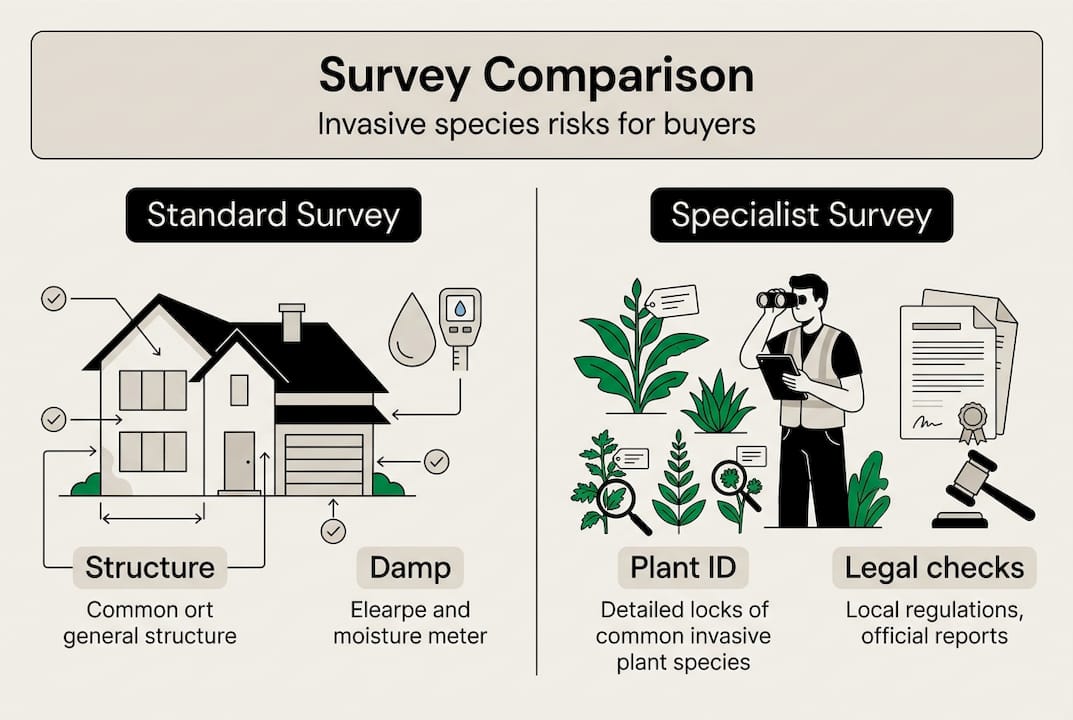
Standard property surveys prioritise structural integrity, damp issues, and building defects but rarely include invasive species expertise. General surveyors may note visible Japanese knotweed or other plants, yet they often miss invasive species details that cause future problems because they lack ecological training to identify dormant or early-stage infestations.
Specialist invasive species surveys employ ecologists with specific qualifications in plant identification, legislation compliance, and treatment planning. These professionals understand growth patterns, seasonal variations, and legal implications that general surveyors cannot assess. The targeted inspection includes boundary surveys extending beyond property lines, soil analysis for hidden rhizomes, and neighbouring land evaluation for encroachment risks.
| Survey Type | Coverage | Typical Cost | Accuracy | Legal Weight |
| — | — | — | — | |
| Standard property survey | General structural assessment, may note visible plants | £400-£1,500 | Limited for invasive species identification | Low for species-specific claims |
| Specialist invasive species survey | Targeted plant identification, soil sampling, risk mapping | £250-£800 | High with laboratory confirmation | Strong for legal compliance and negotiation |
| Combined approach | Comprehensive structural and ecological assessment | £650-£2,300 | Highest overall property evaluation | Maximum protection and evidence |
The cost difference between survey types appears minimal compared to potential treatment expenses. A £500 specialist survey can identify a £20,000 problem before purchase, whereas relying solely on standard assessments leaves buyers vulnerable to discoveries that emerge only after legal completion.
Pro Tip: Always request an invasive species survey in addition to standard surveys, even for new-build properties, as construction sites often disturb dormant rhizomes that regenerate rapidly once building work concludes and landscaping begins.
How to act on your invasive species survey results before buying
Survey outcomes typically fall into three categories: clear (no invasive species detected), manageable (minor infestation with straightforward treatment), or severe (extensive contamination requiring significant intervention). Each scenario demands different buyer responses to protect your investment and ensure legal compliance.
For clear results, proceed with confidence knowing specialist inspection found no evidence of problematic species. Manageable findings require obtaining professional treatment plans with detailed cost estimates and timeframes. Most buyers negotiate price reductions equivalent to treatment costs plus a buffer for inconvenience, typically 10-15% above quoted removal expenses. Severe infestations warrant serious consideration of withdrawal, particularly when treatment exceeds £25,000 or requires multi-year management programmes.
Effective invasive species management plans reduce risk and support legal compliance when buying property. Negotiate with sellers to implement treatment before completion, or secure price reductions that cover professional eradication plus contingency funds. Request insurance-backed guarantees for any treatment work, as these protect against regrowth and satisfy mortgage lender requirements.
Legal obligations vary across England, Wales, and Ireland, but all jurisdictions require landowners to prevent invasive species spreading to neighbouring properties. Sellers must disclose known infestations on property information forms, and buyers who discover undisclosed problems can pursue legal action for misrepresentation. Treatment timelines range from single-season interventions for minor infestations to five-year monitoring programmes for extensive contamination.
| Treatment Type | Typical Cost | Timeframe | Success Rate | Guarantee Period |
|---|---|---|---|---|
| Chemical herbicide programme | £2,500-£8,000 | 2-3 growing seasons | 85-95% | 5-10 years |
| Excavation and removal | £5,000-£25,000 | 2-6 weeks | 95-100% | 10 years |
| Chemical-free energy treatment | £3,000-£12,000 | 1-2 growing seasons | 90-98% | 10 years |
| Root barrier installation | £1,500-£6,000 | 1-2 weeks | Containment only | 20 years |
Essential post-survey actions for buyers include:
- Obtain minimum three treatment quotes from accredited specialists with insurance-backed guarantees
- Request detailed management plans showing treatment methodology, visit schedules, and monitoring protocols
- Negotiate seller contribution or price reduction covering full treatment costs plus 15% contingency
- Verify mortgage lender acceptance of proposed treatment plan before exchange
- Secure written confirmation that treatment guarantees transfer to future property owners
- Schedule initial treatment commencement before completion where possible to accelerate clearance
These steps ensure you enter property ownership with clear understanding of costs, timelines, and legal compliance requirements, eliminating surprises that could jeopardise your investment or create neighbour disputes.
Protect your property investment with expert invasive species surveys
Navigating invasive species risks requires specialist knowledge that protects your investment and ensures peace of mind throughout the property purchase process. Japanese Knotweed Agency delivers comprehensive surveys across England, Wales, and Ireland, combining ecological expertise with chemical-free treatment solutions that eliminate infestations without environmental harm.
Our pioneering energy-based treatment technology delivers up to 5000 volts directly to root systems, causing internal cell damage that depletes rhizome energy reserves with each application. This approach avoids chemical residues whilst achieving clearance rates comparable to traditional methods. We also provide root barrier installations and excavation services where immediate containment or removal suits your timeline and budget.
Explore our invasive weed survey guide for detailed information about the assessment process, or review our Japanese knotweed FAQs for answers to common buyer concerns. For personalised advice on your property purchase, our invasive weed management steps guide walks you through every stage from initial survey to final clearance certification.
Frequently asked questions
What is an invasive species survey?
An invasive species survey is a detailed inspection targeting presence of problematic plants like Japanese knotweed, giant hogweed, and Himalayan balsam. Specialists assess infestation extent, spread risks, and legal compliance requirements. The survey includes boundary inspections, soil sampling for dormant rhizomes, and photographic documentation that supports negotiation or treatment planning.
Can invasive species surveys affect the property price?
Survey results frequently influence final purchase prices when infestations are detected. Buyers use documented evidence to negotiate reductions covering treatment costs, typically achieving 10-15% discounts beyond quoted removal expenses. Unmanaged infestations reduce market value significantly, sometimes by 10-20% depending on severity, as mortgage lenders restrict financing for affected properties. The property survey workflow explains how survey findings integrate into purchase negotiations.
What should I do if invasive species are found during the survey?
Obtain professional treatment plans with detailed cost estimates and timeframes from minimum three accredited specialists. Review our invasive weed management steps for guidance on evaluating proposals and selecting appropriate solutions. Negotiate with sellers for price reductions or pre-completion treatment, and verify your mortgage lender accepts the proposed management plan. Consider withdrawal if infestation severity exceeds your risk tolerance or budget capacity.
Are invasive species surveys legally required when buying property in the UK?
There is no absolute legal requirement for invasive species surveys prior to purchase, but they are strongly recommended to avoid legal and financial risks. Sellers must disclose known infestations on TA6 forms, yet many remain unaware of dormant or neighbouring problems. Failing to identify and manage infestations can lead to legal penalties under the Wildlife and Countryside Act 1981, with fines reaching £5,000 for allowing spread to adjacent land. Understanding laws regarding Japanese knotweed helps buyers recognise their compliance obligations before committing to purchase.