

TL;DR:
- Knotweed damages structures by exploiting existing weaknesses rather than exerting measurable pressure.
- Approximately 1.6 million UK properties are affected, with urban areas at higher risk near transport corridors.
- Effective management requires specialist surveys to identify both knotweed presence and structural vulnerabilities.
Japanese Knotweed is one of the most financially damaging invasive species affecting UK property transactions today, yet the most widely held belief about how it causes damage is fundamentally incorrect. Many homeowners, buyers, and even some surveyors operate under the assumption that knotweed physically forces its way through concrete and brickwork by sheer mechanical pressure. In reality, no empirical PSI measurements have ever been established for knotweed rhizomes, and the damage mechanism is far more nuanced. Understanding this distinction is not merely academic; it has direct consequences for how you protect your property and what you demand from a survey.
Table of Contents
- Understanding knotweed ‘pressure’: myth vs reality
- Urban prevalence and property impact: The scale of the problem
- Survey evidence: How knotweed activity is identified in urban settings
- Practical steps: Protecting your property against urban knotweed
- Why the pressure myth leads homeowners astray
- Take the next step: Urban knotweed expertise for your property
- Frequently asked questions
Key Takeaways
| Point | Details |
|---|---|
| Pressure myth debunked | Knotweed does not crack concrete but grows persistently through existing weaknesses. |
| Urban spread significant | Japanese Knotweed impacts 1.6 million UK properties, causing substantial financial risk. |
| Survey evidence crucial | Detection relies on identifying persistent growth and structural vulnerabilities. |
| Focus on proactive action | Homeowners should seek thorough surveys and quick specialist support for knotweed. |
Understanding knotweed ‘pressure’: myth vs reality
The word ‘pressure’ gets used loosely when people describe what Japanese Knotweed does to built structures. It conjures an image of roots driving like hydraulic rams through solid concrete, splitting walls apart with brute force. This image is compelling, but it is not accurate.
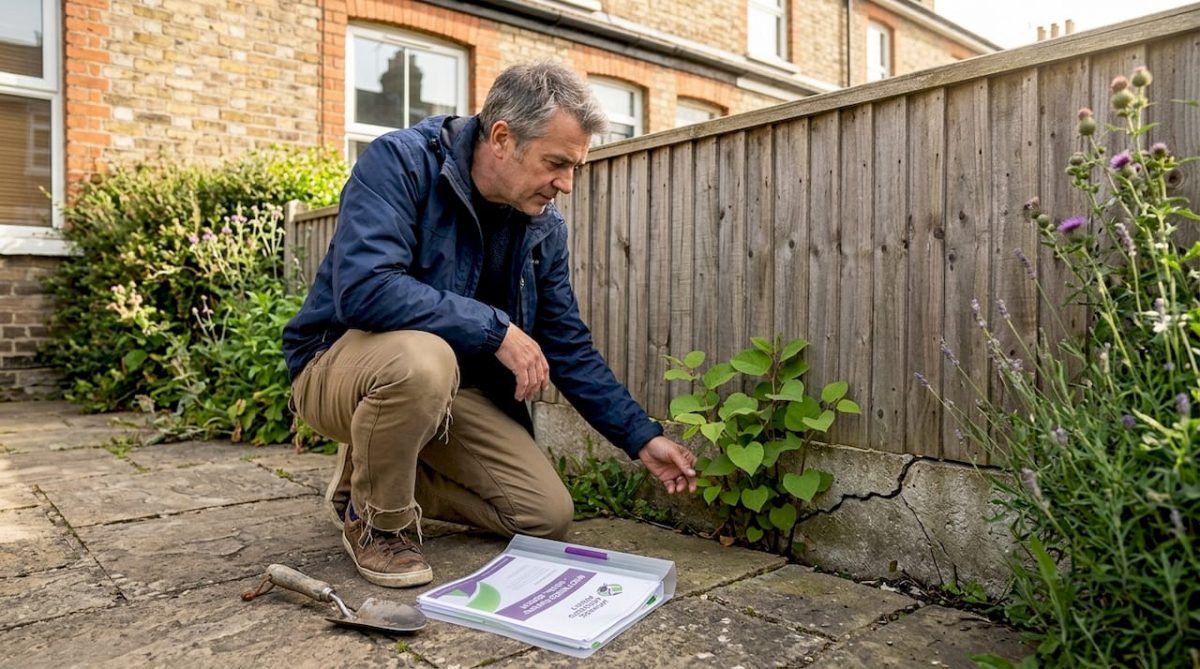
The science is more precise. Knotweed’s rhizome network, which can extend three metres deep and seven metres laterally from the visible plant, does not initiate new cracks by exerting measurable physical pressure. Instead, it exploits weaknesses that already exist. Hairline cracks in mortar joints, gaps around service entries, poorly sealed expansion joints, and deteriorating masonry all provide entry points. Once inside, persistent seasonal growth widens these pre-existing vulnerabilities incrementally, season after season. The property damage from knotweed that results is very real, but the mechanism is opportunistic rather than forceful.
“No specific pressure testing methodology or empirical PSI measurements found for knotweed rhizomes in surveys; damage mechanism relies on persistent growth exploiting weaknesses rather than initiating new cracks.” Japanese knotweed myths: What does work?
This distinction matters enormously in a property transaction context. A buyer who believes knotweed simply ‘pushes through everything’ may either dismiss a nearby stand of knotweed as unlikely to cause harm to a solid-looking wall, or overestimate the severity of damage to a structure that was already compromised. Neither position serves you well when negotiating a sale or assessing a mortgage.
| Common myth | Actual mechanism |
|---|---|
| Knotweed exerts measurable hydraulic pressure | Growth exploits pre-existing weaknesses |
| Solid structures are immune | Hairline cracks and gaps provide entry points |
| Damage is rapid and dramatic | Damage accumulates gradually over seasons |
| Knotweed can split intact concrete | No empirical evidence supports crack initiation |
| Removing above-ground growth resolves the risk | The rhizome network remains active underground |
Pro Tip: When reviewing a survey report that references knotweed damage, look specifically for language describing pre-existing structural weaknesses alongside knotweed presence. This combination is a far more meaningful indicator of risk than a general statement that knotweed was observed nearby.
Now that the misconceptions are set straight, let’s examine the true scale of knotweed’s urban impact.
Urban prevalence and property impact: The scale of the problem
The financial consequences of Japanese Knotweed in UK urban environments are substantial and well documented. Approximately 1.6 million properties, representing around 7% of all homes, are potentially affected by this species. The average property value loss attributable to knotweed sits at approximately £13,500, or around 5% of average property value, and the total estimated financial impact across the UK property market is in the region of £21.4 billion. These are not abstract numbers; they represent real negotiations collapsing, mortgages refused, and sales falling through at the last moment.
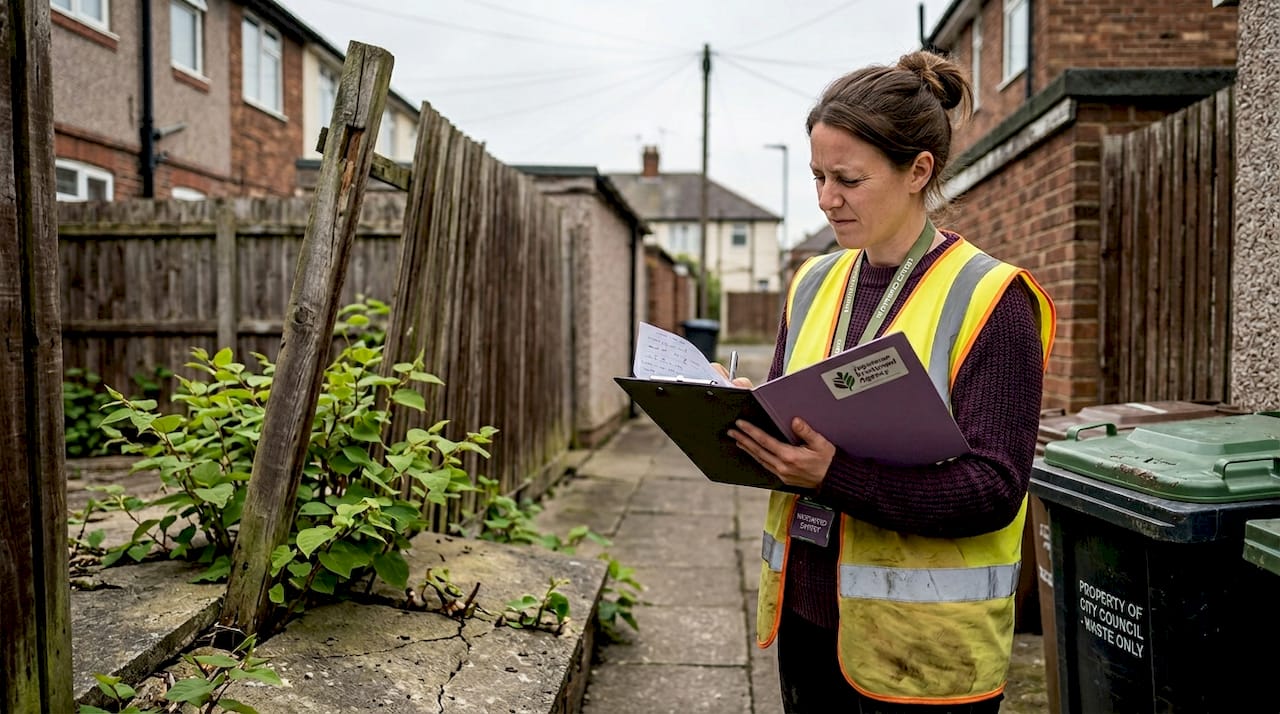
Urban environments present particular concentrations of risk. The impact on property values is most acute in areas adjacent to railways, riverbanks, and canal towpaths, where knotweed has historically spread along transport and water corridors. Railway embankments in particular have acted as knotweed highways across the UK, allowing the plant to establish in dense urban centres where it would not otherwise have arrived naturally.
Highest-risk urban scenarios include:
- Properties with rear gardens backing onto railway embankments or Network Rail land
- Homes adjacent to rivers, canals, or flood-relief channels
- Properties close to former industrial or brownfield sites
- Streets adjacent to parks or public green space where knotweed management has been inconsistent
- Terraced properties where knotweed on a neighbouring plot can encroach through shared boundary features
The property industry effects extend beyond individual transactions. Mortgage lenders, particularly those following guidance from the Royal Institution of Chartered Surveyors, apply a tiered risk assessment to knotweed proximity. A property with knotweed identified within seven metres of a habitable space or structural boundary can face significant lending restrictions, irrespective of whether visible damage has occurred.
| Category | Detail |
|---|---|
| UK properties potentially affected | Approximately 1.6 million (7% of homes) |
| Average value reduction | £13,500 (approx. 5% of property value) |
| Estimated total market impact | £21.4 billion |
| Highest-risk locations | Railway land, waterways, brownfield sites |
| RICS risk zone for lending concerns | Within 7 metres of habitable space |
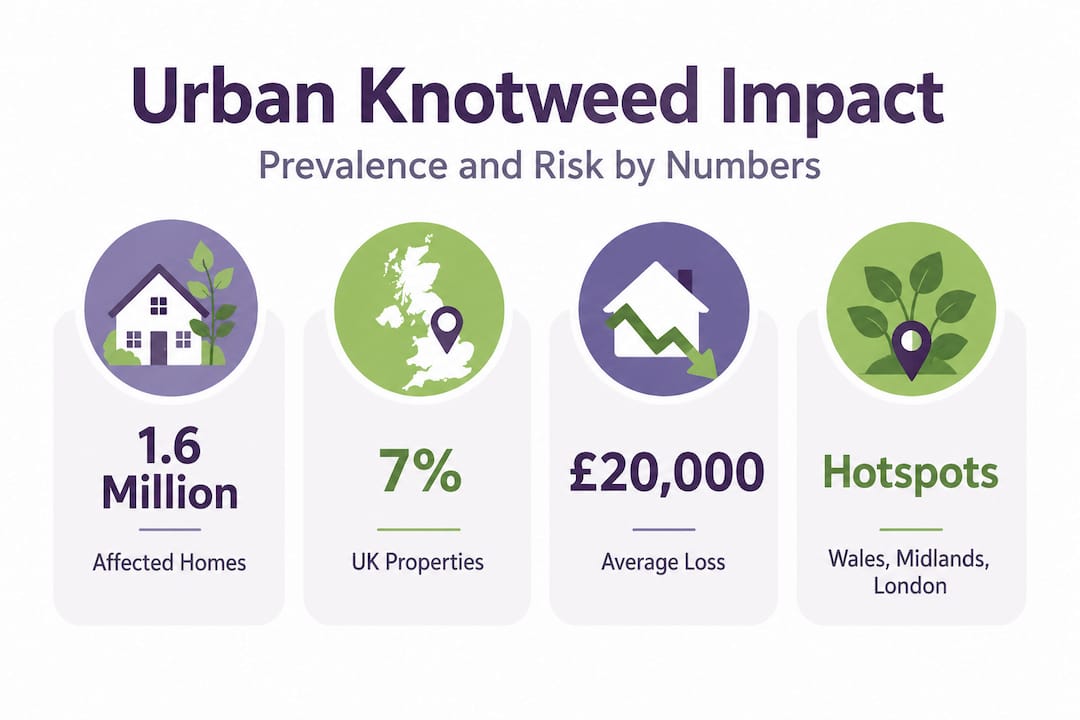
A statistic worth holding: In some urban postcodes, particularly in South Wales, the West Midlands, and parts of Greater London, knotweed prevalence is measurably higher than the national average. If you are purchasing in these areas, specialist survey provision is not optional; it is prudent financial management.
With the scale established, homeowners should know what signs and survey evidence to watch for.
Survey evidence: How knotweed activity is identified in urban settings
A general property survey, even one carried out by a qualified RICS surveyor, does not always include a specialist invasive weed assessment. Standard Level 2 and Level 3 surveys will note visible knotweed if it is present and accessible, but they do not typically extend to identifying dormant rhizome networks, assessing adjacent land, or evaluating the specific vulnerability of structures. This gap is where significant risk enters a transaction undetected.
Understanding the invasive weed survey process is essential before you commission any form of property assessment. A specialist survey focuses on the following distinct elements:
- Visual identification of knotweed above ground, including characteristic hollow bamboo-like canes, shield-shaped leaves, and cream-coloured late-summer flowers.
- Dormant season assessment, which identifies dead cane clusters, rhizome crowns at ground level, and distinctive reddish shoot emergence in early spring.
- Boundary and adjacent land review, examining neighbouring gardens, communal areas, and public land within the RICS-defined risk zone.
- Structural vulnerability mapping, documenting any pre-existing weaknesses in walls, outbuildings, paving, and drainage infrastructure that knotweed could exploit.
- Rhizome spread estimation, using ground-level cane density and seasonal growth evidence to estimate the extent of the underground network.
- Risk categorisation, aligning findings with RICS categories to produce a clear, lender-acceptable report.
Crucially, the risks of untreated knotweed are not simply structural. Untreated knotweed can make a property unmortgageable, reduce its market appeal significantly, and create legal liability if the plant spreads to neighbouring land. Under the Infrastructure Act 2014, allowing knotweed to spread to adjoining properties can constitute a legal nuisance, which carries real financial and reputational consequences.
What surveyors look for as meaningful evidence of knotweed exploitation:
- Mortar deterioration or joint erosion at the base of garden walls near knotweed stands
- Lifted or displaced paving slabs adjacent to areas of confirmed knotweed activity
- Evidence of previous cut-back or attempted control of canes without formal management
- Ground disturbance patterns consistent with rhizome network expansion
- Root fragments visible in soil profiles near boundary structures
Pro Tip: If you are purchasing in an urban area with known knotweed prevalence, ask your solicitor to include a specific pre-purchase enquiry about invasive weeds in the TA6 property information form. Sellers are legally required to disclose known knotweed; however, disclosure only applies to what is known. A specialist survey protects you from what the seller may not know themselves.
Having grasped how surveys spot knotweed, we turn to practical steps for homeowners looking to mitigate risks.
Practical steps: Protecting your property against urban knotweed
Knowledge without action has limited value. Once you understand both the real mechanism of knotweed damage and the scale of its urban prevalence, the question becomes what to do with that knowledge as you navigate a purchase or remortgage.
Before purchase or remortgage:
- Commission a specialist invasive weed survey in addition to your standard property survey, particularly if the property is near railways, waterways, or former industrial land.
- Review the TA6 form response carefully. Any mention of knotweed or invasive species should trigger a specialist assessment before exchange.
- Request that your surveyor assesses not just the subject property but the adjacent land within the RICS seven-metre risk zone.
- Obtain an indicative treatment cost if knotweed is identified, so you can factor this into any price negotiation.
If knotweed is found:
- Do not allow any cutting, strimming, or excavation without specialist guidance. Fragmenting rhizomes spreads the plant and can constitute an offence under the Wildlife and Countryside Act 1981 if contaminated soil leaves the site without appropriate disposal.
- Contact a specialist treatment provider promptly. Early-stage knotweed is significantly easier to manage than an established, multi-season colony.
- Ensure any treatment programme includes a formal management plan and insurance-backed guarantee, which most mortgage lenders will require as a condition of lending.
Monitoring your existing property:
- Inspect boundary walls, outbuildings, paved areas, and drainage gullies annually for signs of new cane emergence, particularly between March and May.
- Pay particular attention to structures that already show signs of deterioration: these are the most vulnerable to knotweed exploitation.
- Keep records of any knotweed observed on neighbouring land. This provides a baseline should future disputes arise and supports a property value claim if the spread affects your asset.
The persistent growth mechanism, rather than mythologised pressure, is what makes prompt action so important. Each growing season that knotweed remains untreated deepens the rhizome network, widens any structural vulnerabilities it has found, and compounds the remediation cost.
Pro Tip: When requesting a knotweed management plan, ensure it specifies the treatment methodology, the number of treatment cycles, the expected duration of the programme, and the form of guarantee provided. A plan without these details is not lender-ready.
Let’s consider a broader perspective on how knotweed risk is often misunderstood, especially in urban settings.
Why the pressure myth leads homeowners astray
The fixation on knotweed ‘pressure’ is not simply an innocent misunderstanding; it actively misdirects where homeowners and surveyors direct their attention. When the narrative centres on whether knotweed is strong enough to crack solid concrete, the focus shifts away from what actually matters: the condition of existing structures and the completeness of the survey evidence.
In our experience working across urban environments in England, Wales, and Ireland, we have observed a consistent pattern. Properties where knotweed damage occurs almost always involve pre-existing structural vulnerabilities that a thorough survey would have identified independently. The knotweed accelerates deterioration; it rarely initiates it from nothing. This is why survey quality, and specifically the level of detail around structural condition alongside knotweed presence, is the variable that determines whether risk is properly managed.
The evidence is clear that no empirical pressure data has ever been established for knotweed rhizomes. Yet the myth persists because it is intuitive and vivid. A plant pushing through tarmac is a striking image. It speaks to something primal about nature overcoming urban infrastructure. But the truth is that tarmac already compromised by age, frost, or poor installation provides the opportunity; knotweed simply takes it.
The practical implication is this: a robust survey that identifies both knotweed presence and pre-existing structural vulnerability gives you something actionable. A survey that notes knotweed without assessing structural condition, or vice versa, gives you an incomplete picture. Homeowners and buyers who understand this demand better surveys, and better surveys produce better outcomes for selling a property with knotweed or purchasing one where knotweed is in the vicinity.
Shifting the conversation from pressure to persistent growth, from dramatic imagery to careful survey evidence, is where genuine property protection begins. Urban knotweed is a serious and manageable risk. It is not an unstoppable force; it is a well-understood invasive species that responds to specialist assessment and targeted treatment.
Take the next step: Urban knotweed expertise for your property
Whether you are in the early stages of a property purchase, preparing for a remortgage, or managing an existing knotweed concern, specialist support makes the difference between uncertainty and confident, evidence-based action.

Japanese Knotweed Agency provides specialist property invasive weed surveys across England, Wales, and Ireland, delivering survey reports that meet lender requirements and give you a complete picture of your property’s risk profile. Our chemical-free urban knotweed solutions use direct thermo-electric treatment at up to 5,000 volts, targeting the rhizome network at source without herbicide, providing an eco-responsible pathway to eradication with a 95% success rate. For answers to common questions before you book, our urban knotweed FAQs cover the most important concerns homeowners raise at every stage of the process. Get in touch today to take the next step with confidence.
Frequently asked questions
Can knotweed crack concrete due to its pressure?
No. Knotweed does not exert sufficient measurable force to initiate cracks in intact concrete; it exploits pre-existing weaknesses through persistent seasonal growth rather than direct mechanical pressure.
How many UK homes are impacted by urban knotweed?
Around 1.6 million properties, representing approximately 7% of UK homes, are potentially affected by Japanese Knotweed, with urban prevalence particularly high near railways and waterways.
What should an urban homeowner request during a property survey to spot knotweed?
You should ask for a specialist invasive weed survey that assesses signs of persistent growth, rhizome presence in dormant periods, and pre-existing structural weaknesses that knotweed could exploit, in addition to any standard structural report.
Is urban knotweed more problematic near railways and waterways?
Yes. Urban knotweed prevalence is significantly elevated near railways and waterways, as these corridors have historically enabled the plant’s spread into dense residential and commercial areas.