

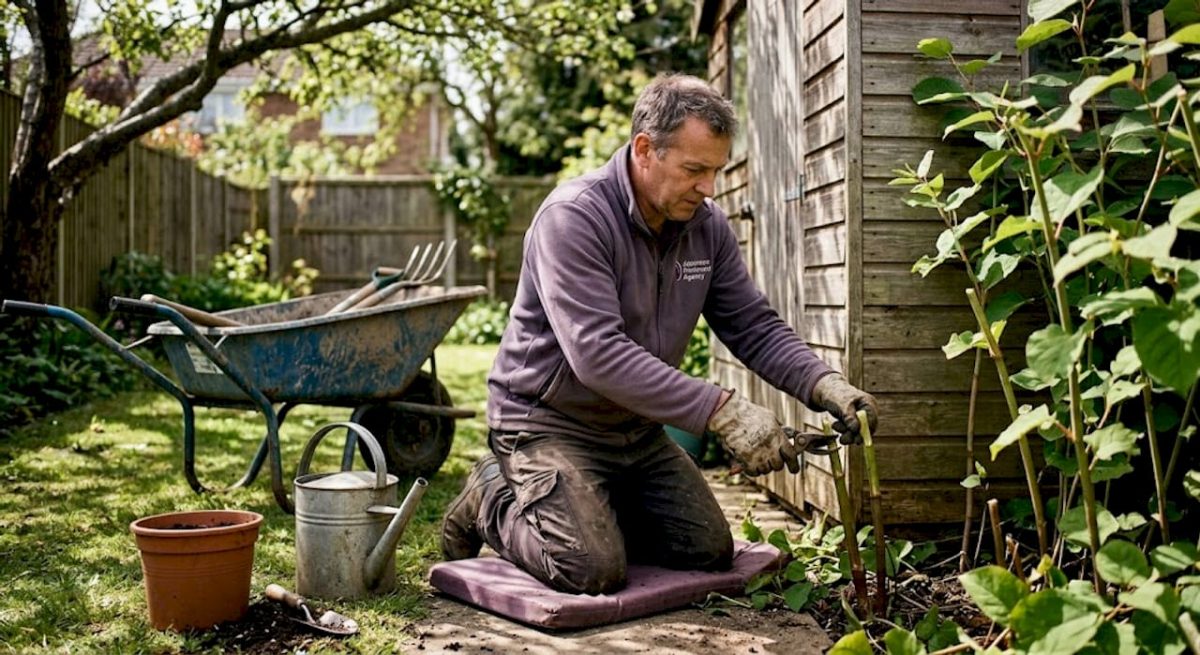
TL;DR:
- Non-residual weed control methods are effective, safe, and environmentally responsible for Japanese Knotweed eradication.
- Techniques include repeated cutting, mulching, manual removal, and electro-thermal treatment over several years.
- A structured, multi-year approach with professional guidance ensures lasting results and legal compliance.
Many UK homeowners assume that tackling Japanese Knotweed requires strong herbicides and repeated chemical applications. That assumption is now outdated. Non-residual weed control, which works without leaving lasting chemical traces in your soil or surrounding environment, has advanced considerably, and the evidence strongly supports chemical-free approaches as both effective and responsible. Whether you are protecting your garden, preparing a property for sale, or simply concerned about the impact of chemicals on your family and local wildlife, this guide sets out the most reliable non-residual strategies available to you right now.
Table of Contents
- Understanding non-residual weed control
- Top chemical-free methods for Japanese Knotweed in the UK
- Comparing non-residual and chemical approaches
- Applying effective non-residual strategies for lasting results
- What most homeowners miss about chemical-free weed control
- Get expert help with chemical-free Knotweed solutions
- Frequently asked questions
Key Takeaways
| Point | Details |
|---|---|
| Safe for families | Non-residual, chemical-free weed control avoids health risks and benefits domestic pets and children. |
| Integrated strategy needed | Lasting Japanese Knotweed control demands repeated cutting, root barriers, monitoring, and specialist treatments. |
| Commit to the long game | Expect multi-year efforts and patience to see results, especially with resistant Knotweed strains. |
| Legal compliance is essential | Disposal and eradication must meet UK Wildlife Act and environmental standards for property owners. |
Understanding non-residual weed control
With chemical use facing increased scrutiny from regulators, lenders, and ecologists, the fundamentals of non-residual weed control provide a crucial foundation for any homeowner dealing with invasive plants.
Non-residual weed control refers to any method of managing or eradicating unwanted plants without leaving chemical residues in the soil, water table, or surrounding ecosystem. Unlike residual herbicide treatments, which persist in the ground and can affect future planting, neighbouring habitats, and even property valuations, non-residual approaches target the plant directly and leave no lasting chemical legacy.
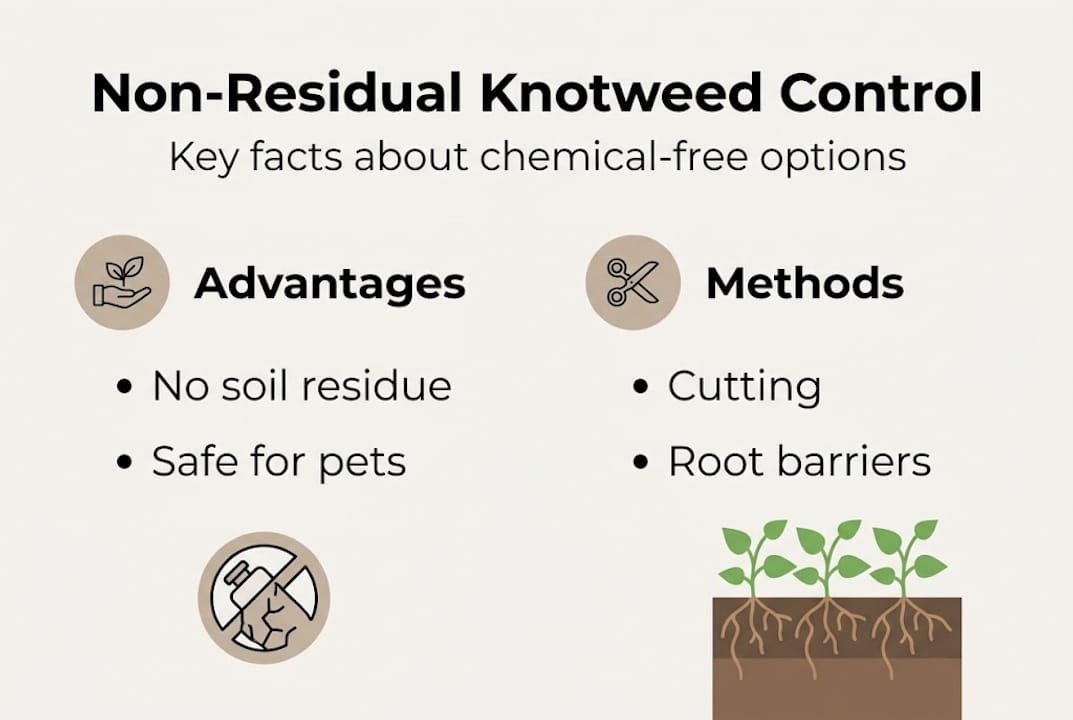
For Japanese Knotweed specifically, this distinction is significant. Knotweed is not an ordinary garden weed. Its rhizome network, the underground root system that drives its growth, can extend up to three metres deep and seven metres horizontally. It can push through tarmac, compromise building foundations, and spread rapidly from even the smallest fragment. This means that any effective control strategy must address the rhizome system directly, not just the visible canes above ground.
The environmental impact of Knotweed on UK properties and ecosystems is well documented. Lenders frequently refuse mortgages on properties where Knotweed is present, and the legal obligations surrounding its disposal are strict. These realities make the choice of treatment method far more than a gardening preference.
Non-residual methods work by physically exhausting, smothering, or disrupting the plant’s ability to photosynthesise and store energy in its rhizomes. The core strategies include:
- Repeated cutting and mowing: Removing top growth regularly prevents photosynthesis and forces the plant to draw on its rhizome energy reserves, gradually weakening the root system over time.
- Mulching and smothering: Covering the affected area with heavy-duty membrane or organic mulch cuts off light and further depletes the plant’s energy.
- Manual removal: Physically excavating rhizome material, though labour intensive, is one of the most direct methods for contained infestations.
- Hoeing and surface disturbance: Effective for smaller, early-stage growth.
- Electro-thermal treatment: The most advanced non-residual option, delivering up to 5,000 volts directly into the plant tissue to cause internal cell damage and deplete the rhizome energy network.
| Method | Residue left in soil | Effort level | Suitable for large infestations |
|---|---|---|---|
| Repeated cutting | None | Medium | Partially |
| Mulching/smothering | None | Low to medium | Yes (combined) |
| Manual excavation | None | High | No (small patches) |
| Electro-thermal treatment | None | Low (professional) | Yes |
| Glyphosate herbicide | Yes | Low | Yes |
The benefits of chemical-free weed control are measurable in terms of property value, ecological safety, and long-term soil health. Non-residual treatment timescales vary: electro-thermal approaches typically require between three and seven years of consistent application to fully deplete resistant rhizome networks, making patience and commitment essential components of any successful programme.
Top chemical-free methods for Japanese Knotweed in the UK
Once the principles are understood, homeowners can start applying practical, non-chemical methods tailored to their specific challenge and property type.
The most effective chemical-free strategies each target a different vulnerability in Knotweed’s biology. Used in combination, they create a sustained, integrated approach that can achieve lasting eradication without harming your garden, your family, or the broader environment. The non-chemical control guidance recommends a range of techniques including repeated cutting, mulching, and advanced options such as electro-thermal treatment using up to 5,000 volts to cause direct physical damage to the rhizome system.
Here are the key methods in practical order of application:
-
Repeated cutting and mowing. Begin cutting as soon as new canes emerge in spring, typically between March and May. Cut to ground level every three to four weeks throughout the growing season. This forces the plant to redirect energy reserves from the rhizome network to new shoot production, progressively weakening it. Consistency is critical: missing even one growing season allows the rhizomes to recover significantly.
-
Solarisation and smothering. After initial cutting, cover the area with a high-grade root barrier membrane or thick black polythene sheeting, weighted or pinned down at the edges. This blocks sunlight and raises soil temperature, creating conditions hostile to rhizome survival. Leave it in place for a full growing season minimum, ideally two consecutive years for dense infestations.
-
Manual removal and root barriers. For contained patches close to structures, physical excavation combined with root barrier installation provides a reliable, chemical-free solution. Root barriers, typically 2mm HDPE membrane, are installed vertically around the affected zone to prevent lateral rhizome spread.
-
Boiling water and flame treatment. These techniques are suitable only for small, early-stage growth, not established infestations. Boiling water applied directly to cut stems can damage surface growth, whilst flame weeding with a licensed tool achieves similar surface disruption. Neither method reaches the depth required to affect a mature rhizome network.
-
Electro-thermal treatment. This is the most technically advanced chemical-free approach available in the UK. The treatment involves delivering direct electrical energy at up to 5,000 volts into the plant tissue, causing internal cell rupture and steadily depleting the energy stored in the rhizome system with each application. It requires professional-grade equipment and trained operatives, but produces no chemical residue and is suitable for sensitive environments including riverbanks, school grounds, and residential gardens close to watercourses.
“Repeated cutting over years weakens perennials by exhausting rhizome energy reserves. Electro-thermal treatment, applied consistently over three to seven years, is effective even against resistant strains.”
Pro Tip: Under the Environmental Protection Act 1990 and the Wildlife and Countryside Act 1981, Japanese Knotweed is classified as controlled waste. Never compost Knotweed material or place it in your general garden waste bin. All removed material must be taken to a licensed waste facility or disposed of by a licensed contractor. Breaching these rules can result in significant fines.
A common pitfall is uneven timing: homeowners who cut in spring but then neglect summer regrowth allow the plant to recover far more quickly than expected. Follow a structured step-by-step chemical-free treatment schedule to avoid this issue and maintain pressure on the rhizome system throughout the growing season.
Comparing non-residual and chemical approaches
Homeowners weighing options deserve an honest assessment of how chemical-free and chemical approaches stack up in practice.
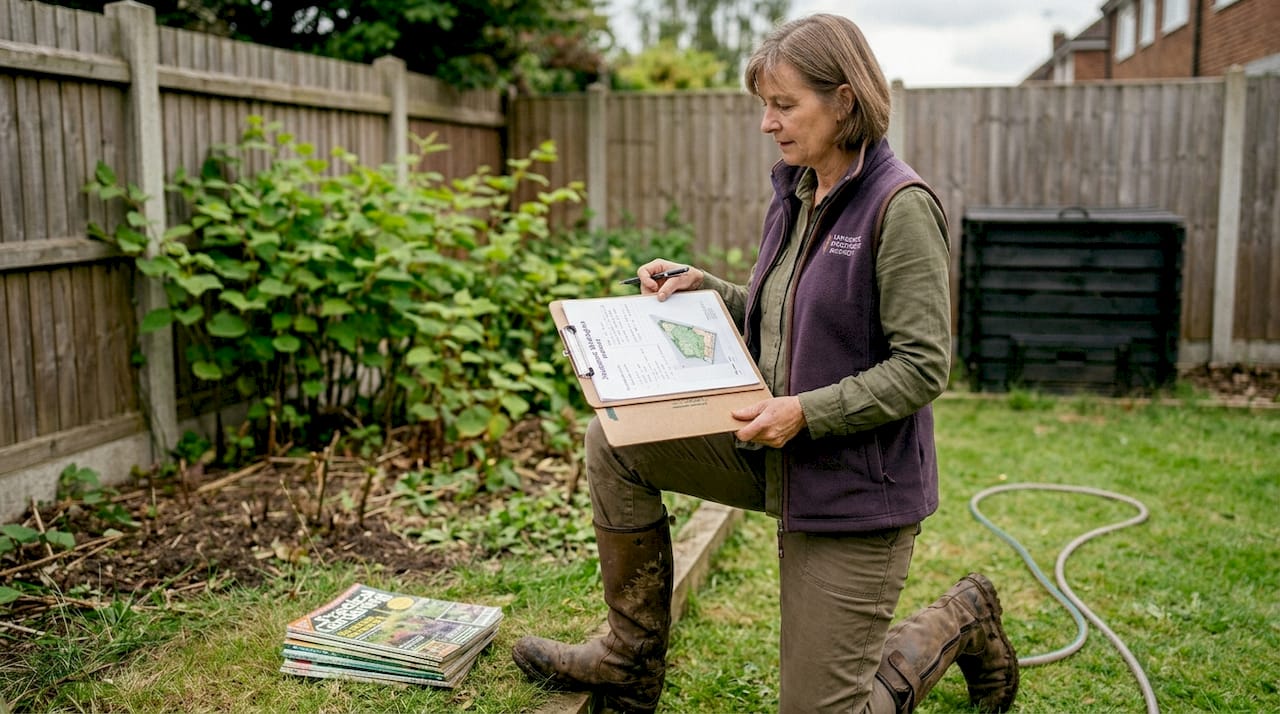
There is genuine nuance in this comparison. Chemical treatments, particularly glyphosate-based herbicides, are widely used because they are cost-effective per treatment cycle and relatively simple to apply. However, their limitations are increasingly well documented, particularly for homeowners with children, pets, and ecologically sensitive gardens. The RHS guidance on non-chemical weed control notes that chemical-free approaches are safer for families, pets, and ecosystems, though they are more labour intensive and slower to produce results against large, established Knotweed stands.
| Factor | Chemical (glyphosate) | Non-residual / chemical-free |
|---|---|---|
| Speed of visible results | Fast (weeks) | Slower (months to years) |
| Soil residue | Yes, persists | None |
| Safe for children and pets | No, restricted access required | Yes |
| Ecological impact | Risk to waterways and wildlife | Minimal |
| Resistance risk | Yes, documented cases | No resistance pathway |
| Long-term soil health | Can degrade microbial activity | Preserved |
| Suitable for sensitive sites | No | Yes |
| Professional oversight required | Partially | Recommended for advanced methods |
Key differences for UK homeowners to consider:
- Resistance: Glyphosate resistance in plant populations is a documented and growing concern. Non-residual methods carry no resistance risk because they work through physical or thermal disruption rather than chemical pathways.
- Mortgage implications: Some lenders now specify that Knotweed management must follow professional, documented programmes. Chemical-free approaches, particularly those with formal monitoring records, are increasingly accepted by surveyors and lenders.
- Environmental compliance: Properties near watercourses, SSSIs (Sites of Special Scientific Interest), or protected habitats face strict restrictions on pesticide use. Non-residual methods are the only viable option in these settings.
- Soil legacy: Residual chemicals can persist for weeks or months, affecting replanting timelines and surrounding vegetation. Non-residual treatments leave the soil biologically intact.
The safe chemical-free weed treatment guide provides practical criteria for homeowners assessing which approach suits their property and risk profile. For most residential situations, particularly those involving gardens used by children or pets, non-residual strategies represent the responsible and increasingly practical choice. Understanding Knotweed removal best practices helps ensure your chosen approach is both effective and legally compliant.
Applying effective non-residual strategies for lasting results
With the pros and cons considered, the focus shifts to practical, step-by-step action for homeowners ready to get results.
Creating a structured, integrated plan is what separates effective long-term eradication from repeated frustration. The integrated non-residual strategy recommended for UK homeowners involves an initial cut and solarise phase, followed by root barrier installation and electro-thermal treatments where appropriate, with monitoring continuing for at least two to three years to prevent regrowth and ensure compliance with the Wildlife and Countryside Act 1981.
A practical framework for non-residual Knotweed control looks like this:
- Year one, spring: Begin aggressive cutting as soon as new growth appears. Cut to ground level every three to four weeks. Install solarisation membrane over the affected zone after the first cut.
- Year one, autumn: Survey the perimeter to identify any lateral rhizome spread. Arrange a professional property survey to document the infestation’s extent and establish a formal management record.
- Year two: Install high-grade root barriers where lateral spread is confirmed or at risk. Introduce electro-thermal treatment for any persistent growth that survives cutting and smothering.
- Year two to three, ongoing: Continue cutting regrowth, inspect root barrier edges quarterly, and maintain treatment records. Electro-thermal sessions should continue through the growing season as required.
- Year three and beyond: Monitor for any regrowth across the treated zone and surrounding garden. Annual surveys ensure the rhizome network is fully depleted before the management programme is formally closed.
The reasons for using non-chemical methods go beyond personal preference: they protect biodiversity, maintain soil integrity, and in many cases satisfy the requirements of lenders and insurers who need documented evidence of responsible Knotweed management.
Legal compliance is not optional. Allowing Knotweed to spread to a neighbouring property can result in civil action. Disposing of Knotweed material incorrectly can trigger investigation under the Environmental Protection Act 1990. Both risks are manageable when a professional, documented non-residual programme is in place.
Pro Tip: Keep a detailed photographic and written record of every treatment session, including dates, methods used, and observed regrowth. This documentation is increasingly requested by mortgage lenders and conveyancers during property sales, and it demonstrates a responsible management history that adds measurable value to the transaction. A professionally installed Knotweed root barrier combined with documented treatment records represents some of the strongest evidence you can present to a surveyor.
What most homeowners miss about chemical-free weed control
The most common frustration we encounter is a homeowner who committed to cutting and mulching for one season, saw the Knotweed re-emerge the following spring, and concluded that chemical-free methods simply do not work. That conclusion misreads what the evidence actually shows.
Real eradication is not measured in weeks. It is measured in growing seasons. The chemical-free success rate data we have gathered from property cases demonstrates that integrated, consistently monitored programmes achieve reliable results. The difference between success and repeated failure almost always comes down to regularity of treatment, quality of monitoring, and willingness to involve professional expertise when the infestation exceeds what manual methods alone can address.
Shortcuts carry a compounding cost. A missed season of cutting restores rhizome energy reserves that may have taken two years to deplete. Poorly secured membrane allows canes to emerge at the edges, restarting the cycle. And illegal disposal of rhizome material can introduce new infestations elsewhere on your property or on neighbouring land, creating legal exposure that dwarfs the cost of professional management.
The homeowners who achieve lasting results share one characteristic: they treat the eradication programme as a multi-year commitment from the outset, not a single intervention. That mindset, more than any specific method, is what defines success in non-residual Knotweed control.
Get expert help with chemical-free Knotweed solutions
For homeowners ready to act, professional guidance makes the difference between a well-managed, documented programme and a cycle of partial treatments that never fully resolves the problem.

Japanese Knotweed Agency are pioneers in chemical-free treatment and eradication, delivering electro-thermal treatment at up to 5,000 volts directly onsite to cause internal cell damage and deplete rhizome energy networks without a single chemical. We also provide root barrier installation, excavation works, and formal property surveys across England, Wales, and Ireland. Whether you need an initial assessment, a full management programme, or documentation to satisfy your lender, our team is ready to support you with a legally compliant, eco-friendly solution designed for lasting results.
Frequently asked questions
Is non-residual weed control effective for large Japanese Knotweed infestations?
Non-residual methods are effective but require a multi-year approach and consistent application, particularly given that electro-thermal treatment for resistant Knotweed strains typically spans three to seven years of structured delivery.
What is the safest chemical-free method for UK homeowners?
Repeated cutting, root barriers, and mulching are widely recommended as safe and practical for households with children and pets, and they comply fully with UK regulations. Chemical-free approaches carry no residue risk and suit most residential settings.
How long does it take to eradicate Knotweed using chemical-free approaches?
Most chemical-free treatment programmes require monitoring for two to three years at minimum to confirm lasting eradication, prevent regrowth, and maintain compliance with the Wildlife and Countryside Act 1981.
Do I need professional help for advanced chemical-free methods?
Professional involvement is strongly recommended for electro-thermal treatments, large or structurally complex infestations, and cases where Wildlife Act compliance and formal documentation for mortgage purposes are required.