Choosing a Japanese knotweed remediation provider who can supply documented, lender-friendly evidence for mortgage and conveyancing checks remains fraught with gaps in guarantees and reporting standards. Most removal firms either limit their insurance cover, delay survey appointments, or do not offer written warranties accepted by mortgage lenders and solicitors. This comparison allows you to weigh insurance-backed guarantees, accreditation, and survey speed across six remediation agencies so you can select one that aligns with both your site risk and your conveyancing timetable.
Table of Contents
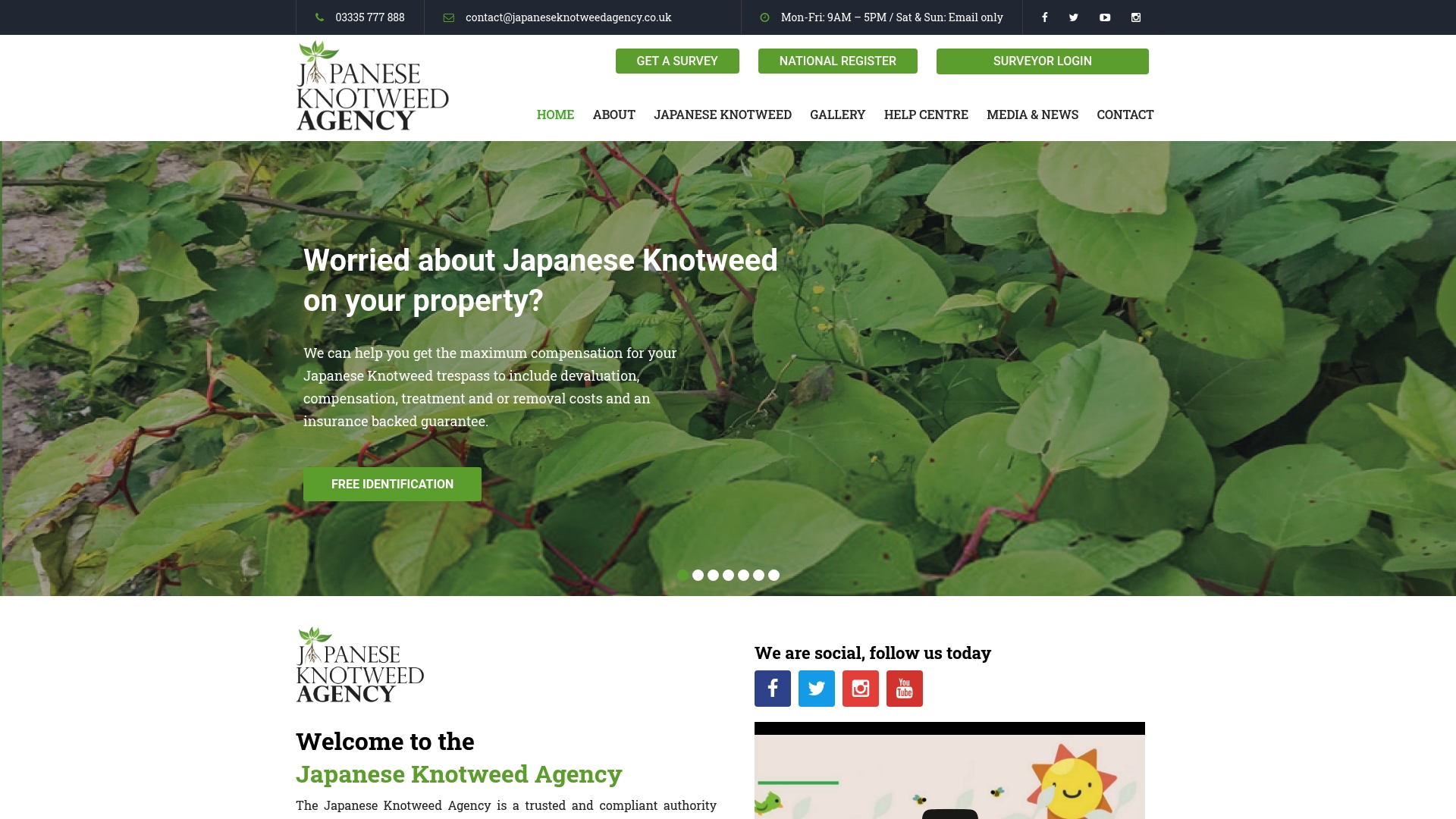
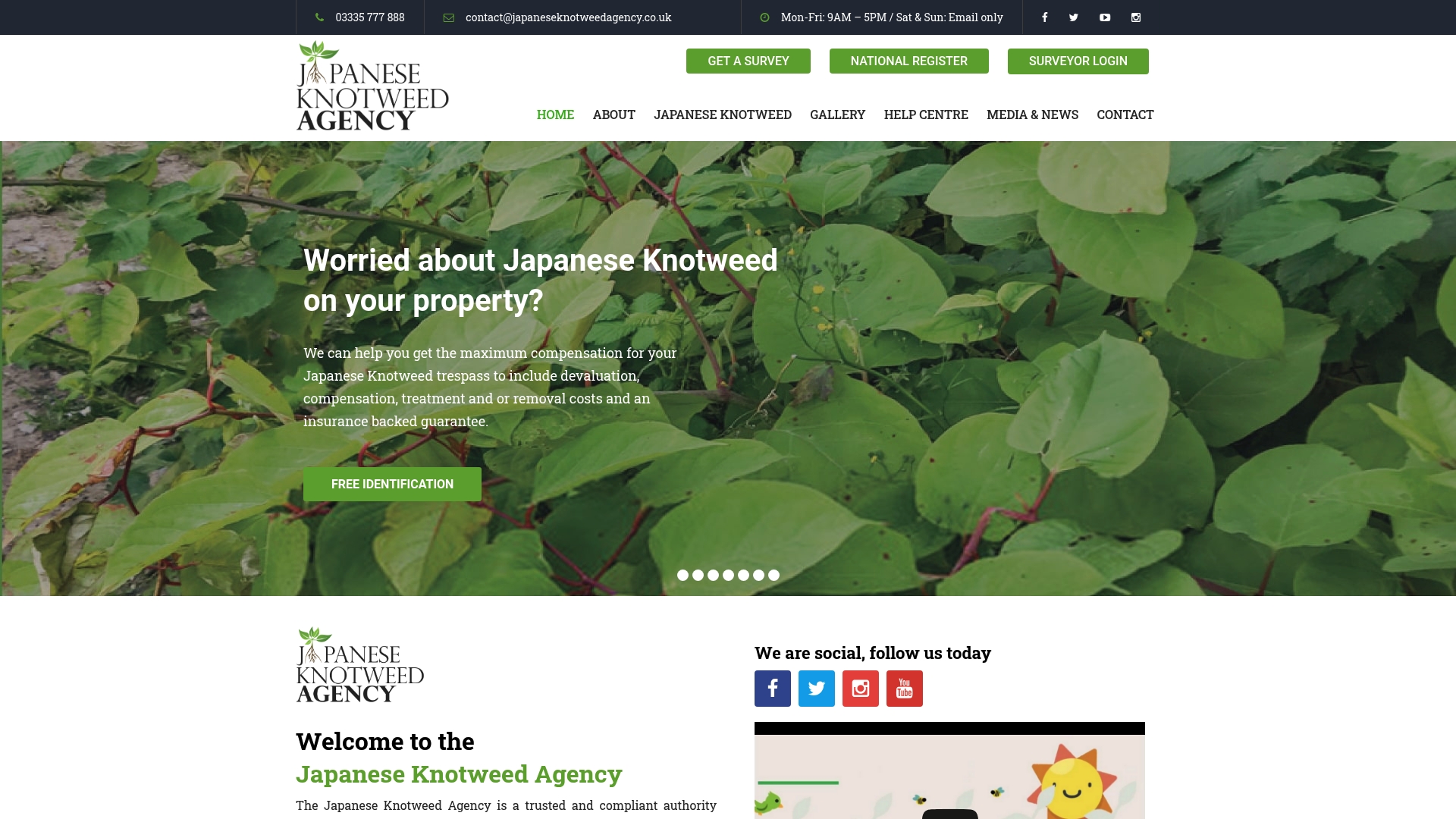
Japanese Knotweed Agency
At a Glance
The vendor advertises delivering direct energy up to 5000 volts on site to target knotweed rhizomes, a concrete departure from herbicide-led programmes. The approach is presented as chemical free and the team surveys properties across England, Wales and Ireland.
Core Features
- Thermo-electric treatment delivered on site to damage root systems without routine herbicide use.
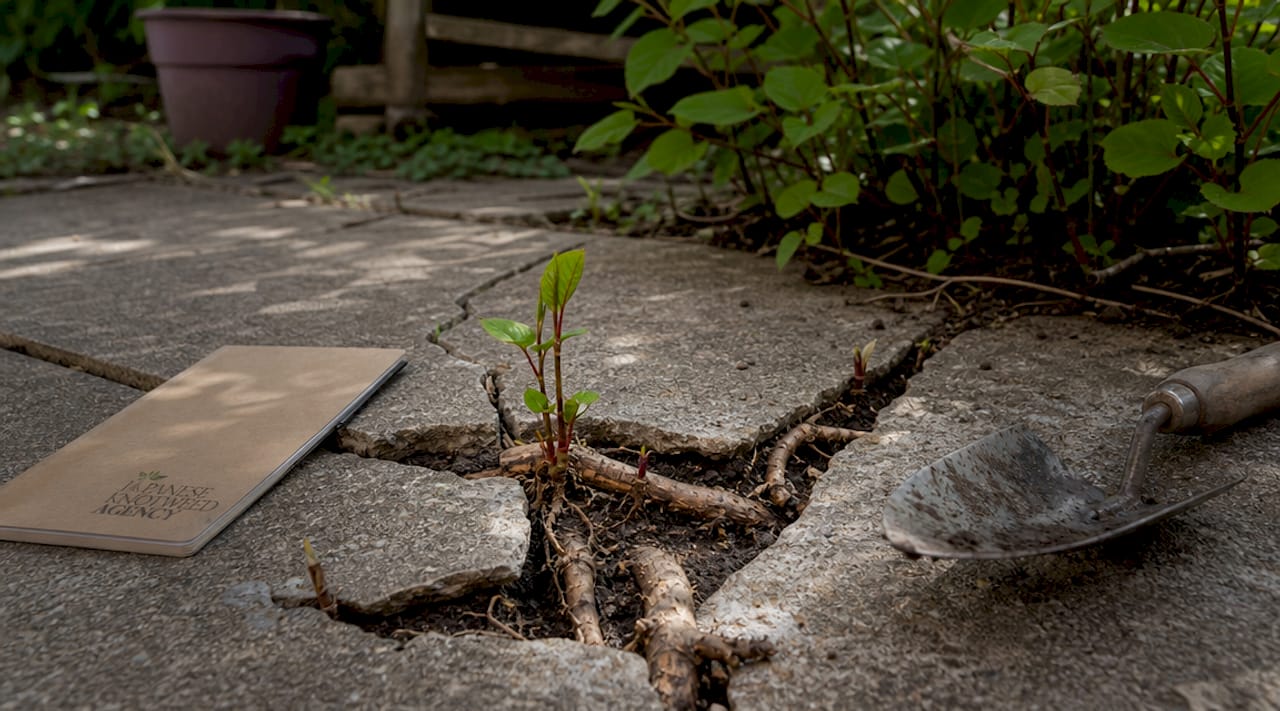
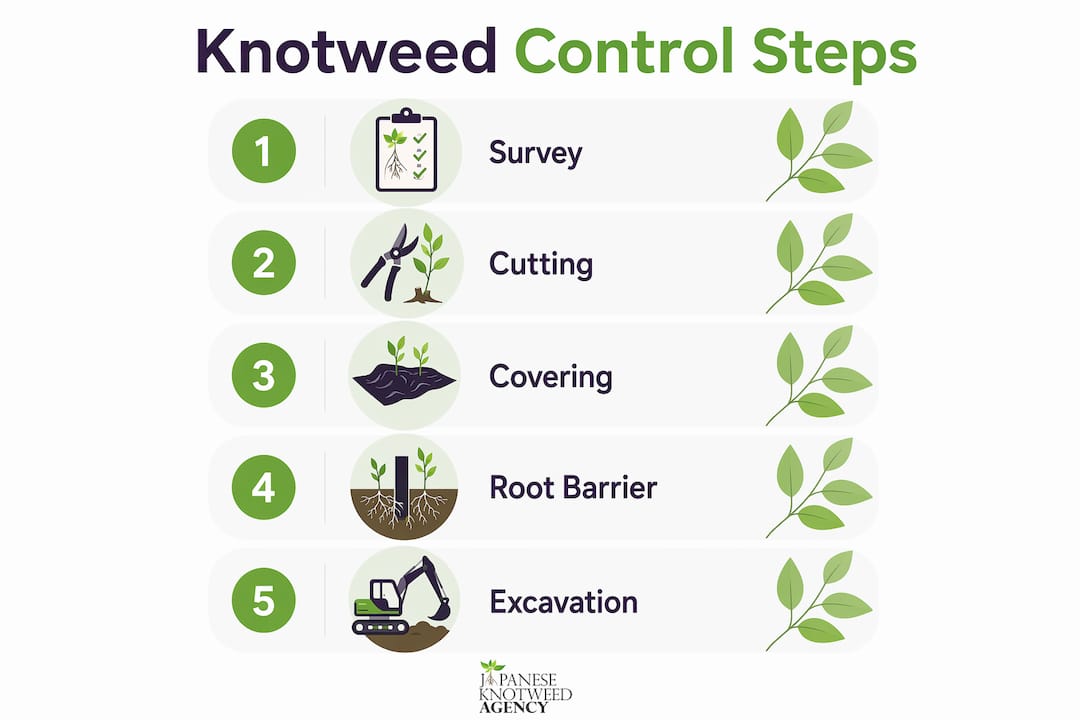
- Root barrier installs and excavation works to limit future migration across boundaries.
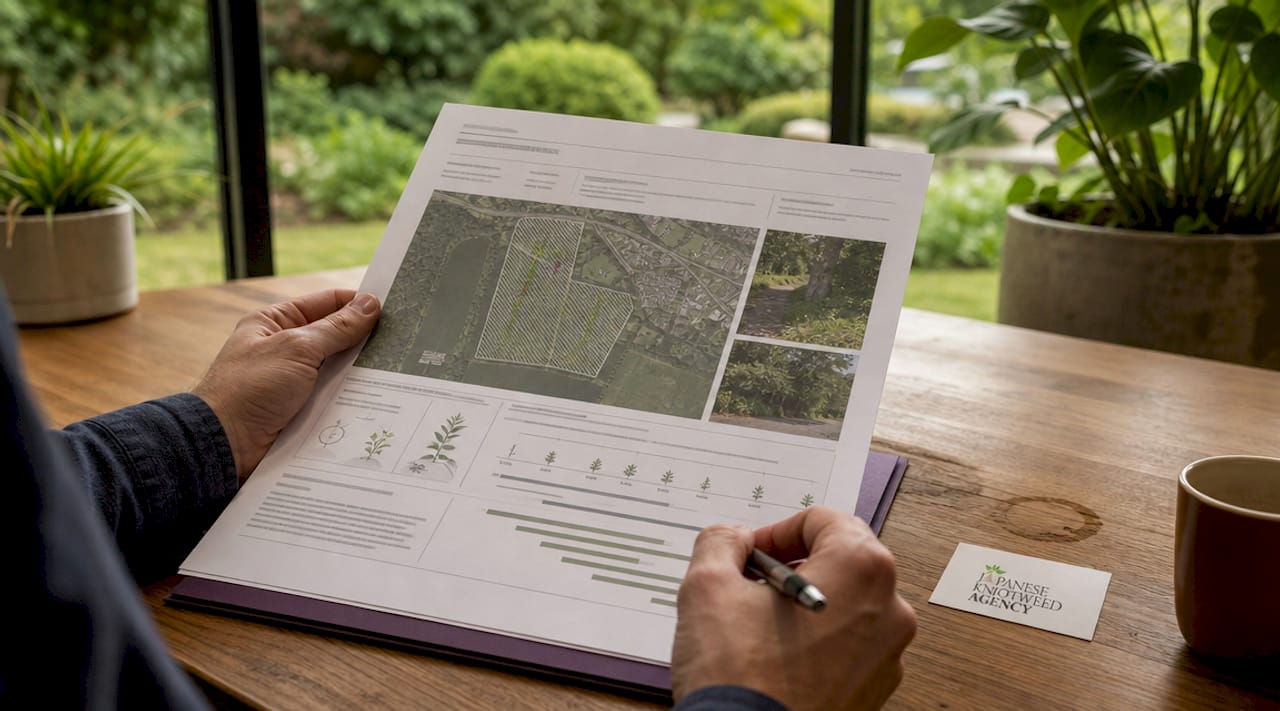
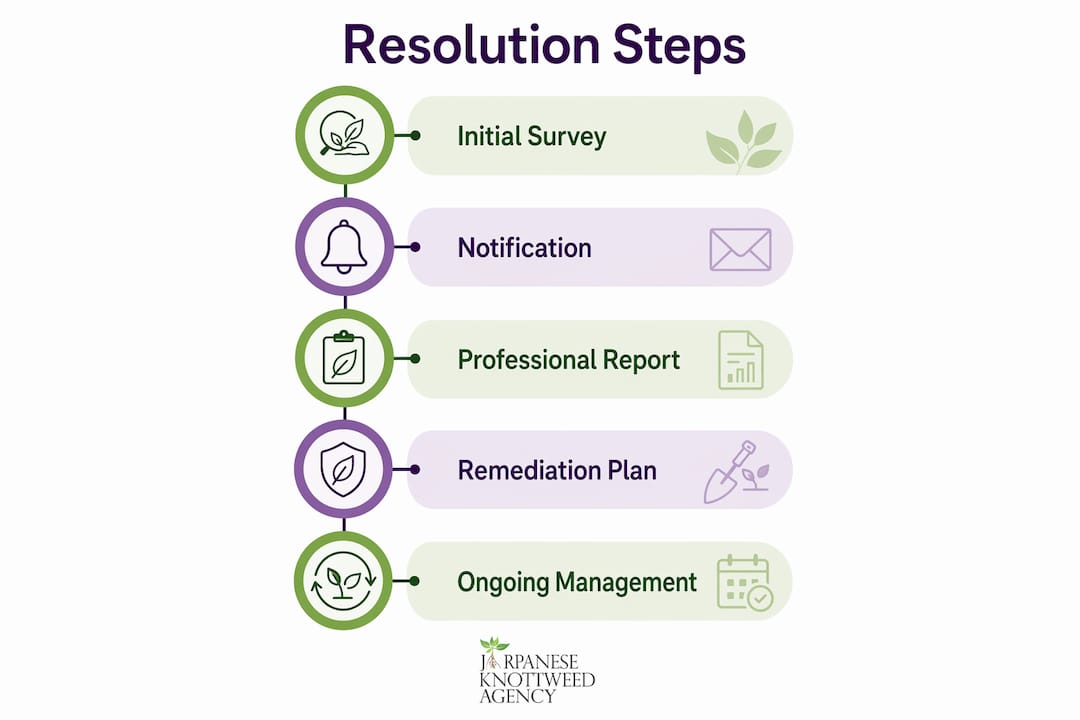
- Property surveys and detailed management plans tailored to each case, with documentation suitable for lenders and legal processes.
Key Differentiator
The service centres on a thermo-electric method rather than standard spraying. That technical focus changes the practical work on site: operators deliver a directed energy treatment aimed at the extensive rhizome network and follow up with physical mitigation where needed.
Pros
- Specialised in chemical free removal methods, which helps homeowners who prefer less herbicide use around gardens and watercourses.
- Offers legal support and claims management, so you receive paperwork for lenders or for diminution claims after a professional survey.
- Operates nationally across England and Wales and advertises coverage into Ireland, making it practical for larger portfolios and regional developers.
- Provides documented evidence intended to meet mortgage and conveyancing checks, reducing the back-and-forth often required by solicitors.
- Maintains a national register to track knotweed locations, which helps surveyors and conveyancers check encroachment risk quickly.
Cons
- Most effective treatments require repeated visits over several years, which can increase total cost and require longer project coordination.
Who It’s For
Homeowners, property developers, and legal professionals who need a documented, lender-ready route to identify and manage Japanese Knotweed. If you need a formal survey for conveyancing or a planned root barrier prior to development, this service is built around those outcomes. Book a survey at book a survey to start the process.
Unique Value Proposition
That vendor claim about direct energy shifts the account from a general removal quote to a measurable, site-delivered intervention. For conveyancers and valuers the practical implication is clearer records and a treatment narrative that links site activity to mortgage compliance and legal submissions.
Real World Use Case
A buyer finds knotweed on a shared boundary. The agency conducts a targeted survey, logs the location on its register, installs a root barrier and delivers follow up thermo-electric sessions. The buyer supplies the agency paperwork to their lender and solicitor, shortening the conveyancing queries.
Website: https://japaneseknotweedagency.co.uk
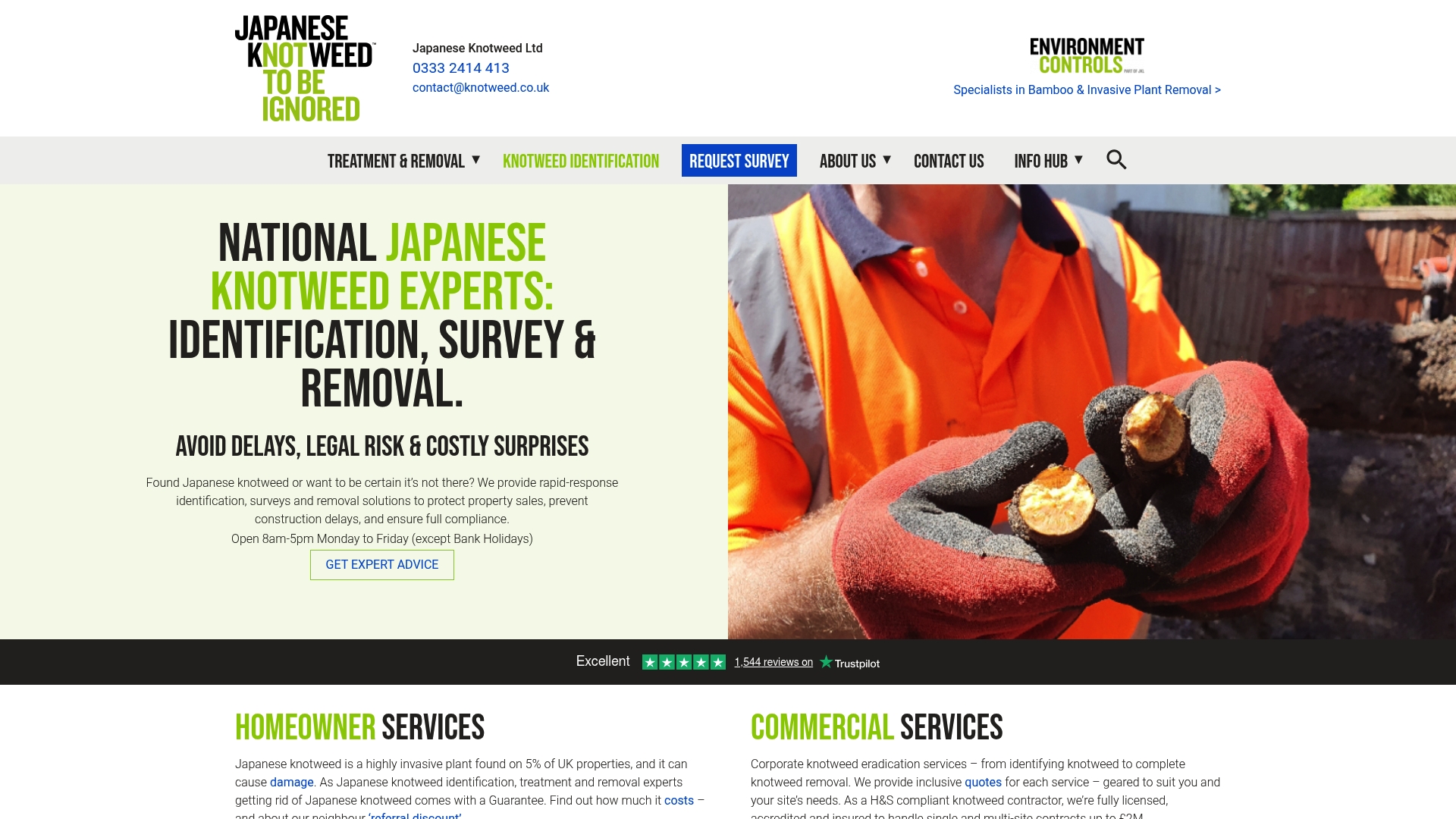
Japanese Knotweed Ltd
At a Glance
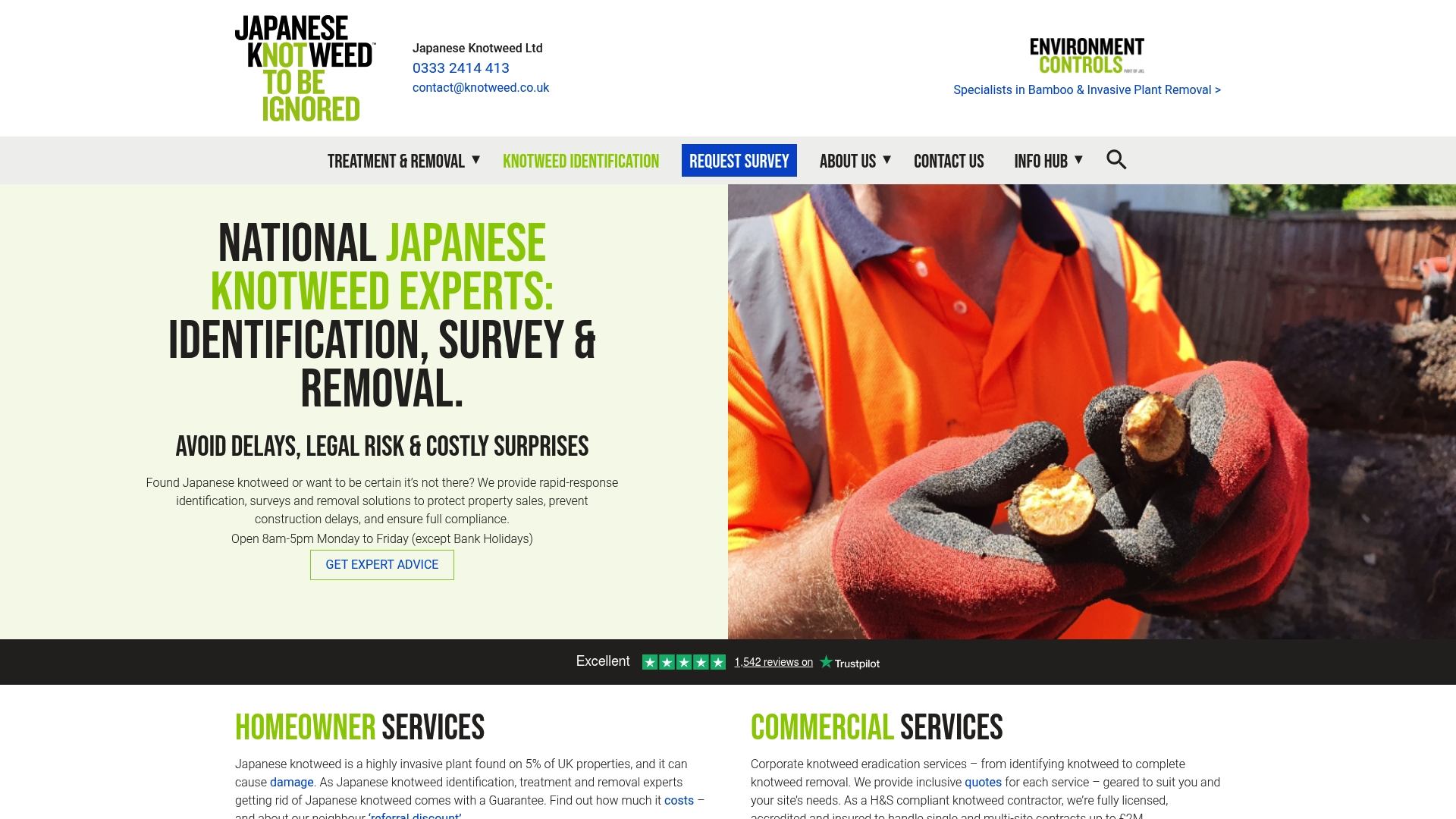
The vendor reports serving over 7,000 clients since 2010 and handles projects ranging from domestic gardens to £2 million development sites. The company says it operates nationally from offices in London, Southampton and Manchester and that it is industry registered and fully insured.
Core Features
Rapid response plant identification and site surveys for buyers and owners. Guaranteed removal and treatment options that include herbicide plans and excavation where needed. Post treatment monitoring and inspections to track regrowth. Expert advice on property and construction risk management linked to planning and mortgage concerns.
Key Differentiator
Japanese Knotweed Ltd emphasises a written guarantee tied to recognised safety and environmental practices. That guarantee, combined with national coverage and a history of work on large developer projects, positions the company as a provider equipped to handle both household and site wide remediation.
Pros
- Helpful staff and clear guidance. Users report professional and reassuring customer service during surveys and treatment planning.
- Free photo identification and prompt initial response lower the barrier for homeowners worried about a plant they spotted in a hedge.
- Registered and insured according to the vendor, which supports contractors and developers who need paperwork for planning and lenders.
- A full suite of treatments from herbicide programmes to excavation and ongoing monitoring gives practical options for different risk profiles.
- Capacity for larger contracts. The company advertises experience on projects up to £2 million, which matters to developers facing site clearance deadlines.
Cons
- Some customers report communication lapses after the initial visit, including missed calls or delayed follow up.
- A handful of users describe dissatisfaction with responsiveness during the post treatment monitoring phase.
- Pricing is variable. Complex or large scale works typically require bespoke quotes which means no fixed online price list for many jobs.
When It May Not Fit
If you need an instant, fixed price for a simple treatment the bespoke quoting process may feel slow. Teams that demand guaranteed same day follow up after treatment should factor in occasional communication reports. Small budgets will find lower cost local contractors on straightforward garden clears.
Who It’s For
Homeowners planning a sale or purchase who want a documented survey and treatment pathway. Developers and construction professionals requiring insurer friendly paperwork and the option to scale to excavation work. Property managers who value a single supplier for survey, treatment and monitoring.
Real World Use Case
A housing developer books a pre construction survey to identify encroachment and then commissions excavation and disposal to keep the build programme on track. Japanese Knotweed Ltd provided the survey report for the planning pack and managed the remediation to meet contractors timelines.
Pricing
Treatments start from £1,500 according to the vendor. Excavation projects range from about £2,500 up to £1.5 million for large sites. Surveys are free when knotweed is found and cost £240 plus VAT if no knotweed is present.
Website: https://japaneseknotweed.co.uk
JKS (jks.dk) – Danish Recruitment Agency
At a Glance
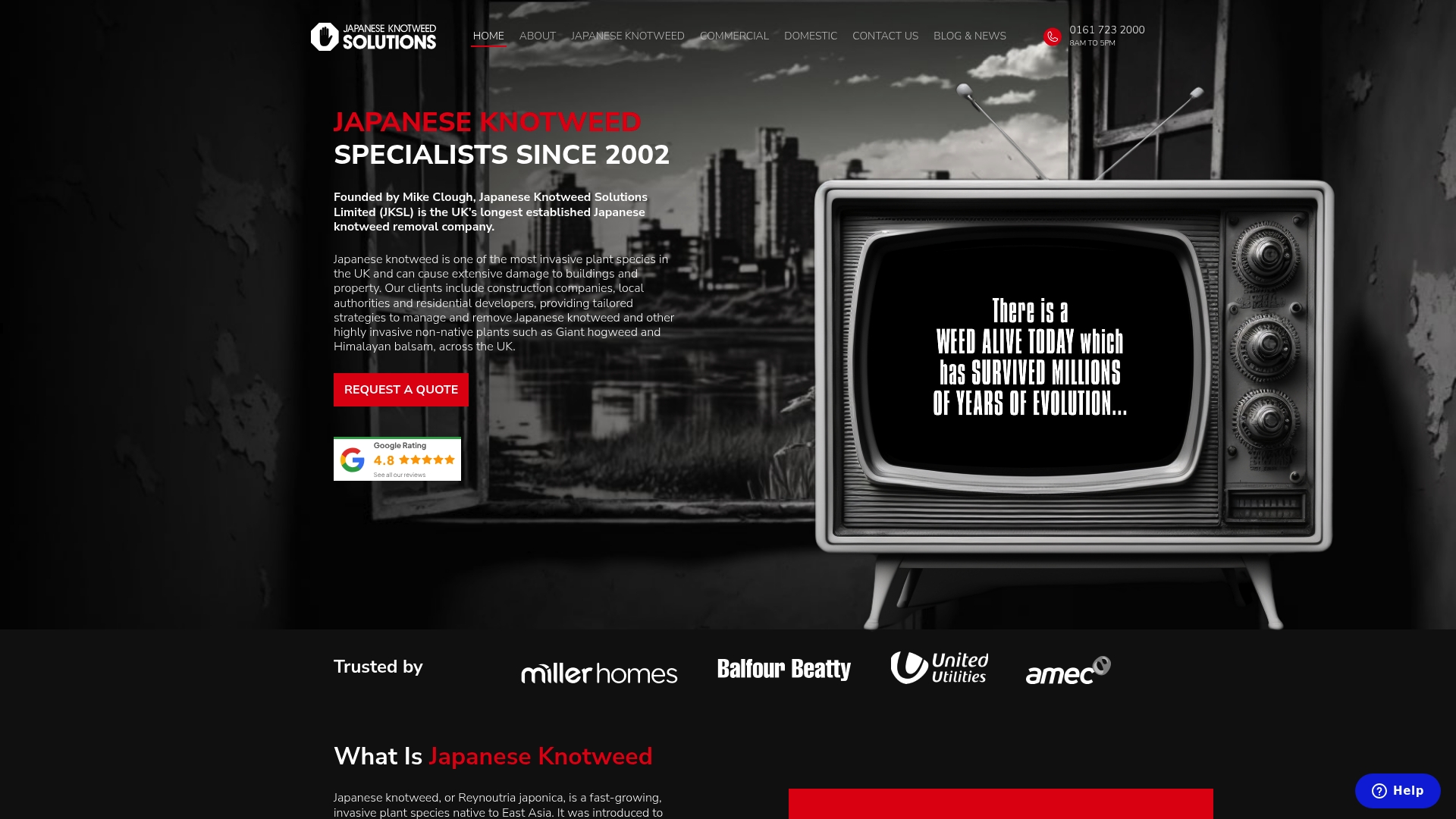
The vendor advertises a 10 year insurance backed guarantee for knotweed treatment, and pairs that promise with a proprietary site management tool called JK Connect for live project tracking. This combination is pitched at developers and landowners who need documented assurance during redevelopment.
Core Features
- Japanese knotweed identification and surveys tailored to planning and conveyancing timescales.
- Full management plans and treatment options including remediation and excavation where appropriate.
- Insurance backed guarantee for treatment success over 10 year as stated in the company materials.
- Proprietary site management system JK Connect for communications, records and progress updates.
- Comprehensive case studies across UK remediation projects.
Key Differentiator
JKS differentiates itself by coupling insured treatment plans with a digital project hub. That mix aims to reduce administrative friction on larger sites because decision makers can see survey reports, treatment milestones and guarantees in one place rather than chasing email trails.
Pros
- Experienced, accredited specialists. The team profile and case studies point to long term sector experience which helps when you must present a remediation record to lenders.
- Insurance backed guarantees give a documented assurance layer that some buyers and conveyancers want to see on file.
- Tailored plans that account for environmental constraints and site specific considerations reduce the risk of surprise works during construction.
- JK Connect improves transparency by centralising survey reports, treatment schedules and client communications in a single portal.
- A history of UK remediation projects means the firm understands the reporting formats conveyancers and mortgage underwriters expect.
Cons
- Public reviews are sparse and some third party search results refer to a different Danish recruitment business, so independent buyer feedback specific to knotweed work is limited.
- No standard pricing published, which makes early cost comparison against other contractors difficult.
- The vendor provided materials are the primary source for the 10 year guarantee and reported capabilities; there is little independent verification available online.
When It May Not Fit
If you need an immediately available local contractor with transparent fixed pricing, JKS may feel slow to assess value because costs appear to be quoted after a survey. If you want multiple independent online reviews before engaging, those are currently thin or mixed with unrelated listings.
Notable Integrations
- JK Connect is listed as the proprietary site management system used for project tracking and client communication.
Who It’s For
Property owners, developers and contractors who accept an initial survey based quotation process and who prioritise an insured, documented remediation path for sites affected by Japanese knotweed.
Real World Use Case
A commercial developer commissions a survey, receives a tailored removal plan and uses JK Connect to monitor treatment milestones. The developer then presents the insured guarantee and the portal reports to conveyancers and lenders during site sale negotiations.
Pricing
Pricing information is not published publicly and the product data lists pricing as not applicable. For accurate cost estimates you should request a site survey and written quotation direct from the vendor.
Website: https://jksl.com
Japanese Knotweed Expert
At a Glance
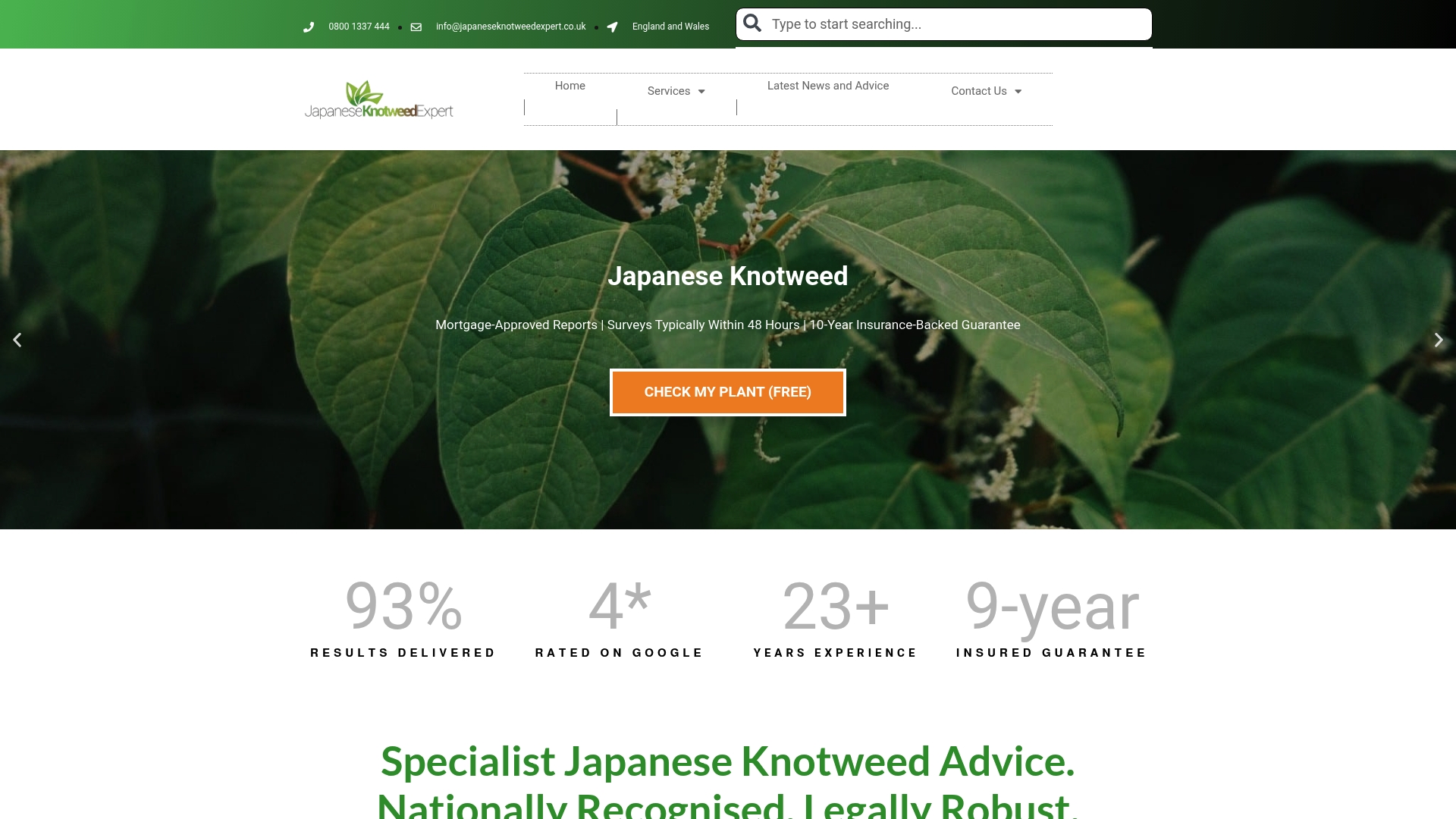
The vendor advertises mortgage approved surveys delivered within 48 hours, a 10 year insurance backed eradication guarantee and more than 25 years’ experience handling Japanese knotweed cases, including over 40 expert witness assignments. These are claims from the provider’s marketing materials.
Japanese Knotweed Expert positions itself as a lender-friendly specialist for England and Wales, aiming to close conveyancing delays with rapid reporting and insurance support for treatments.
Core Features
- Mortgage approved surveys with rapid delivery for tight conveyancing timetables.
- 10 year insurance backed guarantee available alongside removal options, subject to site assessment and policy terms.
- PCA accreditation and industry certifications that the firm highlights in its literature.
- Specialist services including invasive weed surveys, expert witness reports, excavation supervision, CPD training and site management.
Key Differentiator
Their marketing materials stress legally robust reports that lenders accept and pair those reports with PCA accreditation plus an insurance backed guarantee. That combination is the single service angle most likely to sway conveyancers and solicitors when a mortgage offer is at risk.
Pros
-
Rapid reporting helps keep a sale on track. The 48 hour promise above targets common conveyancing delays with fast, lender-friendly paperwork.
-
Lender acceptance reduces queries from mortgage underwriters. Using lender-approved documentation makes it easier for solicitors to forward a file.
-
The guarantee above provides a documented remedy for recurrence and gives buyers a clear risk transfer mechanism when treatment is specified.
-
Experienced technical input and expert witness work supports disputes. The firm cites a lengthy track record that translates into defensible reports for legal cases.
-
PCA accreditation and visible industry credentials help when planners or authorities ask for proof of competence.
Cons
-
Several users report mixed administrative support; phone and email handling is inconsistent according to feedback.
-
Removal charges can be high in proportion to survey fees and may surprise owners who budget only for the report cost.
-
Some clients perceive commercial practices as profit driven, which can erode trust during remediation scoping and invoicing.
When It May Not Fit
If your priority is the lowest possible remediation spend, this provider may not be the best match. The premium for insurance backed guarantees and accredited reporting adds cost compared with basic contractors.
Also avoid them if you need granular hand holding from an administrative team rather than technical assurance, since administrative responsiveness has been flagged by some clients.
Who It’s For
You are a homeowner selling a property with suspected knotweed, a developer managing site risk, or a solicitor needing a lender acceptable report. This service is aimed at parties who value accredited reports and contractual guarantees over the lowest price.
Real World Use Case
A seller in England needs a mortgage approved survey to unblock an offer. The firm delivers the survey quickly, produces a lender friendly report and supervises a treatment contract that comes with a 10 year insurance backed guarantee. The conveyancer accepts the documentation and the sale proceeds.
Website: https://japaneseknotweedexpert.co.uk
Japanese Knotweed Control
At a Glance
The vendor advertises a 10 year warranty backed by Lloyds of London Insurance that covers structural damage, a notable promise in invasive plant work. Established in 2004, the company combines insurance-backed guarantees with ecologically sound methods for UK properties.
Core Features
- Invasive plant identification tools and online resources for initial site assessment.
- Comprehensive eradication services tailored to residential and commercial sites.
- Treatment planning supported by case studies and client support channels.
- 10 year warranty backed by Lloyds of London Insurance covering structural damage.
- Emphasis on ecologically sound methods rather than routine chemical-only approaches.
Key Differentiator
That 10 year warranty, which the vendor advertises as insurance backed by Lloyds of London Insurance, is the service’s headline feature. It appeals to buyers who want a clear insurance route for post-treatment structural claims rather than prioritising a particular treatment technology.
Pros
-
Established 2004 gives a long track record of projects across the UK, which helps with familiarity on complex sites.
-
The insurance backed warranty provides a formal claims route for homeowners and developers worried about long term liability.
-
Specialist focus on invasive species removal means teams and case studies target knotweed rather than general landscaping work.
-
Online resources and treatment plans make the process transparent for clients who prefer documented programmes and outcomes.
-
The stated emphasis on ecological methods reduces reliance on routine chemical approaches for sensitive sites.
Cons
-
No readily available third party reviews are listed, so independent user feedback appears limited.
-
Pricing is not published and the presence of insurance cover suggests costs may be higher than basic removal services.
-
Treatment method specifics and detailed pricing structures are not clearly described on public pages, which complicates early-stage comparisons.
When It May Not Fit
If you prefer a hands-on DIY route or a low cost, minimal-scope contractor, this full warranty-backed service will likely be more than you need. Also, if your priority is a specific non-insurance treatment method, the warranty emphasis might be irrelevant.
Who It’s For
Homeowners, landowners, councils and developers who prioritise a written insurance route for structural claims will find the offering attractive. If you want a warranty you can point to in conveyancing or lender discussions, this service speaks directly to that need.
Real World Use Case
A homeowner discovers knotweed near a garden boundary and wants both eradication and a documented guarantee for mortgage and resale purposes. Japanese Knotweed Control provides a quoted programme plus the advertised 10 year warranty, helping the owner present a warranty-backed remediation record to solicitors and lenders. If you prefer a chemical-free survey first, consider booking a survey with Japaneseknotweedagency: book a survey.
Pricing
Pricing is not specified and is likely to vary by site complexity, access and rhizome extent. Expect a written quotation and possible premium where an insurance backed warranty is supplied; always request a detailed scope and exclusions before committing.
Website: https://japaneseknotweedcontrol.com
TP Knotweed Solutions
At a Glance
The vendor advertises a 10-year insurance-backed guarantee on all Japanese Knotweed remediation work, which is the clearest single selling point in their literature. They also promote a rapid 24-hour survey response and Property Care Association accreditation for UK jobs.
Core Features
- Nationwide site surveys that identify Japanese Knotweed and map the rhizome spread.
- Tailored remediation using excavation or herbicide treatments depending on site constraints and client preference.
- Ongoing site monitoring and a long-term insurance-backed guarantee for treated sites.
- Certified operatives accredited by the Property Care Association and documented methods for regulatory compliance.
Key Differentiator
That 10-year guarantee is the service’s headline claim and defines how TP Knotweed Solutions positions itself against local contractors. The guarantee gives conveyancers and lenders a single contractual point to cite when assessing long term risk, provided the paperwork meets lender requirements.
Pros
- The vendor reports being trusted by thousands of UK property owners which signals scale in their marketing materials.
- Fast survey response with a 24-hour initial turnround for homeowners who need an immediate assessment.
- Industry-standard warranties of up to ten years deliver a clear risk transfer for buyers and sellers alike.
- Accredited teams and documented eco-friendly methods support planning applications and liaising with local authorities.
- The mix of excavation and targeted herbicide options lets practitioners choose the most appropriate technical route for site conditions.
Cons
- No specific third-party customer reviews are published in the product data, which makes independent reputation checks harder for conveyancers.
- Pricing is not published publicly so solicitors and vendors must request bespoke quotations during the transaction timetable.
- The offering focuses primarily on Japanese Knotweed and may not include broader invasive species remediation without a separate scope.
When It May Not Fit
If you need transparent published costs to supply to a mortgage lender swiftly, TP Knotweed Solutions’ closed pricing approach will add a step. If your site has multiple invasive species or complex habitat constraints, their specialism in knotweed alone may require a supplementary contractor.
Who It’s For
Homeowners, property managers, developers and conveyancers in the UK who want a certified remediation contractor with an insurance-backed guarantee and the capacity for quick surveys. It suits transactions where lenders require formal guarantees rather than informal assurances.
Real World Use Case
A Kent homeowner spots dense knotweed near a boundary and calls for an emergency assessment. TP Knotweed Solutions sends a surveyor within 24 hours, produces a combined herbicide and excavation plan and issues the paperwork for the 10-year guarantee so the sale can proceed with lender confidence. For a comparative survey booking, see Japaneseknotweedagency.
Pricing
The vendor does not publish fixed rates and lists pricing as not applicable in the product data. Expect bespoke quotations based on site size, method chosen and access constraints; allow time for a written estimate when you need conveyancing paperwork.
Website: https://tpknotweed.com
Navigating the selection of Japanese Knotweed remediation services requires careful attention to distinctive advantages tailored to specific needs. Below, we analyse solutions presented by prominent providers, focusing on effectiveness, operational methodologies, and documentation practices.
Comparison of Treatment Approaches
The effectiveness of treatment methods varies significantly amongst providers. Japanese Knotweed Agency employs a thermo-electric treatment methodology, aligning with environmentally conscious practices through reduced chemical usage. Conversely, Japanese Knotweed Ltd integrates traditional herbicide treatments and excavation techniques, offering versatility to cater to diverse site conditions.
Documentational Support and Warranties
For property-related legal processes, the availability of appropriate documentation is crucial. Japanese Knotweed Expert highlights rapid delivery of mortgage-approved surveys, addressing time-sensitive transactions. Meanwhile, JKS introduces the JK Connect system, which amalgamates essential documents and updates, promising improved transparency for clients undertaking extensive projects.
Best Fit Scenarios
- For homeowners preferring chemical-free remediation, Japanese Knotweed Agency’s thermo-electric treatment offers an eco-sensitive alternative.
- For clients managing large-scale developments requiring versatility in treatment, Japanese Knotweed Ltd provides herbicide and excavation solutions.
- For expedited survey needs in property sales, the 48-hour reporting by Japanese Knotweed Expert presents competitive advantage.
Our Pick: Japanese Knotweed Agency
The Japanese Knotweed Agency distinguishes itself through its commitment to technologies like thermo-electric treatment, reducing environmental impact while maintaining effectiveness. However, clients with immediate reporting needs or specific warranty preferences might find alternatives more aligned with their requirements.
Consider which Japanese knotweed remediation service best aligns with your site requirements and documentation needs from the options below.
| Product Name |
Key Service |
Best For |
Pricing |
Notable Limitation |
| Japaneseknotweedagency |
Thermo-electric treatment, root barriers, and surveys |
Chemical-free, lender-compliant removal |
Not disclosed |
Effectiveness requires repeated visits over years |
| Japanese Knotweed Ltd |
Herbicide and excavation options with nationwide coverage |
Large-scale developers and housing |
Starting at £1,500 |
Communication lapses after initial treatments |
| JKS |
Insurance-backed guarantees and the JK Connect system |
Developers requiring insured results |
Not disclosed |
Sparse independent reviews available |
| Japanese Knotweed Expert |
Mortgage-approved surveys with 10-year guarantees |
Quick conveyancing compliance |
Not disclosed |
Mixed feedback on administrative responsiveness |
| Japanese Knotweed Control |
Lloyds-backed 10-year structural damage warranty |
Comprehensive insurance-backed services |
Not disclosed |
Lack of transparency in treatment methods |
| TP Knotweed Solutions |
PCA-certified with 10-year insurance-backed guarantee |
Swift initial assessments |
Not disclosed |
Lack of published independent reviews |
Simplify Knotweed Conveyancing Reports with Japaneseknotweedagency
Dealing with Japanese knotweed in property transactions can cause delays and added stress. The detailed surveys and documented management plans highlighted in the “Top 6 knotweed conveyancing report providers 2026” demonstrate how crucial professional assessments are for mortgage compliance and legal clearance. If you are looking for a chemical-free, clear, and lender-ready solution, Japaneseknotweedagency offers a specialised thermo-electric treatment that damages knotweed rhizomes without herbicides. Their nationwide property surveys and root barrier installations help you confidently manage knotweed risks across England, Wales and Ireland.
Take control of knotweed encroachment issues and smooth your property conveyancing process by booking a professional survey at Japaneseknotweedagency.
Act now to gain peace of mind with detailed surveys, legal documentation, and environmentally responsible treatments. Visit the Japaneseknotweedagency homepage to learn more about how their innovative on-site solutions can support your conveyancing needs.
Frequently Asked Questions
What specific features make Japaneseknotweedagency suitable for mortgage-approved surveys?
Japaneseknotweedagency offers rapid delivery of mortgage-approved surveys, ensuring timely assessments crucial for property transactions. Their commitment to fast turnaround aligns with the needs of homeowners facing strict conveyancing timelines. If you’re looking for a dependable source for mortgage-approved documentation, consider booking a survey with Japaneseknotweedagency.
How does Japaneseknotweedagency compare to Japanese Knotweed Expert in terms of guarantee duration?
Japanese Knotweed Expert provides a 10-year insurance-backed guarantee on their remediation work, which offers significant peace of mind for homeowners. In contrast, Japaneseknotweedagency also delivers a similar guarantee alongside their innovative thermo-electric treatment options, making their service appealing to those focused on sustainable approaches. For an environmentally-conscious remediation strategy with a solid guarantee, Japaneseknotweedagency is a strong choice.
Can I expect ongoing support after treatment from Japaneseknotweedagency?
Japaneseknotweedagency includes ongoing management plans tailored to each case, ensuring continued support after initial treatment. Their detailed management plans are designed to minimise future risks, offering documentation that is lender-ready. If sustained care is important for your property, Japaneseknotweedagency provides the necessary assurance.
What distinguishes Japaneseknotweedagency’s treatment methods from those of its competitors?
Japaneseknotweedagency uses a thermo-electric treatment method, delivering targeted energy directly to knotweed rhizomes without relying on chemicals. This unique approach is aimed at homeowners who prefer less herbicide use while still effectively managing knotweed. If you’re searching for a sustainable alternative to chemical treatments, Japaneseknotweedagency stands out in this regard.
How does the pricing structure of Japaneseknotweedagency compare to that of other providers?
While Japanese Knotweed Ltd offers treatments starting from £1,500, Japaneseknotweedagency’s pricing details align with a range of competitive offerings without compromising on quality. Although the exact pricing varies based on individual cases, Japaneseknotweedagency ensures transparent communication regarding costs. For tailored quotes based on your specific needs, reach out directly to Japaneseknotweedagency.
Recommended