TL;DR:
- Recognizing invasive plants early is crucial to protect property value and legal compliance.
- Professional surveys and management plans are essential for effective control and legal peace of mind.
- DIY treatment risks spreading the invader and failing to meet legal or mortgage requirements.
Invasive plants are quietly costing British and Irish homeowners thousands of pounds in devalued property, failed mortgage applications, and legal disputes. Many people discover a regulated species only when a surveyor flags it during a sale or a neighbour raises a formal complaint. Japanese Knotweed alone can reduce property value by 5 to 20% if left unmanaged, and it is far from the only threat in British and Irish gardens. This guide profiles the most common invaders, explains how to identify them with confidence, compares your management options honestly, and sets out exactly when professional support becomes not just advisable but legally necessary.
Table of Contents
- Criteria for identifying and prioritising common invaders
- The common garden invaders every homeowner should know
- Comparison of treatment and management strategies
- Legal responsibilities and when to seek professional help
- Prevention and long-term protection strategies
- Why ‘quick fixes’ rarely solve garden invader problems
- Get expert support for your invasive plant challenge
- Frequently asked questions
Key Takeaways
| Point | Details |
|---|---|
| Regulated invaders | Species like Japanese Knotweed and Giant Hogweed are subject to strict laws and can heavily impact property value. |
| Professional surveys required | Mortgage lenders and insurers often need accredited invasive plant surveys and management plans before approving transactions. |
| DIY risks | Attempting removal without expertise risks further spread, legal issues, and loss of guarantees. |
| Prevention first | Routine garden inspections and avoiding regulated plantings are the most effective security. |
| Long-term solutions | Lasting protection depends on professionally backed, multi-year site management strategies. |
Criteria for identifying and prioritising common invaders
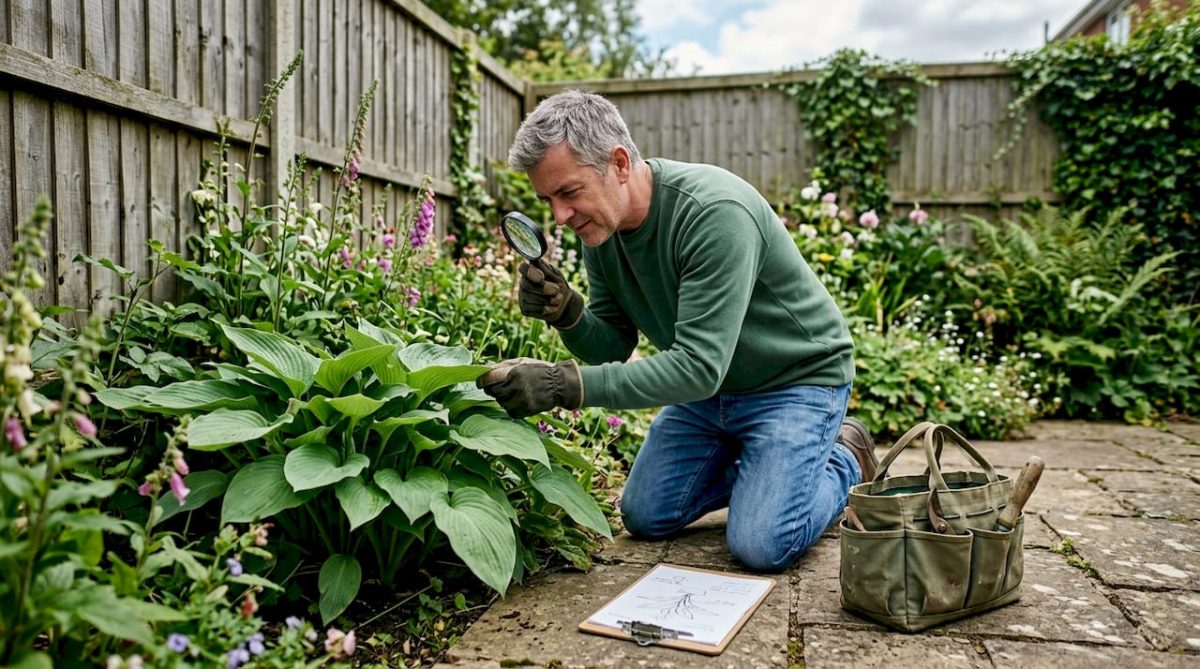
Recognising an invasive plant early is the single most effective way to protect your property. Visual indicators vary by season, so knowing what to look for throughout the year is essential. In spring and summer, watch for unusually rapid growth, dense canopy formation, and the suppression of surrounding native plants. In autumn and winter, identification becomes significantly harder because many species die back above ground while their root and rhizome networks remain fully active underground.
Several factors elevate a plant from a nuisance to a genuine high-risk threat:
- Proximity to structures: Roots and rhizomes can undermine foundations, drainage systems, and hard standing.
- Proximity to watercourses: Species near rivers or streams can spread rapidly downstream, triggering legal obligations.
- Schedule 9 listing: Plants listed under Japanese Knotweed laws carry strict legal controls in England and Wales.
- EU and national lists: Ireland and Northern Ireland operate equivalent regulatory frameworks.
- Speed of spread: A plant doubling its footprint annually poses a far greater risk than a slow-growing species.
One of the most underestimated challenges is winter identification. Rhizomes extend 7m+ from visible growth, meaning a plant that appears absent above ground may be actively spreading below the surface. Dormant knotweed, in particular, is notoriously difficult to detect without professional equipment and trained eyes.
Pro Tip: Do not rely solely on visual checks in winter. If you suspect an invasive species, commission a survey in late spring or early summer when above-ground growth is at its most identifiable.
Self-identification carries real risk. Studies suggest that only 27% of DIY identification attempts are accurate. A PCA-accredited surveyor brings specialist knowledge, legal credibility, and documented evidence that satisfies mortgage lenders and insurers. The RHS invasive plant guidance provides a useful starting reference, but it does not replace a professional site assessment.
The common garden invaders every homeowner should know
Understanding how to spot risk factors sets you up to tackle these specific invaders. The following species appear most frequently in professional surveys across England, Wales, and Ireland, and each carries distinct identification features and legal implications.
Common invasive garden plants include Japanese Knotweed, Giant Hogweed, Himalayan Balsam, Giant Rhubarb, Cotoneaster, Montbretia, Water Fern, Three-cornered Garlic, and Hottentot Fig. Each requires a different management approach.
| Plant | Key identification features | Legal status (England/Wales/Ireland) | Preferred habitat | Management difficulty |
|---|---|---|---|---|
| Japanese Knotweed (Fallopia japonica) | Hollow canes, shovel-shaped leaves, cream flowers | Schedule 9 / S.I. 477 | Gardens, roadsides, riverbanks | High |
| Giant Hogweed (Heracleum mantegazzianum) | Enormous white flower umbels, toxic sap, 5m+ height | Schedule 9 / S.I. 477 | Riverbanks, waste ground | Very high |
| Himalayan Balsam (Impatiens glandulifera) | Pink-purple flowers, explosive seed pods | Schedule 9 | Riverbanks, damp areas | Moderate |
| Giant Rhubarb (Gunnera tinctoria) | Enormous leaves up to 2m, spiny stems | Plants of national concern in Ireland | Wetlands, coastal areas | High |
| Cotoneaster | Dense berry-laden shrub, suppresses native flora | Schedule 9 (some species) | Walls, cliffs, gardens | Moderate |
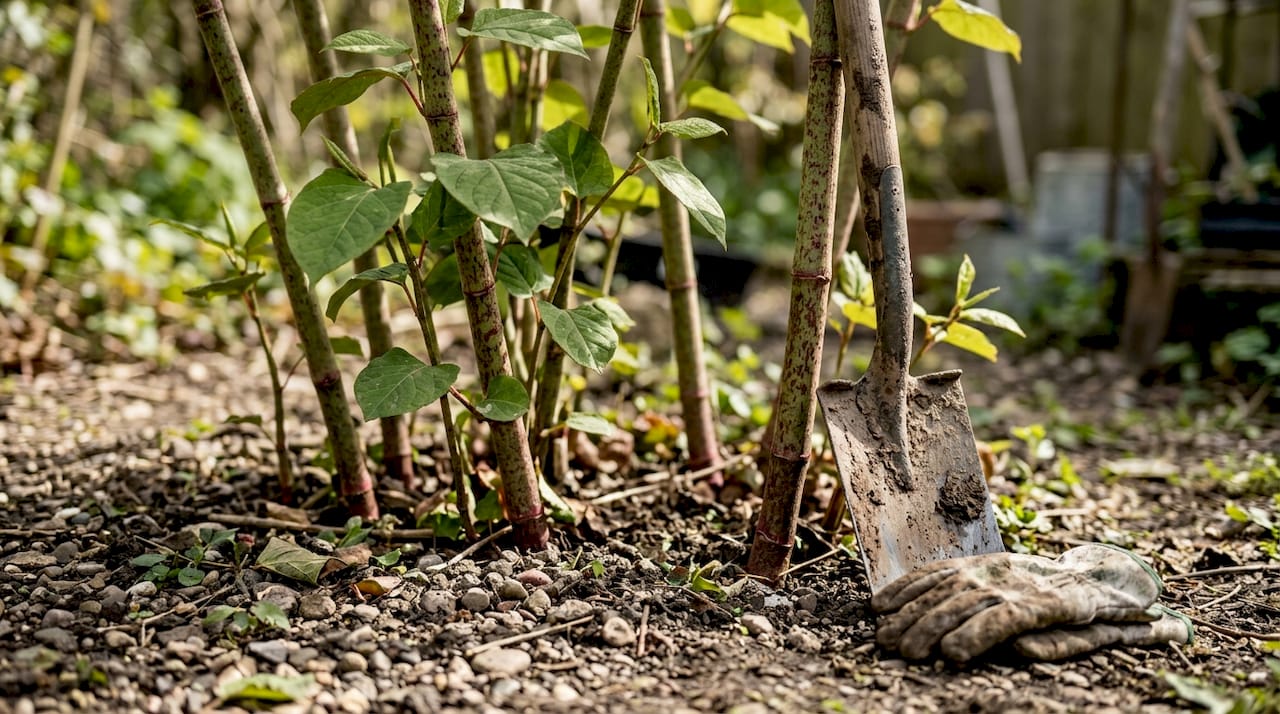
For Japanese Knotweed specifically, look for the distinctive zigzag stem pattern, bamboo-like hollow canes in late summer, and the characteristic shovel or heart-shaped leaf with a flat base. In spring, red and purple shoots emerge rapidly from the ground. These best practices for removal start with accurate identification.
Monitor your property boundaries and any areas adjacent to watercourses with particular attention. Invasive species spread most aggressively along water corridors, and a neighbour’s unmanaged infestation can become your legal problem faster than you might expect.
Comparison of treatment and management strategies
Knowing which plant you’re fighting, let’s compare your management options side-by-side. The right approach depends on the species, the size of the infestation, proximity to structures or water, and your legal obligations.
| Method | Suitability | Time to control | Approximate cost | Ecological impact |
|---|---|---|---|---|
| Herbicide treatment | Most species, open sites | 3 to 5 years | Low to moderate | Moderate (chemical residue) |
| Excavation and disposal | All species, urgent cases | Weeks to months | High | Low if managed correctly |
| Root barrier installation | Boundary containment | Immediate containment | Moderate | Minimal |
| Thermo-electric treatment | Japanese Knotweed, eco-sensitive sites | Multiple seasons | Moderate | Very low |
| DIY manual removal | Small, non-regulated patches only | Variable | Low | Variable |
The RHS control guidance favours non-chemical approaches wherever practical, and mortgage lenders increasingly prefer professionally insured management plans over DIY interventions. The non-chemical removal advantages are particularly significant for sites near water, where herbicide use is tightly regulated.
Key risks of DIY management:
- Fragment regrowth: Even a small piece of Japanese Knotweed rhizome can regenerate a full plant.
- Unintentional spreading: Moving contaminated soil without proper controls is a criminal offence.
- No legal protection: DIY treatment does not satisfy lender or insurer requirements.
- Misidentification: Treating the wrong plant wastes time and may allow the actual invader to spread unchecked.
For a detailed breakdown of when excavation is preferable to chemical treatment, the excavation vs chemical treatment comparison sets out the decision criteria clearly.
Pro Tip: For properties near watercourses or in ecologically sensitive areas, thermo-electric treatment is often the only viable professional option. It causes internal cell damage and depletes the rhizome’s energy reserves without introducing any chemical residue into the surrounding environment.
Legal responsibilities and when to seek professional help
Choosing a management plan is not just practical. It is legal. Here is how the law affects your garden strategy.
Schedule 9 of the Wildlife and Countryside Act 1981 covers England, Wales, and Northern Ireland, making it an offence to plant or cause regulated species to grow in the wild. The Republic of Ireland operates under S.I. 477, Regulation 49, which carries equivalent prohibitions. Critically, it is not illegal to have Japanese Knotweed on your land, but you must prevent its spread.
Key legal obligations for homeowners:
- Controlled waste: Knotweed and other regulated invasive material must be disposed of at a licensed facility. Fly-tipping contaminated soil is a serious criminal offence.
- Neighbour liability: If your infestation spreads onto a neighbouring property, you may face a civil claim.
- Property transactions: Most lenders demand PCA-accredited surveys before approving a mortgage on affected properties.
- Insurance: Some insurers will not cover properties without a documented management plan in place.
The legal impact for homeowners extends beyond fines. Undisclosed invasive species at the point of sale can result in post-completion claims from buyers. The PCA legislation guide sets out the professional standards that accredited surveyors must meet.
If an infestation is spreading beyond your boundary or towards a watercourse, you have a duty to report it promptly to the Environment Agency or your local authority. Early reporting demonstrates responsible land management and can protect you from future enforcement action.
Prevention and long-term protection strategies
Legal and management strategies aside, keeping your property secure means proactive prevention at all times.
The most effective strategy is not planting regulated non-native species in the first place. Before purchasing any ornamental plant, verify it against the Schedule 9 list and the RHS Japanese Knotweed guidance. Several popular garden plants, including some Cotoneaster varieties, are regulated despite being widely sold.
A practical long-term protection plan includes:
- Annual garden survey: Walk your boundaries in late spring when growth is most visible. Photograph anything unusual.
- Watercourse monitoring: Check areas adjacent to streams or drainage channels at least twice yearly.
- Neighbour communication: Early, friendly dialogue about a shared boundary issue prevents costly disputes later.
- Reporting obligations: Contact the Environment Agency or local authority if you observe uncontrolled spread beyond your land.
- Ongoing records: Dated photographs and written logs support any future legal defence or property transaction.
Chemical-free solutions are gaining significant traction as the preferred approach for long-term management, particularly on properties near water or in areas of ecological sensitivity. Mulching, manual removal of small non-regulated species, and thermo-electric treatment all offer effective control without the environmental drawbacks of herbicide programmes.
Pro Tip: Keep a dedicated folder, digital or physical, with all survey reports, treatment records, and correspondence relating to invasive plants on your property. This documentation is invaluable during any property transaction or insurance claim. The Irish invasive plant guides offer region-specific advice for homeowners in the Republic.
Why ‘quick fixes’ rarely solve garden invader problems
Before you act, consider why most shortcut strategies backfire and what experienced professionals have consistently observed.
The belief that a single season of treatment will eliminate Japanese Knotweed is one of the most persistent and costly misconceptions in property management. The rhizome network can extend several metres below ground and several metres laterally from any visible growth. Cutting back above-ground canes without addressing the root system simply redirects the plant’s energy into producing new shoots the following season.
The hidden financial costs compound quickly. Lenders may refuse mortgage applications, neighbours may pursue civil claims, and re-sale valuations can reflect the unresolved infestation for years. Only 27% of DIY identification attempts are accurate, which means many homeowners are treating the wrong plant entirely while the actual invader continues to spread.
Multi-year, professionally guaranteed management plans are not an upsell. They are the only framework that satisfies lenders, insurers, and legal obligations simultaneously. A current, professionally documented survey is the only reliable basis for any property transaction involving a suspected invasive species. Following established removal best practices from the outset saves considerably more than it costs.
Get expert support for your invasive plant challenge
If you have identified or suspect an invasive species on your property, professional support is not optional. It is the foundation of legal compliance, mortgage approval, and long-term peace of mind.

Japanese Knotweed Agency provides accredited property surveys across England, Wales, and Ireland, delivering site assessments, detailed mapping, and fully documented management strategies. Our pioneering thermo-electric treatment deploys up to 5,000 volts directly into the rhizome network, causing internal cell damage and depleting energy reserves without any chemical residue. For properties requiring containment, we also install root barriers and carry out professional excavation works. Explore our invasive species eradication plan or learn more about our chemical-free treatment process to take the right next step.
Frequently asked questions
Which garden plant invaders are most strictly regulated in England and Ireland?
Japanese Knotweed, Giant Hogweed, Himalayan Balsam, and Giant Rhubarb are heavily regulated under UK Schedule 9 and Irish S.I. 477, with strict controls on planting, spreading, and disposal.
Is it illegal to have Japanese Knotweed in my garden?
It is not illegal to possess Japanese Knotweed on your own land, but you must prevent its spread; planting it in the wild or disposing of it improperly is a criminal offence.
How can I tell if a plant is a regulated invader?
Look for rapid dense spreading, large root or rhizome systems, and cross-reference with RHS regulated plant lists and Schedule 9 to confirm the species and its legal status.
Do I need a professional survey to sell a house with Japanese Knotweed?
Yes. PCA-accredited surveys are required by most mortgage lenders before they will approve a sale or remortgage on a property affected by Japanese Knotweed.
What is the fastest guaranteed removal method for common garden invaders?
Excavation and disposal is the quickest option but carries the highest cost, while multi-year professional management plans offer long-term control backed by insurance and guarantees.