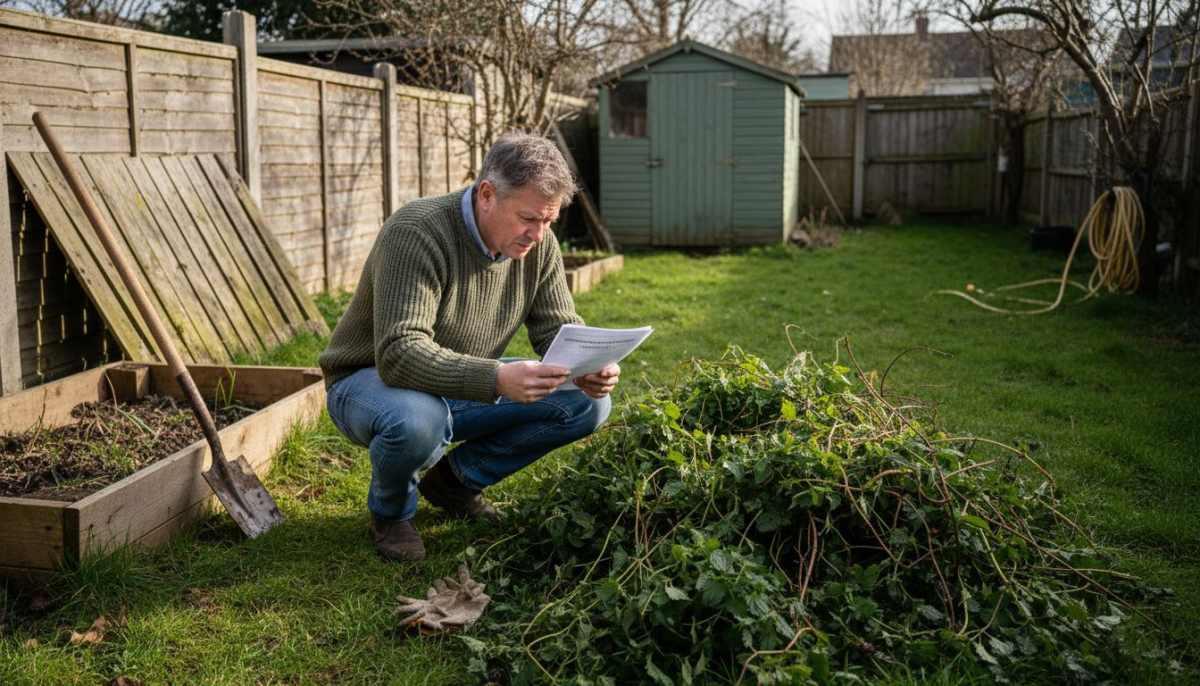
Living with Japanese Knotweed on your property in England or Wales can quickly turn from a gardening headache into a complex legal and financial concern. Invasive species such as this not only endanger our native biodiversity but also carry strict responsibilities for every homeowner. Understanding the rules surrounding control and chemical-free eradication helps you protect both your land and your peace of mind, while staying compliant with tough regulations designed to safeguard local ecosystems.
Table of Contents
- Definition of Invasive Species and Control
- Why Control Matters Now
- Legal Framework in England and Wales
- Local Authority Powers and Enforcement
- Prohibited Actions and Restricted Species
- Exemptions and Permitted Circumstances
- Permitted Eradication Methods Without Chemicals
- Post-Removal Habitat Restoration
- Homeowner Obligations and Potential Penalties
- Liability for Spread Beyond Your Property
Key Takeaways
| Point | Details |
|---|---|
| Understanding Invasive Species | Invasive species, such as Japanese Knotweed, threaten native biodiversity and can have significant legal and financial implications for homeowners. |
| Legal Responsibilities | Property owners must actively manage invasive species on their land and are liable for any spread to neighbouring properties. |
| Control and Management Strategies | Early detection and proactive control are essential; homeowners should engage professionals for treatment and document all management efforts. |
| Economic Consequences | Failing to disclose invasive species during property transactions can lead to substantial financial losses and legal claims from buyers. |
Definition of Invasive Species and Control
An invasive species is a non-native plant, animal, or organism that has been introduced outside its normal geographical range, typically through human activity, and causes significant harm to native ecosystems, biodiversity, or the economy. Not every non-native species becomes invasive—only those that establish rapidly, spread aggressively, and damage their new environment earn that classification. In Great Britain, invasive non-native species are recognised as major drivers of biodiversity loss and pose serious threats to both natural habitats and economic interests.
What makes a species invasive rather than simply “foreign” comes down to impact. A non-native plant or creature might arrive in a new country without causing problems. Japanese Knotweed, however, exemplifies true invasiveness. It outcompetes native vegetation, destabilises soil structures, spreads through rhizomes that can extend metres underground, and can penetrate concrete and tarmac. The species thrives in conditions where native plants cannot, fundamentally altering habitats and making control exceptionally difficult without intervention.
Invasive species harm ecosystems in several measurable ways:
- Outcompeting native species for light, water, nutrients, and space, reducing biodiversity
- Spreading disease to native plants and animals
- Altering physical habitats through changes to soil chemistry, water availability, or structural composition
- Disrupting ecological balances by introducing predators or parasites with no natural controls in place
- Causing economic damage through crop loss, property damage, and costly management efforts
For homeowners in England and Wales, the legal and practical implications are substantial. Selling a property where Japanese Knotweed is present triggers mandatory disclosure obligations, and most mortgage lenders will refuse to lend without evidence of treatment and management plans. This transforms what might seem like a garden problem into a serious property matter with real financial consequences.
Invasive species are among the most significant threats to biodiversity globally, and controlling them is essential to protecting native ecosystems and achieving environmental targets.
Why Control Matters Now
Control of invasive species has shifted from optional to mandatory in many circumstances. Early detection and rapid response prevent infestation from becoming entrenched, which makes treatment exponentially more expensive and time-consuming. Once invasive species establish themselves across multiple properties or large areas, eradication becomes nearly impossible. Chemical-free control methods, such as thermo-electric treatment that delivers direct energy to destroy plant cells and deplete rhizome energy reserves, offer homeowners effective alternatives that avoid soil contamination and protect groundwater.
The strategy for managing invasive species involves six key stages:
- Prevention – stopping introduction of new invasive species through biosecurity measures
- Early detection – identifying invasive species as soon as they appear
- Monitoring – tracking established populations to assess spread and treatment effectiveness
- Rapid response – acting quickly when new invasions are detected
- Long-term management – controlling established invasive populations over years or decades
- Eradication – complete removal where feasible, particularly on smaller infestations
For a homeowner discovering Japanese Knotweed or other invasive species on their property, understanding these stages helps set realistic expectations. A small, newly discovered infestation may be eradicated within a few seasons through consistent treatment. A mature, extensive infestation requires long-term management and may never be fully eradicated without excavation.
To help clarify the stages of invasive species management, the following table summarises each phase and its main purpose:
| Stage | Description | Typical Outcome |
|---|---|---|
| Prevention | Biosecurity and avoidance | Stops new introductions |
| Early Detection | Identifying invaders quickly | Enables prompt response |
| Monitoring | Tracking populations and progress | Assesses spread and treatment success |
| Rapid Response | Immediate action upon detection | Prevents establishment and escalation |
| Long-term Management | Ongoing control over time | Reduces densities and minimises impact |
| Eradication | Complete removal where feasible | Restores natural habitats |
Pro tip: If you suspect invasive species on your property, arrange a professional survey immediately rather than waiting—early intervention is significantly cheaper and more effective than managing a mature infestation, and surveys are often required by mortgage lenders before you can sell.
Legal Framework in England and Wales
The legal framework governing invasive species control in England and Wales is a structured system designed to prevent, manage, and eradicate invasive species before they cause irreversible ecological damage. At its foundation lies The Invasive Alien Species (Enforcement and Permitting) Order 2019, which enforces the Retained EU Regulation (1143/2014) domestically. This legislation represents the UK’s commitment to international obligations and creates enforceable rules that homeowners, businesses, and local authorities must follow. Understanding this framework is essential because non-compliance can result in significant penalties and liability issues.
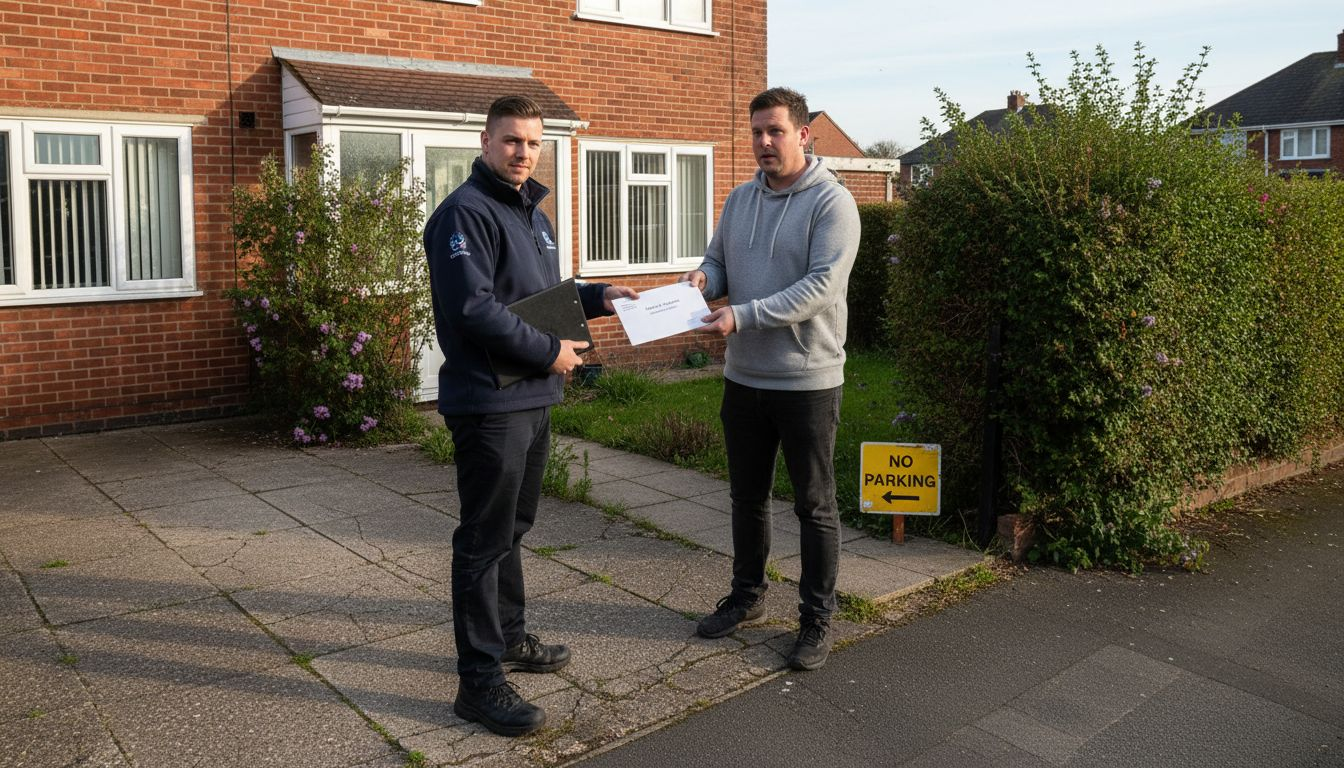
The legislation prohibits specific actions regarding species designated as particularly concerning. You cannot lawfully import, keep, breed, transport, sell, or release any species listed on the UK government’s official invasive species register without explicit permission. Japanese Knotweed sits at the forefront of these regulated species, which means that if you discover it on your property, you have a legal obligation to manage and control it. Failure to do so can result in enforcement action by the Environment Agency or local authorities, who possess powers to serve control orders requiring you to eradicate the species at your own cost.
The framework includes several critical mechanisms that directly affect homeowners:
- Species control agreements – negotiated arrangements between property owners and authorities to manage invasive species through specified methods and timescales
- Species control orders – mandatory enforcement tools issued when voluntary control fails, requiring property owners to implement removal or containment measures
- Prohibition on sale or trade – preventing the commercial movement of regulated species, which stops their spread across regions
- Import restrictions – preventing new invasive species from entering the UK through biosecurity measures
- Legal liability – making property owners responsible for invasive species on their land, even if they didn’t introduce it
For property sales, the legal implications become especially significant. When selling a property where Japanese Knotweed or other invasive species are present, you must legally disclose this information to potential buyers. Mortgage lenders typically require evidence of treatment, a management plan, or a Japanese Knotweed warranty guarantee before approving lending. This creates a practical chain of legal consequences: failing to disclose can result in breach of contract claims from buyers after completion, whilst mortgage refusal means your property simply will not sell.
The legal framework makes property owners legally responsible for invasive species on their land and grants authorities enforcement powers to require eradication at the owner’s expense.
Local Authority Powers and Enforcement
Local authorities in England and Wales possess significant powers under this framework to compel invasive species control. If an invasive species is spreading from your property onto neighbouring land or public areas, the local council can serve you with a formal notice requiring removal within a specified timeframe. If you fail to comply, the authority can carry out the work and charge all costs to you, including administrative expenses and contractor fees. These costs can reach thousands of pounds, making early voluntary control far more economical.
The Environment Agency and local authorities conduct routine monitoring and receive reports from concerned citizens. If your property is identified as harbouring invasive species, you will typically receive formal notification before enforcement action, giving you the opportunity to arrange private control measures. Professional treatment through chemical-free methods such as thermo-electric treatment can demonstrate your commitment to proper management and often satisfies enforcement requirements more efficiently than traditional approaches.
Pro tip: Document all invasive species control efforts with photographs, treatment dates, and contractor reports—this evidence protects you legally if authorities inspect your property and demonstrates good faith compliance with regulations.
Prohibited Actions and Restricted Species
Legislation in England and Wales creates a strict prohibition list governing what you can and cannot do with invasive species. The scope is remarkably broad—it covers not just the living organisms themselves, but their reproductive parts and any action that might allow them to spread. There are currently 36 invasive alien plant species listed as species of special concern, alongside 30 invasive non-native animal species that fall under legal restriction. Understanding what is prohibited is critical because the consequences for breaching these rules are severe and extend far beyond simple fines.
The prohibited actions under invasive plant species rules are unambiguous. You cannot import these species into England or Wales, nor can you keep them on your property, breed them, transport them, sell them, or grow them intentionally. The legislation goes further still—you cannot allow them to proliferate or spread, which means if you discover an invasive plant on your land and do nothing about it, you are technically in breach. This has profound implications for homeowners who inherit invasive species infestations with their properties. Passive acceptance is not a legal option.
The restrictions apply to every part of regulated species, not just the main plant body. Seeds, fragments of rhizomes, tubers, and any reproductive material are equally prohibited. This is why Japanese Knotweed control requires such meticulous attention to detail. A single rhizome fragment discarded carelessly can regenerate into a new infestation. If you excavate Japanese Knotweed and dispose of soil containing rhizome pieces at an unregistered waste site, you are committing a breach. Professional disposal to licensed facilities is not merely advisable—it is legally required.
Animals present an equally strict framework. Invasive non-native animal species cannot legally be kept, bred, transported, sold, released, or allowed to escape. These prohibitions exist because invasive animals like American mink, raccoons, and muntjac deer cause significant ecological damage once established. Unlike plants that spread through localised mechanisms, invasive animals can disperse rapidly across regions, making prevention far more cost-effective than control after establishment.
Prohibited actions on invasive species include:
- Importing regulated species into the UK
- Keeping them in captivity or on your property
- Breeding them intentionally or allowing natural reproduction
- Transporting them across regions or to different properties
- Selling them commercially or privately
- Growing them as ornamental plants or for any purpose
- Allowing them to spread without implementing control measures
- Disposing of them improperly at unauthorised waste sites
- Releasing them into the environment, either intentionally or through negligence
The legislation makes you liable for invasive species on your property regardless of how they arrived there, and passive inaction constitutes a breach of the law.
Exemptions and Permitted Circumstances
Whilst the prohibitions are broad, specific exemptions exist for legitimate purposes. Scientific research conducted under proper licensing may involve restricted species if the research serves conservation objectives or public health. Similarly, authorised destruction programmes—where professional contractors are explicitly permitted to handle and eliminate invasive species—fall outside the prohibition. The critical word is “authorised.” If you hire an unqualified contractor who lacks proper licensing to handle restricted species, both you and the contractor may face liability.
For homeowners, the practical exemption involves engaging licensed professionals to control invasive species on their property. When you arrange professional treatment through chemical-free methods such as thermo-electric treatment, the contractor operates under specific licensing arrangements that allow them to handle the species legally. The responsibility shifts to the contractor to comply with transport, handling, and disposal regulations. This is why using established, accredited specialists is essential—they carry the expertise and regulatory compliance needed to manage the process legally.
One crucial misunderstanding concerns storage and temporary holding. You cannot simply remove Japanese Knotweed and store it in a corner of your property whilst deciding what to do with it. Once excavated, it must be transported to a licensed waste facility within strict timeframes. Some homeowners have faced enforcement action for storing excavated Japanese Knotweed material on-site, believing temporary storage was acceptable. It is not.
Pro tip: Before engaging any contractor to handle invasive species, verify their licensing and ask specifically about their waste disposal methods—request confirmation that all excavated material will be transported to a licensed facility, and keep documentation of this arrangement for your legal protection.
For homeowners, understanding both prohibited actions and exemptions improves compliance. Here is a quick reference for legal responsibilities and permitted exceptions:
| Legal Requirement | Description | Permitted Exception |
|---|---|---|
| Prohibit possession | No invasive species allowed on property | Licensed research or professional control |
| Ban transport/disposal | Cannot move or dispose of material informally | Accredited contractor handles legal disposal |
| Mandate disclosure | Must inform buyers of infestations | None; disclosure always required |
| Compulsory eradication | Must actively control and prevent spread | Only waived if managed by authorities |
Permitted Eradication Methods Without Chemicals
Chemical herbicides are not the only—or even the best—option for controlling invasive species in England and Wales. In fact, legislation actively encourages non-chemical approaches where feasible, and regulators increasingly favour methods that avoid soil contamination and groundwater risk. The government’s guidance on invasive plant control emphasises physical removal techniques including hand-pulling, cutting, digging out root systems, and systematic mowing to prevent seed dispersal. For homeowners dealing with Japanese Knotweed or other invasive species, understanding these permitted methods is essential because they offer effective alternatives that comply fully with environmental regulations.
Physical removal remains the foundation of non-chemical control, though its effectiveness depends heavily on timing, technique, and follow-up management. Hand-pulling works only for small, young plants with shallow root systems—attempting to hand-pull an established Japanese Knotweed infestation is futile and potentially counterproductive, as broken rhizome fragments will simply regenerate. Cutting and mowing prevent seed production and reduce above-ground biomass, but they do not eliminate root systems. Digging out root systems is more effective but requires excavation to depths often exceeding one metre, and any rhizome fragments left in the soil will regrow. This is why physical removal alone rarely achieves complete eradication without being combined with other methods.
Modern non-chemical eradication has evolved significantly beyond basic physical removal. Thermo-electric treatment represents a breakthrough approach that delivers direct electrical energy to plant tissue, causing internal cellular damage and depleting energy resources throughout extensive rhizome networks. This method works by penetrating deep into soil without requiring excavation, destroying the plant’s ability to regenerate. Unlike physical removal, which only affects visible parts, thermo-electric treatment targets the hidden rhizome system where invasive plants store their reserves. Treatment must be repeated at intervals to ensure all rhizome reserves are depleted, typically over one to two growing seasons, but this approach avoids the soil disturbance and contamination risks associated with chemical herbicides.
Effective non-chemical control methods include:
- Hand-pulling – suitable only for small, young plants with shallow roots
- Cutting and mowing – reduces above-ground growth and prevents seed dispersal
- Digging and excavation – removes root systems but requires careful disposal and follow-up monitoring
- Thermo-electric treatment – destroys plant cells and depletes rhizome reserves without chemicals
- Root barriers – prevents rhizome spread to adjacent areas by installing physical containment
- Habitat restoration – planting native vegetation to outcompete invasive species and prevent reinvasion
- Biosecurity practices – cleaning equipment and clothing to prevent spread during removal activities
Disposal of invasive plant material is as important as removal itself. Effective disposal methods include burning or burying material off-site at licensed waste facilities, never in your garden or local green waste collection. Japanese Knotweed material especially must never be composted or left where it could regenerate. Professional contractors use licensed facilities specifically equipped to handle invasive species waste, destroying material through high-temperature processing that kills all viable rhizome fragments. Improper disposal can spread infestations to new locations and violates environmental legislation.
Successful non-chemical eradication combines immediate control methods with habitat restoration, preventing reinvasion by establishing native vegetation that naturally suppresses invasive species.
Post-Removal Habitat Restoration
The final critical step in non-chemical eradication is habitat restoration. After removing invasive species, bare ground becomes vulnerable to reinvasion because invasive plants specialise in colonising disturbed areas. Native vegetation, by contrast, competes strongly with invasive species and gradually restores ecological function. Planting native shrubs, perennials, and ground covers appropriate to your local environment creates conditions where invasive species struggle to re-establish. This step often determines long-term success—properties that remove invasive species but leave bare ground frequently experience reinfestation within two to three years.
Consistent monitoring after removal is essential. Invasive species can regrow from rhizome fragments missed during initial removal, so regular inspection during the growing season allows you to spot and treat any regrowth before it becomes established again. This monitoring phase typically lasts two to three years after major removal efforts. Many homeowners underestimate this phase, assuming eradication is complete once the main infestation is gone. Early vigilance prevents regrowth from becoming a full reinfestation requiring expensive repeat treatment.
Pro tip: After professional removal or treatment, maintain detailed records of all work completed with dates and photographs—this documentation demonstrates to future buyers and mortgage lenders that the invasive species has been actively managed and controlled, significantly improving your property’s marketability.
Homeowner Obligations and Potential Penalties
Homeownership brings legal responsibilities that many people don’t fully appreciate until they discover invasive species on their property. Unlike some areas of property law where ignorance provides a defence, invasive species management operates on strict liability principles. This means you can be held legally responsible for invasive species on your land regardless of whether you introduced them, planted them, or inherited them from a previous owner. Understanding your obligations now protects you from enforcement action, financial penalties, and property complications later.
Your primary legal obligation is straightforward: you must not plant, allow to grow, or cause invasive species to spread on your property. Homeowner responsibilities for invasive plants extend beyond simply not planting them—passive inaction when invasive species are present constitutes a breach. If Japanese Knotweed exists on your land and spreads to neighbouring properties or public areas, you can be held liable for the costs of removal and any ecological damage caused. Local authorities can serve enforcement notices requiring you to eradicate invasive species within specified timeframes, and failure to comply results in the council carrying out the work and charging all costs to you, often with substantial administrative fees added.
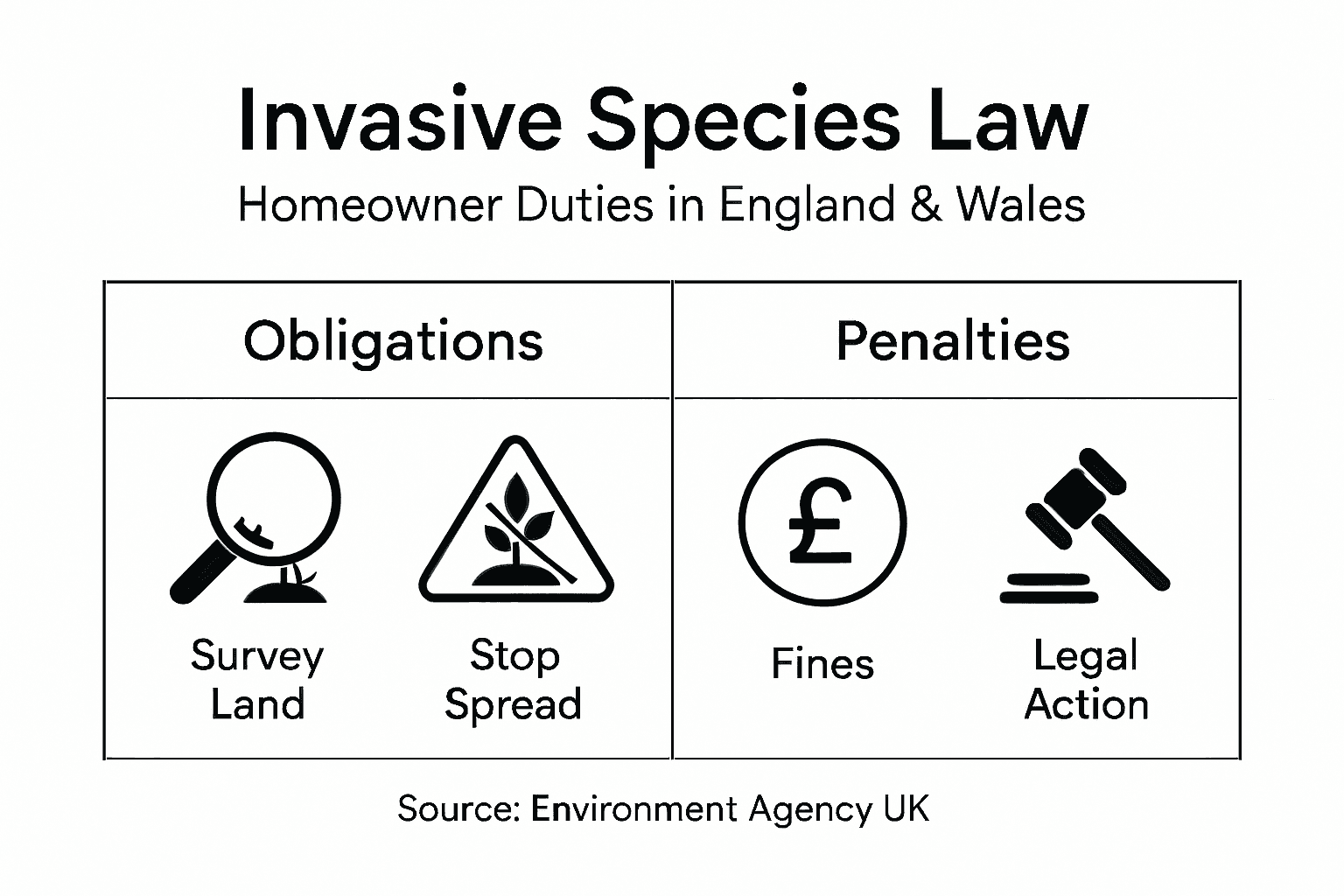
The financial consequences of non-compliance are severe. Fines under invasive species legislation can reach thousands of pounds, and in serious cases involving deliberate or reckless spread, criminal penalties including imprisonment are possible. More commonly, homeowners face financial exposure through property devaluation, mortgage complications, and enforcement costs. A property with unmanaged Japanese Knotweed typically loses 5–15% of market value, and many buyers walk away entirely once infestation is disclosed. Mortgage lenders refuse to lend on properties with known invasive species unless treatment plans and warranties are in place, making such properties effectively unsellable.
Key homeowner obligations include:
- Prevention – ensuring invasive species are not introduced or spread through your actions
- Detection – monitoring your property for invasive species and reporting them if discovered
- Management – taking active steps to control and eradicate invasive species present on your land
- Disclosure – revealing invasive species to potential buyers during property transactions
- Compliance – responding promptly to enforcement notices from local authorities
- Proper disposal – ensuring all invasive plant material is disposed of at licensed facilities
- Documentation – maintaining records of management efforts and professional treatments
Property transactions deserve special attention. When selling your home, you are legally required to disclose invasive species to potential buyers. Estate agents and conveyancers typically ask specific questions about Japanese Knotweed and other invasive species. Failing to disclose known infestations can result in breach of contract claims after completion, allowing buyers to pursue damages. These claims can be substantial—covering the cost of treatment, property devaluation, and legal fees. Some buyers have successfully recovered £20,000–£50,000 from sellers who failed to disclose invasive species.
Homeowners can be held legally liable for invasive species spreading from their property even if they didn’t introduce it, and liability extends to enforcement costs, property devaluation, and buyer claims.
Liability for Spread Beyond Your Property
A critical aspect of homeowner obligations concerns liability when invasive species spread beyond your land. Whilst you are not legally required to control invasive species on your property in isolation, you become legally liable the moment they spread to neighbouring land or public areas. Landowners can be held liable under the Wildlife and Countryside Act and related environmental legislation if invasive species from their property cause damage. This means a neighbour could sue you for the cost of removing Japanese Knotweed that spreads from your garden to theirs. Local authorities can also pursue cost recovery if they have to remove invasive species that originated from your property.
This liability creates a powerful incentive to manage invasive species proactively rather than waiting for enforcement action. Demonstrating good faith efforts to control invasive species—through professional surveys, documented treatment, and habitat restoration—significantly reduces your legal exposure. If you can show that you took reasonable steps to manage invasive species, courts and authorities view your position far more favourably than if you ignored the problem entirely. Conversely, if you were aware of invasive species and took no action, you face maximum liability for enforcement costs, damages, and potentially criminal penalties.
The practical pathway to protecting yourself involves several essential steps. First, arrange a professional survey if you suspect invasive species on your property—early detection is infinitely cheaper than managing a mature infestation. Second, engage qualified professionals to implement control measures, preferably non-chemical methods that avoid environmental damage. Third, maintain meticulous documentation of all work completed. Fourth, respond promptly to any enforcement notices from local authorities. Fifth, disclose everything honestly during property transactions.
Pro tip: Obtain a professional Japanese Knotweed survey before buying a property and request a management plan or ten-year warranty guarantee as a condition of purchase—this shifts liability to the seller and protects your investment from hidden invasive species costs.
Protect Your Property from Legal Risks with Expert Invasive Species Control
The legislation surrounding invasive species places heavy responsibilities on homeowners to detect, control, and disclose infestations like Japanese Knotweed. Ignoring these duties can result in costly enforcement actions and reduced property value. At Japanese Knotweed Agency, we understand the urgent need to manage invasive species legally and effectively. Our pioneering chemical-free treatments deliver up to 5000 volts of direct energy on site, destroying rhizomes deeply without soil contamination. We also offer professional root barrier installation and excavation to ensure thorough control.
Act now to safeguard your home and investment. Arrange a professional invasive species survey across England, Wales, or Ireland to identify risks early. Discover how our advanced thermo-electric treatment methods comply fully with UK regulations, protect your neighbours, and provide documented proof of control for conveyancing and mortgage requirements. Visit Japanese Knotweed Agency today to take the first step towards peace of mind and compliance.
Frequently Asked Questions
What are the legal obligations of homeowners regarding invasive species?
Homeowners are legally obligated to manage, control, and prevent the spread of invasive species on their property, even if they did not introduce them. Failing to act can result in significant financial penalties and liability issues.
What actions are prohibited under invasive species legislation?
The legislation prohibits homeowners from importing, keeping, breeding, transporting, selling, or allowing invasive species to spread on their property. Passive inaction when invasive species are present is also considered a breach of the law.
What should I do if I discover invasive species on my property?
If you discover invasive species, it is essential to arrange a professional survey immediately. Early detection and intervention are crucial to prevent further infestation and legal complications.
What are the potential penalties for non-compliance with invasive species laws?
Penalties for non-compliance can include fines reaching thousands of pounds, liability for eradication costs, and even criminal penalties in serious cases. Homeowners may also face property devaluation and complications in property sales due to untreated infestations.