

TL;DR:
- Japanese Knotweed’s underground rhizome system can spread across property boundaries, affecting multiple sites.
- Cross-site contamination impacts property values, legal obligations, and mortgage eligibility for homeowners.
- Coordinated community efforts and professional surveys are crucial for effective management and prevention.
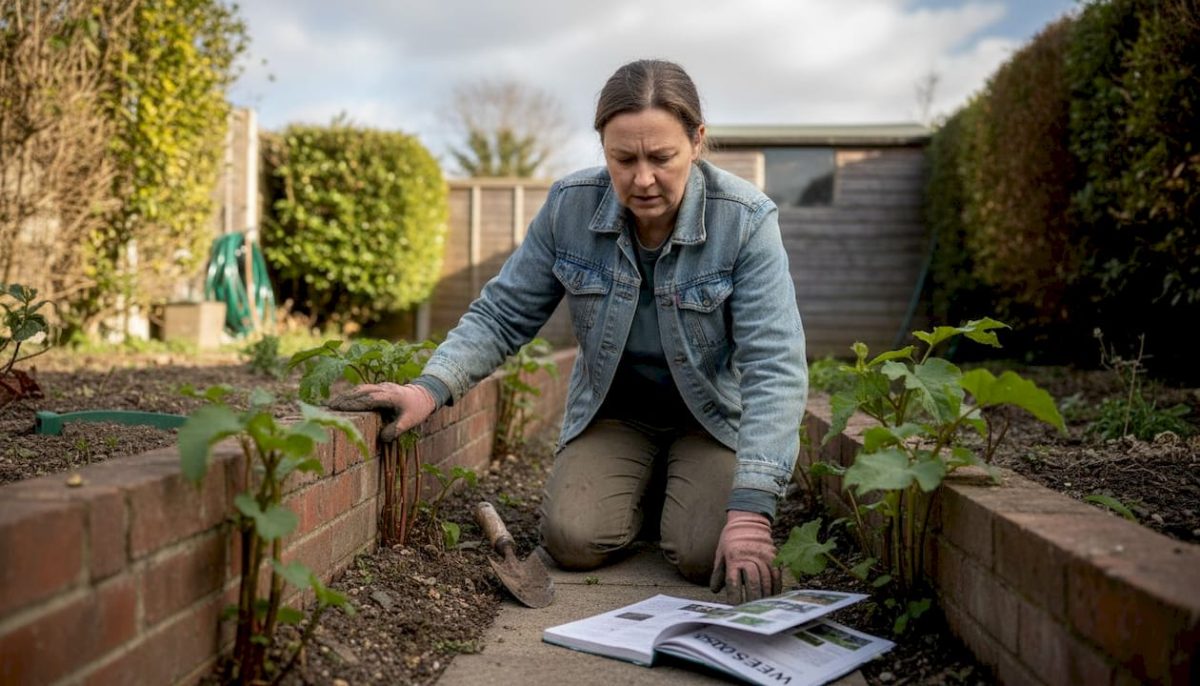
Japanese Knotweed is rarely a problem that stays neatly within one set of boundary fences. The rhizome network, which can extend three metres deep and seven metres laterally, respects neither garden walls nor legal property lines. For property buyers and homeowners across England, Wales, and Ireland, this means a neighbour’s untreated knotweed can directly threaten your mortgage prospects, your legal standing, and your property’s market value. Cross-site risk demands boundary surveys to establish the full extent of contamination. This article sets out what cross-site contamination means in practice, the legal and financial consequences, and the most effective chemical-free steps you can take.
Table of Contents
- What is cross-site knotweed contamination?
- Property and legal consequences of cross-site contamination
- How to detect and assess boundary contamination risks
- Chemical-free treatment options and cross-site prevention
- A fresh perspective: why cross-site knotweed risks demand a community response
- Expert help for cross-site knotweed contamination
- Frequently asked questions
Key Takeaways
| Point | Details |
|---|---|
| Cross-site contamination risk | Japanese Knotweed can easily invade neighbouring properties and trigger legal and financial difficulties. |
| Survey and disclosure are vital | Boundary surveys and TA6 disclosure are essential for property buyers and sellers facing knotweed risks. |
| Mortgage and value impacts | Knotweed presence can reduce property value by 5–15% and complicate mortgage approval. |
| Chemical-free control possible | Physical barriers, routine monitoring, and coordinated action support safe, chemical-free knotweed management. |
What is cross-site knotweed contamination?
Cross-site Japanese Knotweed contamination occurs when the plant’s underground rhizome system, or its above-ground stems and fragments, migrates from one property onto an adjacent or nearby site. Unlike many garden plants, Japanese Knotweed does not need seeds to spread. A fragment of rhizome as small as a fingernail can establish an entirely new colony, which is why construction works, fly-tipping, and even heavy rainfall can carry contamination across boundaries without anyone noticing.
The plant itself is deceptively vigorous. It can push through tarmac, crack concrete, and exploit the smallest gaps in hard standing. Once established beneath a boundary wall, it may emerge on your side of the fence months or even years after the original colony took hold next door. By that point, the rhizome network is already extensive and well-resourced.
Common routes of cross-site spread include:
- Rhizomes growing laterally beneath boundary walls, fences, or shared structures
- Soil movement during neighbouring construction or landscaping works
- Fly-tipped knotweed material deposited near or on your land
- Watercourses carrying stem fragments onto adjacent land
- Poorly managed cutting regimes that disperse viable material
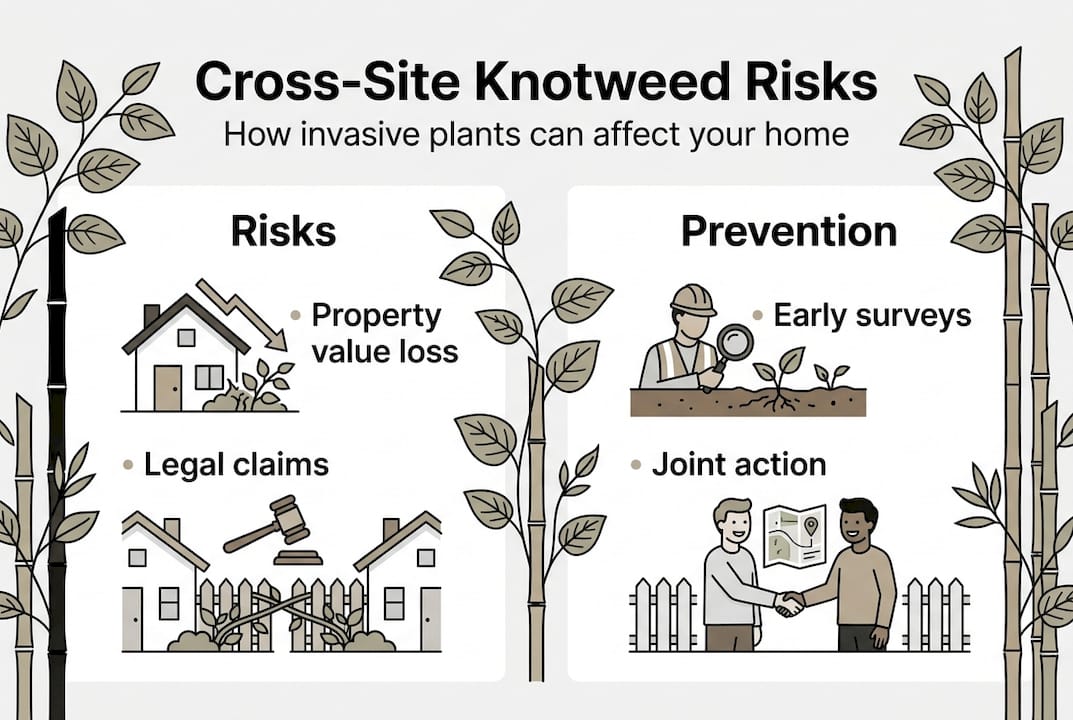
The impact on property values is significant. Research indicates knotweed can reduce value by 5 to 15%, even when the infestation originates on a neighbouring plot. This matters enormously to buyers who may have no awareness of an adjacent problem until a surveyor flags it during a mortgage valuation.
“Japanese Knotweed does not recognise property boundaries, and neither does the legal liability it can create for owners and buyers alike.”
Understanding your knotweed legal obligations is essential before you buy, sell, or begin any remediation work. The property implications extend well beyond the garden, touching conveyancing, insurance, and neighbour relations in ways that catch many homeowners off guard.
Pro Tip: If you are buying a property near railway embankments, riverbanks, or derelict land, commission a specialist invasive weed survey before exchange of contracts. These habitats are among the most common sources of cross-site contamination in the UK.
Property and legal consequences of cross-site contamination
Defining contamination is only half the battle; understanding the outcomes sets the stage for informed decisions. The financial and legal consequences of cross-site knotweed are wide-ranging, and they affect buyers and sellers differently.
Key consequences at a glance:
- Mortgage lenders may decline applications or impose conditions if a surveyor identifies knotweed within seven metres of a habitable structure.
- Property values can fall between 5% and 15%, even when the source of contamination is a neighbouring site.
- Sellers are legally required to disclose knotweed presence in the TA6 property information form, including any known risk from adjacent land.
- Failure to disclose can result in legal action from buyers after completion.
- Boundary disputes may arise when neighbours disagree about the source or extent of contamination.
The TA6 form, which is a standard part of the conveyancing process in England and Wales, asks sellers directly whether Japanese Knotweed is present or has previously been treated. Lenders routinely require professional surveys and approved treatment plans before they will proceed with a mortgage offer. Securing a mortgage with knotweed on or near a property is achievable, but it requires documented evidence of a management plan from a qualified specialist.
| Consequence | Impact on buyer | Impact on seller |
|---|---|---|
| Value reduction | Reduced equity from day one | Lower sale price achieved |
| Mortgage refusal | Application declined or conditioned | Reduced pool of eligible buyers |
| Legal disclosure | Right to claim if not disclosed | Liability for non-disclosure |
| Remediation costs | Inherited if not negotiated | Must be factored into sale price |
| Boundary disputes | Risk of ongoing neighbour conflict | Potential legal proceedings |
For those selling a property with knotweed, transparency and a proactive treatment plan are the strongest tools available. Buyers who discover undisclosed knotweed after completion have successfully pursued legal claims, so the risk of silence far outweighs the discomfort of disclosure.
Statistic to note: Knotweed-related property disputes have increased steadily in England and Wales, with courts awarding damages to buyers where sellers knowingly withheld information about contamination.
How to detect and assess boundary contamination risks
Understanding the consequences means you need a practical plan for identifying risks and taking informed action. Detection is not always straightforward, particularly when the source of contamination lies on a neighbouring property or beneath the ground surface.
Step-by-step boundary survey checklist:
- Conduct a visual inspection of your entire boundary line in late spring and summer, when knotweed is most visible above ground.
- Look for the characteristic hollow, bamboo-like stems, distinctive heart-shaped leaves, and creamy-white flower clusters.
- Check for signs of rhizome emergence near walls, fences, drains, and hard standing.
- Review satellite imagery or historical aerial photographs to identify any established colonies on neighbouring land.
- Engage a qualified invasive weed surveyor to carry out a formal assessment, including subsurface investigation where necessary.
Cross-site risk demands boundary surveys conducted by accredited professionals, as self-assessment alone is unlikely to satisfy lender or legal requirements. A professionally produced report carries weight in conveyancing, insurance claims, and any subsequent legal proceedings.
| Survey method | Best use | Limitations |
|---|---|---|
| Visual inspection | Initial identification | Misses subsurface spread |
| Satellite imagery | Historical spread patterns | Resolution may be insufficient |
| Professional survey | Legal and mortgage compliance | Requires qualified surveyor |
| Subsurface investigation | Confirms rhizome extent | Higher cost, more intrusive |
Familiarise yourself with the full property survey process before commissioning any work. Understanding what a surveyor will examine, and what the resulting report should contain, ensures you receive a document that is fit for purpose. If you identify knotweed on a neighbouring property, you may also need guidance on reporting knotweed to the relevant authorities or landowner. Boundary survey advice consistently emphasises that early professional assessment reduces both remediation costs and legal exposure.
Pro Tip: Early detection is the single most cost-effective action you can take. A survey commissioned before exchange of contracts is far less expensive than remediation costs inherited after completion.
Chemical-free treatment options and cross-site prevention
Having detected a risk, you need actionable ways to manage the threat and limit cross-site impact. Chemical herbicides remain controversial in residential settings, particularly where children, pets, or watercourses are present. Fortunately, effective chemical-free approaches exist and are increasingly favoured by lenders and local authorities alike.
Physical containment and removal methods include:
- Root barrier installation: High-density root barriers inserted vertically along boundary lines prevent rhizome migration between properties. Correct installation depth is critical, typically a minimum of two metres, to intercept the deepest rhizome growth.
- Excavation: Complete removal of contaminated soil and rhizome material is the most decisive physical intervention. All excavated material must be handled as controlled waste and disposed of at a licensed facility.
- Thermo-electric treatment: Japanese Knotweed Agency delivers direct energy up to 5,000 volts into the plant’s rhizome network, causing internal cell damage and progressively depleting the energy reserves that sustain regrowth. This method requires no chemicals and leaves no residual contamination in the soil.
- Regular cutting regimes: Consistent above-ground cutting weakens the plant over time by reducing photosynthesis and drawing on rhizome energy stores. Cutting alone is rarely sufficient as a standalone solution but supports other methods.
- Coordinated neighbour action: If the source of contamination is on an adjacent property, engaging your neighbour in a shared management programme significantly improves outcomes. A treatment plan on your side alone will not prevent re-colonisation if the rhizome network on the neighbouring plot remains intact.
The importance of cross-site prevention through coordinated action cannot be overstated. Our chemical-free knotweed process is designed to address precisely these multi-site scenarios, and our root barrier installation tips provide practical guidance for boundary protection.

Pro Tip: Document every treatment action with dated photographs, site plans, and written records. This evidence strengthens your legal position if a boundary dispute arises and demonstrates due diligence to mortgage lenders.
A fresh perspective: why cross-site knotweed risks demand a community response
Most property guides treat Japanese Knotweed as a solitary problem, something to be resolved by the individual landowner within their own boundaries. This framing is understandable but fundamentally incomplete. The biology of the plant makes individual action insufficient in many cross-site scenarios. You can install the most robust root barrier available, commission multiple treatment cycles, and still face re-colonisation if the neighbouring rhizome network is left undisturbed.
The property value impact of widespread neighbourhood contamination extends beyond any single plot. Entire streets and estates can experience suppressed values when knotweed is present across multiple sites without coordinated management. Local councils have a role to play here, particularly where infestations originate on publicly owned land such as verges, embankments, or parks. Yet enforcement remains inconsistent, and many homeowners are left managing a problem that originates beyond their control.
The most effective outcomes we observe involve neighbours, councils, and specialists working from a shared management plan. Documenting that shared strategy, including agreed treatment schedules and boundary responsibilities, benefits every party. Cross-site risk demands boundary surveys as a starting point, but sustained success demands sustained collaboration.
Expert help for cross-site knotweed contamination
If cross-site contamination is affecting your property or a purchase you are considering, professional guidance is the most reliable path to compliance and peace of mind. Japanese Knotweed Agency provides specialist property surveys across England, Wales, and Ireland, delivering accredited reports that satisfy lender and legal requirements.

Our chemical-free treatment guide explains the thermo-electric process in detail, and our property survey guidance walks you through what to expect at every stage of an invasive weed assessment. For answers to the most common questions about knotweed management, disclosure, and treatment options, visit our knotweed FAQs. Our team is ready to support you with the evidence-backed, chemical-free solutions that protect your property and your legal standing.
Frequently asked questions
Can Japanese Knotweed spread between neighbouring properties?
Yes, Japanese Knotweed can easily cross boundaries through its extensive rhizome network, leading to cross-site legal and financial issues for both the source landowner and affected neighbours.
Do I have to disclose knotweed on my property even if it’s from an adjacent site?
Yes, any presence or known risk of knotweed, including contamination originating from an adjacent property, must be disclosed in the TA6 form during the conveyancing process.
Will banks refuse mortgages if cross-site knotweed contamination is detected?
Many lenders will require professional surveys and approved treatment plans if knotweed is identified, and lenders require surveys and treatment plans before proceeding with a mortgage offer on affected properties.
What are the best chemical-free methods for controlling knotweed across boundaries?
Physical root barriers, thermo-electric treatment, excavation of contaminated material, and coordinated cutting regimes are the most effective chemical-free cross-site control options currently available.