
Many homeowners across England and Wales worry that Japanese Knotweed spells disaster for their property, yet much of what is believed about its potential for destruction simply is not true. Acting on myths rather than accurate information can lead to unnecessary stress, costly mistakes, and a heavier impact on the environment. By learning the real facts and exploring eco-friendly, chemical-free control options, you can protect both your home and the wider landscape responsibly.
Table of Contents
- Japanese Knotweed and Common Misconceptions
- Effective Chemical-Free Control Methods
- Surveying and Identifying Invasive Weeds
- Legal Duties for Homeowners in the UK
- Comparing Root Barriers and Excavation Options
Key Takeaways
| Point | Details |
|---|---|
| Misconceptions About Japanese Knotweed | Homeowners often overestimate the damaging potential of Japanese Knotweed, believing it can invade solid structures, which is not accurate. Understanding its actual impacts is essential for making informed decisions. |
| Long-Term Commitment to Control | Effective management of Japanese Knotweed requires time, typically involving years of monitoring and treatment rather than quick fixes. Homeowners are encouraged to opt for chemical-free methods that align with environmental values. |
| Legal Responsibilities of Homeowners | Landowners have a duty to prevent the spread of invasive species, with potential legal consequences for inaction. Being proactive about infestation management is crucial to avoid fines and liability claims. |
| Choosing the Right Treatment Method | The selection between root barriers and excavation depends on infestation severity and specific circumstances. Professional assessments should guide decisions to optimise cost-effectiveness and long-term success. |
Japanese Knotweed and Common Misconceptions
Japanese knotweed has accumulated a significant reputation in the property market, but much of what homeowners believe about it differs markedly from reality. The plant’s infamy has led to widespread myths that often cause unnecessary panic and misinformed decisions. Understanding the actual facts about this invasive species is crucial for homeowners across England and Wales who need to address it effectively without resorting to excessive measures or chemical treatments they may not require.
One of the most persistent misconceptions involves the plant’s destructive power. Many homeowners believe Japanese knotweed can penetrate solid concrete or brick structures, leading to catastrophic property damage. In reality, the plant cannot grow through solid concrete, though it can exploit existing structural weaknesses such as cracks, mortar joints, or damaged foundations. The House of Commons Science and Technology Committee examined this issue extensively and found that whilst Japanese knotweed can cause damage, much of its reputation surpasses documented physical impacts. The plant’s ability to spread is also frequently overstated. Research shows that rhizome spread is generally limited to a few metres, not the unlimited distance many assume. This distinction matters significantly when assessing risk and determining appropriate treatment strategies for your property.
Another common misconception centres on treatment timeframes and methods. Some homeowners expect rapid eradication, but effective control requires time and consistency. Chemical herbicides, traditionally the standard approach, typically demand at least three years of repeated applications by certified operators. However, eco-friendly alternatives now provide effective solutions without relying solely on chemical treatments. Japanese Knotweed Agency pioneered chemical-free approaches using direct energy delivery that damages the extensive rhizome network, offering homeowners an environmentally responsible option. Beyond the physical plant itself, property stigma represents a significant but often overlooked concern. The psychological and legal implications of Japanese knotweed presence can affect property values and mortgage lending decisions, even when the actual structural threat is minimal. Understanding these distinctions helps homeowners address the problem proportionally and avoid overreacting to exaggerated claims.
Pro tip: Request a professional survey before deciding on any treatment method, as accurate identification and assessment of the infestation’s extent will guide you toward the most effective and economical solution for your specific situation.
Effective Chemical-Free Control Methods
Chemical-free weed control represents a fundamental shift in how homeowners approach invasive plant management. Rather than relying solely on herbicides, modern eco-friendly strategies combine multiple approaches tailored to your specific situation. For Japanese Knotweed and other invasive species, this integrated approach proves both effective and sustainable, protecting your property whilst maintaining environmental responsibility. The goal is not quick fixes but lasting solutions that address the root cause without compromising soil health or biodiversity around your home.
Mechanical and thermal methods form the backbone of chemical-free control. Thermal weeding using hot water or flame technology effectively damages plant tissues and disrupts growth cycles without chemical residues. Japanese Knotweed Agency specialises in direct energy delivery systems that send up to 5,000 volts directly into the rhizome network, causing internal cell damage and depleting energy reserves within the extensive root system. This thermo-electric approach represents innovation in chemical-free treatment, working in harmony with the plant’s biology rather than against it. Manual removal, whilst labour-intensive, remains effective for smaller infestations when combined with barrier installations that prevent regrowth from underground fragments. Excavation works can also eliminate deeply established root systems entirely, though this requires careful planning to avoid spreading contaminated soil.
Integrated strategies enhance effectiveness significantly. Chemical-free weed control methods enhance soil health and biodiversity whilst disrupting weed life cycles through timing and cultural practices. Root barriers installed after initial treatment prevent reinfestation from fragments, creating long-term protection. Regular monitoring identifies new growth promptly, allowing intervention before the plant becomes established again. This combination of initial treatment, physical barriers, and sustained monitoring typically requires three to five years, but the results prove permanent without the ecological damage associated with repeated chemical applications.
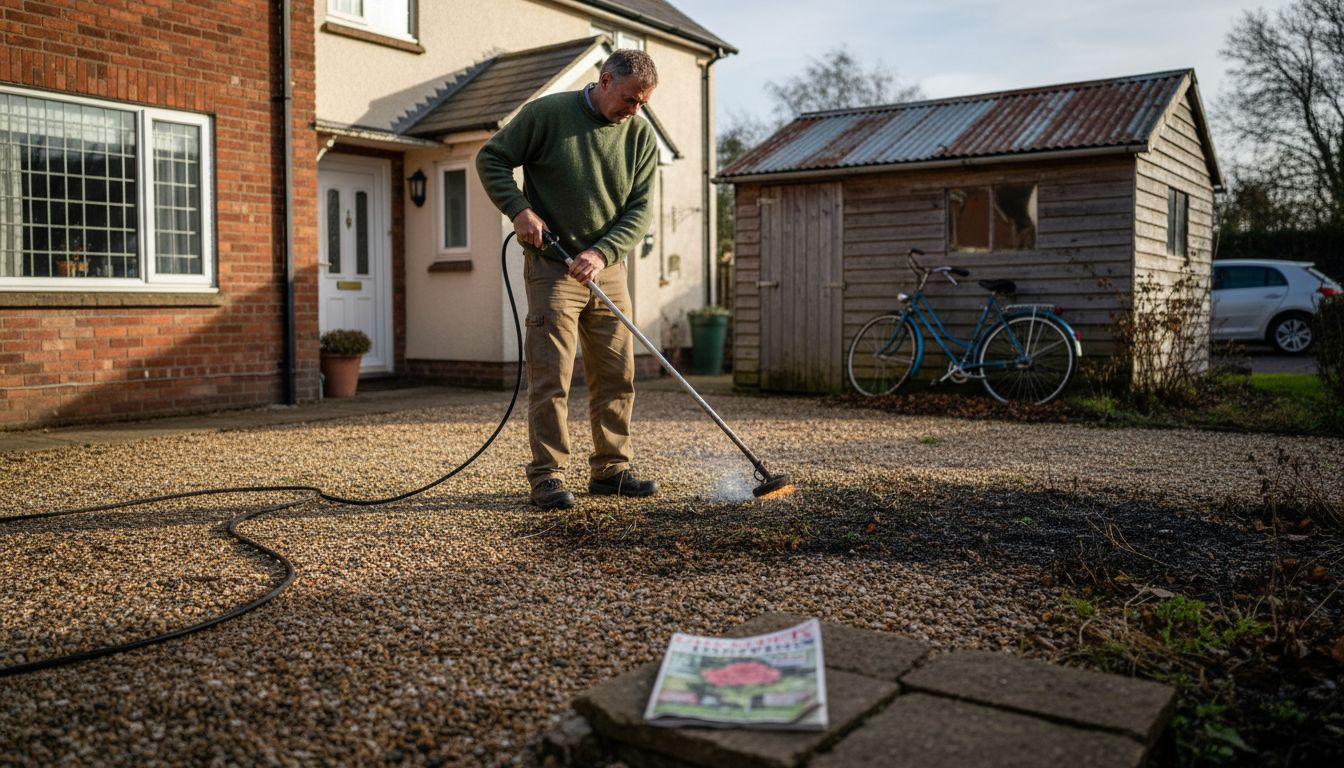
The reality is that effective chemical-free control demands commitment and professional expertise. However, homeowners across England and Wales increasingly recognise that this approach aligns with their environmental values whilst delivering superior long-term outcomes. The absence of chemical residues means better soil condition, reduced impact on nearby plants, and peace of mind knowing your property protection strategy respects the wider environment.
Pro tip: Have a professional survey conducted to map your infestation’s extent and identify the most suitable chemical-free method for your property, as different treatment approaches work best under different conditions.
The following table highlights key differences between chemical-free and chemical-based approaches to Japanese knotweed control:
| Method Type | Environmental Impact | Treatment Duration | Typical Effectiveness |
|---|---|---|---|
| Chemical-Free | Promotes soil health | 3–5 years, monitoring | High, with commitment |
| Chemical Herbicides | Risk of soil damage | At least 3 years | Reliable if repeated |
| Mechanical Removal | No chemical residues | Immediate, but labour | Effective for small areas |
| Thermo-Electric | Minimal ecosystem impact | 3–5 years with follow-up | Highly effective if surveyed |
Surveying and Identifying Invasive Weeds
Surveying your property for invasive weeds requires a systematic approach that combines careful observation with expert knowledge. Early detection makes all the difference between managing a small problem and facing an extensive infestation that demands years of treatment. Whether you suspect Japanese Knotweed, Giant Hogweed, or other invasive species, understanding what you are looking for and how to document it properly protects your property and helps inform treatment decisions. A professional survey goes beyond casual inspection, mapping the exact location, extent, and growth stage of infestations to create a clear picture of what needs addressing.
Accurate identification forms the foundation of effective management. Each invasive species exhibits distinct characteristics that distinguish it from native plants and other invasive species. Japanese Knotweed displays distinctive heart-shaped leaves, bamboo-like stems, and small creamy-white flowers, but misidentification remains common amongst homeowners unfamiliar with botanical features. Survey methods and identification guides for invasive species help you distinguish invasive plants from harmless vegetation, ensuring you direct treatment efforts accurately. Professional surveyors use visual inspections combined with mapping techniques to document plant location, rhizome depth, and affected area dimensions. This detailed information becomes critical when selecting treatment methods and estimating timeframes for eradication. Photography documenting seasonal growth patterns also helps monitor progress and adjust strategies as needed.
Coordinated surveying across the UK reflects best practice in invasive species management. Surveillance and rapid response measures for invasive plants emphasise the importance of timely reporting and data collection that informs control actions. When selling a property where invasive plants are present, mortgage lenders typically require a professional survey and treatment plan before lending approval. This legal and financial necessity underscores why proper surveying matters beyond simple curiosity. Japanese Knotweed Agency conducts comprehensive property surveys across England and Wales, identifying invasive species presence and creating detailed assessments that guide treatment planning. The survey documents the infestation’s extent, enabling realistic timescales and cost estimates for chemical-free eradication using thermo-electric treatment or other appropriate methods.
Pro tip: Document your property survey findings with photographs taken in spring when plants are actively growing, as seasonal growth patterns make identification clearer and help establish treatment effectiveness during follow-up monitoring.
Legal Duties for Homeowners in the UK
Owning property in the UK comes with specific legal responsibilities regarding invasive plants. Understanding these duties protects you from potential prosecution, liability claims, and financial penalties. The law recognises that invasive species like Japanese Knotweed and Giant Hogweed pose genuine risks to neighbouring properties and the wider environment. Your legal obligations extend beyond your property boundaries, creating a framework that demands proactive management rather than passive acceptance of infestations.
UK legislation imposes clear obligations on landowners and occupiers. Preventing invasive plants from spreading beyond property boundaries is a legal requirement, not merely a recommendation. You cannot legally plant invasive species, and allowing them to spread to neighbouring land exposes you to prosecution and potential liability for damages. This creates a situation where ignoring an infestation on your property becomes increasingly problematic as time passes. The Wildlife and Countryside Act 1981, alongside Environmental Protection Act requirements, establishes these duties comprehensively. Failure to comply can result in criminal prosecution, unlimited fines, and civil liability for harm caused to others’ properties. If invasive plants spread from your land onto a neighbour’s property and cause damage, they can pursue legal action against you for the costs of treatment and any property diminution.
Environmental legislation governing invasive species control outlines specific responsibilities for safe removal and waste disposal. When treating invasive plants, you must use appropriate methods and ensure proper disposal of contaminated materials. This is particularly important with Japanese Knotweed, where even small rhizome fragments can regenerate if disposed of incorrectly. When selling a property, disclosure of invasive plant presence becomes both a moral and legal consideration. Mortgage lenders increasingly require professional surveys and treatment plans before approving finance, and failure to disclose known infestations can expose you to claims of misrepresentation. The responsibility falls on you to identify problems and implement solutions before they escalate into situations that attract regulatory attention or legal challenges from neighbours.
Pro tip: If you suspect invasive plants on your property, obtain a professional survey immediately to document the infestation and create a compliant treatment plan, as proactive management demonstrates good faith and significantly reduces legal and financial exposure.
Here is a summary of legal responsibilities landowners encounter regarding invasive plant management in the UK:
| Legal Duty | Potential Consequence | Recommended Action |
|---|---|---|
| Prevent plant spread | Prosecution or fines | Monitor boundaries |
| Safe removal/disposal | Environmental penalties | Use licenced facilities |
| Disclosure before property sale | Loss of finance, claims | Obtain survey, disclose presence |
| Treat infestation responsibly | Neighbour disputes, claims | Create treatment plan |
Comparing Root Barriers and Excavation Options
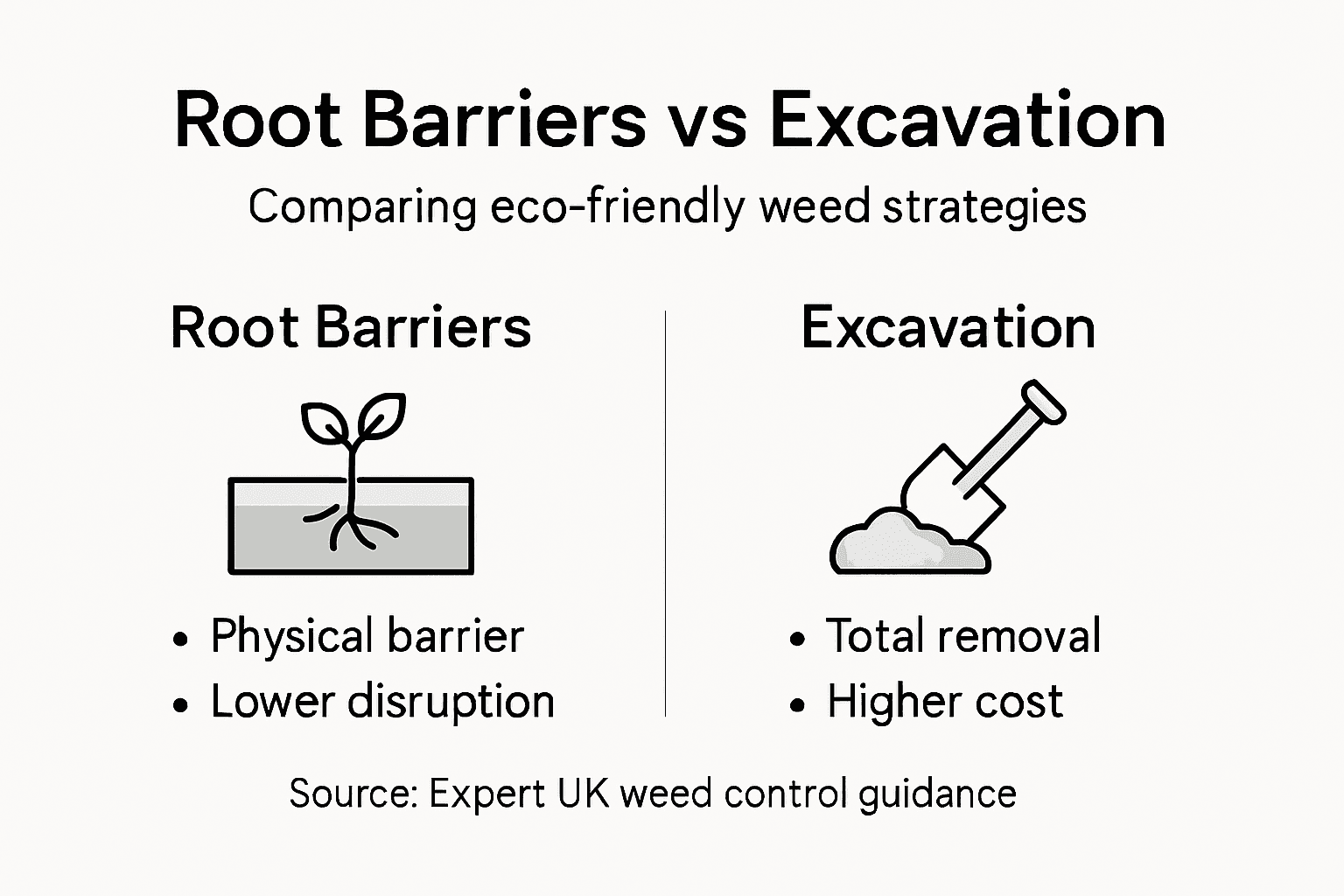
When addressing Japanese Knotweed or other invasive species, the choice between root barriers and excavation represents a fundamental decision affecting both immediate costs and long-term outcomes. Each approach offers distinct advantages and limitations depending on your property’s specific circumstances, infestation severity, and budget constraints. Understanding how these methods work, where they work best, and what results you can expect helps you make an informed decision aligned with your property protection goals.
Root Barriers: Containment and Prevention
Root barriers function as physical boundaries preventing rhizome penetration into protected areas. Durable, puncture-resistant root barrier membranes installed vertically or horizontally contain invasive roots and protect built infrastructure from damage. These impermeable polyethylene liners create a shield that existing rhizomes cannot breach, making them particularly effective for properties adjacent to infestations or where underground utilities require protection. Installation typically involves excavating to the appropriate depth, positioning the barrier material, and ensuring overlapping seams create a continuous protective layer. Root barriers work best alongside chemical-free treatment methods like thermo-electric therapy, where you treat existing plants whilst the barrier prevents new growth from entering protected zones. The barriers remain effective indefinitely, providing permanent protection once installed correctly. However, barriers do not eliminate existing rhizomes beyond the protected area; they prevent expansion rather than eradicate infestations.
Excavation: Complete Removal
Excavation involves removing contaminated soil entirely, eliminating all rhizome fragments within the affected area. This approach suits extensive infestations where rhizomes have penetrated deeply or spread widely. The removed soil requires proper containment and disposal at licensed facilities, as even small rhizome pieces can regenerate if placed in garden waste streams. Excavation proves expensive and disruptive, requiring significant ground disturbance and often temporary relocation of utilities, paving, or structures. However, it provides complete elimination of rhizomes within the excavated zone, creating certainty that reinfestation will not occur from soil-based fragments. Many properties combine excavation of severely affected areas with root barrier installation to contain any remaining rhizomes at excavation boundaries.
Selecting Your Approach
Small, contained infestations in accessible areas suit barrier installation combined with chemical-free treatment. Large, established infestations with deep rhizome networks often require excavation, potentially combined with barriers for comprehensive protection. Your surveyor’s assessment of infestation extent, rhizome depth, and affected area determines which approach offers the best outcome. Japanese Knotweed Agency delivers both root barrier installation and excavation works alongside chemical-free thermo-electric treatment, allowing integrated strategies tailored to your specific situation.
Pro tip: Obtain professional assessment of your infestation before committing to either approach, as combining root barriers with targeted treatment often proves more cost-effective and less disruptive than complete excavation for many properties.
Protect Your Home Naturally with Expert Chemical-Free Japanese Knotweed Control
Japanese Knotweed can seem unstoppable but understanding the truth behind its growth and damage helps you avoid unnecessary panic and harsh chemical treatments. If you are looking for an eco-friendly solution that respects your property and the environment, Japanese Knotweed Agency offers pioneering chemical-free treatment using advanced direct energy technology. This treatment targets the plant’s rhizome network effectively without damaging soil health or biodiversity. Alongside bespoke solutions like root barrier installation and careful excavation, we provide comprehensive property surveys across England, Wales and Ireland to accurately map infestations before any work begins.
Don’t let misconceptions about Japanese Knotweed cause costly delays or impact your property value. Take confident action now with a professional survey and sustainable treatment plan from Japanese Knotweed Agency. Visit our chemical-free treatment page to learn more about how we protect homes naturally and start your journey to a knotweed-free property today.
Frequently Asked Questions
What is eco-friendly weed control?
Eco-friendly weed control refers to natural methods of managing invasive plants without the use of chemical herbicides. This approach often includes mechanical removal, thermal methods, and integrated strategies that prioritise environmental responsibility and soil health.
How do thermal weeding methods work?
Thermal weeding uses hot water or flame technology to damage plant tissues and disrupt growth cycles. This method effectively targets invasive plants like Japanese knotweed without leaving chemical residues in the soil.
What are the benefits of using root barriers for weed control?
Root barriers prevent the spread of invasive plant roots, providing a physical barrier that protects structures and cultivated areas. When used in conjunction with eco-friendly treatment methods, root barriers can effectively contain existing infestations and reduce the risk of regrowth.
How long does eco-friendly weed control typically take to be effective?
Chemical-free weed control methods usually require a commitment of three to five years of monitoring and treatment to achieve lasting results. Regular observation and follow-up interventions are essential for establishing complete control over invasive plant species.