

TL;DR:
- Energetic weed treatment uses chemical-free heat or electricity to destroy Japanese Knotweed.
- It offers faster, eco-friendly eradication with up to 100% success in one to two years.
- Professional survey, treatment, and documentation are essential for effective and lender-accepted results.
Japanese Knotweed is one of the most legally and financially disruptive plants a UK or Irish homeowner can encounter. It can push through tarmac, destabilise foundations, and trigger mortgage refusals before you’ve even listed your property. With growing restrictions on herbicide use and increasing demand for eco-responsible solutions, more homeowners are turning to energetic weed treatment as a safe, effective alternative. This guide walks you through the entire process, from understanding the technology to preparing your site, executing treatment, and documenting results for insurers and lenders.
Table of Contents
- Understanding energetic weed treatment: The chemical-free approach
- Preparation and requirements before starting treatment
- Step-by-step: The energetic weed treatment process in action
- Comparing outcomes, challenges, and what to expect
- Our take: Why energetic weed treatment is changing the game
- Next steps and where to get help
- Frequently asked questions
Key Takeaways
| Point | Details |
|---|---|
| Chemical-free control | Energetic weed treatment uses heat or electricity instead of herbicides for Japanese Knotweed. |
| Faster eradication | Thermo-electric and steam methods can work in 1–2 years, outperforming traditional herbicides. |
| Safer for sensitive areas | These methods avoid chemicals, making them suitable near water, gardens, and for eco-conscious homeowners. |
| Professional involvement | Certified experts are essential due to equipment, legal, and documentation requirements. |
Understanding energetic weed treatment: The chemical-free approach
With the problem defined, let’s clarify why energetic weed treatment is revolutionising Japanese Knotweed control.
Energetic weed treatment refers to chemical-free methods using thermal or electrical energy to eradicate Japanese Knotweed, targeting the plant’s cellular structure rather than relying on herbicides. Two primary techniques are used in professional practice: thermo-electric treatment and superheated steam. Both work by disrupting the plant’s biology at a fundamental level, making regrowth increasingly difficult with each application.
Thermo-electric treatment delivers controlled electrical current directly into the plant’s stems and rhizomes via specialist probes. The electrical energy generates intense internal heat, causing irreversible cellular damage and progressively depleting the energy reserves stored deep within the rhizome network. Superheated steam treatment applies pressurised steam at temperatures exceeding 100°C to foliage and soil, penetrating the root system and denaturing proteins that sustain growth.
Both methods contrast sharply with conventional herbicide programmes, which introduce glyphosate or other chemicals into the soil over multiple seasons. Excavation, while immediate, is highly disruptive and expensive, often requiring specialist disposal of contaminated soil. Energetic methods sit between these extremes: less invasive than excavation, faster-acting than herbicides, and entirely free of chemical residues.
The energy-based weed control benefits are particularly significant on sensitive sites. Near watercourses, in organic gardens, or on land with biodiversity value, chemical-free approaches eliminate the risk of drift, runoff, and soil contamination. Regulatory pressure on herbicide use is increasing across England, Wales, and Ireland, making these techniques increasingly relevant for landowners who want to stay ahead of compliance requirements.
Key advantages of energetic weed treatment at a glance:
- No chemical residues left in soil or water
- Suitable for use near watercourses, gardens, and ecologically sensitive areas
- Aligns with emerging environmental regulations restricting herbicide use
- Causes progressive depletion of rhizome energy reserves with each treatment
- Produces no contaminated soil requiring specialist disposal
- Supports biodiversity by avoiding harm to surrounding plant and animal life
| Feature | Energetic treatment | Herbicide programme | Excavation |
|---|---|---|---|
| Chemical residues | None | Yes | None |
| Suitable near water | Yes | Restricted | Yes |
| Soil disruption | Minimal | Minimal | High |
| Treatment duration | 1–2 years | 3–5 years | Immediate |
| Eco-credentials | High | Low | Medium |
For homeowners seeking a chemical-free weed treatment guide, understanding these distinctions is the essential first step before committing to any programme.
Preparation and requirements before starting treatment
Now that you know what energetic treatment involves, here’s how to prepare and what’s required before taking action.

Professional preparation is not optional. The chemical-free knotweed process follows a structured sequence: site survey and mapping, initial treatment during active growth (typically May to June), follow-up treatments in July and August, repeat cycles over one to two years, and thorough documentation for insurers and mortgage lenders. Skipping any stage risks incomplete eradication and potential legal complications.
The site survey is where everything begins. A qualified specialist will map the full extent of the infestation, including underground rhizome spread, which can extend up to three metres beyond visible growth. Without this mapping, treatment zones cannot be accurately defined, and you risk missing significant root mass.
What preparation involves for homeowners:
- Engaging a certified invasive species specialist for a formal site survey
- Providing access to all affected areas, including boundaries and outbuildings
- Clearing surface debris to allow equipment access
- Notifying neighbours if the infestation crosses boundaries (a legal obligation in many cases)
- Retaining all survey reports and treatment records for insurance and conveyancing purposes
Documentation is arguably as important as the treatment itself, particularly if you intend to sell your property. Mortgage lenders and insurers require evidence of a formal management plan, and without it, a sale can stall or collapse entirely.
| Preparation step | DIY approach | Professional approach |
|---|---|---|
| Site survey | Incomplete, no mapping | Full rhizome mapping included |
| Equipment | Unavailable to public | Specialist high-voltage units |
| Documentation | Not accepted by lenders | Lender-compliant reports produced |
| Legal compliance | High risk | Fully managed |
| Safety | Significant hazard | Controlled and insured |
Pro Tip: Request that your specialist produces documentation in a format accepted by major mortgage lenders from the outset. Retrofitting paperwork after treatment is completed is time-consuming and sometimes impossible.
Personal protective equipment, including insulated gloves, face shields, and appropriate footwear, is mandatory during thermo-electric treatment due to high-voltage operation. This is one of several reasons why DIY attempts are strongly discouraged. The equipment involved is not commercially available to the public, and improper use risks serious injury as well as worsening the spread of knotweed through disturbed rhizome fragments.
Step-by-step: The energetic weed treatment process in action
Preparation complete — it’s time to walk through the energetic weed treatment process, step by step.
- Site survey and rhizome mapping. A specialist visits the property, identifies all knotweed growth, and maps the rhizome network. This defines the treatment zone and informs the management plan.
- Initial treatment (May to June). The first energetic treatment is delivered during active growth, when the plant is directing energy upward and the rhizomes are most vulnerable. Thermo-electric treatment delivers controlled current of up to 5,000 volts via probes inserted into stems and rhizomes, generating fatal internal heat.
- Follow-up treatments (July to August). Subsequent sessions target regrowth and any rhizome sections that survived the initial treatment. Each delivery further depletes the plant’s energy reserves.
- Second-year monitoring and treatment. For most infestations, a second year of treatment is required. The specialist revisits, assesses regrowth, and delivers additional sessions as needed.
- Final inspection and documentation. Once eradication is confirmed, a formal completion report is produced. This document is essential for property transactions and insurance claims.
“The steam method penetrates rhizomes, denatures proteins, neutralises pathogens, and remediates soil, offering a biologically thorough approach to knotweed eradication.” UK steam treatment research
The choice between thermo-electric and steam methods depends on site conditions. Thermo-electric treatment is highly precise and well-suited to confined spaces, boundaries, and areas where ground disturbance must be minimised. Steam treatment covers larger surface areas and offers particularly strong results in open ground.
Pro Tip: Timing your initial treatment to coincide with peak growth in May or June significantly improves outcomes. The plant’s upward energy transfer during this period makes the rhizomes more susceptible to energetic disruption.
Safety during treatment is non-negotiable. High-voltage equipment requires trained operators and a cleared exclusion zone. The knotweed eradication workflow must be managed entirely by certified professionals, both for safety and to ensure the resulting documentation carries weight with lenders and insurers.
Comparing outcomes, challenges, and what to expect
Now you’ve seen how the process unfolds, let’s examine what results to expect and how energetic treatment stacks up.
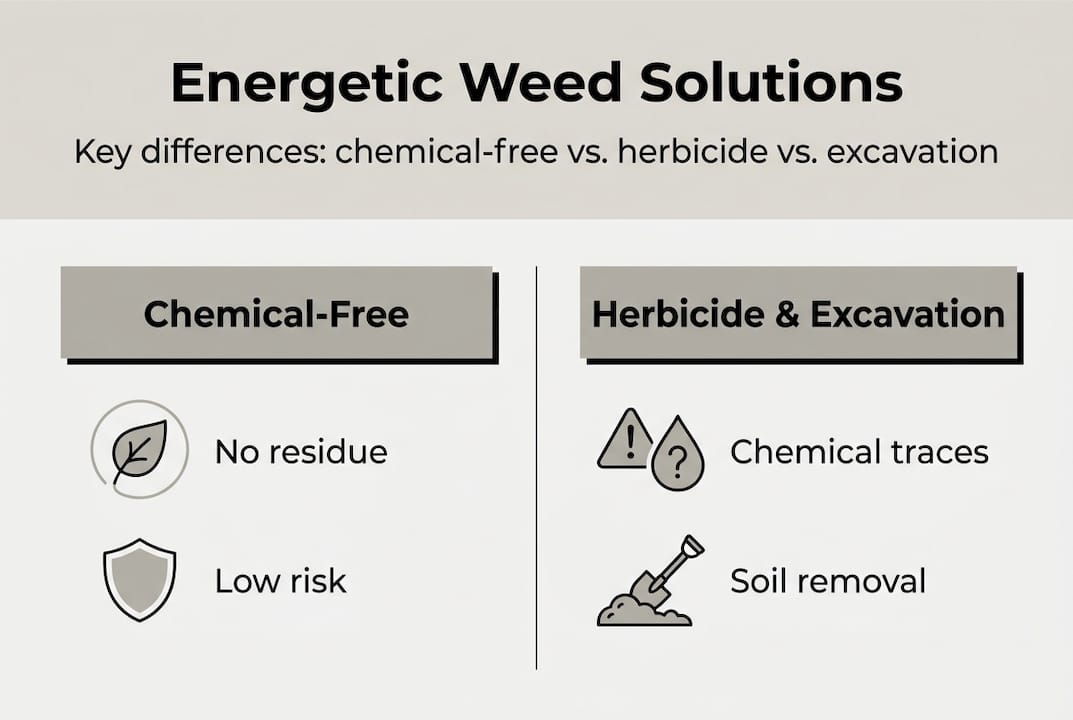
The performance data for energetic methods is compelling. Thermo-electric treatment achieves 80 to 95% success rates within one to two years, while steam treatment has recorded 100% eradication in UK trials. By comparison, herbicide programmes typically achieve 85 to 90% success but require three to five years to complete. For homeowners with a property transaction on the horizon, that timeline difference is significant.
| Treatment method | Success rate | Typical duration | Chemical use |
|---|---|---|---|
| Thermo-electric | 80–95% | 1–2 years | None |
| Superheated steam | Up to 100% | 1–2 years | None |
| Herbicide programme | 85–90% | 3–5 years | Yes |
| Excavation | Near 100% | Immediate | None |
Energetic treatment performs particularly well near watercourses, in organic gardens, and on sites where chemical use is restricted. The chemical-free weed control benefits extend beyond ecology: no contaminated soil to dispose of, no waiting periods before replanting, and no risk of chemical harm to neighbouring land.
There are known limitations. Dense infestations with extensive rhizome networks may require additional treatment cycles. Boundary disputes can complicate access, particularly when knotweed has spread from a neighbouring property. In these cases, root barrier installation may be recommended alongside energetic treatment to prevent reinfestation.
Common challenges and how to address them:
- Incomplete rhizome mapping: Always insist on a full survey before treatment begins
- Boundary infestations: Engage a specialist who can advise on legal obligations and neighbour communication
- Lender acceptance: Confirm your chosen specialist produces documentation recognised by major lenders
- Reinfestation risk: Ongoing monitoring after treatment completion is essential
The impact on property transactions is well documented, and lenders are increasingly scrutinising knotweed disclosures. While energetic treatment is gaining recognition, PCA white papers on herbicides confirm that herbicide and excavation methods currently hold broader acceptance among lenders. This is changing, but documentation quality remains critical regardless of which method you choose. The energy-based weed control advantages are clear, provided the treatment is professionally delivered and properly evidenced.
Our take: Why energetic weed treatment is changing the game
With the main guidance covered, here is an honest perspective from those working at the forefront of chemical-free knotweed management.
Most guides stop at explaining how energetic treatment works. What they rarely address is the regulatory landscape shifting beneath the industry. Glyphosate restrictions and eco-regulations are tightening across the UK and Ireland, and energetic methods are directly aligned with where legislation is heading. Homeowners who adopt chemical-free solutions now are not simply making an ethical choice; they are future-proofing their approach.
The honest challenge is lender adoption. Energetic treatment does not yet carry the same universal acceptance as established herbicide programmes in the eyes of all mortgage lenders. This is not a reflection of efficacy; it is a reflection of familiarity. The solution is rigorous documentation from the outset, produced by certified specialists whose reports carry professional weight.
Our view is straightforward: the knotweed removal best practices of tomorrow will be chemical-free. Homeowners who invest in energetic treatment today, backed by thorough evidence trails, will be better positioned for property transactions, regulatory compliance, and long-term land management than those who default to herbicide programmes simply because they are more familiar.
Next steps and where to get help
Armed with this insight, here’s where to go next for expert help and official planning.
If Japanese Knotweed is affecting your property, the most important step is securing a professional survey from a certified specialist. Japanese Knotweed Agency delivers thermo-electric treatment directly on site, applying up to 5,000 volts to cause internal cell damage and progressively deplete the rhizome network with every session. We cover England, Wales, and Ireland.

For homeowners seeking a formal eradication plan, our chemical-free solutions page provides detailed information on treatment options and next steps. If you need a structured approach for a property transaction or insurance requirement, our invasive species eradication planning resource walks you through the full planning process. Contact us to arrange a survey and receive documentation that meets lender and insurer requirements.
Frequently asked questions
What is energetic weed treatment and how does it work?
Energetic weed treatment uses controlled heat or electricity to destroy Japanese Knotweed cells and rhizomes without any chemical application. Thermo-electric methods deliver up to 5,000 volts directly into the plant’s root system, while steam methods apply pressurised heat above 100°C to achieve the same result.
Is energetic treatment safer for pets, gardens, or near water than herbicides?
Yes. Because energetic methods avoid chemical drift and leave no residues in soil or water, they are particularly well-suited to sensitive sites including gardens, watercourses, and areas with protected wildlife. There is no waiting period before people or animals can re-enter treated areas.
How long does energetic weed treatment take to eradicate Japanese Knotweed?
Thermo-electric treatment typically achieves 80 to 95% success within one to two years, and steam treatment has recorded 100% eradication in UK trials. Both methods are significantly faster than herbicide programmes, which commonly require three to five years to complete.
Can I do energetic Japanese Knotweed treatment myself?
DIY is not advised. The equipment involved is not available to the public, and improper treatment risks spreading the infestation through disturbed rhizome fragments, as well as serious personal injury from high-voltage operation. Professional involvement is also required to produce documentation accepted by lenders and insurers.