

TL;DR:
- Chemical-free methods like Roots Reset achieve over 95% eradication in a single treatment.
- Proper eradication requires a formal plan with long-term guarantees from accredited specialists.
- DIY removal poses legal and environmental risks, making professional, documented treatment essential.
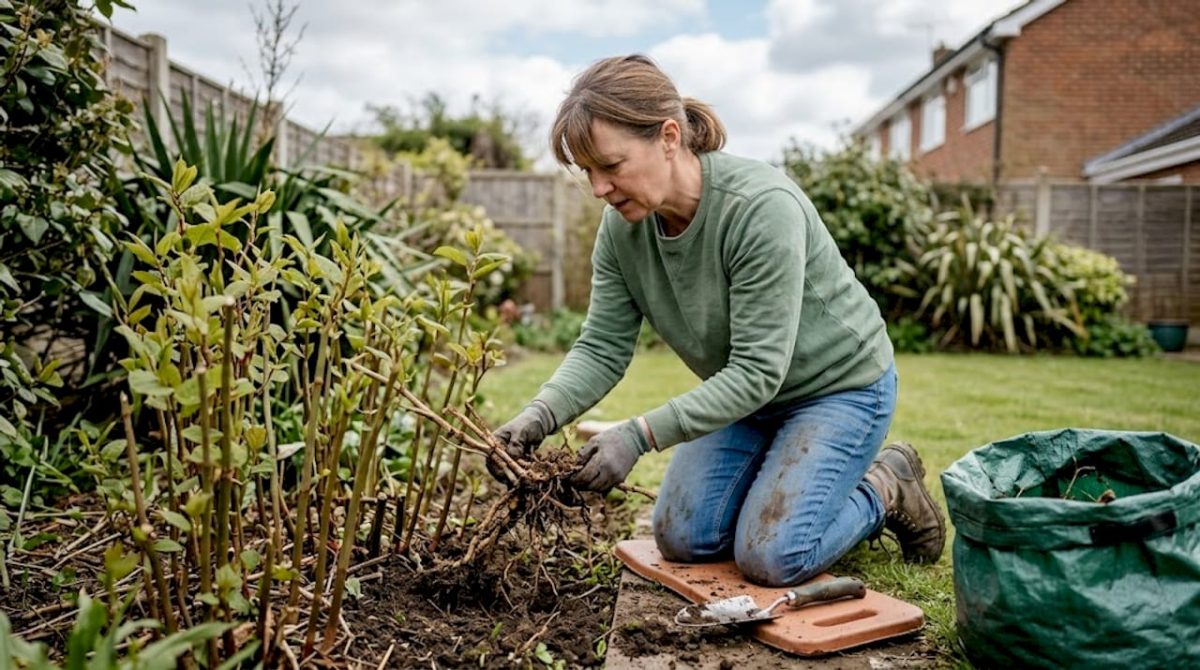
The belief that Japanese Knotweed cannot be controlled without herbicides has persisted for decades, shaping the advice given to homeowners across England, Wales, and Ireland. That assumption is now being overturned. Trials conducted in Wales in 2025 demonstrated over 95% eradication using a fully chemical-free method, and Irish pilot projects are producing comparable results through organic compost approaches. If you are facing a knotweed infestation and want a solution that protects your property, your health, and your legal standing, the landscape of available options has changed significantly.
Table of Contents
- What makes Japanese Knotweed so resistant?
- Breakthroughs in chemical-free treatment: Welsh and Irish success stories
- What formal eradication looks like: Homeowner obligations and legalities
- Choosing and applying a chemical-free solution: Step-by-step for homeowners
- A fresh perspective: Why most advice about knotweed control is out of date
- How we help: Get the right formal plan for knotweed eradication
- Frequently asked questions
Key Takeaways
| Point | Details |
|---|---|
| Knotweed can be eradicated | New chemical-free methods now reliably control Japanese Knotweed in the UK and Ireland. |
| Formal plans are essential | Accredited surveys and guarantees are critical for property sales and legal compliance. |
| DIY risks are high | Attempting unaccredited DIY removal can worsen the problem and may lead to legal issues. |
| Rapid replanting possible | Some advanced chemical-free treatments allow you to replant as soon as five days later. |
What makes Japanese Knotweed so resistant?
Now that we have challenged the biggest myth, let us uncover why Japanese Knotweed is so persistent in the first place. Understanding its biology is essential before selecting any treatment method, chemical-free or otherwise.
Japanese Knotweed (Fallopia japonica) produces an extensive underground network of rhizomes, the root-like stems that store energy and drive regrowth. These rhizomes can extend up to three metres deep and seven metres horizontally from the visible plant. A fragment as small as one centimetre is capable of generating an entirely new plant. This is not a weed that responds to surface-level intervention.
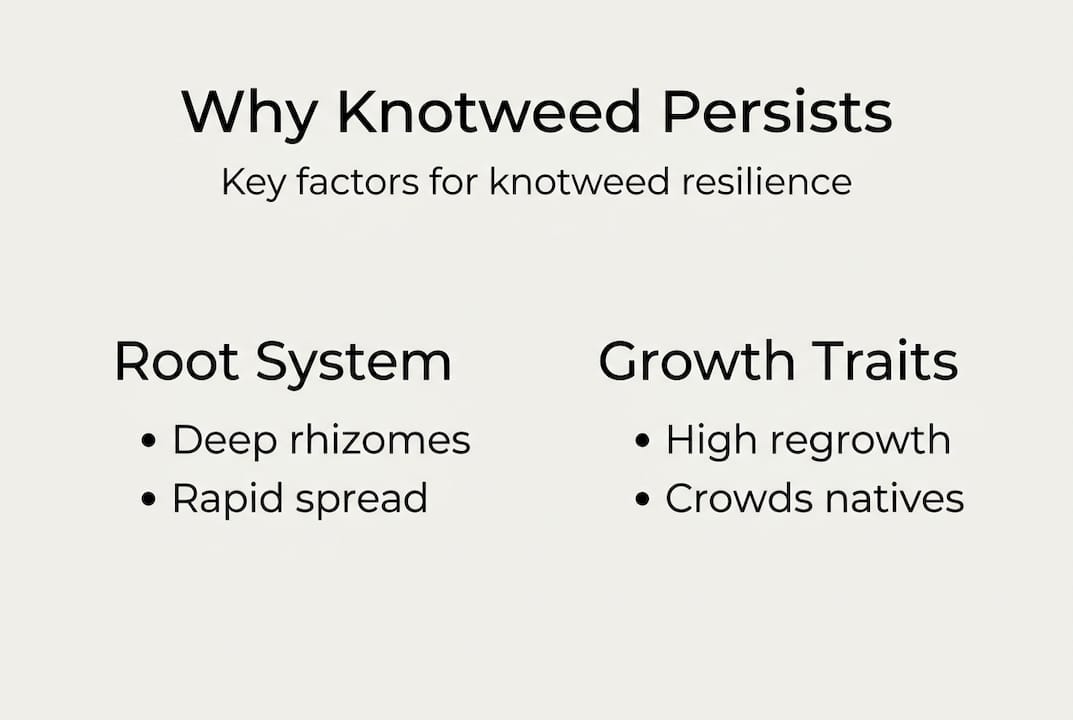
The plant’s above-ground canes can push through tarmac, crack foundations, and breach drainage systems. Below ground, the rhizome network acts as a biological reserve, drawing on stored energy to regenerate even after the visible growth has been removed. This is precisely why incomplete removal attempts so often make the problem worse.
Common homeowner struggles include:
- Legal obligations: In the UK, allowing knotweed to spread to neighbouring land is a civil and potentially criminal matter
- Long treatment timelines: Most approaches require multiple seasons before any guarantee can be issued
- Garden disruption: Excavation works can be extensive, affecting landscaping, structures, and soil integrity
- Property sale complications: Mortgage lenders and insurers require formal eradication plans before proceeding
“Herbicide methods take over 3 seasons and are often incomplete since Knotweed regenerates from fragments.”
This is why understanding why use non-chemical methods matters so much. Herbicide programmes are slow, require repeated applications, and carry environmental risks to surrounding soil and waterways. The case for a better approach is well established, and the evidence now supports it.
Breakthroughs in chemical-free treatment: Welsh and Irish success stories
Understanding resistance is only half the battle. What are the game-changing solutions now available to homeowners in England, Wales, and Ireland?
Two significant developments deserve close attention. The first is the Roots Reset method, trialled in Wales in 2025. This technique uses an anaerobic soil process, depriving the rhizome network of the oxygen it needs to sustain cell function, causing cellular breakdown without any herbicide input. The results were striking: the Roots Reset method achieves 95% or greater eradication in a single treatment cycle, with replanting possible just five days after completion.
The second development comes from Ireland, where the KNOT project introduced a bespoke organic compost treatment. This approach works by boosting beneficial soil fungi, improving the microbial environment, and using targeted shading to suppress knotweed regrowth. The Irish pilot compost method increases beneficial fungi and measurably reduces knotweed regrowth across treated sites.
| Method | Treatment time | Replanting | Chemical use | Eradication rate |
|---|---|---|---|---|
| Herbicide programme | 3 or more seasons | Delayed | Yes | Variable |
| Excavation (dig out) | Days to weeks | Immediate | No | Risk of spread |
| Roots Reset (anaerobic) | Single treatment | 5 days | No | 95%+ |
| Organic compost (KNOT) | Multiple seasons | Gradual | No | Improving |
Statistic to note: A 95% eradication rate in a single treatment cycle represents a significant advance over traditional herbicide programmes, which frequently require three to five years and still carry risk of incomplete clearance.
Pro Tip: When reviewing any chemical-free option, ask the contractor to share documented trial data, not just testimonials. Methods like Roots Reset have published results you can verify independently.
For homeowners wanting to understand the full chemical-free eradication workflow, the process is structured and methodical. Reviewing non-chemical knotweed controls alongside these trial results gives a clear picture of what modern, responsible eradication looks like.
What formal eradication looks like: Homeowner obligations and legalities
With new solutions available, let us clarify what eradication means in a legal and practical sense, and why the formal process matters as much as the method itself.
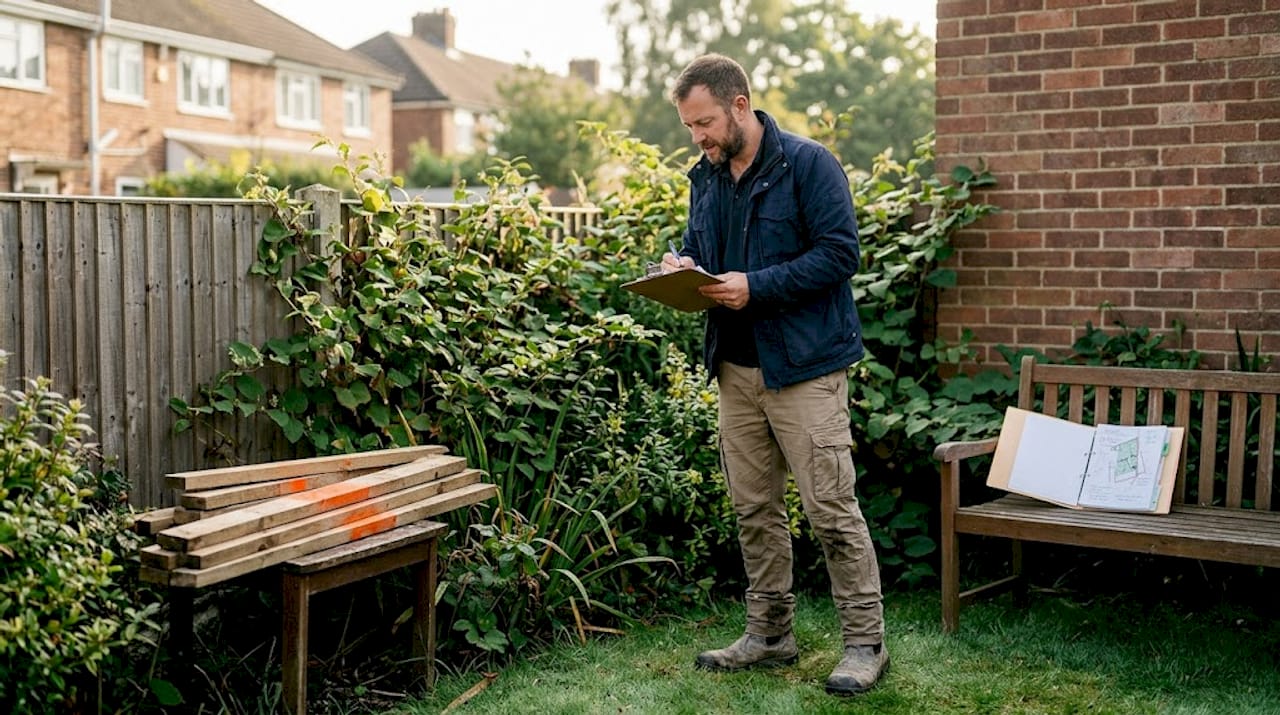
Eradication is not simply the removal of visible canes. In the context of property law, insurance, and mortgage lending, eradication means a documented, professionally managed programme with a long-term guarantee, typically between five and ten years. Without this, a property sale can stall, a mortgage application can be declined, and insurance claims related to knotweed damage may be rejected.
Key legal and procedural considerations for homeowners include:
- Accreditation matters: Contractors should hold PCA (Property Care Association) or INNSA (Invasive Non-Native Specialists Association) accreditation
- Formal management plans: These documents outline the treatment method, timelines, monitoring schedule, and guarantee terms
- Waste disposal compliance: Knotweed is classified as controlled waste in the UK; improper disposal is a criminal offence
- Neighbour liability: Allowing spread to adjacent land can result in legal action under the Anti-Social Behaviour, Crime and Policing Act 2014
“Homeowners should start with a PCA or INNSA-accredited survey for a formal plan with a 5 to 10 year guarantee; DIY risks spread and legal issues.”
Understanding the knotweed specialists’ role is essential here. A specialist does not simply treat the plant; they produce documentation that satisfies lenders, insurers, and solicitors. The survey guide for knotweed explains what a professional assessment covers and why it forms the foundation of any credible eradication plan.
| Requirement | Why it matters |
|---|---|
| PCA or INNSA accreditation | Recognised by lenders and insurers |
| Written management plan | Required for property transactions |
| 5 to 10 year guarantee | Provides long-term legal protection |
| Controlled waste disposal | Legal compliance, avoids prosecution |
DIY attempts carry serious risks. Beyond the practical challenge of incomplete removal, homeowners who disturb knotweed without a plan risk spreading the plant, creating additional legal liability, and voiding any future guarantee from a professional contractor.
Choosing and applying a chemical-free solution: Step-by-step for homeowners
Knowing the standards, homeowners need actionable steps to implement the right chemical-free remedy with confidence.
Official guidance prioritises non-chemical approaches where possible, but always recommends starting with a professional survey. Here is a practical framework:
- Assess the infestation: Note the extent of visible growth, proximity to structures, and whether the plant has spread beyond your boundary
- Commission a professional survey: An accredited specialist will map the rhizome extent and identify the most appropriate treatment method
- Select the right method: Based on survey findings, choose between approaches such as Roots Reset, organic compost treatment, thermo-electric treatment, root barrier installation, or excavation
- Agree a formal management plan: Ensure the plan is written, includes a guarantee period, and specifies monitoring intervals
- Follow up as scheduled: Chemical-free methods often require follow-up visits to confirm eradication and address any regrowth
- Obtain written confirmation of clearance: This document is what solicitors and lenders will request during any future property transaction
Common pitfalls to avoid:
- Cross-contamination during removal, which can spread viable rhizome fragments to unaffected areas
- Disposing of knotweed material in standard garden waste, which is illegal
- Accepting verbal assurances instead of written guarantees
- Choosing a contractor without verifiable accreditation
Pro Tip: Ask specifically for evidence of completed formal eradications using non-chemical methods. A reputable contractor will have documented case studies and be able to demonstrate the process for chemical-free treatment clearly. Understanding the benefits of chemical-free weed control will also help you ask the right questions during any initial consultation.
A fresh perspective: Why most advice about knotweed control is out of date
Stepping back, it is worth asking why so many authorities and online forums still emphasise herbicides or offer ambiguous answers when the science has moved on.
The honest answer is institutional inertia. Guidance documents take years to update, and herbicide programmes have a long commercial history that shapes what contractors default to recommending. Meanwhile, trials like Roots Reset in Wales and the KNOT composting project in Ireland are producing results that render much of the standard advice obsolete.
The uncomfortable truth for homeowners is this: DIY attempts, however well-intentioned, still carry a disproportionate legal and logistical risk. A single mishandled removal can spread the plant further, create liability with neighbours, and invalidate future professional guarantees. The financial cost of that mistake consistently exceeds the cost of engaging a specialist from the outset.
Only well-documented, professionally delivered, chemical-free programmes resolve knotweed issues in a way that satisfies lenders, insurers, and the law. For homeowners serious about protecting their property, reviewing sustainable eradication advice is a logical and necessary first step.
How we help: Get the right formal plan for knotweed eradication
If you are ready to move beyond confusion and secure a professional, chemical-free solution that is recognised for legal and resale purposes, Japanese Knotweed Agency is here to help.
We are pioneers of chemical-free treatment and eradication of Japanese Knotweed across England, Wales, and Ireland. Our thermo-electric treatment delivers up to 5,000 volts directly to the rhizome network, causing internal cell damage and depleting the plant’s energy reserves without a single drop of herbicide. We also carry out root barrier installations, excavation works, and accredited property surveys. Our eradication plan guide explains exactly what a formal plan involves, and our chemical-free eradication step-by-step gives you a clear pathway from survey to guarantee.
Frequently asked questions
Can Japanese Knotweed really be eradicated without chemicals?
Yes. The Roots Reset method achieves over 95% eradication in a single treatment cycle, and the Irish organic compost pilot demonstrates measurable suppression of regrowth, both without herbicides.
What guarantee do I need for formal eradication?
You should insist on a written guarantee of five to ten years from a PCA or INNSA-accredited contractor, as this is the standard recognised by mortgage lenders and insurers.
Is it illegal to dig and dispose of Knotweed without a professional plan?
It carries serious legal risk. Knotweed waste is classified as controlled waste in the UK, and improper disposal can result in prosecution, as well as spreading the plant further.
How quickly can I replant after a chemical-free treatment?
With the Roots Reset method, replanting is possible just five days after treatment is completed, making it significantly faster than herbicide-based programmes.